ICD-10 Code Y76.0: Diagnostic obstetric and gynecological devices
ICD-10 Code Y76.0: Definition and billable status ICD-10 Code Y76.0 is a valid, ...

Last Updated: Oct 23, 2026
Billable Code Specific Code
H83.19 is the billable ICD-10-CM code for labyrinthine fistula, unspecified ear.
According to the Centers for Medicare and Medicaid Services (CMS), ICD-10-CM codes are updated annually each October 1. H83.19 is valid under the FY2026 edition and remains unchanged from prior cycles, making it a stable reference for practices coding inner ear pathology.
Let Pabau's smart automation suggest the right codes, reduce claim denials, and keep your practice compliant—effortlessly.
Automate repetitive tasks and focus on what matters most—your patients.
Reduce coding errors and ensure compliance with the latest regulations.
Clean claims, fewer denials, and faster reimbursements.
Powerful insights and reporting to help your practice thrive.
HIPAA compliant SOC 2 certified GDPR-compliant Trusted by 4,000+ clinics worldwide

ICD-10 code H83.19 describes labyrinthine fistula of the unspecified ear and is billable for FY2026 (October 1, 2025 through September 30, 2026).
Use H83.11 (right ear), H83.12 (left ear), or H83.13 (bilateral) when documentation supports it. H83.19 applies only when the affected side is genuinely undetermined or undocumented.
H83.19 belongs to the H83 category (Other diseases of inner ear) within the H60-H95 block. Parent codes H83 and H83.1 are non-billable headers.
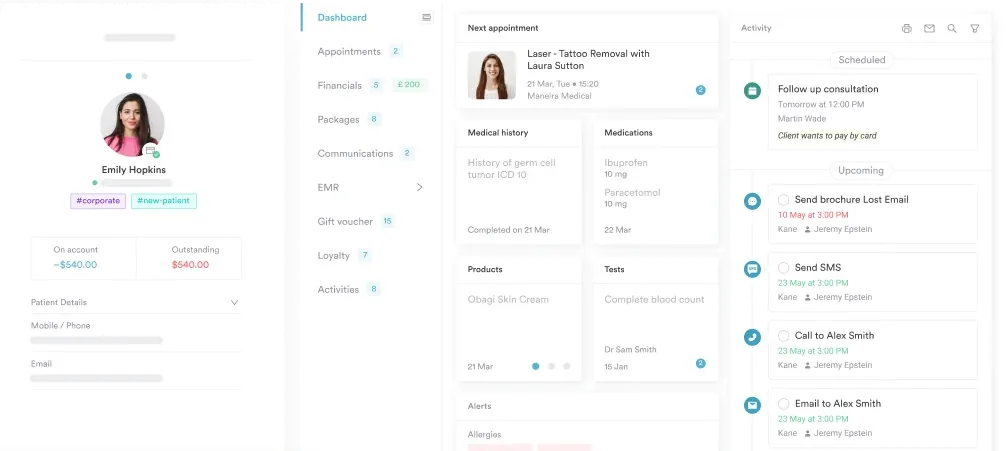
Practice management software like Pabau helps ENT and audiology practices apply codes like H83.19 accurately, reducing claim errors through built-in claims management tools.
ICD-10 code H83.19 is a billable, specific ICD-10-CM diagnosis code. It is valid for claim submission during FY2026 (October 1, 2025 through September 30, 2026). The full official description is Labyrinthine fistula, unspecified ear.
Practices coding inner ear conditions should verify coverage with individual payers. Medicare and commercial plans may have Local Coverage Determinations (LCDs) that affect reimbursement for labyrinthine fistula diagnoses. Billable status in ICD-10-CM does not guarantee payer approval. Accurate claims management workflows reduce the risk of denials tied to insufficient documentation. A Medicare claim is adjudicated against local coverage policy, which varies by contractor.

A labyrinthine fistula is an abnormal opening in the membranous structures of the inner ear labyrinth. It creates a pathway between the fluid-filled compartments of the inner ear and the middle ear or surrounding spaces, disrupting normal vestibular and auditory function.
The most common variant is the perilymphatic fistula, in which perilymph leaks through a defect at the oval or round window. Common causes include barotrauma, head injury, extreme physical exertion, and post-surgical changes. Patients often first raise these symptoms during a general practice visit before referral to audiology or ENT specialists. Clinical presentation varies, but the hallmark symptoms include:
Diagnosis is primarily clinical. No single test confirms a labyrinthine fistula definitively. Audiometry, vestibular function testing, and a thorough history of precipitating events guide the assessment.
When a fistula is confirmed or strongly suspected but the affected ear is not documented, ICD-10 code H83.19 applies. For audiologists and ENT specialists.
ICD-10-CM’s laterality rules require coders to select the most specific code supported by documentation. For labyrinthine fistula, four leaf-level codes are available under the H83.1 subcategory:
ICD-10-CM Official Guidelines for Coding and Reporting, maintained jointly by CMS and the National Center for Health Statistics (NCHS), establish that when documentation specifies a laterality, coders must use the matching code. Defaulting to H83.19 when the clinician’s note identifies the affected side is a documentation deficiency that may result in claim denial or audit findings. The billing cycle for one claim can run weeks, and most of that time is spent waiting on a payer.
In practice, H83.19 is appropriate when the initial assessment cannot confirm which ear is affected, or when the source document genuinely omits laterality. When both ears are confirmed affected, H83.13 applies instead of H83.19. Coders should query the treating clinician rather than assume when the record is ambiguous.
Consistent digital intake and assessment forms that prompt laterality capture at the point of care reduce the frequency of these queries. Similar laterality-specificity issues affect other ear codes.

Run a monthly audit of claims submitted with H83.19. Flag any encounter where the clinical note documents a specific ear. These are H83.11, H83.12, or H83.13 cases miscoded as unspecified. Correcting these before payer review avoids denials and supports cleaner audit trails.
H83.19 sits within the H83 category, which covers other diseases of the inner ear not classified elsewhere. Understanding the full H83 group helps coders select the most precise code and avoid miscoding related but distinct conditions.
The H83 category sits within the broader H60-H95 block (Diseases of the ear and mastoid process). Category H83 itself is a non-billable header. Only the leaf-level codes with full specificity are valid for claim submission.
Confusing the category header (H83) with a specific code is a common coder error that triggers rejection. You can verify current H83 group codes through the AAPC’s ICD-10-CM code lookup.

Pabau’s practice management platform helps ENT and audiology practices maintain accurate clinical documentation, supporting laterality-specific coding and cleaner claim submissions.

ICD-10 code H83.19 is valid for claim submission, but coders should follow these documentation and sequencing guidelines to support clean claims:
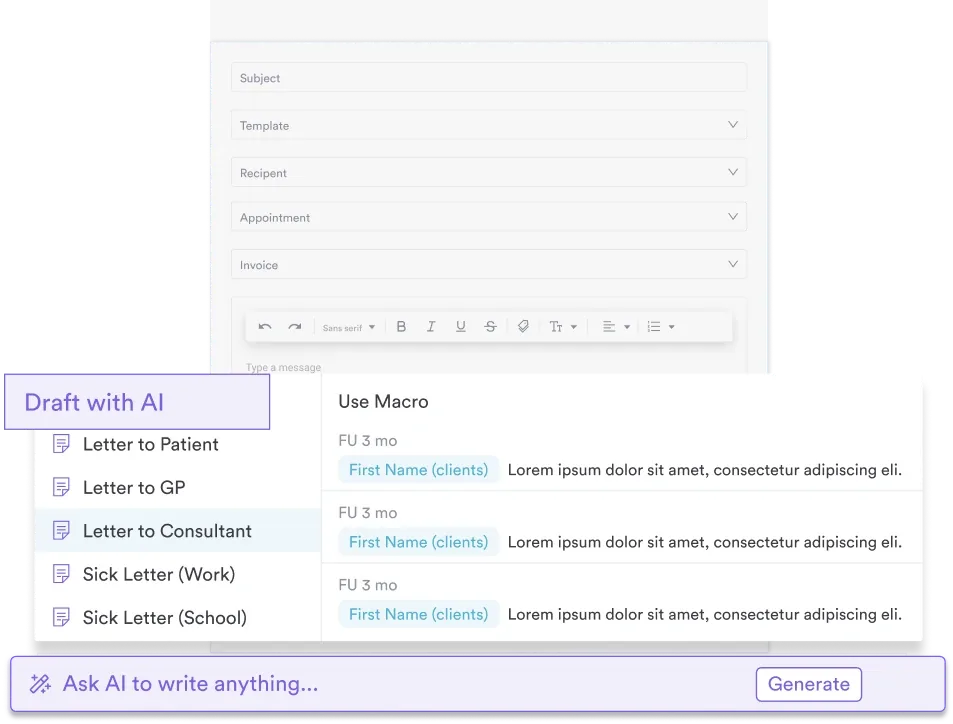
Practices using AI-assisted clinical documentation can capture the detail needed to support laterality-specific codes at the point of care, reducing the need for retrospective coder queries. For a broader view of compliance documentation workflows.
Patients confirmed with labyrinthine dysfunction are often referred for vestibular rehabilitation delivered by physical therapy practices, so complete diagnostic documentation supports a clean referral. The same documentation habits that keep diagnostic coding accurate also support broader compliance goals.
Several codes sit near H83.19 in the ICD-10-CM hierarchy or describe clinically adjacent conditions. Coders evaluating inner ear pathology should be familiar with this reference set:
Perilymphatic fistula is sometimes used interchangeably with labyrinthine fistula in clinical settings, but they are not always synonymous. A perilymphatic fistula specifically describes a tear or defect at the oval or round window membrane causing perilymph leakage. When documentation confirms this specific pathology, coders should verify whether the record supports H83.19 or a more specific descriptor.
The WHO ICD-10 browser provides the international classification context for H83.x conditions, useful for practices managing internationally referred patients. For a broader view of inner ear disorder coding.
When documentation mentions perilymphatic fistula specifically, confirm whether the clinical note identifies the window (oval or round) and the affected ear. That level of detail supports the most precise H83.1x code and reduces payer queries at adjudication.
Choosing between H83.11, H83.12, H83.13, and ICD-10 code H83.19 comes down to a single question: does the clinical record identify which ear or ears are affected? When it does, the laterality-specific code is mandatory. When it genuinely does not, H83.19 is appropriate and billable for FY2026.
Pabau’s compliance management tools and structured documentation workflows help ENT and audiology practices capture the laterality detail that supports cleaner coding at every encounter. To see how Pabau reduces coding-related claim errors across specialties, book a demo with the team.

Coding visual loss without laterality or severity documented? ICD-10 code H54.7 guide covers when a record doesn’t document laterality or WHO-graded visual acuity.
Need another example of documentation specificity in ICD-10-CM? M31.2 shows how an incomplete clinical note can lead to an imprecise code selection, much like the laterality issue with H83.19.
Want to streamline clinical note capture at the point of care? Pabau Scribe, our AI scribe, helps clinicians document with the detail needed to support specific ICD-10 code selection without adding time to the consultation.
ICD-10 code H83.19 is a billable diagnosis code used to report labyrinthine fistula of the unspecified ear. It applies when an abnormal opening in the inner ear labyrinth is confirmed or strongly suspected, but the clinical record does not identify whether the right or left ear is affected. It is valid for FY2026 (October 1, 2025 through September 30, 2026).
Yes. H83.19 is a billable, specific ICD-10-CM code valid for reimbursement. Individual payer coverage varies. Medicare and commercial plans may apply LCDs that restrict payment for labyrinthine fistula diagnoses, so confirming payer-specific policies before submission is advisable.
All four codes describe labyrinthine fistula. H83.11 specifies the right ear, H83.12 specifies the left ear, H83.13 specifies bilateral involvement, and H83.19 applies when the affected ear is undetermined or not documented. ICD-10-CM guidelines require using the most specific code supported by documentation, so H83.11, H83.12, or H83.13 should be selected whenever the clinical record identifies the side or sides involved.
Perilymphatic fistula is a specific type of labyrinthine fistula involving a tear at the oval or round window. It is typically coded within the H83.1x subcategory based on laterality (H83.11, H83.12, H83.13, or H83.19). Coders should confirm with the treating clinician whether the documentation supports perilymphatic fistula specifically, as this affects code selection and clinical documentation requirements.
H83.19 is appropriate only when documentation genuinely does not specify which ear is affected, for example when the initial assessment doesn’t identify the affected side or the clinical note omits laterality entirely. Using H83.19 when the clinical note identifies a specific side, or when both ears are confirmed affected, is a coding deficiency under ICD-10-CM laterality guidelines and may trigger claim denials or audit findings.
The most common presenting symptoms include fluctuating sensorineural hearing loss, episodic vertigo (often triggered by Valsalva maneuver or exertion), tinnitus, and aural fullness. Disequilibrium aggravated by physical activity is another indicator. Diagnosis is clinical – audiometry and vestibular testing support the assessment, but no single test confirms the condition definitively.