ICD-10 Code S42.444P: Medial epicondyle fracture, right humerus
ICD-10 Code S42.444P: full descriptor and code validity ICD-10 Code S42.444P car...

Last Updated: Oct 13, 2026
Billable Code Specific Code
H67.9 is the billable ICD-10-CM code for otitis media in diseases classified elsewhere, unspecified ear.
ICD-10-CM codes have been required for reimbursement claims with dates of service on or after October 1, 2015, under the HIPAA mandate administered by CMS. H67.9 falls under Chapter 8: Diseases of the ear and mastoid process (H60-H95), within the subblock H65-H75 covering diseases of the middle ear and mastoid.
Let Pabau's smart automation suggest the right codes, reduce claim denials, and keep your practice compliant—effortlessly.
Automate repetitive tasks and focus on what matters most—your patients.
Reduce coding errors and ensure compliance with the latest regulations.
Clean claims, fewer denials, and faster reimbursements.
Powerful insights and reporting to help your practice thrive.
HIPAA compliant SOC 2 certified GDPR-compliant Trusted by 4,000+ clinics worldwide

ICD-10 code H67.9 is a billable diagnosis code for otitis media in diseases classified elsewhere, unspecified ear, valid for FY2026 claims.
H67.9 is a manifestation code: coders must sequence the underlying etiology code first, per ICD-10-CM Official Guidelines Section I.A.13.
When documentation specifies laterality, use H67.1 (right ear), H67.2 (left ear), or H67.3 (bilateral) instead of H67.9.
Pabau’s claims management software supports accurate dual-coding workflows, reducing claim denials tied to incorrect sequencing of manifestation codes.
ICD-10 code H67.9 describes otitis media occurring as a manifestation of a disease that is classified elsewhere in the ICD-10-CM tabular list. The “in diseases classified elsewhere” designation signals that the middle ear inflammation is secondary to an underlying systemic or infectious condition, not a primary otological diagnosis. Common underlying diseases triggering H67.x codes include measles, influenza, mumps, and tuberculosis.
The “unspecified ear” designation in ICD-10 code H67.9 reflects the absence of laterality documentation. When the physician’s notes do not specify whether the right ear, left ear, or both ears are affected, H67.9 is the correct selection.
H67.9 sits within the H67 category, which the WHO’s ICD-10 classification defines as conditions where otitis media is a manifestation of a separately classified disease. This structure is distinct from H65 (nonsuppurative otitis media) and H66 (suppurative and unspecified otitis media), which are assigned when ear disease is the primary condition.
Per the CDC/NCHS ICD-10-CM lookup tool, H67.9 carries an instructional note requiring coders to also report any associated perforated tympanic membrane using an additional code from category H72. This is not optional – it reflects the tabular instruction embedded in the code’s official description, and omitting it when applicable constitutes incomplete coding.
H67.9 is a billable ICD-10-CM code. Unlike the parent category code H67, which is non-billable (used for organizational grouping only), H67.9 carries a valid seven-character structure and is accepted by payers for claim submission. Multiple authoritative references including AAPC’s Codify ICD-10-CM lookup confirm its billability status for FY2026.
The full code breakdown is as follows:
Coders working with ICD-10-CM coding conventions for developmental conditions will recognise this etiology-manifestation structure from other Chapter pairings. The same sequencing logic applies: the underlying cause code goes first, the manifestation code follows.
The single most common billing error with H67.9 is sequencing it alone. The ICD-10-CM Official Guidelines for Coding and Reporting, Section I.A.13, prohibit this. H67.9 must always appear after the etiology code that identifies the underlying disease causing the otitis media.
This two-code sequence works as follows:
Practices familiar with etiology-first sequencing for neurological diagnoses apply the same convention here. The manifestation code (H67.9) cannot be submitted without the etiology code because payers use both codes together to validate clinical plausibility.
Common underlying conditions that trigger H67.x codes include:
When the underlying disease has its own combination code that already includes otitis media (such as B05.3), coders should use that combination code rather than creating a dual-code pair. Verify the tabular list and alphabetic index before defaulting to the two-code sequence.
Inside software built for GPs, eye and ear diagnoses route to the right specialist with history attached.
ICD-10-CM requires laterality specificity wherever documentation supports it. H67.9 is the appropriate choice only when the provider’s documentation does not specify which ear is affected. The general rule from ICD-10-CM coding conventions (Section I.B) is that unspecified codes are acceptable when clinical information is not available to support a more specific code – but coders should query the provider before defaulting to “unspecified” if documentation is ambiguous rather than genuinely absent.
The laterality-specific codes within the H67 category are:
Practices managing ICD-10-CM unspecified codes in similar documentation gaps will recognise this approach. The unspecified code is defensible when documentation is genuinely silent on laterality, but it should not be used as a shortcut when the information is present in the chart.
The same laterality rule runs through the rest of the ear and mastoid chapter. Vertiginous syndromes caused by a separately coded disease take ICD-10 code H82.3 when both ears are affected.
The ICD List diagnostic code reference also notes that H66.9 (Otitis media, unspecified) is itself non-billable, requiring additional specificity to H66.90, H66.91, H66.92, or H66.93. This is a useful distinction: H67.9 IS billable at the unspecified ear level, whereas H66.9 is NOT. Confusing the two is a common coder error when conditions are underdocumented.
Before assigning ICD-10 code H67.9, review the provider’s examination notes for any mention of right ear, left ear, or bilateral findings. Otoscopy documentation almost always specifies laterality. A provider query takes two minutes; an appeal takes weeks.
The most consequential choice a coder makes with otitis media cases is whether to use H67.x or H66.x. The clinical question is straightforward: is the otitis media a manifestation of another disease, or is it the primary diagnosis? A urology coder weighing N22 against the primary N20.x stone codes answers this identical question.
Assigning H67.9 when the provider has not documented an underlying disease is a coding error. Without the etiology code preceding it, H67.9 creates a sequencing violation that payers can detect during automated claim edits. Practices with strong ENT and skin clinic workflows built around structured documentation capture these distinctions at the point of care, before billing.
Payers auditing claims with H67.9 will look for specific elements in the encounter documentation. Missing any of these creates denial risk.
Meeting these documentation standards is also central to HIPAA-mandated diagnosis coding requirements. HIPAA-covered entities are required to use ICD-10-CM codes that accurately reflect the clinical picture documented in the medical record. Codes that are not supported by documentation expose the practice to audit risk regardless of the code’s technical validity.

Pabau’s claims management software helps ENT and primary care practices structure clinical documentation so that etiology and manifestation codes are captured correctly at the point of care, not discovered at billing.

ICD-10 code H67.9 sits within a broader coding ecosystem. Coders working in ENT billing need to know which adjacent codes interact with H67.9 and when each applies.
Coders should also verify the current MS-DRG v43.0 grouping assignment directly in the CMS ICD-10-CM coding and billing resources, as DRG assignments can shift between fiscal years and the grouping affects inpatient reimbursement calculations. For outpatient claims, the DRG grouping does not apply, but the code sequencing rules remain binding in all settings.
When measles is the underlying condition, check B05.3 before building a two-code pair with an etiology code plus H67.9. ICD-10-CM combination codes take precedence. Using a combination code when one exists is the correct approach; building a two-code pair when a combination code is available is an overcoding error.
No two payers apply identical coverage rules, and practices should verify requirements with each payer individually. That said, several documentation practices consistently improve claim acceptance across payer types when H67.9 is involved.
Diagnosis codes reach the payer inside the claim’s 837 file, the standard electronic format for claims, so correct sequencing matters there too.
Practices using claims management software can build claim edits that flag H67.9 submissions lacking an etiology code in position one. This type of front-end validation catches sequencing errors before the claim leaves the practice, rather than after a payer denial arrives. US practices comparing vendors for this kind of front-end validation can start with a guide to the best medical billing software in the US.
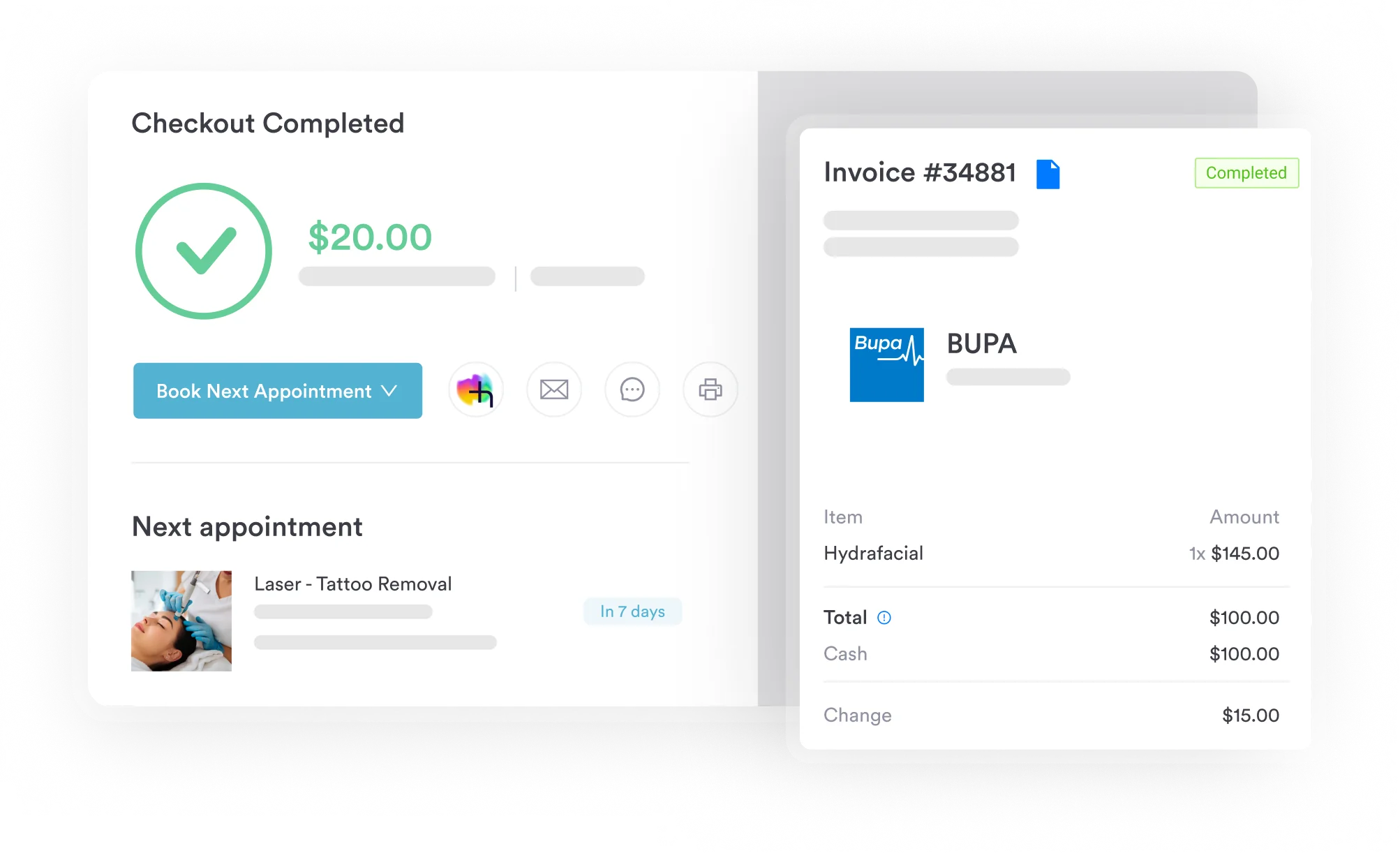
Structured structured patient records that capture laterality, underlying disease, and tympanic membrane status as discrete fields provide coders with clean data at billing time. When the clinical documentation is complete, the coding decision for ICD-10 code H67.9 vs. a laterality-specific code becomes straightforward.
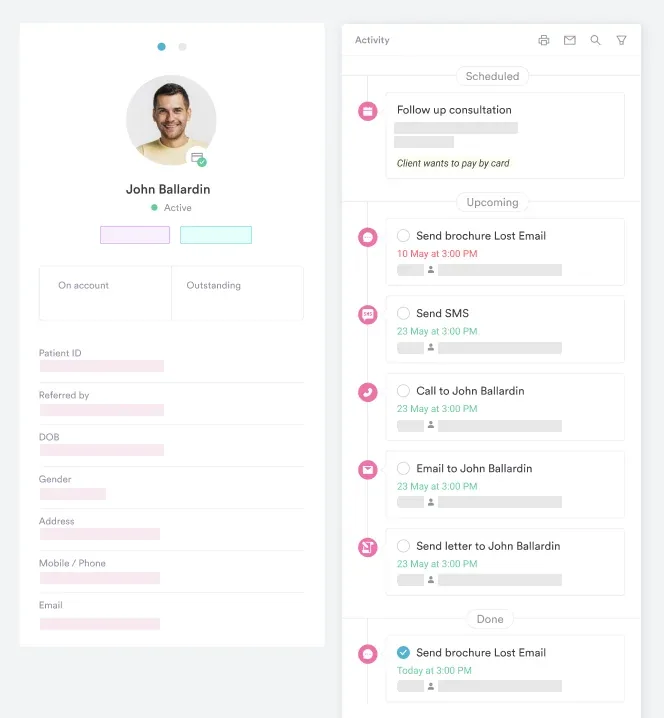
The gap between clinical documentation and accurate billing for ICD-10 code H67.9 almost always traces back to incomplete note templates. When providers use structured templates that require laterality, tympanic membrane assessment, and identification of any underlying systemic disease, coders receive complete information rather than having to query or default to unspecified codes.
Practices that use digital intake forms can capture relevant patient history, including recent systemic infections like measles or influenza, before the clinical encounter begins. This pre-visit data surfaces clinically important context that might otherwise be absent from the physician’s assessment note.
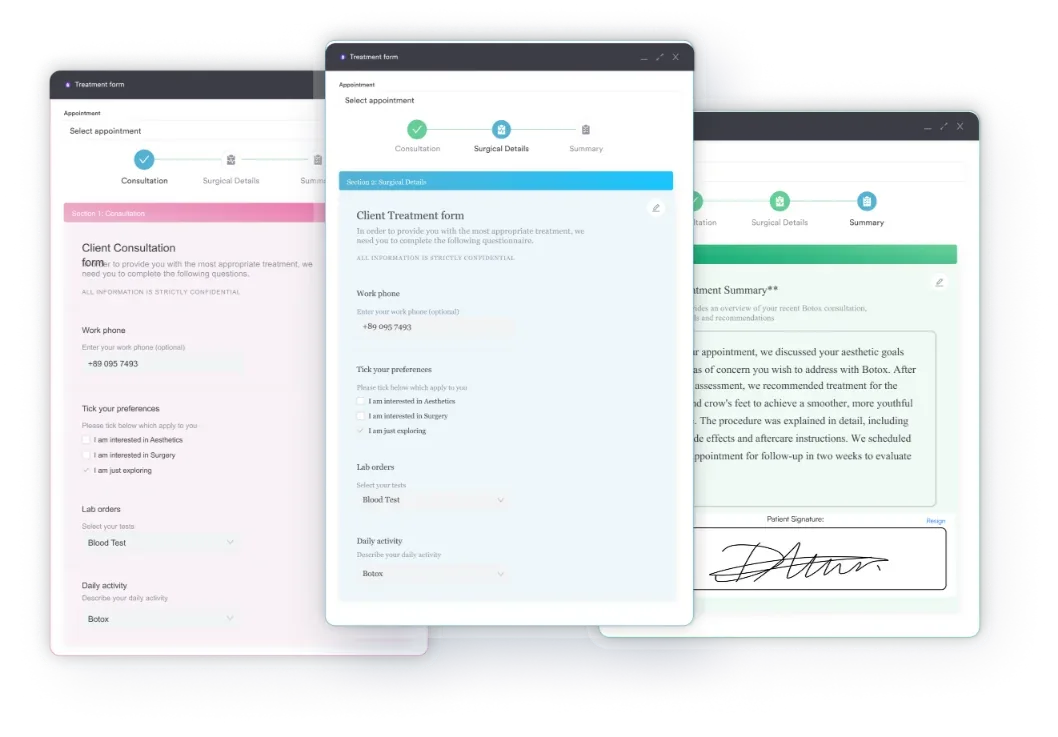
For an H67.9 encounter, the note needs to capture the systemic etiology, ear involvement (including laterality), and tympanic membrane status. A structured note template or AI documentation assistant that prompts for these fields reduces the chance of missing the information that determines which code in the H67 category is appropriate.
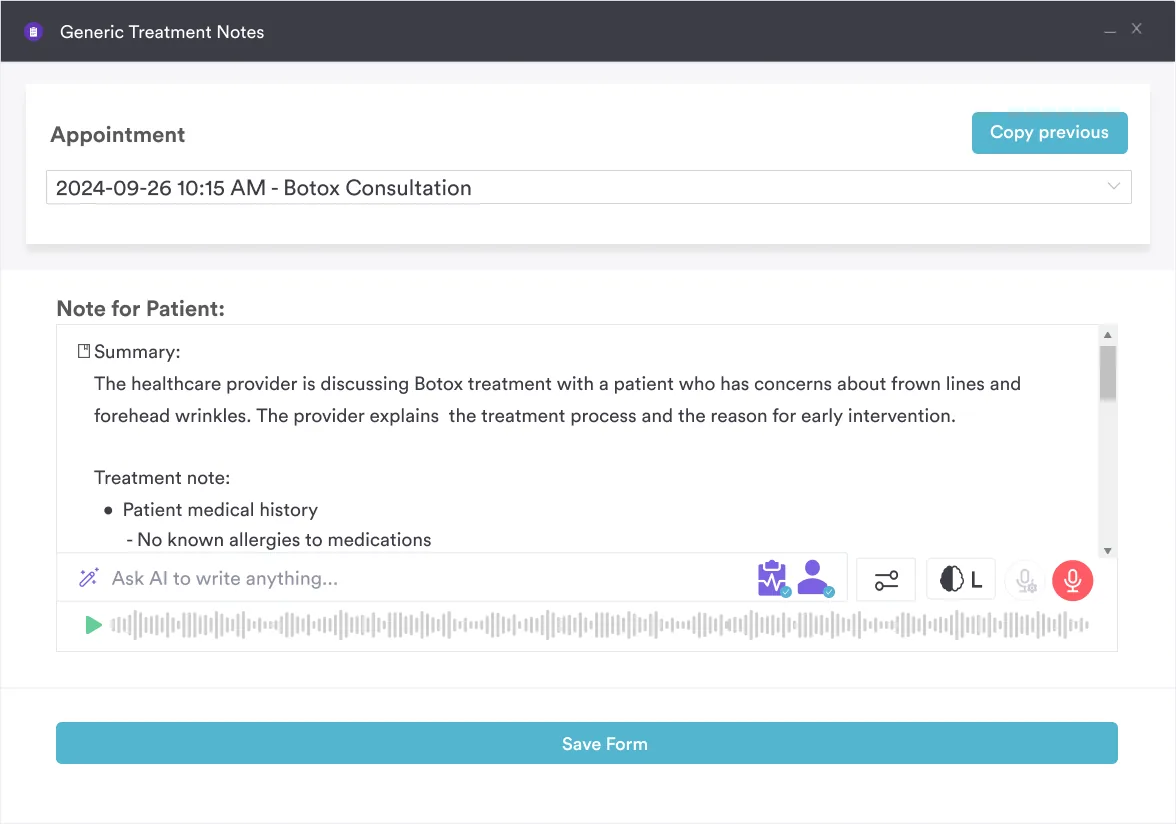
Practices that take clinical documentation for diagnosis coding seriously build these structured workflows into every ENT encounter. The payoff is fewer coder queries, fewer payer denials, and cleaner audit trails.
ICD-10 code H67.9 is a billable manifestation code, but it is never the whole picture. Every claim that includes it must begin with the underlying etiology code that explains why the otitis media occurred. When documentation supports laterality, the specificity codes (H67.1, H67.2, H67.3) replace it. When tympanic membrane perforation is present, an H72.- code is required alongside it.
Practices that invest in structured documentation and front-end claim validation prevent the sequencing errors that generate denials. Pabau’s claims management software supports ENT and primary care workflows with built-in coding checks that catch these issues before submission. To see how Pabau supports accurate ICD-10-CM coding in practice, book a demo.

Coding a retinal pigment epithelium dystrophy? ICD-10 code H35.54 guide covers vitelliform retinal dystrophy, including Best disease, and its billable status.
Coding a retinal condition without a specific code? ICD-10 code H35.89 guide covers why payers scrutinize other specified codes more closely.
Coding a patient’s situational anxiety? ICD-10 code for situational anxiety explains which code to select since there is no single dedicated code.
ICD-10 code H67.9 is a billable diagnosis code for otitis media in diseases classified elsewhere, unspecified ear. It is a manifestation code used when middle ear inflammation occurs as a result of an underlying systemic or infectious disease, and laterality (right, left, or bilateral) is not documented. It must always be sequenced after the etiology code for the underlying condition.
No. H67.9 is a manifestation code and must be sequenced as an additional code after the underlying etiology code. Submitting H67.9 alone in the first diagnosis position violates ICD-10-CM etiology/manifestation conventions and will result in a claim denial or edit.
H67.9 is used when otitis media is a manifestation of a separately classified underlying disease (such as measles or influenza), while H66.90 is used when otitis media is the primary condition with no identified systemic cause. H67.9 requires a preceding etiology code; H66.90 does not.
A provider query is appropriate when the clinical notes contain otoscopy findings that reference a specific ear but the assessment does not specify laterality. Coders should not default to the unspecified code when the specificity information is likely present but missing from the final assessment. Query before defaulting; unspecified codes should reflect genuinely absent information, not documentation gaps.
Yes, in two ways. First, the underlying etiology code is always required and must be sequenced before H67.9. Second, if tympanic membrane perforation is documented, a code from category H72 must be added. Both are mandatory per the ICD-10-CM tabular instructional notes for the H67 category.