ICD-10 Code S42.444P: Medial epicondyle fracture, right humerus
ICD-10 Code S42.444P: full descriptor and code validity ICD-10 Code S42.444P car...

Last Updated: Oct 13, 2026
Billable Code Specific Code
G64 is the billable ICD-10-CM code for other disorders of peripheral nervous system.
Reimbursement claims with a date of service on or after October 1, 2015 require ICD-10-CM codes, per CMS ICD-10 coding requirements. For neurologists, physiatrists, and physical therapists coding peripheral nerve conditions, understanding where G64 fits within the G60-G65 hierarchy is essential before submitting any claim.
Let Pabau's smart automation suggest the right codes, reduce claim denials, and keep your practice compliant—effortlessly.
Automate repetitive tasks and focus on what matters most—your patients.
Reduce coding errors and ensure compliance with the latest regulations.
Clean claims, fewer denials, and faster reimbursements.
Powerful insights and reporting to help your practice thrive.
HIPAA compliant SOC 2 certified GDPR-compliant Trusted by 4,000+ clinics worldwide

ICD-10 code G64 is a billable diagnosis code for other disorders of the peripheral nervous system not classified elsewhere in G60-G63.
G64 maps to MS-DRG 073 (cranial and peripheral nerve disorders with MCC) and MS-DRG 074 (without MCC) under MS-DRG v43.0.
Coders must rule out all more specific PNS codes (G60-G63) before assigning G64, which applies only to residual or unspecified peripheral nerve disorders.
Mononeuropathy (G56-G57) is a separate code family from G64, and G64 has no decimal subdivisions — there is no G64.9.
Pabau’s claims management software supports accurate ICD-10 code submission and reduces claim errors for neurology and physical therapy practices.
ICD-10 code G64 is defined as “Other disorders of peripheral nervous system.” It sits within Chapter 6 of ICD-10-CM (Diseases of the Nervous System, G00-G99), under the block G60-G65: Polyneuropathies and other disorders of the peripheral nervous system.
The official Applicable To note in the ICD-10-CM tabular list classifies G64 as applicable to “Disorder of peripheral nervous system NOS,” where NOS stands for “not otherwise specified.” This tells coders precisely when to use it: Only when the clinical documentation describes a peripheral nervous system disorder but does not provide enough specificity to assign a code from G60, G61, G62, or G63.
Per the CDC/NCHS ICD-10-CM official code lookup, G64 has no further subdivisions. It is a terminal code, meaning it is itself the most specific code available within its classification for the conditions it covers.
Clinically, peripheral nervous system disorders in this category may present with pain, numbness, tingling, swelling, or muscle weakness in various parts of the body. Diminished or absent reflexes, balance and gait difficulty, and autonomic symptoms such as an abnormal heart rate or altered sweating can also appear, depending on which peripheral nerve fibers are affected. These symptoms reflect damage or dysfunction in nerves outside the brain and spinal cord. When the underlying etiology is unclear, unconfirmed, or genuinely does not meet criteria for a more specific G60-G63 code, G64 is the appropriate assignment. Practitioners documenting these cases in a clinical record management system should ensure the note explicitly states why a more specific diagnosis could not be established.
The ICD-10-CM index includes “acquired demyelinating disorder of peripheral nerve” as an approximate synonym for G64. This reflects conditions where the myelin sheath surrounding peripheral nerves has been damaged through non-hereditary, non-inflammatory mechanisms that nonetheless fall outside the more specific G61 or G62 categories. Coders also search for this same code as peripheral demyelinating neuropathy ICD-10 when the documentation describes myelin damage without a clear cause; it maps back to G64 under the same NOS logic.
G64 is a valid, billable ICD-10-CM diagnosis code for the 2026 fiscal year. It can be submitted on insurance claims to indicate a patient diagnosis, confirmed across major code reference platforms including AAPC Codify and ICD List.
The code is active and has been billable since the ICD-10-CM transition on October 1, 2015. No revisions or exclusions have been applied to G64 in recent annual updates, confirming its continued validity for FY2026 claims. For a quick reference lookup, the AAPC Codify ICD-10-CM lookup provides searchable access to the full G60-G65 block with clinical notes and crosswalk data.
Hospital claims involving G64 as the principal diagnosis group into two MS-DRGs under MS-DRG v43.0, determined by the presence or absence of a Major Comorbidity or Complication (MCC).
The MCC distinction matters significantly for hospital reimbursement. Facilities billing under MS-DRG 073 receive higher base payment rates than those under 074 because the presence of a major comorbidity or complication increases expected resource consumption. Billing staff must ensure that any MCC condition documented in the clinical record is captured as a secondary diagnosis code on the claim. Failing to code an MCC when one is present results in assignment to MS-DRG 074 and lower reimbursement.
For outpatient and physician billing, MS-DRG groupings are not relevant. G64 is submitted as the diagnosis code supporting medical necessity for the procedure or evaluation and management service rendered. Physical therapy and neurology practices using physical therapy EMR software should map G64 to each applicable service code to avoid medical necessity denials.
Before finalizing G64 on a hospital claim, audit the record for any documented comorbid conditions that qualify as MCCs under the MS-DRG grouper. Common MCCs include acute respiratory failure, sepsis, or renal failure. Capturing a single valid MCC moves the claim from MS-DRG 074 to 073, which can mean a substantially higher facility payment.
G64 is a code of last resort within the G60-G65 block. Before assigning it, coders must systematically review each more specific code in the range. The WHO ICD-10 browser provides the authoritative hierarchical structure for this classification.
The G60-G65 block contains six code categories, each covering a defined subtype of peripheral nervous system disorder. G64 sits at the end as the catch-all for conditions not captured elsewhere.
For coders working across neurological specialties, related ICD-10 codes outside the G60-G65 block may also be relevant depending on the clinical picture. When neuropathy has a documented diabetic cause, the diabetic neuropathy ICD-10 codes (the E11.40-series diabetes combination codes) are the most common specific alternative to G64, not G64 itself. See ICD-10 code E11.40 for type 2 diabetes with neuropathy.
One distinction trips up coders more than any single G60-G65 code: Mononeuropathy, dysfunction limited to a single peripheral nerve, isn’t part of this block at all. Mononeuropathy ICD-10 codes live in a separate range: G56 for the upper limb and G57 for the lower limb. A diagnosis such as carpal tunnel syndrome or peroneal nerve palsy should never map to G64 or any G60-G65 code.
G64 and its neighbors cover polyneuropathy ICD-10 codes, where multiple peripheral nerves are affected together, not a single nerve. Within that range, G62.9 (polyneuropathy, unspecified) is the code most coders reach for before ever considering G64. Moving to G64 only makes sense once G62.9’s own criteria, an unspecified polyneuropathy, don’t fit either.

Pabau helps neurology and physical therapy practices submit ICD-10 codes correctly the first time. From digital documentation to automated claim workflows, Pabau keeps your billing accurate and your reimbursement on track.

ICD-10-CM G64 converts approximately to ICD-9-CM code 357.89 (Other inflammatory and toxic neuropathy). This conversion is approximate, not exact, because the two code systems categorize peripheral nervous system disorders differently.
The ICD-9-CM code 357.89 was part of the 357.x category covering “Inflammatory and toxic neuropathy,” which mapped broadly to conditions involving nerve inflammation and toxic damage. ICD-10-CM refined this taxonomy, separating hereditary conditions (G60), inflammatory polyneuropathies (G61), toxic/drug-induced neuropathies (G62), and manifestations of other diseases (G63) into distinct categories. G64 captures whatever remains.
When reviewing historical claims or performing retrospective audits, practices must account for this approximate nature. A claim originally coded as 357.89 may not map cleanly to G64 if a more specific G60-G63 code now applies based on the documented clinical findings. Coders handling legacy data or crosswalk work should use the PGM ICD-9 to ICD-10 crosswalk tool as a reference point while verifying against the clinical documentation. For practices transitioning older records into a modern practice management platform, recoding to the most specific ICD-10-CM code remains the clinical and compliance standard.
ICD-10 G64 is the peripheral nervous system equivalent of an NOS code: Appropriate only when specificity is genuinely unavailable, not when the documentation is incomplete. Submitting G64 without adequate supporting documentation is one of the most common reasons payers audit or deny claims in this category.
Solid documentation for G64 should include:
Practices can streamline this documentation process using digital intake forms that capture peripheral nerve symptom patterns at intake. These tools also support HIPAA compliance for medical offices by maintaining complete and auditable clinical records.

G64 is coded as a primary or secondary diagnosis depending on the clinical context. For outpatient encounters, it supports medical necessity for neurological evaluations, nerve conduction studies (NCS), EMG, and physical therapy services. For inpatient hospital claims, it functions as the principal diagnosis when peripheral nerve disorder drives the admission. Patients paying up front and claiming later need a superbill, which itemizes the service, the code and the charge.
Coders searching for the ICD-10 code for a nerve conduction study should note there isn’t a separate diagnosis code tied to the procedure itself. G64 (or whichever G60-G65 code the documentation supports) is reported as the diagnosis justifying the NCS/EMG procedure codes, not as a code that describes the test.
Several payer considerations apply when G64 appears on claims:
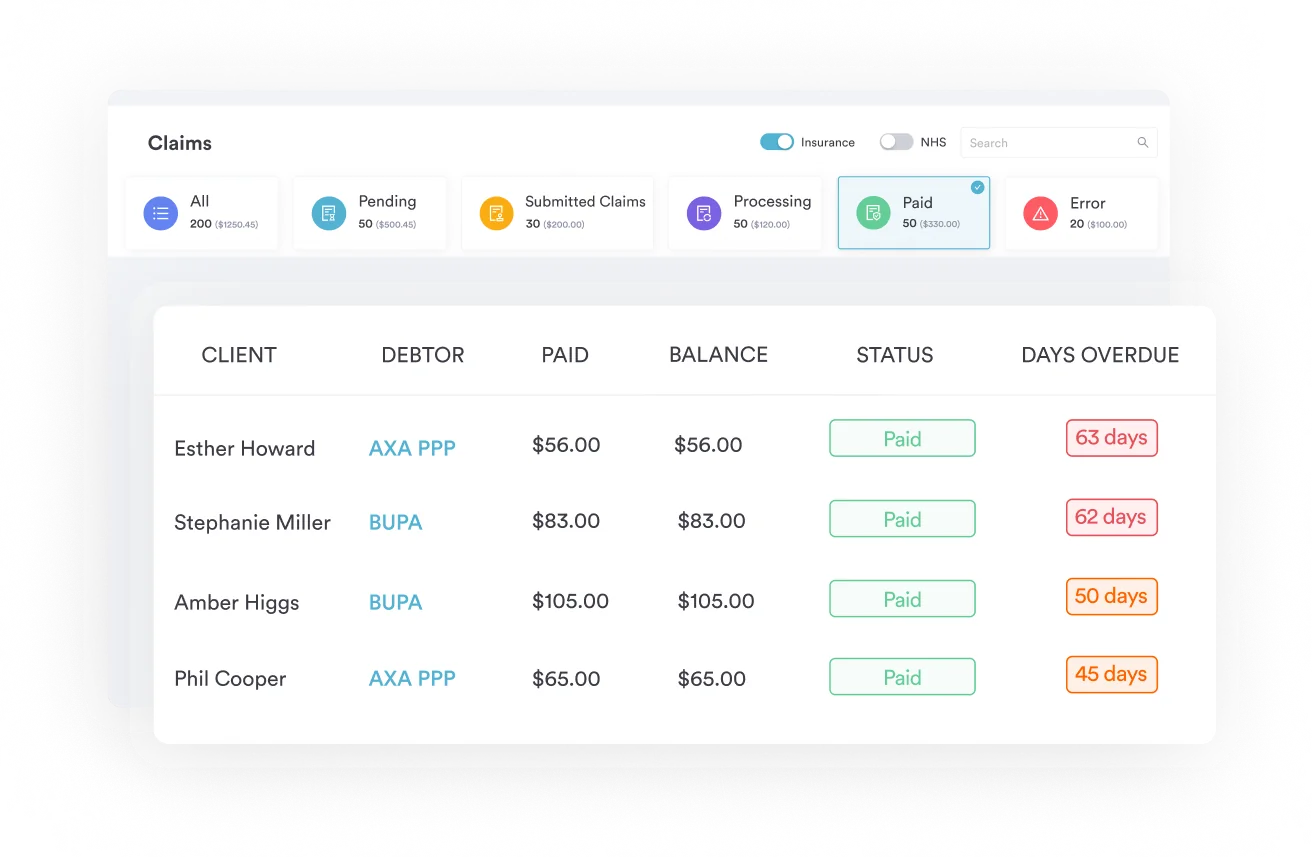
Practices managing neurology or rehabilitation billing benefit from claims management software that flags potential coding mismatches before submission. Pairing this with automated billing workflows reduces the manual effort of reviewing each G64 claim individually and catches MCC-related grouping issues before they cause a downgrade from MS-DRG 073 to 074.
Review payer LCDs before submitting G64-supported NCS/EMG claims. Medicare’s local coverage determinations for nerve conduction studies often specify diagnosis code requirements for coverage. G64 may satisfy LCD criteria for some conditions, but confirming against the applicable MAC’s LCD before submission prevents automatic denials.
Peripheral nerve disorders that don’t fit a more specific G60-G63 classification, and aren’t a mononeuropathy coded under G56-G57, have exactly one ICD-10-CM code to work with: G64. The G64 ICD-10 code is billable, valid through FY2026, and maps to MS-DRG 073 or 074 depending on comorbidities. Using it correctly requires documented exclusion of hereditary, inflammatory, toxic, and secondary neuropathies, plus supporting NCS/EMG findings where available.
Pabau’s specialty EMR and billing tools support the documentation specificity that G64 claims require. Structured clinical notes and digital intake forms mean coders get the information they need the first time, not after a denial. To see how Pabau handles diagnostic code documentation end to end, book a demo with the team.

List Item #1
List Item #2
ICD-10 code G64 is a billable ICD-10-CM diagnosis code for “Other disorders of peripheral nervous system,” used when peripheral nerve dysfunction is documented but does not meet criteria for the more specific codes G60 through G63. It applies to conditions classified as disorder of peripheral nervous system NOS (not otherwise specified) and to acquired demyelinating disorders of peripheral nerve that fall outside other defined categories.
Yes, G64 is a valid and billable ICD-10-CM diagnosis code for FY2026. It can be submitted on insurance claims for outpatient, inpatient, and professional fee encounters. Claims with dates of service on or after October 1, 2015 must use ICD-10-CM codes per CMS requirements, and G64 has remained active without revision since the ICD-10 transition.
G64 maps to MS-DRG 073 (Cranial and peripheral nerve disorders with MCC) and MS-DRG 074 (Cranial and peripheral nerve disorders without MCC) under MS-DRG v43.0. The grouping depends on whether a Major Comorbidity or Complication (MCC) is documented and coded as a secondary diagnosis. MS-DRG 073 carries higher reimbursement than MS-DRG 074.
ICD-9-CM code 357.89 (Other inflammatory and toxic neuropathy) is the approximate ICD-9-CM equivalent of G64. This conversion is approximate, not exact. The two code systems classify peripheral neuropathies differently, so coders should verify clinical documentation against specific ICD-10-CM criteria rather than relying solely on the crosswalk.
G64 applies when the peripheral nervous system disorder cannot be classified under any specific G60-G63 code. G62 (Other and unspecified polyneuropathies) is the correct code when the disorder is a polyneuropathy with a defined cause such as drug-induced (G62.0), alcoholic (G62.1), or toxic (G62.2) etiology, or genuinely unspecified (G62.9). Choose G64 only when the documentation describes a peripheral nerve disorder that genuinely does not meet the criteria for any G60-G63 category and no more specific code applies.
G64 applies whenever a peripheral nerve disease doesn’t fit a more specific G60-G63 code, but it isn’t the only peripheral nervous system disorder ICD-10 code. PNS ICD-10 coding also includes G60 (hereditary and idiopathic neuropathy), G61 (inflammatory polyneuropathy), G62 (other and unspecified polyneuropathies), and G63 (polyneuropathy in diseases classified elsewhere). G64 is reserved for whatever’s left over once those are ruled out.
No. Unlike many ICD-10-CM categories, G64 has no decimal subdivisions, so there’s no G64.9, G64.0, or any other extension. G64 itself is the complete, billable code, confirmed by the CDC/NCHS ICD-10-CM tabular list. If a claim form or EHR template prompts for a fourth character, the correct entry is simply G64.
No. Mononeuropathy, a disorder limited to a single peripheral nerve, is classified under G56 (upper limb mononeuropathies, including carpal tunnel syndrome) and G57 (lower limb mononeuropathies), not G60-G65. G64 and the rest of the G60-G65 block cover polyneuropathy, where multiple peripheral nerves are affected together.
G63 is the code immediately before G64 in the G60-G65 block. It’s used when polyneuropathy is a manifestation of another disease that’s already coded elsewhere, most commonly diabetic polyneuropathy, coded to the diabetic neuropathy ICD-10 category (e.g., E11.40). G63 requires the underlying disease to be coded first, with G63 sequenced as an additional code. G64 doesn’t carry that two-code requirement, since it applies to disorders that aren’t tied to another classified condition.