ICD-10 code S61.201A: Open wound of left index finger without nail damage
ICD-10 code S61.201A covers a left index finger wound of unstated type ICD-10 co...

Last Updated: Oct 16, 2026
Billable Code Specific Code
E41 is the billable ICD-10-CM code for nutritional marasmus.
Let Pabau's smart automation suggest the right codes, reduce claim denials, and keep your practice compliant—effortlessly.
Automate repetitive tasks and focus on what matters most—your patients.
Reduce coding errors and ensure compliance with the latest regulations.
Clean claims, fewer denials, and faster reimbursements.
Powerful insights and reporting to help your practice thrive.
HIPAA compliant SOC 2 certified GDPR-compliant Trusted by 4,000+ clinics worldwide

ICD-10 code E41 (Nutritional marasmus) is a billable ICD-10-CM diagnosis code for severe protein-calorie malnutrition characterized by extreme wasting without edema.
E41 carries an Applicable To note for ‘Severe malnutrition with marasmus’ and excludes marasmic kwashiorkor (E42), making accurate physician documentation essential before coding.
The 2017 Coding Clinic guidance on emaciation was superseded effective October 1, 2020: The ICD-10-CM Index now maps ’emaciation due to malnutrition’ to E43, not E41 – a common coding error that affects DRG grouping and reimbursement.
Practice management software like Pabau helps nutrition-focused and weight loss practices capture accurate E41 documentation through claims management tools and digital intake forms.
ICD-10 code E41 designates nutritional marasmus, a severe form of protein-calorie malnutrition (PCM) in which the body has been chronically deprived of adequate caloric intake. The result is extreme emaciation, muscle wasting, and loss of subcutaneous fat – without the protein-deficiency edema seen in kwashiorkor.
According to the WHO ICD-10 browser, E41 sits within the E40-E46 malnutrition chapter of the Endocrine, Nutritional, and Metabolic Diseases section (E00-E89).
E41 is a fully billable ICD-10-CM diagnosis code, confirmed across the CDC/NCHS ICD-10-CM web tool and the CMS tabular list. It is sufficient as a principal diagnosis for inpatient admission. Coders using AAPC Codify will find it listed with its full applicable-to note and excludes annotations intact.
Billable status depends on specificity, not code length. Injury and external cause codes such as ICD-10 code V19.19XA need seven characters before a payer accepts them, while E41 is complete at three.
The ICD-10-CM tabular list includes an Applicable To note for E41: Severe malnutrition with marasmus. This is a coding instruction, not a separate diagnosis. It means the code is appropriate whenever the physician documents severe malnutrition in conjunction with marasmus-type presentation (extreme wasting, absence of edema, severely reduced body weight).
The index also maps several synonymous terms to E41. Coders relying on ICD List or similar reference tools will see:
The emaciation mapping trips up more coders than any other detail on this code. AHA Coding Clinic 3Q 2017 (pages 24-26) restricted E41 to documented marasmus and directed coders to default plain emaciation to R64 (Cachexia). Checking insurance eligibility before the visit catches terminated coverage while the appointment can still be rescheduled.
Effective October 1, 2020, CMS updated the ICD-10-CM Alphabetic Index again: “Emaciation” alone still indexes to R64, but “Emaciation due to malnutrition” now indexes to E43 (Unspecified severe protein-calorie malnutrition) – not E41 or R64.
In practice: Never assign E41 on the strength of the word “emaciation” alone. E41 requires the note to document marasmus specifically (or “severe malnutrition with marasmus”). Coders working from older reference tools or a memorized 2017 Coding Clinic rule should double-check their index reflects the 2020 update before assigning E41 or E43.
Accurate claims management software workflows depend on having current code assignments embedded in documentation templates.

E41 carries a Type 1 Excludes note for marasmic kwashiorkor (E42). A Type 1 Excludes note means “not coded here” – E41 and E42 cannot be assigned simultaneously for the same condition in the same episode of care.
Clinically, the distinction is clear. Marasmus (E41) presents with severe caloric restriction and wasting but no edema. Marasmic kwashiorkor (E42) presents when a patient has both the wasting of marasmus and the protein-deficiency edema of kwashiorkor occurring together. When a physician documents both features, E42 is the correct code – not E41 with an additional E40.
Supporting good patient compliance documentation at intake is one way practices reduce this type of coding ambiguity. When the clinical picture is captured clearly from the first encounter, the documentation supports an accurate code assignment rather than requiring a physician query later.
Run a quarterly audit of any claim coded E41 where E42 or E43 appears on a different line for the same encounter. Overlap like that usually means the documentation doesn’t clearly support one code alone. Use your EHR integration workflows to flag these for physician clarification before billing.
Practices focused on metabolic conditions chart these codes inside a metabolic health EMR built for long-term tracking.
The most operationally significant coding decision around ICD-10 code E41 is the distinction from E43 (Unspecified severe protein-calorie malnutrition). Both codes describe severe PCM. E41 is specific to marasmus – documented wasting with caloric deficiency. E43 applies when severe PCM is present but neither marasmus nor kwashiorkor is documented by the clinician.
Coders should never assign E41 based on clinical inference alone. The physician, nurse practitioner, or registered dietitian (in a supporting role) must explicitly document marasmus or language consistent with the Applicable To note.
Without that specificity in the note, E43 is the safer and correct choice. This is not a coder’s judgment call – it is a documentation requirement under CMS ICD-10-CM Official Guidelines for Coding and Reporting.
Good client record documentation practices – including structured intake forms and templated clinical notes – reduce the number of physician queries generated at the coding stage. When nutritional assessment findings are captured systematically, the specificity needed for E41 versus E43 is often already in the note.
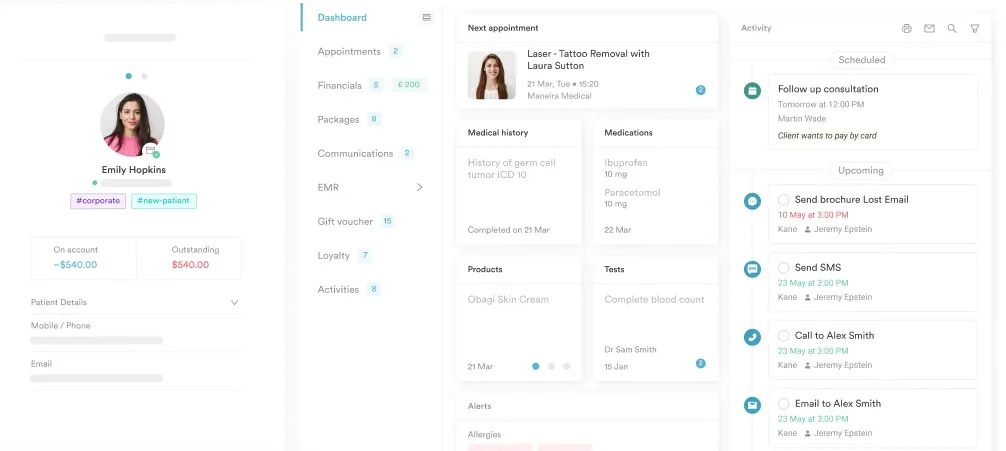

Pabau helps nutrition-focused and weight loss practices capture the clinical detail needed for accurate malnutrition coding – from structured intake forms to integrated clinical notes that support E41 documentation requirements.

ICD-10 code E41 sits within the E40-E46 malnutrition block. According to the CMS ICD-10 codes page, the complete range covers:
Related codes that are not in the E40-E46 range but often appear alongside E41 in documentation include:
For practices managing patients with complex nutritional histories, including weight loss clinic software workflows that capture body composition and nutritional intake data longitudinally, the specificity of each encounter note directly affects which code in this range is assignable.
Avoid assigning R63.4 (Abnormal weight loss) as the principal diagnosis when a physician has documented malnutrition. ICD-10-CM guidelines require coding the underlying condition – E41, E43, or another E40-E46 code – when it is established. R63.4 is appropriate only as an additional code or when the malnutrition type has not yet been diagnosed.
Coders cannot assign ICD-10 code E41 without physician documentation. The CMS ICD-10-CM Official Guidelines are explicit: Diagnosis codes are assigned based on physician, nurse practitioner, or other qualified healthcare provider documentation – not on lab values, vital signs, or coder inference alone.
For E41 to be coded, the note should include at least one of the following:
A note documenting only “emaciation,” “severe weight loss,” “poor nutritional intake,” or “failure to thrive” is not sufficient for E41 – “emaciation” on its own indexes to E43 or R64, never E41. Those presentations require a physician query to establish whether the condition qualifies as marasmus-type malnutrition.
Registered dietitians and clinical nutritionists often perform the initial malnutrition screening using the clinical documentation forms validated in their practice settings. Under American Society for Parenteral and Enteral Nutrition (ASPEN) and Academy of Nutrition and Dietetics consensus criteria, a dietitian’s malnutrition diagnosis can support coding – but only when the treating physician co-signs or acknowledges the assessment.
In most payer environments, the physician attestation remains the coding anchor for an inpatient E41 assignment.
Maintaining structured assessment templates in your digital intake forms library helps ensure nutrition assessments consistently capture the specific language coders need – rather than relying on free-text impressions that vary by provider.
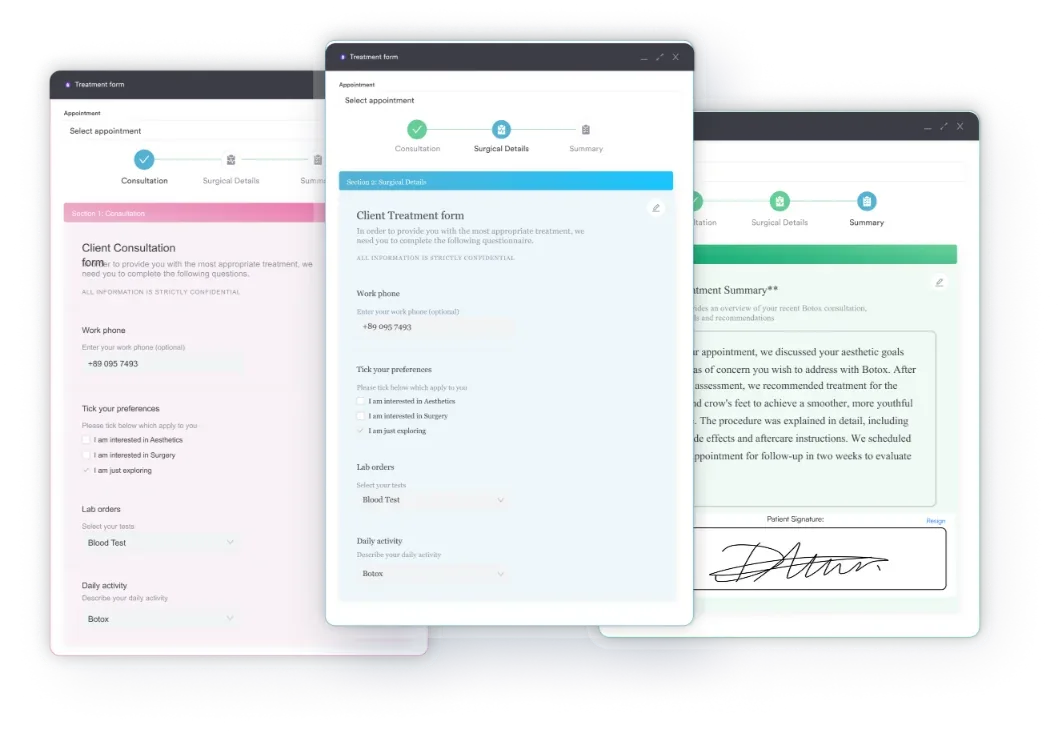
For inpatient encounters, E41 can serve as the principal diagnosis when malnutrition is the primary reason for admission. It affects DRG grouping and reimbursement under the Medicare Severity DRG (MS-DRG) system – accurate coding here has direct revenue impact.
For outpatient encounters, E41 codes to the highest degree of certainty documented at the visit. Do not code outpatient encounters using “probable” or “suspected” malnutrition language; that applies to inpatient encounters only under official coding guidelines.
Facilities using EHR integration workflows that push clinical notes directly into coding queues benefit from having structured nutrition assessment sections within their documentation templates – reducing the time coders spend searching for the specific phrase that justifies E41.
Three errors appear repeatedly in E41 coding audits. Each one is preventable with the right documentation process.
Some coders still assign E41 whenever a note says “emaciation,” carrying over a rule of thumb from the 2017 Coding Clinic era. That is no longer correct.
Since the October 2020 ICD-10-CM Index update, “emaciation” alone indexes to R64 (Cachexia) and “emaciation due to malnutrition” indexes to E43 – neither routes to E41. E41 requires the physician to document marasmus specifically, or “severe malnutrition with marasmus.”
If the note only says “emaciated” or “emaciation due to malnutrition,” code E43 (or R64 if no malnutrition cause is documented), and query the physician before assigning E41.
E43 (Unspecified severe protein-calorie malnutrition) is the appropriate code when the physician documents severe PCM without specifying type. However, if clinical documentation contains language consistent with marasmus – extreme wasting, “skin and bones” appearance, severe caloric restriction – a physician query may be warranted to determine whether E41 is more accurate.
Never upgrade to E41 without physician confirmation, but do not default to E43 when existing documentation may support a query. Good patient data security and audit trail practices in your system make these queries reviewable and defensible.
Because E42 (Marasmic kwashiorkor) is a Type 1 Excludes from E41, the two codes cannot be assigned for the same condition in the same encounter. If both edema and wasting are documented, E42 is the single correct code.
Assigning both generates a coding edit that payers will flag – and in some cases, deny. Build this exclusion into your compliance management workflows as a pre-submission edit check.

Accurate ICD-10 code E41 assignment depends entirely on what is captured in the clinical note. For nutrition-focused practices, weight loss practices, and functional medicine providers, the quality of documentation at intake and follow-up determines coding accuracy at billing.
Pabau’s digital intake forms allow practices to build structured nutritional assessment templates that prompt clinicians for the specific language – marasmus, nutritional wasting, severe caloric deficiency – that coders need. Combined with client record documentation that links assessment findings directly to visit notes, the audit trail from assessment to code is clear and complete.
Practices managing nutrition-related conditions alongside other diagnoses also benefit from Pabau’s functional medicine software features, which support complex, multi-condition documentation across long-term patient relationships – exactly the context where malnutrition diagnoses like E41 require ongoing documentation discipline to maintain coding accuracy.
Reducing the clinical documentation burden through structured templates means clinicians spend less time writing and more time capturing the detail that matters for accurate coding.
ICD-10 code E41 (Nutritional marasmus) is a specific, billable diagnosis code that requires explicit physician documentation of marasmus-type malnutrition before it can be assigned. The most common coding errors involve misapplying R64 (Cachexia), defaulting to E43 without a query when E41 may be supported, and erroneously assigning E41 alongside E42 in violation of the Type 1 Excludes rule.
For practices where nutritional documentation is part of routine care, structured digital forms and integrated clinical records are the practical foundation for coding accuracy. Book a demo to see how Pabau helps practices build the documentation workflows that support accurate ICD-10 coding from intake to billing.

Coding a cervical spine fusion at the skull base? anterior transoral arthrodesis billing guide CPT code 22548 covers arthrodesis at the clivus-C1-C2 level by anterior transoral or extraoral technique, with or without odontoid excision.
Managing a weight loss or nutrition-focused practice? Weight loss clinic software outlines how Pabau supports practices where malnutrition and metabolic documentation are central to clinical workflows.
Billing an anterior cervical fusion procedure? anterior cervical fusion billing guide CPT code 22554 covers anterior cervical fusion without decompression, while 22551 applies when the note documents decompression.
E41 is the billable ICD-10-CM code for nutritional marasmus, a severe protein-calorie malnutrition with extreme wasting, muscle loss, and subcutaneous fat loss — without the edema of kwashiorkor. Classified under E40–E46, valid for FY 2026 discharges.
E41 requires documented marasmus or “severe malnutrition with marasmus.” E43 applies when severe PCM is documented without specifying type. Never assign E41 without explicit documentation — E43 is the correct default when type is unclear, with a physician query if warranted.
Yes. E41 is fully billable, confirmed by the CDC/NCHS tabular list and CMS code files. It can serve as a principal diagnosis for inpatient admission and affects MS-DRG grouping.
Nutritional marasmus is severe protein-calorie malnutrition from chronic caloric deficiency. It presents with muscle wasting, loss of subcutaneous fat, and a markedly underweight appearance — without the edema of kwashiorkor. Affects pediatric and adult patients; coded at E41.
Plain “emaciation” indexes to R64 (Cachexia). “Emaciation due to malnutrition” indexes to E43 (Unspecified severe protein-calorie malnutrition) as of the October 2020 ICD-10-CM Index update — not E41. This superseded the 2017 Coding Clinic guidance that some older references still cite. E41 requires the note to document marasmus specifically.
There’s no single code — ICD-10-CM splits malnutrition by type and severity across E40-E46. E41 applies to marasmus, E42 to marasmic kwashiorkor, E43 to unspecified severe protein-calorie malnutrition, and E46 to unspecified protein-calorie malnutrition of any severity. The correct code depends on what the physician documents.
E43 (Unspecified severe protein-calorie malnutrition) applies when severe malnutrition is documented without a specific type. If the note documents marasmus, use E41 instead; if it documents both marasmus and kwashiorkor features, use E42.