CPT Code 62284: Injection procedure for myelography
CPT Code 62284: official descriptor and procedure overview The American Medical ...

Last Updated: Oct 19, 2026

CCSD code 0025B identifies the BH5 Pre Compounding Test, a diagnostic test code maintained by the Clinical Coding and Schedule Development (CCSD) Group and recognized by all major UK private medical insurers.
The code sits within CCSD’s Diagnostic Test Schedule, not the Schedule of Procedures, so documentation and submission follow lab and diagnostic conventions rather than surgical ones.
Accurate documentation matched to the test descriptor is the biggest factor in preventing claim rejection from Bupa, AXA Health, Aviva, and Vitality.
Pabau’s claims management software lets UK private practices store CCSD test codes against investigations, attach supporting lab documentation, and submit claims electronically without switching between systems.
CCSD code 0025B identifies the BH5 Pre Compounding Test, a diagnostic test code maintained by the Clinical Coding and Schedule Development (CCSD) Group, the body that sets the standard coding framework used across UK private healthcare.
Every insurer, from Bupa to Vitality, processes laboratory and diagnostic claims using this same framework, and a coding or documentation error on the claim means it sits in a query queue rather than a payment run.
Most billing rejections on CCSD claims are not caused by using the wrong code. They happen because the lab documentation does not match the test descriptor, or because a test is bundled with another investigation the insurer expects to be billed separately. This guide covers what CCSD code 0025B is, the documentation requirements, claim submission steps, and the error patterns that most often trigger a rejection.
CCSD code 0025B is the BH5 Pre Compounding Test, a code that sits within CCSD’s Diagnostic Test Schedule rather than the Schedule of Procedures. That distinction matters for billing: diagnostic test codes follow lab-specific documentation and submission rules, and should not be loaded into a practice’s procedure code table alongside surgical or therapeutic codes. The CCSD Technical Guide (October 2025) sets out the business rules, coding principles, and conventions that govern how every code in the schedule is applied, including diagnostic test codes.
Because the full schedule is login-gated, practices should verify the exact test narrative directly at ccsd.org.uk; for a general overview of how the CCSD framework is organized for insurer submissions, see the Bupa CCSD codes guide.
As its name indicates, the BH5 Pre Compounding Test is ordered ahead of a compounding process, the preparation of a bespoke medicine or formulation for a specific patient, rather than as a stand-alone diagnostic workup.
Like every code in the Diagnostic Test Schedule, its descriptor is the billing anchor: if the laboratory record does not reflect the same scope of investigation described by the code, the insurer has grounds to query or reject the claim.
For billing teams new to diagnostic test coding. Diagnostic tests are typically billed by the laboratory or diagnostic provider rather than the treating clinician, which puts more weight on the requesting details and sample chain of custody than a surgical procedure code would carry.
CCSD’s Diagnostic Test Schedule includes many similarly structured codes. Billing teams working across several lab-based codes benefit from applying the same documentation checklist to each. A quick reference sheet cuts lookup time on codes a practice bills every week.
Documentation is where most CCSD claims succeed or fail. Every UK private medical insurer applies its own audit process, but the underlying requirement is consistent: the laboratory record must support the test billed. Some insurers also expect an accompanying ICD-10 diagnosis code to establish the clinical necessity for the test alongside the CCSD code, and the specific diagnosis code depends on the patient’s underlying condition.
For CCSD code 0025B, the documentation checklist a practice billing team should run through before submission covers six areas.
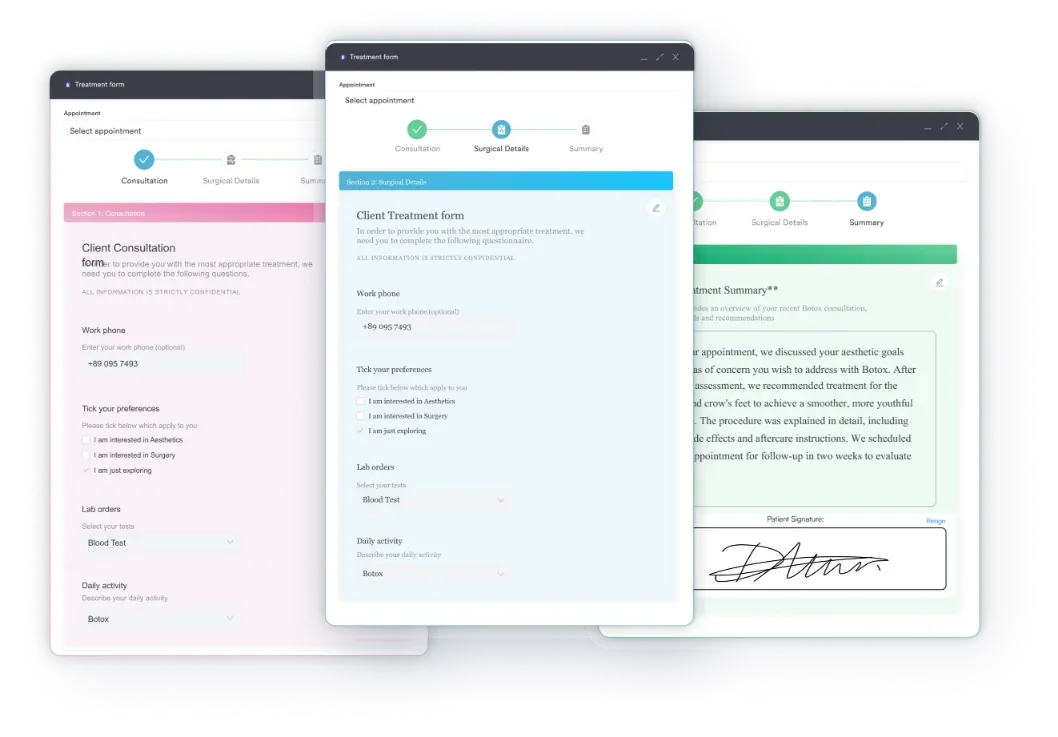
Practices that store documentation against each patient record before the invoice is raised, rather than retrieving it at submission time, have significantly fewer queries. Pabau’s digital forms functionality makes it straightforward to attach consent records and test requests directly to the patient encounter, so the billing team always has the supporting documentation ready when it is time to generate the claim.
Pabau’s template library includes patient-facing documentation for specific test pathways too.
All major UK private medical insurers process claims using the CCSD schedule. For CCSD code 0025B, the primary insurers a UK private practice will encounter are set out below.
Fee amounts are not listed here because insurer reimbursement rates for CCSD code 0025B vary by insurer, by the requesting clinician’s recognition tier, and by any individually negotiated rates. Always check the current fee schedule directly with the relevant insurer before invoicing, since rates are updated periodically.
Practices that have recently transitioned from NHS to private practice will need to register with each insurer separately before claims on any CCSD code will be accepted.
Before submitting any CCSD code 0025B claim to Bupa, run the code through the Bupa code search portal at codes.bupa.co.uk to confirm it is currently active and to check whether any bundling restrictions apply. Bupa updates its code status periodically, and submitting against a restricted or inactive code results in an automatic rejection that delays payment by a full billing cycle.
Electronic submission through Healthcode is the standard route for CCSD claims in UK private healthcare. Healthcode acts as the intermediary between practice billing systems and insurer payment systems, validating the claim format before it reaches the insurer. A claim that fails Healthcode’s format checks is returned to the practice before it reaches Bupa or AXA, which is a faster feedback loop than waiting for an insurer rejection.
The submission process for CCSD code 0025B follows five steps.
Practices managing multiple clinicians and a high volume of insurer claims benefit from software that tracks claim status across all active submissions. The claims management tools in Pabau let billing teams view the status of every outstanding claim, flag those approaching query deadlines, and push responses without leaving the platform.
This is particularly relevant for multi-site practices where multi-location billing oversight across different insurer relationships adds complexity to the submission workflow.
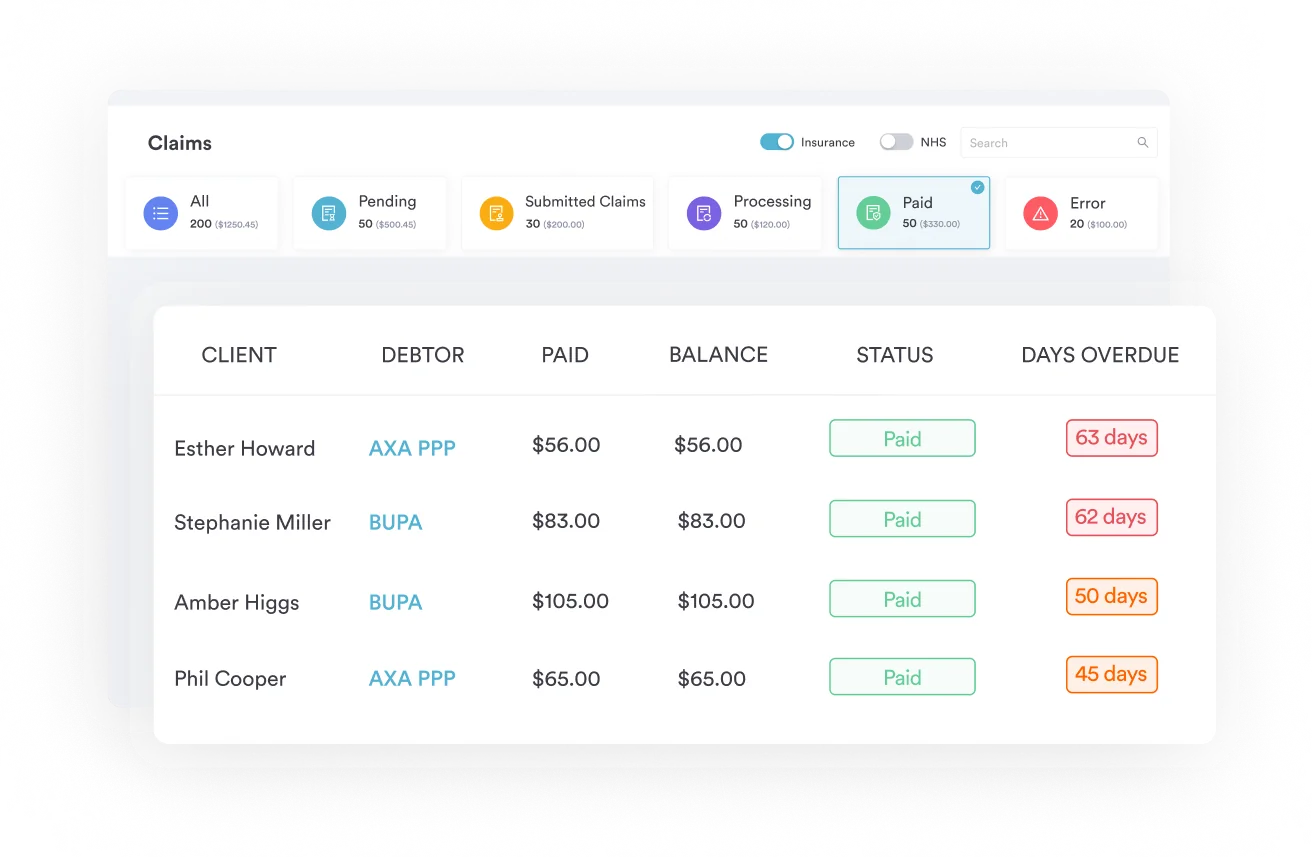

Pabau gives UK private practices a single platform to manage CCSD test codes, attach lab documentation, and track claim status across Bupa, AXA Health, Aviva, and every other insurer your team bills.

Rejection patterns on CCSD claims cluster around a small number of recurring errors. Knowing them in advance is more efficient than diagnosing them after the fact. A clean claim carries the code, the modifiers and the diagnosis in agreement, and needs no rework before payment.
CCSD coding rules, as set out in the Technical Guide, specify which codes can and cannot be billed together. Bundling CCSD code 0025B with another test code that the insurer treats as inclusive of 0025B will result in a part-payment or rejection of the secondary code. Before combining 0025B with any other CCSD code on the same invoice, check the Technical Guide’s bundling rules and the relevant insurer’s schedule, in the same way a practice would check bundling rules before combining CCSD code 0048B or CCSD code 0500C with another diagnostic code.
Healix, in particular, publishes explicit unbundling guidance that applies across its CCSD-based fee schedule.
Vitality Health and AXA Health both require pre-authorization for a range of test categories. If CCSD code 0025B falls within a category that the patient’s policy requires pre-authorization for, submitting without the authorization reference will result in an automatic rejection. The insurer will not pay the claim retrospectively once the test has been performed without authorization, regardless of clinical need.
Each insurer maintains its own register of recognized specialists. A clinician who holds Bupa recognition does not automatically hold AXA recognition. Claims submitted by an unrecognized clinician will be rejected at the insurer’s intake stage. This is a structural issue rather than a coding error, but it accounts for a significant share of first-submission rejections in practices that have recently added a new clinician or that bill to multiple insurers.
Confirming recognition status before the patient appointment takes less time than processing a rejection after it.
The laboratory record must describe the test in terms that map to the CCSD code 0025B descriptor. Generic notes that describe the patient’s condition rather than the test performed give insurers a reason to query whether the code applied was appropriate. Structured note templates tied to specific CCSD codes help standardize documentation and reduce the frequency of post-submission queries.
Pabau’s client record and clinical note features allow templates to be set up against specific tests, so the note structure matches the billing code from the point of entry.
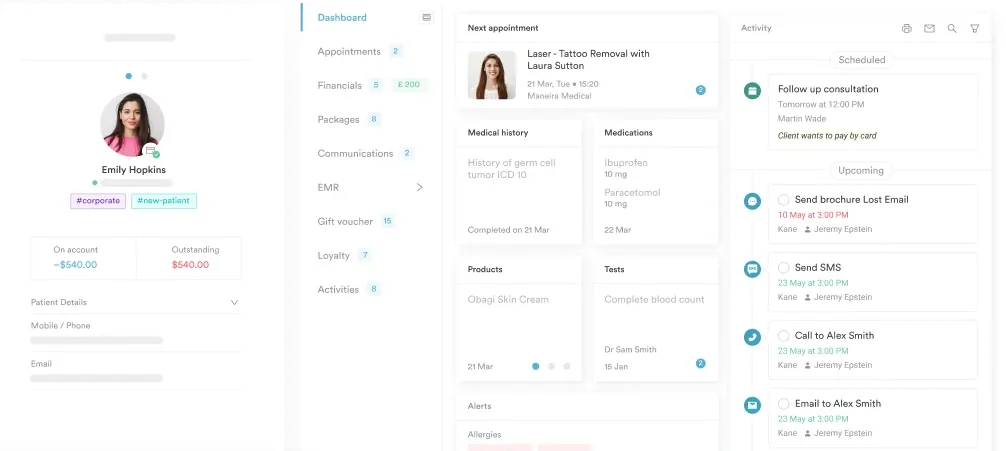
Billing teams that systematically manage the boundary between NHS referrals and private billing also encounter this issue when a test is requested in one setting and billed in another. Keeping the clinical record and the billing record in the same system eliminates the transcription step where mismatches most commonly occur.
Run a monthly audit of your CCSD code 0025B rejections and categorize them by rejection reason: bundling, missing authorization, recognition, or documentation. Most practices find that 80% of their rejections cluster around two or three root causes. Fixing the process behind those causes is more effective than reviewing individual claims after they fail.
Billing for private healthcare tests in the UK sits within a regulatory framework that extends beyond the CCSD coding system itself. The Care Quality Commission (CQC) regulates independent healthcare providers, including diagnostic and pathology services, in England, and CQC registration requirements include maintaining accurate clinical records, which underpins the documentation standards required for CCSD billing.
Scotland, Wales, and Northern Ireland have separate regulatory bodies, but the CCSD coding framework applies across all UK jurisdictions for private healthcare billing.
Patient data handled during the billing process, including the lab documentation attached to CCSD code 0025B claims, falls under UK GDPR. The Information Commissioner’s Office (ICO) sets the data protection standards that apply to health records, and any practice management system used for storing and transmitting claim documentation must handle patient data in line with those standards.
Practices that have recently reviewed their UK GDPR compliance obligations will be familiar with the data handling requirements that apply to electronic claim submission.
The Independent Healthcare Providers Network (IHPN) also publishes guidance relevant to private billing practices, particularly around transparency and patient information obligations. Practices operating in the independent sector should ensure their billing processes align with IHPN standards as well as CCSD technical requirements.
For physiotherapy practices and other allied health providers billing private insurers, compliance obligations for physiotherapy practices overlap with the general CCSD billing framework in areas such as clinician registration, clinical record-keeping, and pre-authorization management. The same documentation discipline that supports regulatory compliance also supports clean CCSD claims.
Manual CCSD billing, where codes are entered on paper invoices or in spreadsheets and then re-keyed into Healthcode, introduces errors at every transcription step. A code that looks right typed into a spreadsheet can have a digit transposed by the time it reaches the insurer’s system. Software that holds CCSD codes natively and generates invoices directly from the clinical or lab record eliminates that risk.
For UK private practices, Pabau provides a dedicated claims management workflow that supports CCSD billing end to end. The platform holds the CCSD code library, links codes to clinical and lab records, and generates invoices that include the required fields for Healthcode submission. The billing team does not need to re-enter data from the clinical note: the information flows from appointment through to invoice within a single system.
The features most relevant to CCSD code 0025B billing are:
For practices operating across multiple sites. A billing manager overseeing three locations should be able to see the full CCSD claims picture from one dashboard rather than logging into three separate systems.

Getting CCSD code 0025B right requires documentation discipline at the point of note entry, verification of clinician recognition before each patient episode, and active claim tracking after submission. Most rejections on this code are preventable, and they cluster around the same root causes: missing documentation, bundling errors, and expired or missing authorization references.
Pabau’s claims management workflow gives UK private practices the infrastructure to manage these steps without switching between systems. From patient record management through to Healthcode-ready invoicing and claim status tracking, the platform is built for the operational reality of CCSD billing. To see how it handles your insurer mix, book a demo.

New to UK private practice billing? Bupa CCSD codes guide covers the full schedule used by the UK’s largest private medical insurer, with guidance on code search, recognition requirements, and claim submission.
Coding immobility syndrome next? M62.3 immobility syndrome coding covers why claims fail unless the note ties muscle wasting to documented immobility.
Coding a fibroblastic disorder claim? M72.9 fibroblastic disorder coding covers when it is billable in FY2026 and when a more specific M72 code applies instead.
CCSD code 0025B is the BH5 Pre Compounding Test, a diagnostic test code within CCSD’s Diagnostic Test Schedule, maintained by the Clinical Coding and Schedule Development (CCSD) Group for UK private healthcare billing. It is ordered ahead of a compounding process, the preparation of a bespoke medicine for a specific patient. The full test narrative is held within the CCSD schedule, which requires registration to access. All major UK private medical insurers, including Bupa, AXA Health, Aviva, and Vitality, recognize and process claims submitted under this code.
CCSD codes are the mandatory billing language for UK private medical insurance claims. Every procedure or test billed to a UK private medical insurer must carry the correct CCSD code from the recognized schedule. Using the wrong code, or submitting without adequate supporting documentation, will result in claim rejection or query, delaying payment for the practice and potentially creating a dispute with the patient if an excess payment has already been collected.
All major UK private medical insurers process CCSD codes, including CCSD code 0025B. This covers Bupa, AXA Health, Aviva, Vitality Health, Allianz Care, Freedom Health, Healix, WPA, and Cigna. Each insurer maintains its own fee schedule and recognition requirements, so the reimbursement amount and any pre-authorization requirements will vary by insurer even though they all use the same CCSD code.
Using the wrong CCSD code on a private medical insurance claim will typically result in a rejection or query from the insurer. The insurer may request clinical or lab documentation to verify which test or procedure was actually performed, then assess whether the correct code was applied. If a more expensive code was used than the test warranted, the insurer may require a corrected invoice, which delays payment and creates administrative overhead for the billing team.
The authoritative source for CCSD code lookups is the CCSD Schedule at ccsd.org.uk, which requires registration. For Bupa-specific lookups, the Bupa code search portal at codes.bupa.co.uk provides a searchable index of codes Bupa recognizes, including current status and any applicable restrictions. Practice management software that holds a CCSD code library linked to test and procedure types removes the need for manual code lookups at the point of invoicing.