HIPAA compliant texting: What you can send patients & how to communicate securely
HIPAA compliant texting is possible when a text holds no protected health inform...

Last Updated: Oct 16, 2026

DrChrono pros and cons split along a clear line: strong Apple-native EHR with customizable charting, but iOS-only mobile access and contract lock-in terms that frustrate practices looking to switch.
The EverHealth acquisition has changed the support experience. Post-acquisition reviews on Capterra and G2 consistently cite slower resolution times and less knowledgeable staff.
Scheduling and insurance billing are the two most cited pain points. Users report limited multi-provider scheduling flexibility and complex, unreliable claims processing.
Pabau is the alternative for aesthetic and wellness clinics. It works on any device, has no contract lock-in, and is built around the workflows of private-pay clinics rather than insurance-heavy general practice.
DrChrono pricing sits behind a custom quote across four tiers (Prometheus, Hippocrates, Apollo, and Apollo Plus). Get the exact monthly cost and contract terms in writing before signing, given the lock-in patterns reported above.
About 80% of EHR complaints on review platforms focus on three issues: support quality, contract terms, and scheduling constraints. Understanding the DrChrono pros and cons before signing means knowing exactly where those complaints land, and whether they apply to your practice type. DrChrono has earned genuine praise for its Apple-native interface and charting flexibility. It has also attracted serious criticism for billing complexity, post-acquisition support decline, and contract practices that users describe as opaque. This article breaks down both sides using verified review data, so you can make an informed decision.
DrChrono reviews average a 3.9/5 rating on Capterra. That score reflects a genuine split: strong ratings for usability and charting, pulled down by recurring complaints around billing reliability, scheduling, and contract terms. Evaluating those two sides separately gives a clearer picture than the aggregate number alone. Before comparing solutions, it also helps to understand the distinction between a practice management system vs EMR, since DrChrono positions itself as both.
DrChrono’s strongest area is clinical documentation. Reviewers on Capterra consistently highlight the customizable charting templates and the ease of building SOAP note workflows tailored to a specific specialty. Practices that invest time in setup tend to report high satisfaction with the documentation side.
The negative patterns in DrChrono reviews are consistent enough that outliers cannot explain them. Software Advice explicitly flags scheduling limitations, citing user difficulty with online booking, visit count tracking, and cancellation management. Practices with multiple providers report manual rescheduling as a routine workaround.
EverCommerce acquired DrChrono and now runs it under its EverHealth brand. For many users, this acquisition marks a visible before-and-after in their experience of the platform. Pre-acquisition, DrChrono earned a reputation for responsive customer support. The picture that emerges from post-acquisition reviews is different.
According to EHR Source’s 2026 analysis, post-acquisition reviews on G2 and Capterra consistently cite longer hold times, slower ticket resolution, and less knowledgeable DrChrono support staff. These are not isolated complaints. They reflect a structural shift in how the new owner resources support. EHR Source recommends that prospective buyers ask pointed questions about long-term product commitments before signing.
Practices evaluating all EHR options for private practice should factor acquisition stability into their decision alongside feature sets.
The product roadmap uncertainty is a separate concern. When a platform changes ownership, feature development priorities can shift. Practices that selected DrChrono for a specific capability have no guarantee that capability receives continued investment under EverHealth. For clinics considering a multi-year commitment, this matters.
Before signing any EHR contract post-acquisition, ask two direct questions: Who owns the roadmap, and what is the exit process if the product direction changes? DrChrono’s contract terms have generated significant user complaints around data portability. Get the data export process in writing before you commit.
Contract terms are where DrChrono’s negative reviews become most serious. Multiple users on Software Advice and GetApp report that DrChrono locked them into annual contracts without clear disclosure at signup. One Software Advice reviewer wrote: “They are now locking you into an entire year of contract without telling you, and increasing their premium without giving you a chance to transfer data to another EMR.”
This is not a billing feature complaint. It is a contract practice concern. The specific issues users raise include auto-renewal without proactive notification, price increases mid-contract, and restricted data portability when attempting to leave. For a clinic evaluating direct primary care EHR software, these terms could trap a clinic in a platform that no longer fits as the practice evolves.
| Area | What users report | Confidence level |
|---|---|---|
| Annual contract lock-in | Users locked into 12-month terms without clear pre-signup disclosure | Reported across multiple platforms |
| Auto-renewal | Contracts renew automatically; cancellation window is narrow | Reported across multiple platforms |
| Price increases mid-contract | Prices raised during active contracts with limited recourse | Reported across multiple platforms |
| Data portability | Exporting patient data when leaving is described as difficult | Reported across multiple platforms |
| Insurance claims processing | Complex, unreliable claims pipeline with slow resolution | Reported across multiple platforms |
It is worth noting that you should verify actual contract terms directly with DrChrono before signing. These are user-reported patterns, not officially confirmed terms. That said, the volume and consistency of these reports across independent review platforms is significant enough to warrant direct, written clarification before committing.
DrChrono pricing runs across four plan tiers: Prometheus, Hippocrates, Apollo, and Apollo Plus. Prometheus covers the base charting and scheduling functions. Hippocrates adds insurance eligibility checks, lab integrations, and e-prescribing. Apollo layers in DrChrono’s integrated medical billing, and Apollo Plus hands billing off to DrChrono’s own revenue cycle management (RCM) team.
None of these tiers carry a published monthly price on DrChrono’s site. Getting an exact quote means contacting DrChrono’s sales team directly, and the figure will depend on provider count, tier, and add-ons like patient text and phone reminders, which carry a per-message charge once a plan’s monthly allowance runs out. Given the contract lock-in and auto-renewal patterns covered above, get the exact monthly cost, the reminder allowance, and the cancellation terms in writing before signing, not just the tier name.

No annual contracts, no device restrictions. Pabau is built for aesthetic and wellness clinics that want flexible scheduling, integrated payments, and clinical documentation on any device.

Despite the concerns above, DrChrono is not a poor product in absolute terms. It suits a specific type of practice well. The characteristics of that fit are worth being specific about.
For aesthetic clinics, med-spas, wellness practices, and private-pay clinics, DrChrono is a partial fit at best. The iOS dependency, insurance-centric billing tools, and scheduling limitations align poorly with how aesthetic practices operate. These clinics need device flexibility, client-facing booking tools, and billing built around private-pay workflows, not insurance claims pipelines.
Pabau serves exactly this context. It runs on any device, including Android and Windows, so there is no hardware dependency baked into the decision. Its scheduling supports multi-provider, multi-location clinics, with automated workflows handling reminders, recalls, and follow-up sequences that aesthetic clinics rely on for repeat bookings. This is why Pabau consistently appears in roundups of best medical spa software.
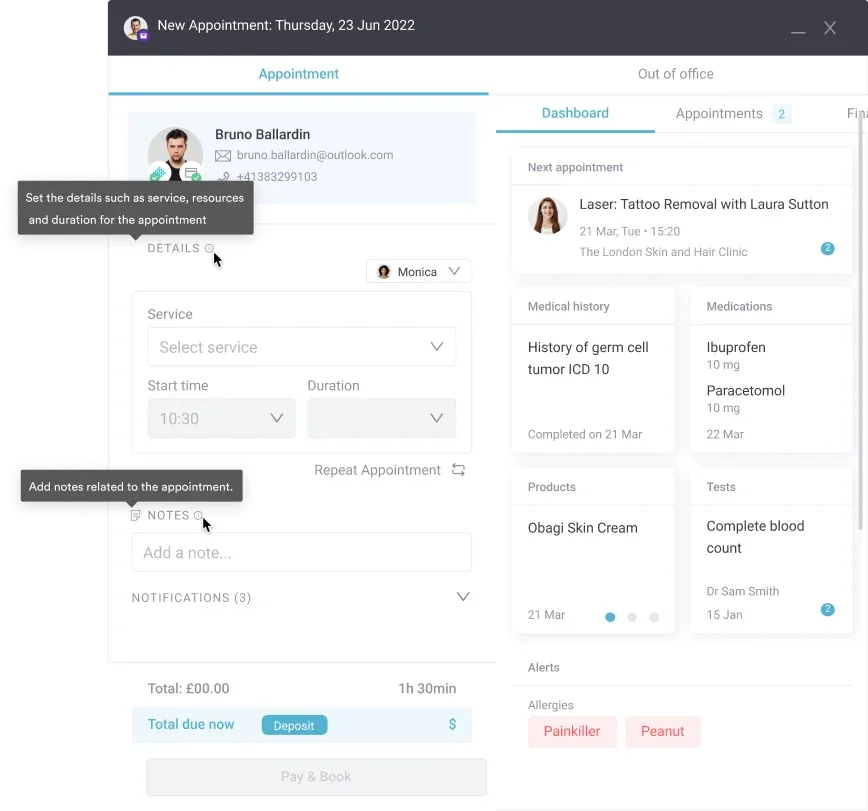
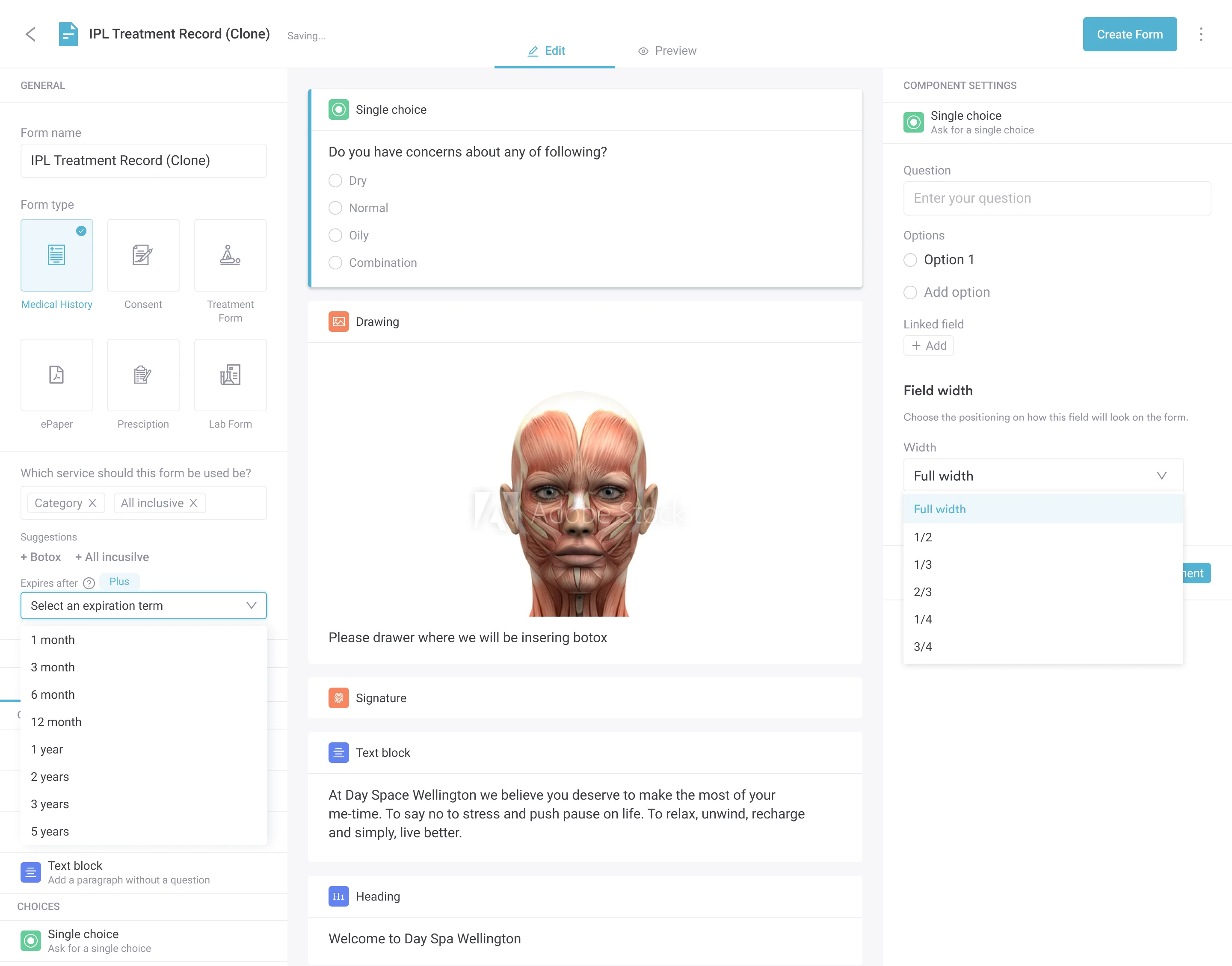
The billing model is also different. Pabau’s payment tools focus on deposits, packages, memberships, and private-pay invoicing rather than insurance claims submission. For a clinic where 95% of revenue comes directly from patients rather than insurers, this is a significant practical difference. Digital intake forms, before-and-after photo management, and injection plotting are native to the platform rather than workarounds. For med-spas and aesthetic practices, Pabau also sits at the center of the medical spa software category with purpose-built tools that DrChrono does not address. Practices that have explored aesthetic EMR software options will find Pabau’s feature set maps directly onto their workflows.
Support structure is another material difference. Pabau offers structured onboarding and dedicated customer success access. For practices migrating from DrChrono, this matters: setup support reduces the risk of configuration errors that tend to surface weeks or months after go-live.
If you are migrating from DrChrono, start by auditing your current custom charting templates before you move. Map each template to its equivalent in the new system during the onboarding phase, not after go-live. This is where most migrations lose time.
DrChrono is a capable EHR for Apple-device general medical practices that need strong charting customization and are prepared to navigate an insurance-heavy billing system. The platform’s limitations become most apparent when a practice needs Android access, flexible multi-provider scheduling, or a billing model built around private-pay workflows rather than insurance claims.
The post-EverHealth acquisition concerns, contract lock-in patterns, and support quality decline are real factors that deserve direct verification before signing. For aesthetic clinics, med-spas, and wellness practices, Pabau’s device-agnostic platform, private-pay billing tools, and clinic-specific workflows are a closer fit than DrChrono’s insurance-oriented design. To see how Pabau handles the workflows your clinic actually runs, see how it compares against other EMR software options or book a demo with the team directly.

Running a med-spa and need purpose-built tools? Medical spa software explains the specific features aesthetic and wellness clinics need that general EHR platforms typically do not include.
Choosing between Fresha and Vagaro? Fresha vs Vagaro comparison compares pricing, features, and usability side by side to find the better fit for your business.
DrChrono’s main pros are its customizable charting, Apple-native interface, and competitive combined EHR and practice management value for iOS-based practices. Its main cons are an iOS-only mobile app that excludes Android users, complex insurance billing, limited multi-provider scheduling flexibility, post-acquisition support decline, and contract lock-in terms that multiple users have flagged as opaque.
No. DrChrono’s mobile app is iOS-only and does not support Android devices. Practitioners using Android phones or tablets cannot access the mobile app. Browser-based access works on any device, but the full mobile experience is limited to Apple hardware.
EverCommerce acquired DrChrono, which now operates under its EverHealth brand. Post-acquisition, independent review analysis from EHR Source and user reviews on Capterra and G2 report a decline in support quality, including longer hold times, slower ticket resolution, and less knowledgeable staff. Product roadmap direction under new ownership is also a concern for long-term planning.
DrChrono can work for small practices that operate entirely on Apple devices, have straightforward visit types, and primarily bill through insurance. Practices that need multi-provider scheduling flexibility, Android support, or private-pay billing workflows may find the platform’s limitations outweigh its strengths at the small-practice scale.
Pabau is the strongest alternative for aesthetic and wellness clinics. It runs on any device, supports private-pay billing with deposits and packages, and includes features like before-and-after photo management, injection plotting, and digital consent forms that DrChrono does not offer natively. For general medical practices staying insurance-focused, NextGen and RXNT are worth comparing against DrChrono directly. Jane App suits allied health and SimplePractice suits mental health specialties.
DrChrono doesn’t publish flat monthly pricing. Its four tiers, Prometheus, Hippocrates, Apollo, and Apollo Plus, add billing and RCM functionality as you move up, but the exact cost per provider comes from a custom quote after contacting DrChrono directly. Ask for the reminder allowance and cancellation terms in writing alongside the quote.
Yes. DrChrono operates as a HIPAA-compliant EHR platform, including the OnPatient portal patients use to view records, lab results, and prescriptions. As with any EHR, confirm the current compliance documentation and data-handling terms directly with DrChrono before signing, since specific security certifications can change.
DrChrono is a solid EHR for Apple-device practices that need flexible charting and are comfortable with an insurance-heavy billing workflow. Weighing the full list of DrChrono pros and cons matters more than the aggregate star rating, since the platform’s contract terms, post-acquisition support, and iOS-only access won’t fit every practice equally.