HIPAA compliant electronic signature: Pabau vs DocuSign
A HIPAA compliant electronic signature is a signing process that protects electr...

Last Updated: Nov 5, 2026
Clinical governance is the framework through which healthcare organizations are accountable for continuously improving the quality of their services and safeguarding high standards of care. Scally and Donaldson’s 1998 BMJ paper set out the widely cited definition of clinical governance, which the 1997 NHS White Paper had introduced. It gives organizations a systematic way to link quality improvement, accountability and patient safety.
For practice owners and managers in England, clinical governance shapes how CQC inspections go and how complaints are handled. It also decides how staff are developed and how patient records are kept. Weak governance invites regulatory action. Strong governance builds a practice that earns patient trust and stands up to scrutiny.
This guide walks through one commonly used seven-pillar model and who is responsible. It then covers private practice and ends with a checklist your team can use.

Clinical governance is the framework that holds healthcare organizations accountable for continuously improving quality and safeguarding standards of care.
One commonly used model groups the work into seven pillars, from clinical effectiveness and risk management to information governance.
Private practices in England that carry out regulated activities must register with the CQC, and Regulation 17 requires them to run effective governance systems.
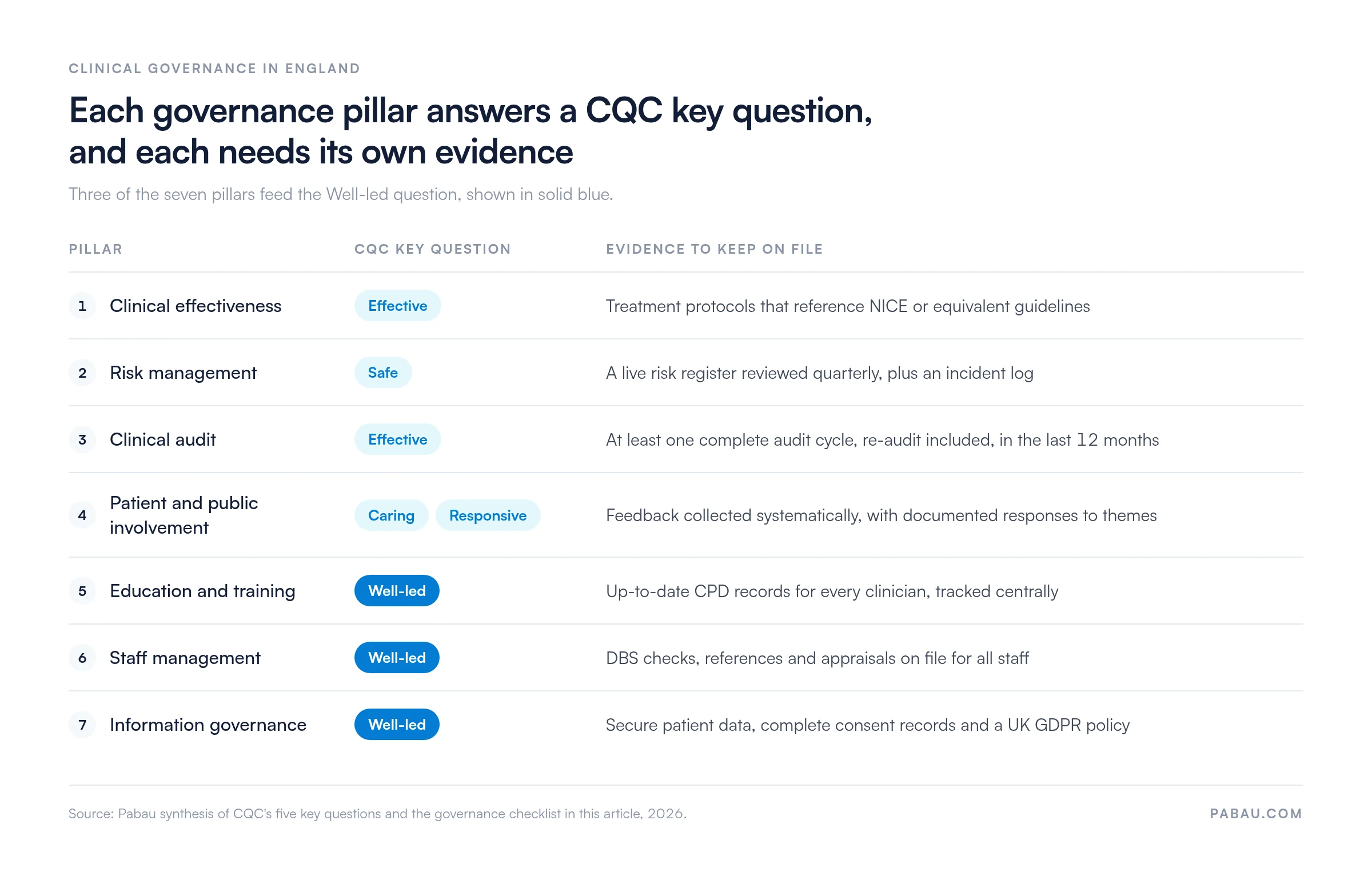
Each pillar answers one or more of the CQC’s five key questions, and three of the seven feed the Well-led question.
Practice management software supports governance by storing signed consent and a timestamped audit trail on every patient record.
Clinical governance matters because poor-quality care has measurable, catastrophic consequences. The 2013 Francis Report into Mid Staffordshire NHS Foundation Trust found systemic failures across governance. Risk management was inadequate, patient complaints were ignored, staff training fell short and nobody owned accountability. The inquiry found that patients suffered appalling and avoidable harm, with many deaths. Governance structures existed on paper at the time but did not work in practice.
Clinical governance creates the conditions that stop those failures from taking root. It does three things well.
Beyond regulation, strong governance is associated with fewer complaints, better staff retention and better patient outcomes. Those are also the conditions a practice needs to grow steadily.
The seven pillars below are one commonly used model for organizing clinical governance work. Published lists differ, and some frameworks group the same activities under different headings.
Clinical effectiveness means delivering care based on the best available evidence. In practice, this involves following NICE guidelines, using validated treatment protocols, and measuring whether interventions produce the outcomes they should. A practice that keeps offering a treatment after NICE has downgraded its evidence base is working outside clinical effectiveness principles. High patient satisfaction does not change that.
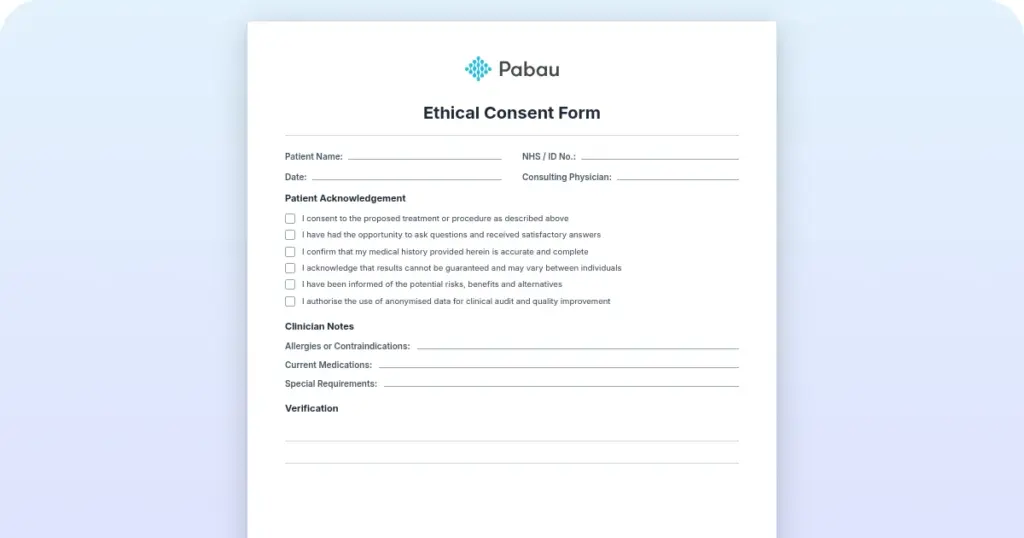
Risk management involves identifying, assessing and reducing clinical and organizational risks before they cause harm. This includes incident reporting, near-miss analysis and root cause investigation. Risk registers and incident logs only earn their keep if they drive change, so an incident filed without review adds no governance value. A standard incident report form keeps each report consistent, which makes trends easier to spot at review.
Clinical audit is the cyclical process of measuring current practice against agreed standards, finding where it falls short, making changes and re-measuring. The audit cycle has five stages.
Without re-audit, the cycle is incomplete. A one-off audit can’t show whether the change worked, and that answer is the whole purpose of the tool.
Patient and public involvement (PPI) recognizes that the people receiving care are a primary source of information about how that care is experienced. Governance obligations here include collecting patient feedback systematically and using complaints as a learning mechanism rather than a reputational threat. They also include involving patients in decisions about how services develop.
Staff development is a governance obligation. Clinicians must keep their knowledge and competence current through continuing professional development (CPD). For regulated professionals, such as doctors registered with the GMC and nurses with the NMC, the regulator sets CPD requirements. For practice owners, the governance duty is to keep records showing every clinician has met their CPD obligations, tracked at an organizational level. A professional development record for each clinician makes that evidence quick to produce.
Effective staff management within clinical governance covers recruitment checks (DBS, reference verification, qualification confirmation), appraisal processes, supervision structures and performance management. A governance framework cannot function when the people delivering care have not been properly vetted or supported.
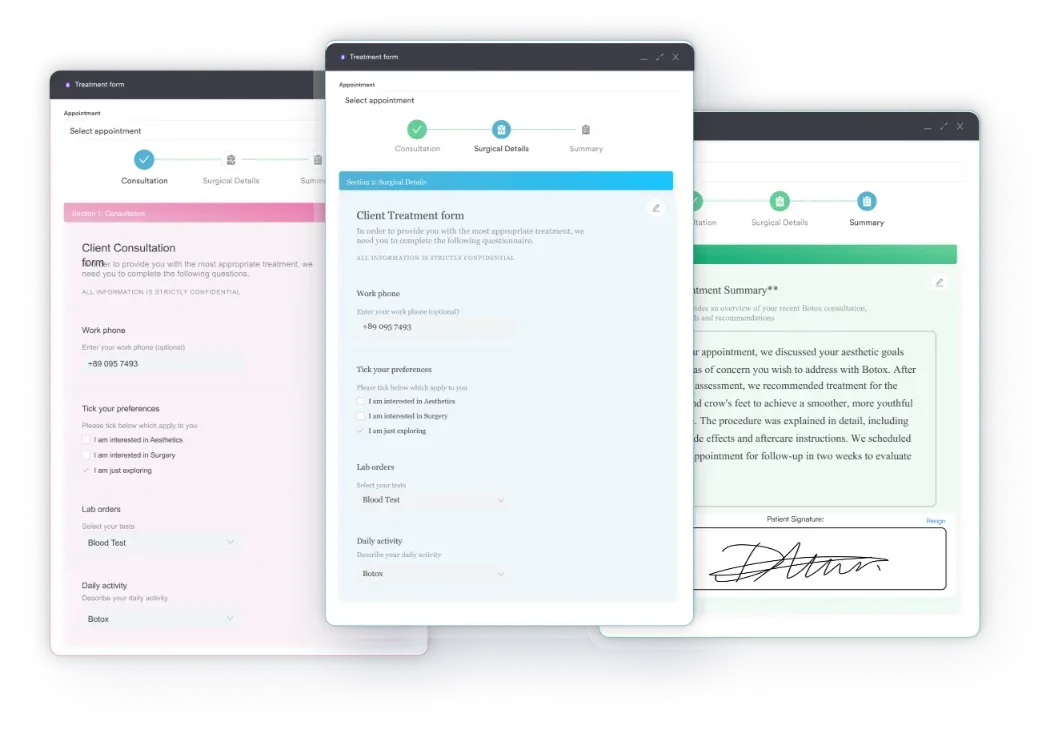
Information governance covers the accurate management, secure storage and lawful use of patient data. In the UK, the relevant legislation is UK GDPR and the Data Protection Act 2018. Digital consent forms and structured patient records are the tools that make information governance work in a practice. On paper, nobody can show who changed a consent form or when, and that is hard to defend in a CQC inspection.
Corporate governance and clinical governance operate at different levels of an organization and answer different accountability questions. Corporate governance covers the board’s responsibility for financial stewardship, legal compliance and strategy. Clinical governance covers the accountability of clinical leaders and all staff for the quality and safety of patient care.
In practice, effective organizations treat the two as linked. A board that approves a budget without weighing its clinical governance implications is not meeting its corporate governance obligations either.
Clinical governance responsibility is shared across the whole organization rather than delegated to a single post. Roles still carry different levels of accountability.
The Francis Report made clear that spreading accountability across too many roles, with nobody taking clear ownership, is itself a governance failure. Every practice needs to name its Clinical Governance Lead and document that appointment.
Clinical governance is a legal requirement for many private practices in England. Practices that carry out regulated activities under the Health and Social Care Act 2008 must register with the CQC and meet its fundamental standards. Regulation 17 of those standards requires systems that assess, monitor and improve the quality and safety of services.
The CQC requirements reach across all seven governance pillars, not only documentation. Scotland, Wales and Northern Ireland have their own regulators, so the CQC rules in this guide apply to England only.
The scope of regulated activities is broad. Aesthetic practices offering surgical procedures, IV therapy providers, GP practices and many other private providers fall within it. For any practice owner, the job is to build a framework sized to the service and its risk profile.
CQC inspections assess providers against five key questions. Each maps to governance domains a practice must demonstrate.
Inspectors look for documentary evidence across all five questions. A practice that runs well but can’t show it through records, policies and training logs will struggle at inspection. Good CQC inspection preparation starts with the clinical governance framework, not with the inspection itself. The table below maps each pillar to the question it answers and the evidence an inspector will ask to see.
Appoint your Clinical Governance Lead before you apply for CQC registration. Inspectors ask who holds this accountability. They expect a named person with documented responsibilities, meeting records and a clear line to the board or registered manager. A role created under inspection pressure rarely convinces anyone.
Use this checklist to self-assess your governance readiness across all seven pillars. It doesn’t replace a formal governance review, but it shows where governance most often slips.
The last column lists weaknesses that commonly show up in practice governance. Fix them before an inspection finds them for you.
Most governance evidence is created during routine care: a signed consent form, an edited note, a message sent after treatment. Kept on paper or across separate tools, those records are slow to audit and easy to leave incomplete.
Pabau records that evidence as the work happens. Its compliance management software keeps a full audit trail of every action, timestamped against the patient record. Consent forms are signed digitally and stored on the same record.
Pre- and aftercare messages go out automatically and are logged on the patient record too. When an inspector asks who changed a note, or how a patient was told about aftercare, the answer is already on file.

Pabau stores signed consent forms and a timestamped audit trail on every patient record. Your team spends less time compiling evidence before a CQC inspection.

For a private practice in England, clinical governance is judged on whether you can show it working. An inspector wants audit cycles that close, a risk register that changes and training records that stay current.
Start with the weakest row in the checklist above, name your Clinical Governance Lead and set a date to re-audit. The trade-off is a few hours now against a scramble when the CQC calls.
Book a demo to see how Pabau keeps consent records and audit trails ready for your next CQC inspection.

Need to prepare your practice for a CQC visit? How to get CQC registered walks through the registration process and what inspectors expect from day one.
Handling sensitive patient information? Patient confidentiality explains what confidentiality means in practice and how to protect it.
Want to understand your GDPR obligations as a practice? GDPR checklist for UK clinics covers the data protection requirements that sit within your information governance pillar.
Clinical governance is the framework through which healthcare organizations are accountable for continuously improving the quality of their services and safeguarding high standards of care. The term was introduced in the 1997 NHS White Paper and defined in Scally and Donaldson’s 1998 BMJ paper. It underpins how NHS trusts and registered private providers organize their quality and safety obligations.
One commonly used model lists seven pillars: clinical effectiveness, risk management, clinical audit, patient and public involvement, education and training, staff management, and information governance. Published lists differ, and some frameworks group these activities under different headings.
Responsibility is shared across the whole organization. The board or registered owner holds ultimate accountability. A named Clinical Governance Lead coordinates governance activities. All clinical staff carry individual professional duties under their regulator, such as the GMC or NMC, to report concerns and maintain competence.
Yes, for private practices in England that carry out regulated activities under the Health and Social Care Act 2008. CQC registration requires providers to meet the fundamental standards, and Regulation 17 requires effective governance systems. Scotland, Wales and Northern Ireland have their own regulators and rules.
Practical examples include running a quarterly clinical audit on complication rates and acting on the findings. Others are monthly governance meetings with documented minutes, and logging and investigating near-miss incidents within 48 hours. Teams also collect patient feedback through post-treatment surveys and feed the themes into service improvements. A central training record shows every clinician’s CPD status.
In England, the CQC’s five key questions (Safe, Effective, Caring, Responsive and Well-led) map directly onto clinical governance domains. Inspectors look for documentary evidence that governance systems work. That means completed audit cycles, actively maintained risk registers, training records for all staff, and a named governance lead with clear responsibilities.