Professional development record
A professional development record is a structured log of a healthcare practition...

8
Last Updated: Oct 8, 2026
Patient confidentiality is your legal and ethical duty to keep identifiable patient information inside the care relationship. It reaches further than the chart. A name on a waiting room screen counts. So does a photo from a consult, or a voicemail left with the wrong person.
Get it right and patients tell you the symptoms and histories that change a diagnosis. Lose it and an HHS Office for Civil Rights investigation, a board complaint and a civil claim can land together.
What follows is the scope of the duty, the five exceptions that override it, and the habits that hold it in place.

Patient confidentiality covers every identifiable detail a patient shares, including verbal disclosures, photos, billing codes and the fact that they are your patient.
Five exceptions allow disclosure without consent, covering mandatory reporting, duty to warn, minor patient rules, incapacity and public health reporting.
HIPAA is the federal floor in the US, and state law plus 42 CFR Part 2 often demand more.
Staff access and casual talk cause more breaches in a practice than outside attackers do.
Practice management software like Pabau enforces confidentiality through role-based access, audit logs, encrypted records and digital consent.
Patient confidentiality rests on two supports that pull in the same direction. One is the ethical principle of patient autonomy. The other is statute, mostly HIPAA and the rules written under it.
Both reach the same conclusion. Anything identifiable a patient shares in a clinical encounter stays inside the care relationship unless they consent or an exception applies.
The duty runs wider than most teams expect. It covers:
That last one catches people out. Confirming to a caller that someone attends your practice is a disclosure, even when no clinical detail changes hands. Front desk teams field that question weekly, usually from a partner or a parent who sounds entirely reasonable.
The scope follows from the purpose. According to NIH StatPearls, patients have to feel safe enough to disclose sensitive information before a clinician can work effectively. A practice with loose data habits creates a clinical risk as well as a regulatory one.
People use the three words as synonyms, and they describe different obligations. Privacy belongs to the patient. Confidentiality belongs to you. Security belongs to the organization. Mixing them up is how a practice ends up with excellent encryption and a receptionist who talks too much.
Confidentiality is the relational duty. Security is the infrastructure that makes it possible to honor. Privacy is the patient-side right that both of them serve. A practice can run excellent security and still breach confidentiality by sharing data in a context the patient never expected.
A confidentiality failure costs you clinical information, and it costs it straight away. Patients who fear disclosure delay care for the conditions that carry stigma.
HIV, mental health, substance use, sexual health and domestic abuse sit at the top of that list. Thinner histories then lead to missed diagnoses, unsafe prescribing and late referrals.
For a practice manager, that turns confidentiality into a workflow discipline rather than an annual legal review. Every team member enforces it in every interaction, or it does not hold.
In the US, HIPAA is the primary federal framework for patient confidentiality. Its Privacy Rule sits at 45 CFR Parts 160 and 164. It defines protected health information, known as PHI, names who has to protect it, and sets the conditions for disclosure.
HIPAA binds covered entities. That means healthcare providers who transmit health information electronically, health plans and healthcare clearinghouses. It also reaches business associates, the vendors that handle PHI on your behalf, through a signed Business Associate Agreement (BAA).
Two standards shape the working day.
Penalties run in tiers scaled by culpability, from an unknowing violation up to willful neglect. The HHS Office for Civil Rights publishes the current tiers. They move with regulatory updates, so check the figure before you quote one.
HIPAA is a floor, not a ceiling. Plenty of states set stricter rules, and some clinical specialties run under a separate framework entirely.
42 CFR Part 2 governs substance use disorder treatment records, and it is considerably tighter than HIPAA. It blocks disclosure of those records even to another treating provider without specific written consent.
It also restricts what a recipient may pass on afterwards. Treating Part 2 records like ordinary PHI is a common and expensive mistake in dual-diagnosis settings.
SAMHSA’s guidance on 42 CFR Part 2 sets out the consent requirements and the narrow exceptions that permit disclosure without permission.
State mental health confidentiality laws add another layer in most jurisdictions. Many require heightened protection for mental health records and block disclosures that HIPAA would otherwise allow. The detail varies a lot by state, so verify your own law rather than assuming HIPAA compliance covers you.
Patient confidentiality is not absolute. Five categories of exception permit or require disclosure without consent. Each one carries its own rules about who may receive the information and how much of it they get.
The grid below sets all five side by side, so you can see who each exception lets you tell and where it stops.
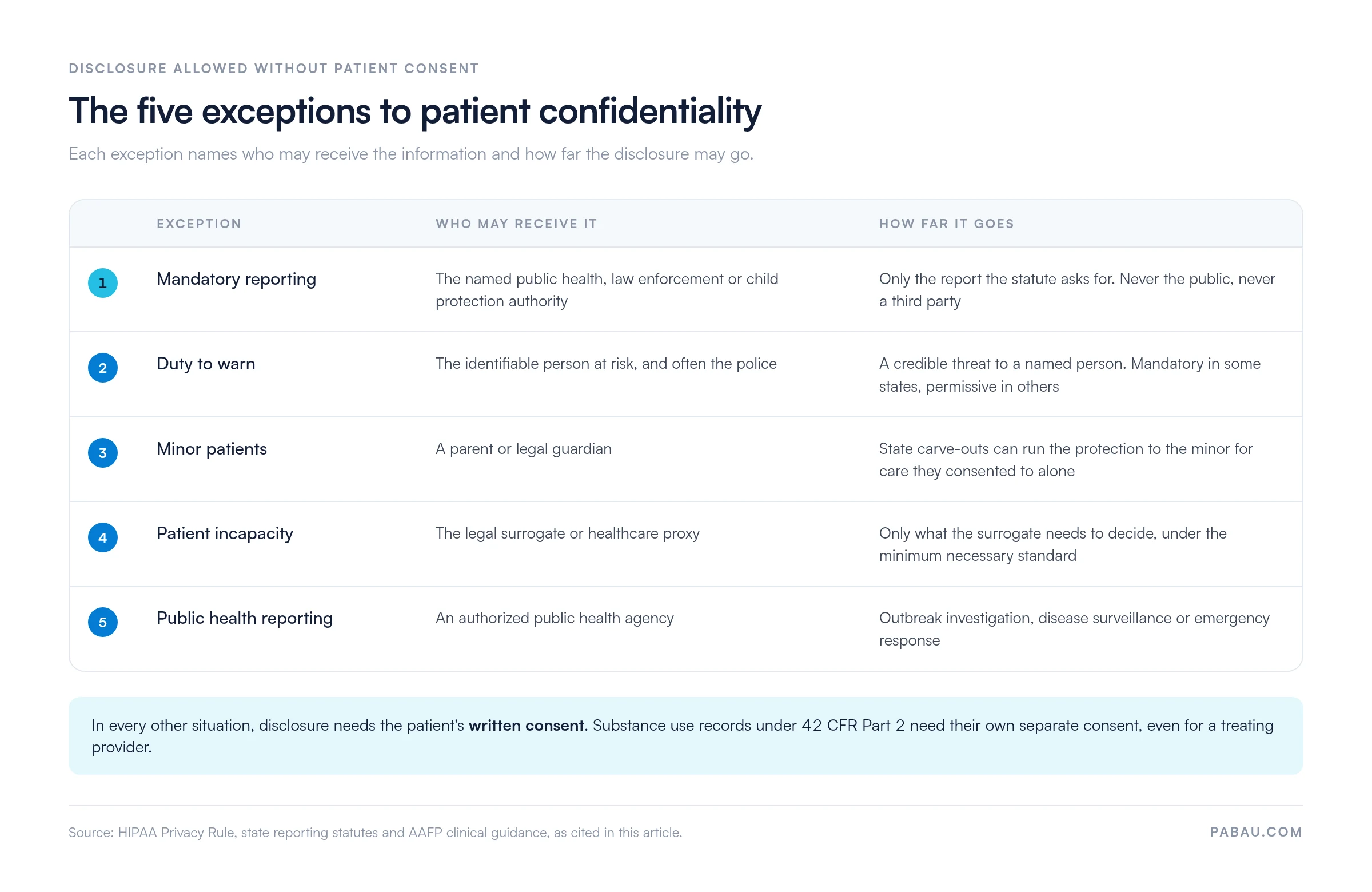
The AAFP’s 2025 guidance on exceptions to patient confidentiality is the clearest current reference for working through these calls at the chairside.
Before you disclose anything under an exception, run four checks.
Mandatory reporting requires you to notify a named authority about specified conditions and events, regardless of patient consent. Reportable items vary by state.
Most lists include named infectious diseases such as TB and STIs, food-borne illness outbreaks, gunshot wounds, some occupational injuries, and suspected child abuse. The duty overrides confidentiality, and the disclosure goes to the reporting authority only.
Duty to warn lets you break confidentiality when a patient makes a credible threat against an identifiable person. It comes from Tarasoff v. Regents of the University of California (1976).
The California Supreme Court held that a therapist had to warn the person named. Its reasoning was that the protective privilege ends where the public peril begins.
Most US states now carry some version of the duty, and the version matters. Some impose a mandatory duty. Others create a permissive exception, and a few have no statute at all. Facing one of these calls, ring your legal counsel and your malpractice carrier before you act on a general reading of the doctrine.
Parents and legal guardians generally have access to a minor’s records, with carve-outs that can put the minor in control instead. States name specific services a minor can consent to alone.
That list usually covers reproductive health, contraception, STI testing and treatment, substance use treatment, and mental health care in some states. Where the minor consented alone, the protection for that care can run to the minor rather than the parent.
State law decides this and the differences are large. Reception takes the call before any clinician hears about it. Write your state’s rule into the script they follow, and keep a printed copy at the desk.
When a patient cannot make their own decisions, a legally designated surrogate or healthcare proxy may receive the clinical information needed to decide.
Disclosure stops at what that decision requires, which is the minimum necessary standard doing its job. Record who the surrogate is, what authority they hold and what you released.
Public health agencies can require identifiable or aggregate data to investigate an outbreak, track disease trends or respond to an emergency. HIPAA permits these disclosures to an authorized agency without patient consent. This sits apart from case-by-case mandatory reporting, although the two overlap during an outbreak.
Mental health practice carries confidentiality duties that go beyond general medical confidentiality. Patients in therapy say things they would say nowhere else, and the work depends on those disclosures staying put.
Three areas need particular attention:
Build these distinctions into the record system rather than leaving them in a policy document. Sensitive notes should be invisible by default to any role with no reason to read them.
Going digital multiplied the ways patient information can leak. A paper chart could be photocopied or walked out of the building. A digital record can be forwarded, screenshotted, opened from home and copied at scale in a single action.
HIPAA’s Security Rule answers this with three categories of safeguard. Administrative covers policy, training and workforce management. Physical covers devices and facilities.
Technical covers encryption, access control and audit logging. Our guide to HIPAA Security Rule requirements walks through what each category asks of a practice.
Four digital risks are worth managing directly.
A written policy protects nobody on its own. These six habits turn a confidentiality obligation into something your team does on an ordinary Tuesday afternoon.
Review your consent workflows once a year. A signed consent your team can find in under a minute beats a cabinet of PDFs. Nobody locates those when a complaint lands. Ask one person to retrieve a named patient’s consent form while you time them. If it takes more than two minutes, the filing is the problem, not the staff.
A breach sets several clocks running at once. HIPAA gives you 60 days from discovery to notify the affected individuals. A breach touching 500 or more people also goes to HHS OCR, and to prominent media outlets in the affected state.
Four kinds of consequence tend to follow.
Suspect you have had one? Our guide on what to do if you violate HIPAA covers the notification sequence and the documentation you need to keep.
Social media deserves its own mention here. Staff posts are among the most common and most visible breach types in practice settings. The risks around HIPAA and social media belong in your next training session.
Most confidentiality failures in a practice happen where a written policy meets a system that does not enforce it. The policy says minimum necessary. The software gives everyone the same login. Staff then fall back on memory and goodwill, which holds right up until a busy Friday.
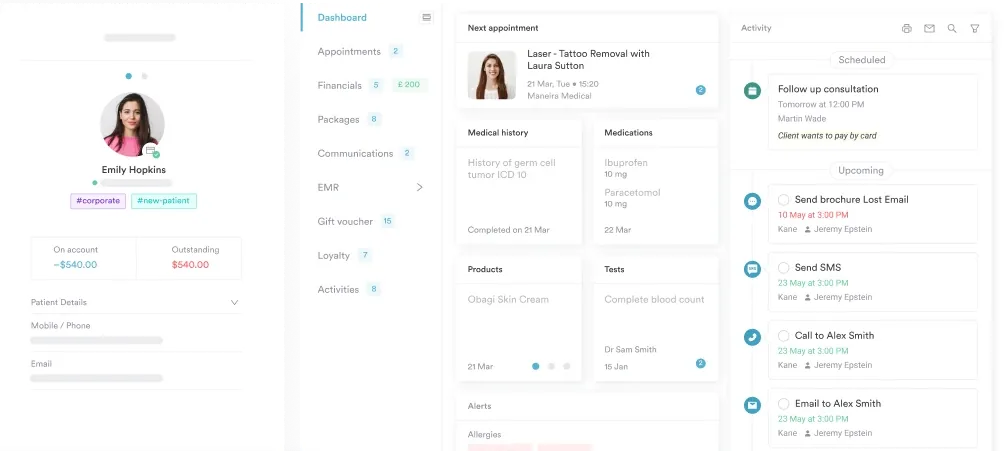
Practice management software like Pabau closes that distance by building the rule into the workflow. Pabau’s compliance management software applies access rules at the record level, so a role that should not see a clinical note simply cannot open one.
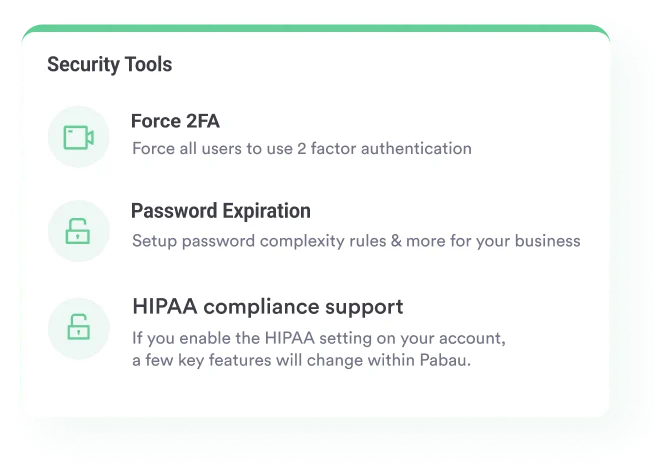
Five capabilities do most of the work:
The outcome is that an owner stops depending on every team member recalling every access rule each day. Multi-site groups get that benefit twice over, since one configuration applies across every location.

Pabau applies role-based access, audit logs, encrypted records and digital consent inside the workflow your team already uses. Confidentiality then holds without anyone having to remember the rules.

Patient confidentiality holds or fails at the level of habit. Statute tells you where the boundary sits. The five exceptions tell you when it moves. Your systems decide whether anyone stays inside it on an ordinary day.
The trade-off worth remembering is a small one. Tight access control feels like friction the week you turn it on, then stops feeling like anything by the second month. Loose access feels like nothing at all, right up until the notification letters go out.
Pick one task this week. Run the PHI inventory, or time someone retrieving a consent form. Either one teaches you more about your exposure in an hour than a policy review teaches in a year. Book a demo to see how Pabau keeps patient records, consents and access rules in one auditable system.

Need the full compliance picture for a medical office? HIPAA compliance for medical offices walks through the administrative, physical and technical safeguards in practical terms.
Wondering how secure your records system is? EHR security covers the controls to look for before you commit to a platform.
Not sure how long you have to keep a patient file? How long to keep medical records sets out the retention periods by state and record type.
Moving your practice off paper? Going paperless in a HIPAA-compliant way covers what to change before you scan the first chart.
No. HIPAA protects a patient’s health information for 50 years after death. During that period the personal representative of the estate holds the same rights the patient held, including the right to authorize a release. Apply the same access controls to deceased patients’ records that you apply to living ones.
No, provided you limit what it shows. HHS treats sign-in sheets and calling a patient’s name in the waiting room as permitted incidental disclosures. Keep the reason for the visit off the sheet. A cover strip or a single-line sheet stops anyone reading the names above their own.
Yes. HIPAA allows appointment reminders, so a short voicemail is fine. Give the practice name, the date and the time, and leave out the reason for the visit. Use only the number the patient gave you, and honor any request to be contacted another way.
Anyone with legal authority to make healthcare decisions for that patient. In practice that means a healthcare power of attorney, a court-appointed guardian, a parent of a minor, or the executor of an estate. They get the same access the patient would, limited to the scope of their authority.