CPT code 52648: Laser ablation of the prostate billing guide
What CPT code 52648 covers, and what it bundles in CPT code 52648 is the code fo...

Last Updated: Oct 21, 2026

A UnitedHealthcare prior authorization form asks UHC to approve a treatment, procedure, or medication before you deliver it.
Submit it through the UnitedHealthcare Provider Portal, by phone, or by fax. Include the member ID, your NPI, the ICD-10 diagnosis code, and the CPT or HCPCS procedure code.
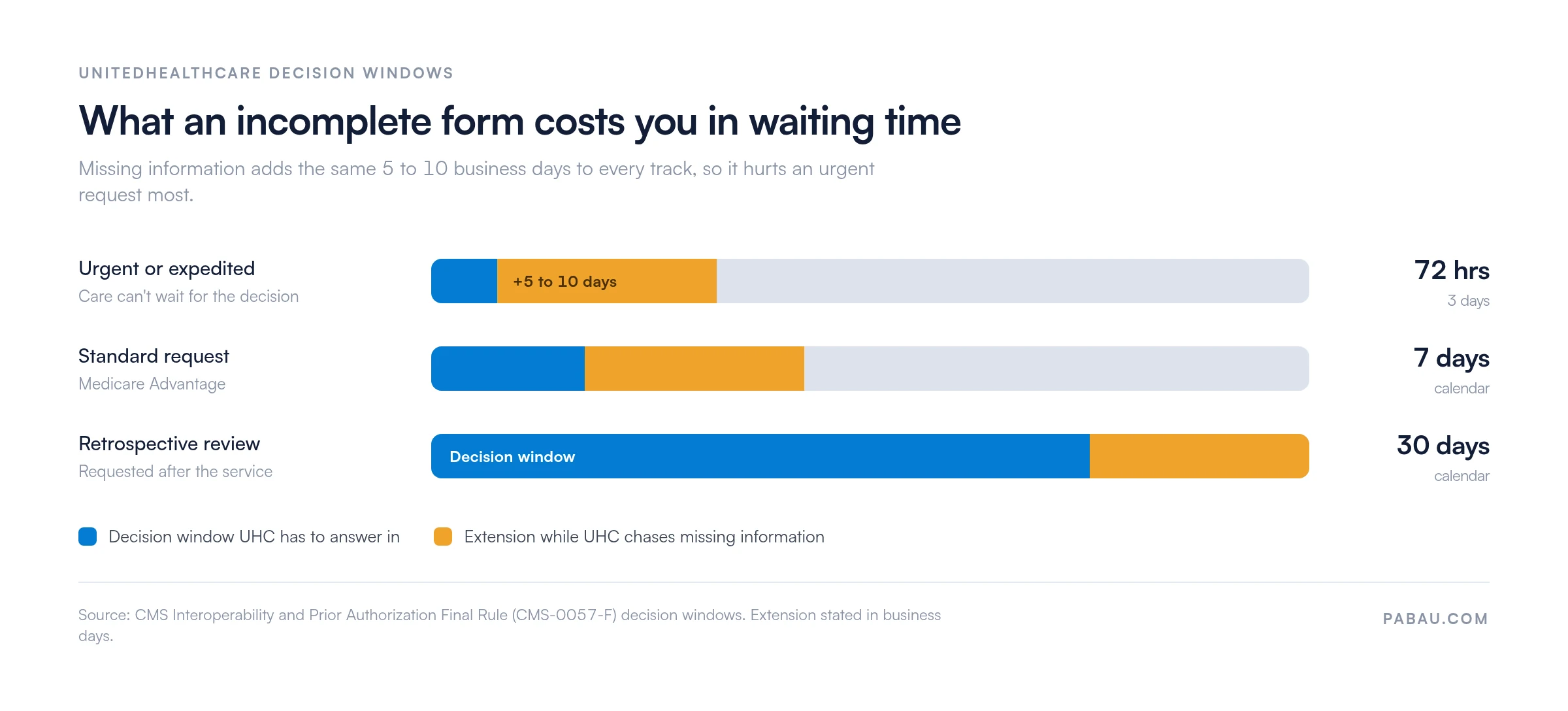
CMS decision windows run 72 hours for urgent requests, seven days for standard Medicare Advantage requests, and 30 days for retrospective reviews.
Incomplete justification, mismatched codes, and fax delays cause 30 to 40 percent of denials. A pre-submission check catches all three.
Practice management software like Pabau keeps intake details, clinical notes, and codes in one patient record, so nothing has to be re-keyed onto the form.
A provider reference covering every field UHC asks for on a prior authorization request. It maps the submission route for Commercial, Medicare Advantage, Medicaid, and Part D plans, and closes with a pre-submission checklist.
Download templateAn incomplete prior authorization request does not just sit in a queue. It restarts the exchange, adding 5 to 10 business days while UnitedHealthcare (UHC) chases what you left out. On an urgent request with a 72-hour window, that turns a three-day answer into a two-week wait.
This guide works through the United Healthcare prior authorization form section by section, for every plan type. You will see what belongs in each field, which submission route UHC answers fastest, and the deadlines the payer works to. Each step is tied to the denial it prevents.
One thing to settle first. UHC has to be able to match your NPI to an active contract, so a request from an unrecognized provider stalls before anyone reviews it. If that is still in progress, start with credentialing with insurance companies and come back to the form.
It is a formal request asking UnitedHealthcare to approve a service before you deliver it. That covers procedures, medications, imaging, and durable medical equipment for an insured patient.
Prior authorization exists to control cost and to confirm that a treatment meets medical necessity standards under the patient’s coverage. The form does two jobs at once. It records the diagnosis and the proposed treatment, and it proves you asked before you treated.
The CMS Interoperability and Prior Authorization Final Rule (CMS-0057-F) sets the response times for Medicare Advantage and Medicaid plans. UHC has 72 hours to answer an urgent request and seven days to answer a standard one. Retrospective reviews, requested after the service, run to 30 days.
Those clocks only start once UHC holds a complete request. Send the form in short of a field and the payer comes back for it, which typically adds another 5 to 10 business days.
Commercial plans sit outside that rule, and a portal submission often clears well inside the deadline. Treat the windows above as the outside edge rather than the expected wait.
Most denials trace back to the paperwork rather than the clinical picture. Work through the form in five sections and check each one before you submit.
You need the patient’s UnitedHealthcare member ID, full name, date of birth, and plan type. Plan type matters more than it looks. Commercial, Medicare Advantage, Medicaid, and Part D each route to a different processing team, and some ask for a different form or submission method.
UHC asks for your NPI, tax ID, practice name, phone number, and fax number. Prescribers filing a pharmacy request add their DEA number. These details have to match your credentialing record exactly. A mismatch sends the request to the wrong team or drops it into manual review.
Enter the ICD-10 diagnosis code and the service code: CPT for procedures, HCPCS for supplies and equipment, J-codes for drugs. Code accuracy matters most in this section. One wrong digit, or a code that contradicts the diagnosis, is an automatic denial.
Take CPT 99213, an office visit for an established patient, filed against a fracture treated two months ago. That pairing contradicts a Medicare coverage guideline UHC applies, which limits office visit codes to active acute conditions. UHC will deny it.
The superbill for the encounter is a quick cross-check here, since it already pairs the diagnosis and service codes you plan to bill.
This section is where you prove medical necessity. Write two to four sentences on why this patient needs this service now. Cover the relevant clinical findings, any conservative treatment that failed, current symptoms, and recent imaging or lab results.
Cite a clinical guideline where one applies. “Per AAOS guidelines, surgical intervention is indicated for Grade 3 ACL tears” is the shape you want. Vague lines like “patient requested it” or “per plan coverage” get denied.
UHC often wants office visit notes, imaging reports, lab results, or records from earlier treatment. Attach whatever strengthens the clinical case. Evidence sent up front either speeds the approval or produces a specific denial you can appeal with better records.
Any practice billing UnitedHealthcare runs into prior authorization. It applies across Commercial, Medicare Advantage, Medicaid, and Part D plans. That takes in primary care and specialty practices in orthopedics, cardiology, mental health, and dermatology. It also covers outpatient surgery centers, imaging facilities, physical therapy practices, and pharmacies dispensing specialty medications.
Solo practitioners, group practices, and multi-location practices all follow the same UHC process. Larger groups usually centralize it with one billing team rather than leaving each site to file its own.
A request that clears on the first attempt does three things for the practice. Treatment starts on schedule. A denial that arrives against complete documentation can be appealed on evidence you have already filed. And the record stands up in an audit, because it shows you sought approval before you delivered care.
UnitedHealthcare does not require prior authorization for every covered service. Preventive care usually needs none, so annual physicals, vaccinations, and routine screenings go straight through. These categories almost always need it:
Requirements shift by plan type and by state, so check the specific plan’s list before you schedule or order. UHC keeps the current list on its provider site.
Roughly 30 to 40 percent of prior authorization denials come from preventable paperwork errors rather than disagreements about medical necessity. Catching them before you submit is faster and cheaper than appealing. Four account for most of the damage.
“Patient needs this procedure” gives the reviewer nothing to weigh, so UHC denies it and asks for detail. Cite specific findings instead: lab values, imaging results, how long symptoms have run. Then say why this treatment is the next appropriate step. Getting this section right is the cheapest denial management you will ever do.
A service code that does not align with the patient’s diagnosis triggers an automatic denial. A foot surgery CPT code filed against a knee injury diagnosis reads as illogical and fails on first review. Software that validates code pairs against LCD and NCD criteria catches this before submission. Pabau’s claims management software runs that check as the claim is built.
Fax is slower and more error-prone than the portal. A portal submission confirms receipt and routes itself to the correct review team. A fax can land in the wrong department, or fail to land at all. Use the portal whenever UHC offers it for that plan.
UHC will not go and find the patient’s chart for you. Attach the office visit notes, lab reports, imaging, and prior treatment records that carry the medical necessity argument.
Avoiding all four comes down to workflow rather than diligence. You need a standard pre-submission checklist, staff trained on clean claim standards, and somewhere to track each request until UHC answers.
Audit your UHC denials once a month and rank the top three reasons. Incomplete justification? Code mismatches? The wrong form for the plan type? Retrain on that one step rather than on the whole process. Fixing a single systematic error usually moves the denial rate further than broad refresher training does.
Most practices assemble a prior authorization by hand. Someone opens the chart for the member ID and checks the credentialing file for the NPI. Then they pull the codes off the encounter and retype all of it into the payer’s form. Every hop is a chance to transpose a digit.
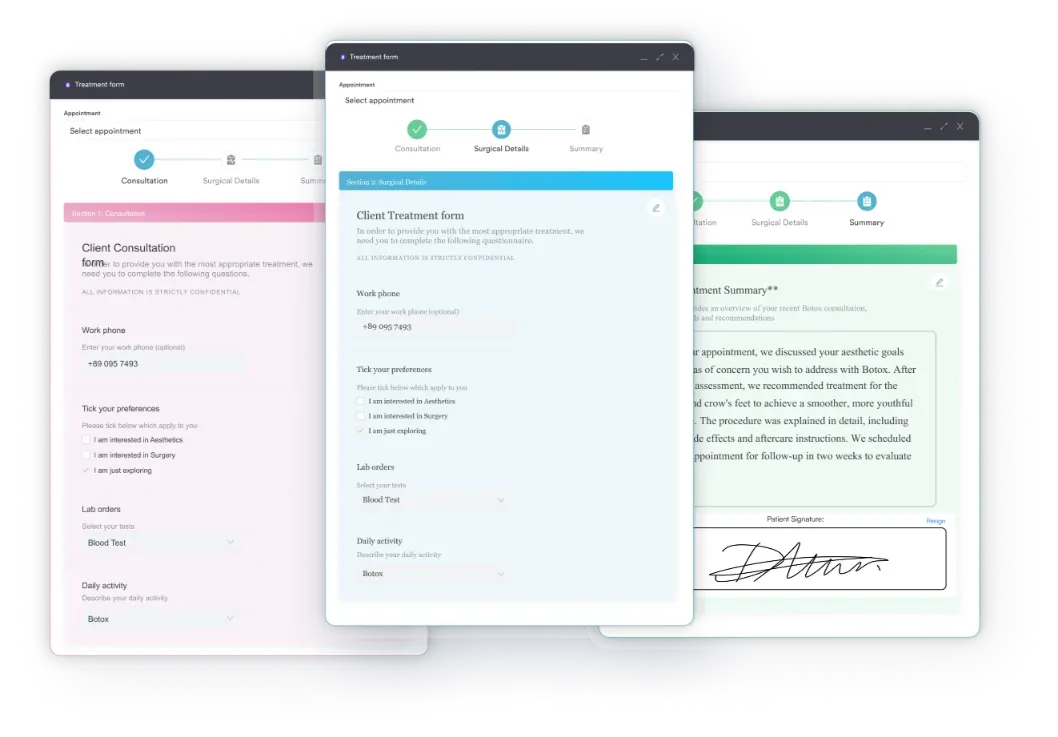
Practice management software like Pabau keeps those pieces in one patient record. Digital intake forms capture member and insurance details when the patient books. Treatment notes, diagnosis codes, and procedure codes sit against the same appointment. Nothing has to be copied between systems.
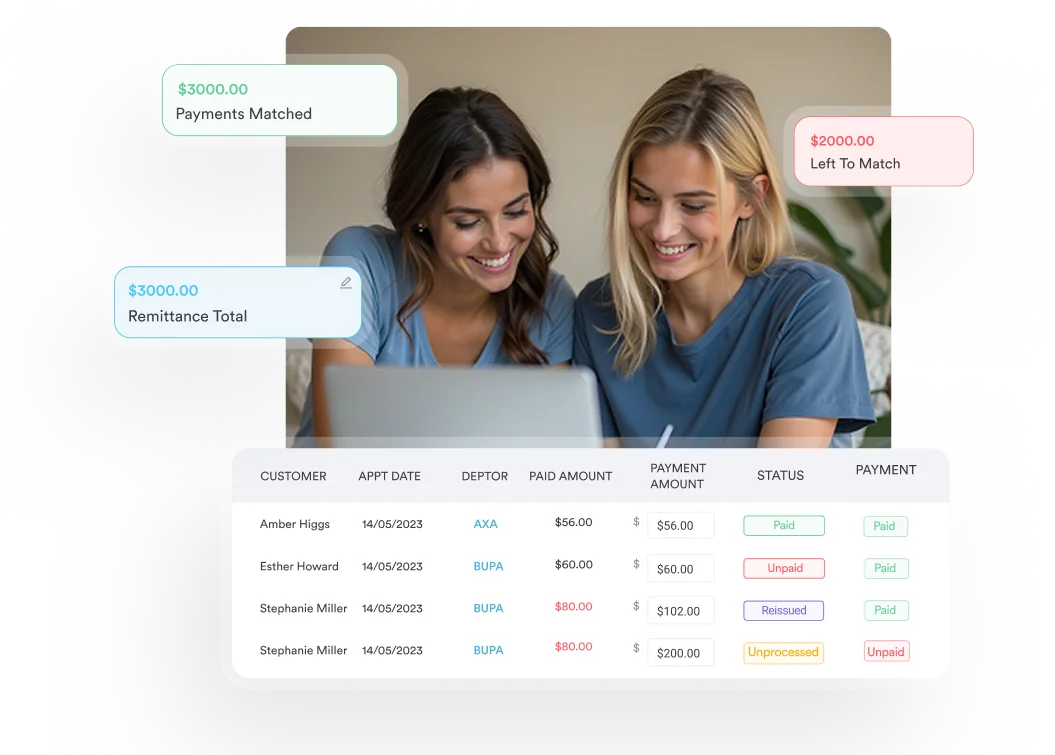
Claims management then tracks what happens after the request leaves the practice, and reporting shows which denial reasons keep recurring. Your front desk stops retyping details it already holds, and billing stops discovering a blank field two weeks later.

Pabau keeps intake details, treatment notes, and billing codes against the same patient record, so a UHC request is assembled rather than retyped. Claims management and reporting then show you where denials keep coming from.

Prior authorization rewards preparation over speed. Practices that clear UHC first time tend to assemble the details well in advance. The member ID, the NPI, the codes, and the clinical evidence are ready before anyone opens the form.
Skipping that costs days rather than dollars. An urgent request answered in 72 hours becomes a two-week wait the moment UHC comes back for a field you left blank. The patient absorbs the delay.
Treat the form as the last step in a process that started at intake, and the denial rate falls on its own. Book a demo to see how Pabau holds the details a UHC prior authorization needs in one patient record.

Need to understand claim denials? Denial management in healthcare walks through the appeals process and how to recover revenue from denied claims.
Want to catch coverage problems before you file? Insurance eligibility verification explains how to confirm coverage at scheduling, which surfaces prior authorization requirements early.
Need the payer-agnostic version of this workflow? The prior authorization process covers the steps that stay the same whichever insurer you are submitting to.
Tracking requests in a spreadsheet? Prior authorization software compares the tools that monitor requests through to approval.
The fastest route is the UnitedHealthcare Provider Portal at UHCprovider.com. Log in and go to Prior Authorization. Complete the form with the member ID, provider NPI, ICD-10 diagnosis code, CPT or HCPCS procedure code, and your clinical justification. Phone and fax submission are also available, on plan-specific numbers listed at UHCprovider.com.
You need the member ID, date of birth, and plan type (Commercial, Medicare Advantage, Medicaid, or Part D). Add your NPI, tax ID, phone, and fax. Then the ICD-10 diagnosis code and the CPT or HCPCS service code, a clinical justification of two to four sentences, and supporting documents. Leave any of these blank and the request stalls.
No. UnitedHealthcare uses one PA request form across inpatient, outpatient, emergency, and telehealth settings. The fields are the same either way. What changes is whether the procedure needs admission or same-day discharge, and plan type can route the request to a different review team.
The CMS Interoperability and Prior Authorization Final Rule (CMS-0057-F) sets the windows for Medicare Advantage and Medicaid plans. Urgent requests must be answered within 72 hours. Standard requests get seven days, and retrospective reviews get 30 days. Commercial plans often approve faster through the portal. An incomplete form can add 5 to 10 business days while UHC requests what is missing.
Preventive care such as physicals, vaccinations, and screenings generally does not. Inpatient admissions, elective surgeries, and non-emergency MRI or CT imaging generally do. So do specialty medications, durable medical equipment, mental health treatment beyond the initial visit, and many outpatient procedures. Check the specific plan’s list before scheduling.
File a reconsideration request inside the window named on the denial letter, typically 30 to 60 days. Send the original form plus additional clinical evidence, peer-reviewed guidelines, or records supporting medical necessity. If the denial survives reconsideration, request an independent external review through your state’s insurance commissioner.
Medicare Advantage plans use the same core form as Commercial plans, but the submission routes and deadlines are set by CMS. Urgent requests must be decided within 72 hours and standard requests within seven days. Some MA plans accept submissions only through the UHC Provider Portal, so check the instructions for your plan at UHCprovider.com.
Yes. The UnitedHealthcare Provider Portal takes electronic submissions around the clock. It is the preferred route because it confirms receipt immediately and routes the request to the correct review team. Phone and fax still work, but both are slower and easier to misroute.