Despina Petrushevska
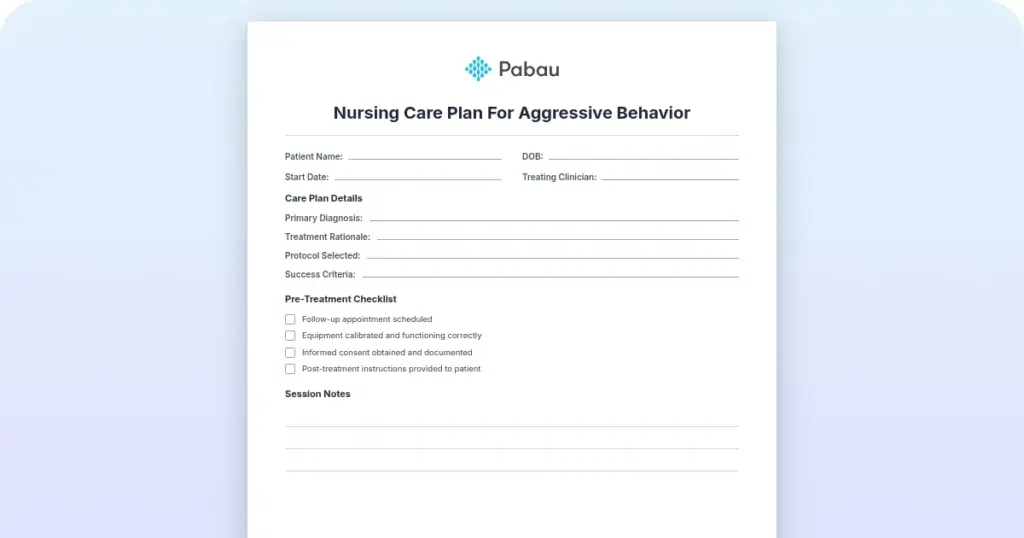
Nursing care plan for aggressive behavior
A nursing care plan for aggressive behavior is a structured clinical document fo...

2
Last Updated: Oct 26, 2026
Free PDF 1 page, print-ready Clinician-reviewed
Download Your Free Tinnitus Report Template Tinnitus Report A comprehensive clinical documentation template for systematically evaluating patient tinnitus symptoms, severity ratings, audiological findings, treatment plans, and progress tracking in audiology and ENT practices. Download template What is a Tinnitus Report Template? A tinnitus report is a structured clinical documentation template designed to capture comprehensive information […]
A comprehensive clinical documentation template for systematically evaluating patient tinnitus symptoms, severity ratings, audiological findings, treatment plans, and progress tracking in audiology and ENT practices.
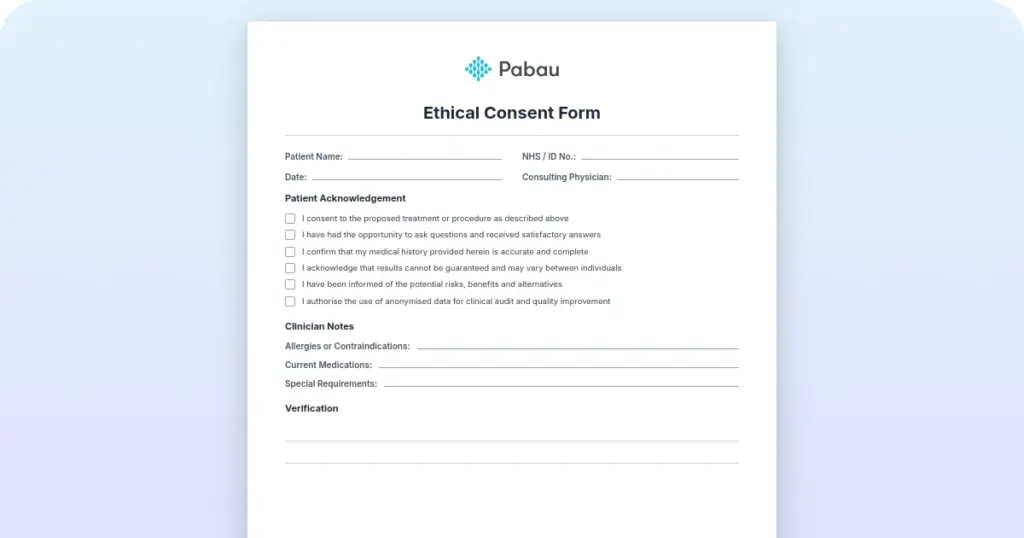
Upload this PDF, or any form you already use, and Pabau's AI Form rebuilds it with tick boxes, text fields and a signature. Attach it to the treatment once, and every patient gets it on time.
AI Form rebuilds the consent, history and aftercare forms you already use. You review each one, then publish.
Patients complete forms on their phone before they arrive, so the front desk stops retyping paper.
Every signed form is versioned and attached to the treatment record, ready when you need it.
Set how long a consent stays valid. Returning patients skip forms they have already signed.
Supports HIPAA and GDPR compliance AES-256 encryption 4.8 on G2 4.7 on Capterra Trusted by 4,000+ practices worldwide

A tinnitus report is a structured clinical documentation form used by audiologists and ENT specialists to systematically assess, monitor, and document tinnitus symptoms and treatment response.
The template captures severity ratings, symptom characteristics, audiological findings, impact on function, and treatment outcomes using validated assessment scales like the Tinnitus Functional Index and Tinnitus Handicap Inventory.
Standardized reporting reduces documentation gaps, ensures consistent follow-up, supports clinical decision-making, and improves compliance with patient outcome tracking requirements.
Pabau’s digital forms and Echo AI streamline tinnitus report creation and reduce administrative burden for audiology and ENT practices.
A tinnitus report is a structured clinical documentation template designed to capture comprehensive information about a patient’s tinnitus experience in a standardized format. Rather than relying on narrative notes, this template provides organized sections that guide clinicians through systematic assessment of symptom severity, triggering factors, impact on daily life, and treatment response.
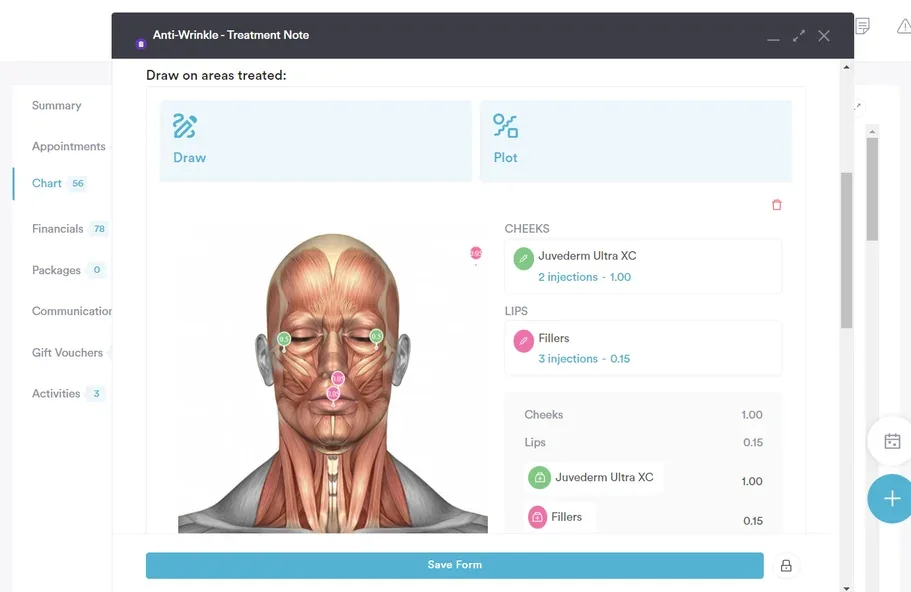
The template typically includes validated assessment scales-such as the Tinnitus Functional Index (TFI) and Tinnitus Handicap Inventory (THI)-alongside space for audiological test results, patient-reported outcomes, and clinical observations. This structured approach ensures consistency across patient visits and creates a clear clinical record that supports diagnosis, treatment planning, and longitudinal progress tracking.
Tinnitus affects approximately 10-15% of the population globally. Prevalence rises in older adults and those with hearing loss. For audiology and ENT practices, a standardized tinnitus report eliminates gaps in documentation, reduces the risk of missing critical clinical details, and provides evidence for treatment efficacy when patients undertake interventions such as sound therapy, cognitive behavioural therapy, or hearing aids.
Using a tinnitus report template follows a five-step clinical workflow that mirrors best-practice audiology assessment:
This systematic approach ensures that each tinnitus report captures clinically actionable information and creates a longitudinal record supporting evidence-based care.
Audiologists in private practice and hospital audiology departments rely on standardized tinnitus report documentation to manage high patient volumes while maintaining clinical quality. The template supports both general audiology clinics and specialized tinnitus management centres that see multiple patients with hearing loss and associated tinnitus daily.
Otolaryngologists (ENT specialists) use tinnitus reports as part of comprehensive ear, nose, and throat assessment, particularly when ruling out underlying structural or systemic causes. Mental health practitioners-therapists, psychologists, and counsellors-also benefit from tinnitus report templates when patients present with tinnitus-related anxiety, insomnia, or depression requiring coordinated care.
Software designed for GP practices can attach this form to the consultation record automatically.
Consistency and standardization: A structured template ensures every clinician in the practice documents tinnitus assessments using the same framework. This consistency enables peer review, supports training of new audiologists, and allows reliable comparison of patient outcomes across the practice.
Clinical decision support: Embedded severity scales and outcome measures guide clinicians toward evidence-based interventions. Rather than relying on subjective impression, numeric scores objectively quantify tinnitus burden and enable rational selection between hearing aids, sound therapy, cognitive behavioural therapy, or specialist referral.
Longitudinal outcome tracking: This supports both patient engagement (showing progress) and audit compliance (demonstrating effectiveness).
Compliance and legal protection: A comprehensive tinnitus report documents the clinical reasoning behind diagnostic and treatment decisions. This protects the practice in the event of patient dispute, supports HIPAA and GDPR compliance through systematic consent and data handling, and provides evidence for insurance billing if applicable.
Systematically screen every patient presenting with hearing loss for tinnitus, even if they don’t spontaneously report it. Many patients minimise or normalise tinnitus symptoms, but a brief screening question (‘Do you ever hear ringing, hissing, or other sounds in your ears?’) will identify 30-50% of patients with unmanaged tinnitus. Embedding a tinnitus severity scale into your routine audiometric protocol ensures no patient leaves without documented tinnitus status and appropriate counselling.
Tinnitus is one of the most common symptoms audiology practices encounter, yet it remains under-documented in many clinical settings. Patients often tolerate tinnitus for years before seeking help. When they do, they frequently describe distress, sleep disruption, and anxiety that rival the impact of hearing loss itself. A structured tinnitus report validates the patient’s experience, documents the clinical rationale for treatment, and creates accountability for follow-up. Patients whose tinnitus-related fatigue limits daily function may also need a nursing care plan for activity intolerance to track physical capacity.
This real-time documentation improves data accuracy and frees up clinical time for patient education and counselling.
Additionally, a populated tinnitus report creates a defensible clinical record. If a patient later claims the clinician failed to assess or counsel about tinnitus, the completed template and documented severity scores provide objective evidence of appropriate clinical care. For practices pursuing accreditation from the American Academy of Audiology or British Society of Audiology, standardized tinnitus documentation is increasingly expected as evidence of clinical governance.
The most widely adopted tinnitus severity scales are:
Including these validated instruments in a tinnitus report template ensures that clinicians capture quantifiable outcome data rather than vague descriptors. This supports clinical decision-making. It also supports research participation if the practice contributes data to tinnitus registries or intervention trials.
In the UK. Patients must provide informed consent for data collection and processing. The practice must also document how tinnitus severity information will be used (clinical care, audit, research).
In the US, HIPAA regulations require that clinical documentation containing patient health information be stored securely. Appropriate access controls and audit trails are mandatory. For private audiology practices, using a secure practice management system with built-in tinnitus report templates ensures compliance and reduces the risk of data breach.
The template should include clear documentation of any referrals made (psychiatry for anxiety, sleep specialist for insomnia). It should also record patient education provided regarding realistic timelines for symptom improvement. This demonstrates that the clinician addressed not only the hearing problem but also the psychosocial impact of tinnitus.
Digital practice management platforms now offer customizable tinnitus report templates that integrate directly with patient records, appointment scheduling, and outcome reporting. Rather than printing paper forms, practices can embed the template into their intake process. Patients complete severity scales on a tablet or through a patient portal before the appointment. This reduces completion time and ensures baseline data is captured before the clinician enters the room.
Clinicians can then review the patient’s responses and add their own clinical findings (audiometric results, physical examination notes). The completed report automatically populates longitudinal outcome tracking dashboards.
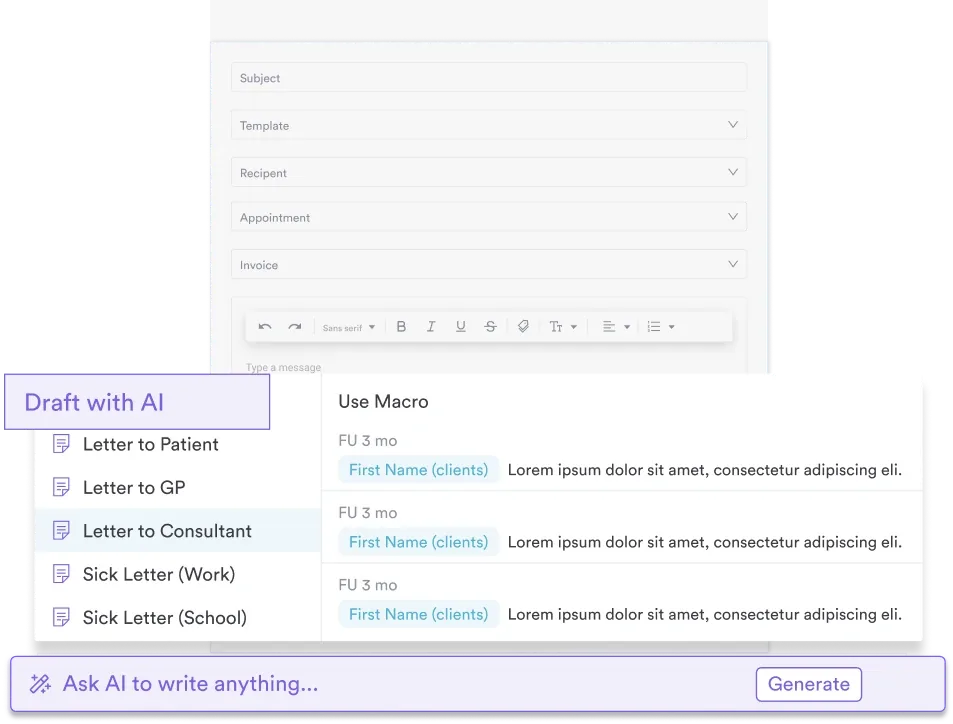
Training staff to use the template consistently takes around one to two weeks. The goal is to ensure every patient with an ear-related complaint is screened for tinnitus, and that all tinnitus patients have a completed tinnitus report at baseline and each visit. Once embedded in workflow, the template typically adds only 5-10 minutes per patient visit and generates significant clinical and operational benefits.
Book a demo to explore how Pabau’s digital forms and clinical record system can streamline tinnitus assessment and documentation in your audiology or ENT practice. Our built-in templates and outcome tracking tools help you deliver consistent, evidence-based care while reducing paperwork.
A standardized tinnitus report template transforms tinnitus assessment from ad-hoc narrative documentation into systematic, quantifiable, and reproducible clinical care. By embedding validated severity scales, audiological findings, and treatment outcomes into a structured template, audiology and ENT practices ensure that no patient’s tinnitus experience is overlooked, and that treatment decisions are grounded in objective evidence.
Whether you’re a solo practitioner or a multi-clinician audiology centre. It also supports patient engagement through visible progress tracking. Start with the free template above and customize it to match your practice’s specific patient population and treatment philosophy.

How do you measure tinnitus severity in clinical practice? Choosing an electronic health record for private practice allows you to embed validated severity scales like the TFI and THI directly into your patient assessments.
Handing off nursing assistant duties at shift change? CNA report sheet template organizes vital signs, ADL support, and condition changes across a single shift.
Assessing a patient for Raynaud’s phenomenon? Cold stimulation test template records baseline measurements and finger temperature recovery times for a Raynaud’s diagnosis.
A tinnitus report is a structured clinical documentation form that systematically captures patient symptoms, severity (using validated scales like the TFI or THI), audiological findings, and treatment response in audiology and ENT practices.
Audiologists, otolaryngologists, mental health practitioners, and any clinician managing patients with tinnitus benefit from standardized templates. The template is especially valuable in private practices and specialized tinnitus centres where multiple clinicians need to document consistently.
The Tinnitus Functional Index (TFI) and Tinnitus Handicap Inventory (THI) are the most widely validated tools. Many practitioners also use a simple Visual Analogue Scale (VAS) for quick baseline and follow-up loudness and annoyance ratings.
Quantified severity scores help clinicians objectively assess tinnitus impact and select evidence-based interventions (hearing aids, sound therapy, CBT, specialist referral) rather than relying on subjective impression. Follow-up scores then document whether the chosen treatment is effective.
A tinnitus report itself is compliant as long as it’s stored securely in a HIPAA or GDPR-aligned practice management system, patient consent for data collection is documented, and access is restricted to authorised clinicians. Digital systems with audit trails and encryption provide the necessary safeguards.