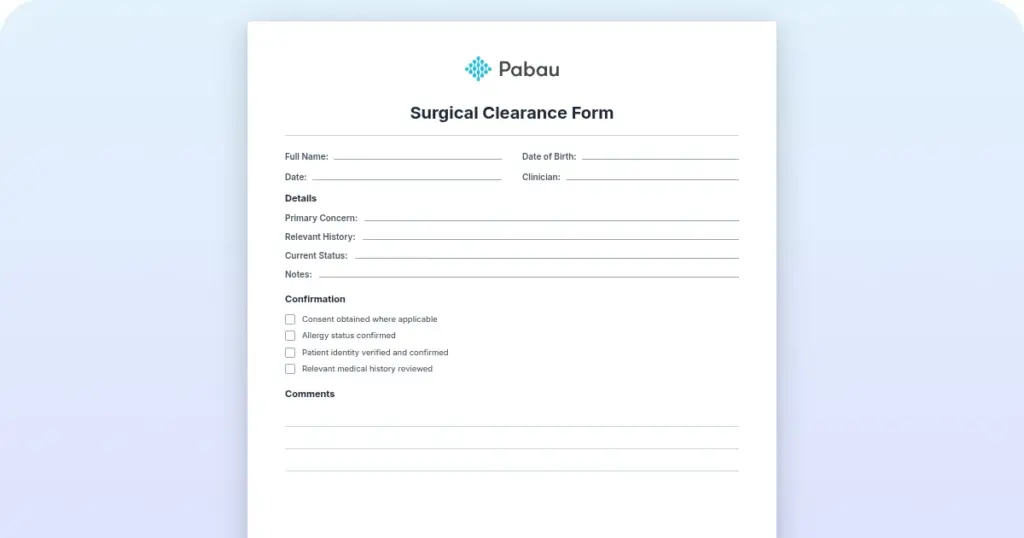
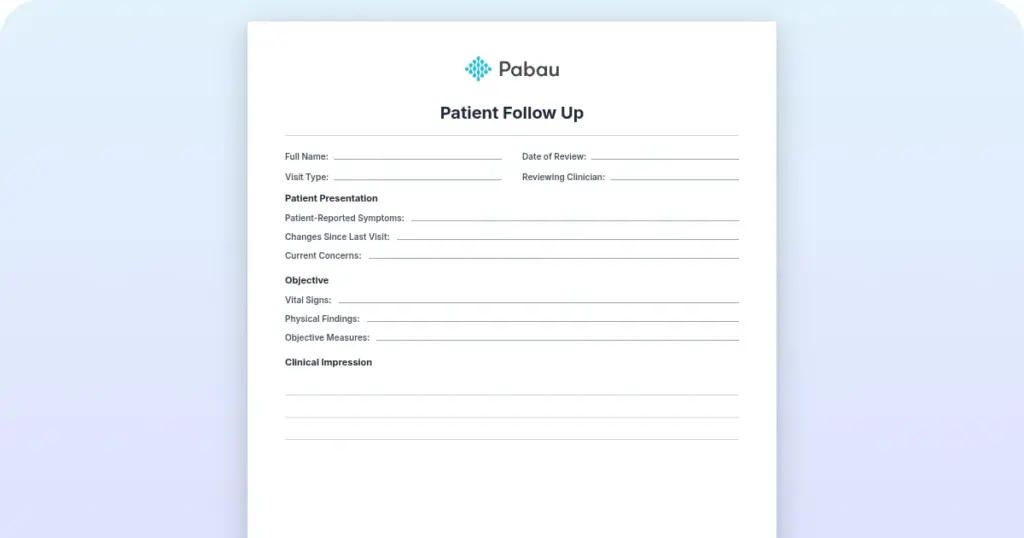
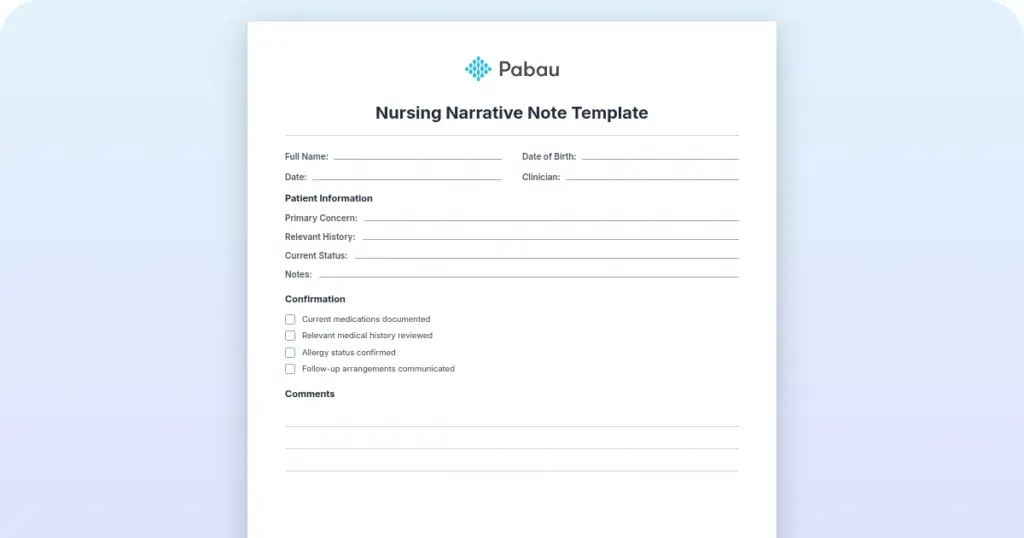
Surgical clearance form to download
A surgical clearance form is the document a surgeon uses to record whether a pat...

Last Updated: Oct 22, 2026
A therapy termination worksheet is a short clinical form that guides you and your patient through the last phase of treatment.
It captures goals met, coping skills learned, early warning signs, and the support the patient will lean on next.
The free worksheet below fits planned endings and unplanned ones alike. This guide explains what each section asks, how to adapt it for teens and groups, and what to document when a patient stops attending.
A ready-to-use form covering goals review, progress assessment, coping skills, relapse prevention planning, support networks, and emotional closure. Written for adult and adolescent patients.
Download template
A therapy termination worksheet structures the last phase of treatment, from progress review to relapse prevention and emotional closure.
Ethical codes from the APA and NASW require a planned ending, and a completed worksheet documents that you delivered one.
Adults, teens, and therapy groups each need different wording, while an unplanned ending needs a documented outreach trail instead.
Practice management software like Pabau builds the worksheet into the patient record, and Care Plus, a paid add-on, extends patient care further.
A therapy termination worksheet is a one- to two-page clinical form that structures the end of treatment. It prompts you and the patient to review the treatment journey, the gains made, and the skills learned. A final section sets out the plan for holding on to those gains after discharge.
The worksheet is a shared tool, so the patient completes sections and takes a copy home. That copy doubles as a record of the work done and of their readiness to move on. A termination summary, by contrast, stays in the chart and is written for clinicians.
Both the APA ethical standards and the NASW Code of Ethics treat a planned, documented ending as part of competent care.
How treatment ends shapes whether a patient keeps the gains or slides back. A rushed, unstructured close can undo months of work, and sudden abandonment leaves patients feeling rejected.
Ethical obligations are not optional here. APA Ethics Code Standard 10.10 requires psychologists to terminate when a patient no longer benefits, or when the psychologist cannot provide competent care. NASW standards focus on avoiding abandonment through referral and transition planning.
A structured worksheet covers both duties at once. It documents that closure happened, and it sends the patient away with written coping skills, a relapse plan, and resources to call on. Mental health practice software can schedule the reminders that flag a final session before anyone drops off the calendar.
A complete worksheet covers seven sections.
Build each section around the patient in front of you rather than handing over a fixed form. A worksheet that names their own goals in their own words tends to come back completed. A generic one gets folded into a bag and forgotten.
Those seven sections hold for every ending you will handle. What shifts is the wording, who else takes part, and which section carries the most weight.
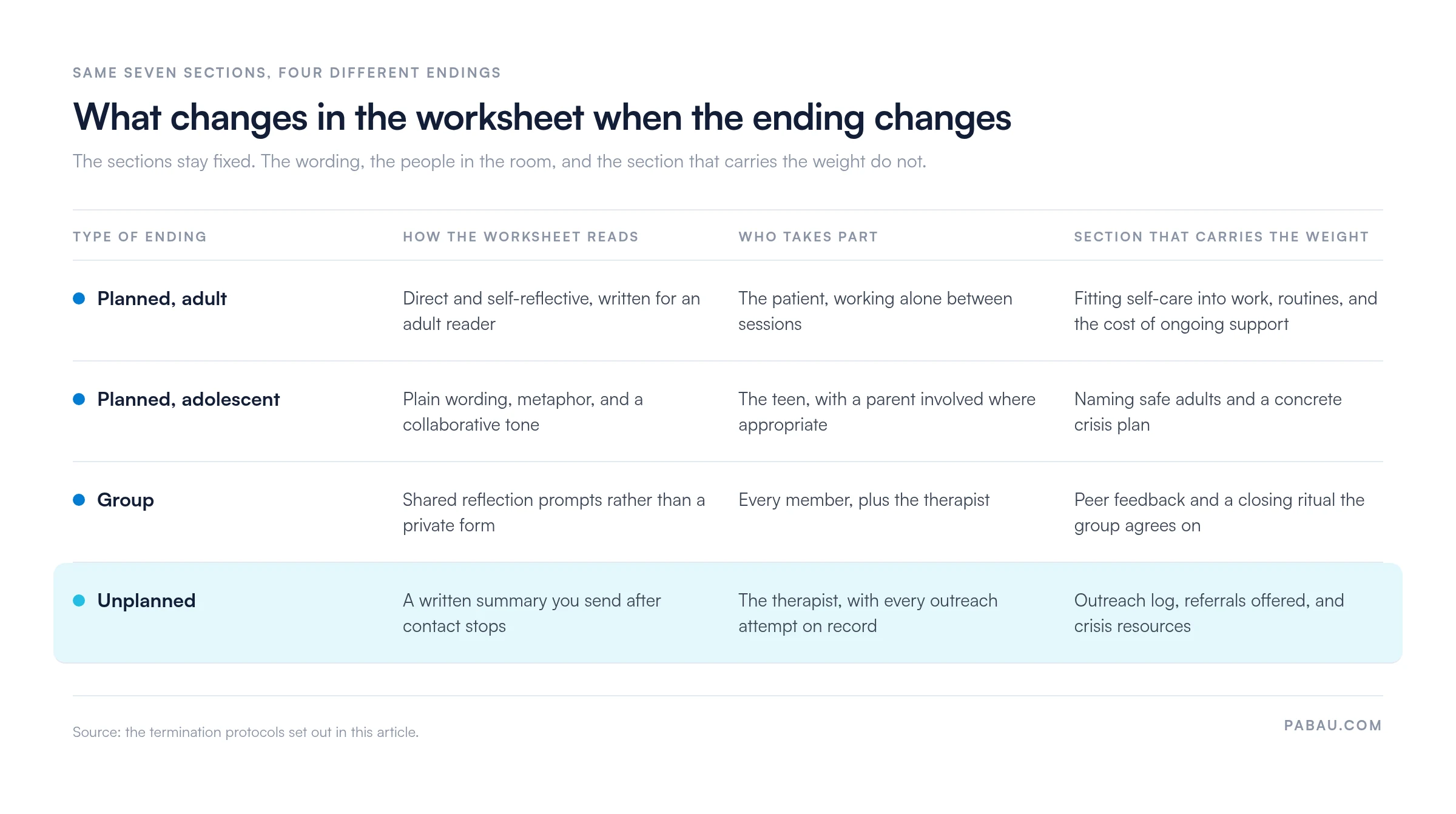
Adult patients bring complex lives to an ending. Work stress, family demands, and the cost of ongoing care all shape what happens after the last session. Adult wording stays direct and self-reflective, and it takes those constraints seriously.
Three questions do most of the work here. Ask how they will find time for self-care once sessions stop. Ask which low-cost or free resources they can reach. Ask how they will handle a stressful week at work using the skills you built together.
Record those answers in the patient record rather than on the sheet alone. If another clinician picks the case up in a year, the discharge plan is right there beside the intake notes.
Adolescents need developmental sensitivity at the end of therapy. Teens with attachment difficulties often read termination as abandonment, so name that risk early. Plain wording, parental involvement where appropriate, and peer support all belong in a teen version.
Metaphor carries more weight than clinical phrasing at this age. Ask what one skill they will carry with them, like a tool in a kit. Ask who they can talk to when things get hard, and what their plan is if they feel unsafe.
An emotion personification exercise extends the same idea. Giving a hard-to-name feeling a character and a voice lets a teen talk about the ending without clinical vocabulary.
Keep the tone collaborative throughout. A teen who reads the sheet as a school assignment will fill it in for you rather than for themselves.
Group endings ask for closure with the therapist and with every other member. A final group session usually runs in three parts.
Individual work suits a standard worksheet, but a group needs its termination protocol set out at the start. Group therapy consent is the natural place to spell out how the final session runs.
Not every course of therapy ends as planned. Patients drop out after a life change, a money problem, a rupture in the relationship, or plain fear. You cannot make someone stay, but you still owe them documentation and a referral.
Documentation steps. Record the date attendance stopped, every outreach attempt you made, any reason the patient gave, and the referral information you offered.
Therapeutic stance. Offer one more session, even a short one, to process the ending and hand over crisis resources. If the patient refuses contact, send a closing letter that summarizes their progress and says how to reach you later.
The final session is clinical work, not a ceremony. A fixed set of questions keeps you from missing the ground that matters most. Some patients end treatment still carrying hurt toward someone outside the room. A structured exercise in letting go of resentment can settle that before discharge.
The termination summary is clinician-facing documentation that lives in the patient record. It differs from a progress note because it covers the whole treatment episode rather than one session.
Essential components. A summary another clinician can act on carries all of the following.
Format follows your setting. SOAP notes are standard in many practices, while a narrative works better for complex cases. Write so that any licensed clinician picking up the file later can follow it, and keep jargon out.
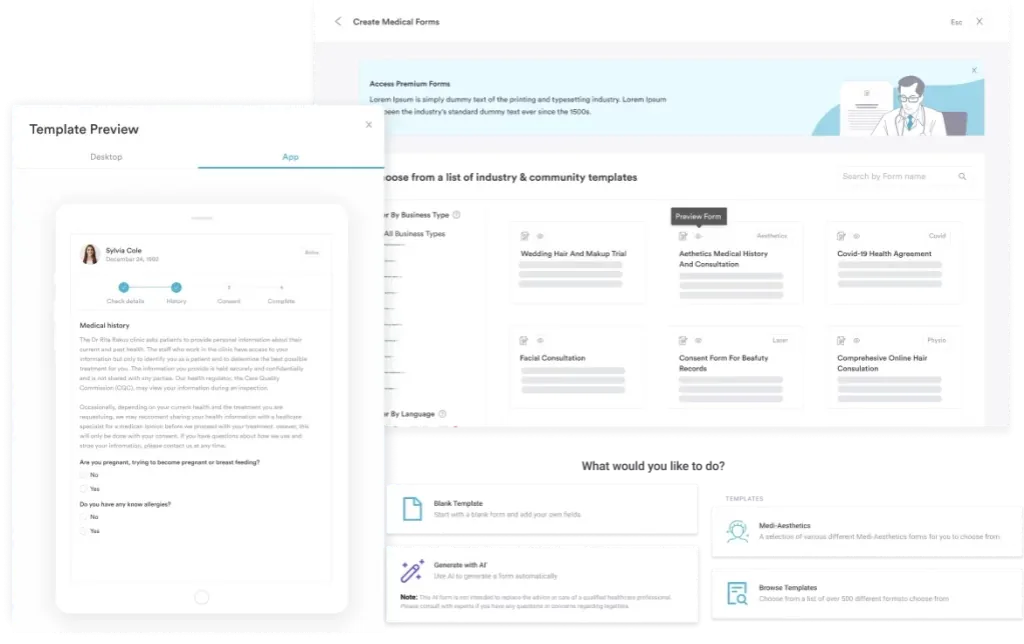
Termination touches the chart, the calendar, and the way you contact the patient. Most practices keep the worksheet as a PDF on a shared drive, print it for the final session, and scan it back in later. Practice management software like Pabau is built for therapy practices, so those steps stay in one place.
In Pabau, the worksheet is a digital form you build once and send to the patient before the last session. Their answers land in structured clinical records against the chart that already holds the intake form and the treatment plan. The psychiatric evaluation template gives you a starting point for adult, teen, and group versions.
Appointment reminders handle the scheduling side, so the final session gets booked rather than drifting. Every subscription includes the forms, the records, and the reminders. Care Plus, a paid add-on, layers additional patient care features on top if you want more.

Pabau’s digital forms and patient records carry the termination worksheet from the final session into the chart. Care Plus, a paid add-on, adds further patient care tools.

Endings are clinical work, and they deserve the same structure as an intake. A worksheet gives the last session a shape, which is what makes the gains portable once you stop meeting.
Download the template above, adapt the wording for the patient in front of you, and keep the completed copy in the record.
Do that consistently and discharge notes stop being a scramble at the end of the week. Book a demo to see how Pabau keeps termination worksheets, final sessions, and discharge notes in one patient record.

Setting goals at the start of treatment? Change plan worksheet gives you the goal-setting structure you will review again at termination.
Tracking progress between sessions? Mental health check-in worksheet collects the mood and symptom data your progress summary draws on.
Watching your own reactions to an ending? Countertransference in therapy covers what to look out for as the relationship closes.
Facing a patient in acute distress? Crisis intervention strategies sets out the steps that belong in a relapse prevention plan.
A complete worksheet covers seven sections. Those are treatment goals and whether they were met, a progress summary, and the coping strategies the patient learned. It then covers a relapse prevention plan, the support network, room for feelings about ending, and what happens next.
Give notice, usually two to four weeks ahead. Run a structured final session with explicit closure questions, and complete a worksheet or summary with the patient. Document their progress and discharge plan in the record, and offer referrals where ongoing care is needed.
Adults respond to reflective work. Walk back through the timeline of their therapy, and write a skills inventory together. Name the growth or resilience they built. Some patients find it useful to write themselves a letter summarizing the work and their strengths.
Ask about the most helpful moments and which strategies feel most useful going forward. Ask what feelings come up about ending, and what the plan is if symptoms return. Ask who will support them, whether anything feels unsaid, and how they want to remember the work.
Record the date attendance stopped and every outreach attempt you made. Offer one more session to process the ending, and pass on referrals. If the patient declines, send a letter with crisis resources and your contact details. Treat it as a clinical event that needs documentation.
A termination summary is clinician-facing documentation kept in the patient’s permanent record. It covers the presenting problem, the interventions used, progress toward goals, and the reason for discharge. It also carries the final risk assessment, the relapse plan reviewed, referrals offered, and recommendations for ongoing care.
No single law mandates them. Ethical codes from the APA and NASW do require structured termination and documentation, and licensing boards expect evidence of professional closure. A standardized worksheet shows competence and protects both the patient and you.