Waist-to-hip ratio chart: Risk bands for women & men (free PDF)
A waist-to-hip ratio chart sorts a patient’s waist-to-hip ratio (WHR) into...

3
Last Updated: Oct 14, 2026
A snacks for diabetics list is a reference of snack options sorted by carbohydrate content, glycemic index (GI), and portion size. It helps people with type 1 or type 2 diabetes keep blood sugar steady between meals. The best choices pair a modest carb portion, usually 15–30g, with protein, fiber, or healthy fat. Greek yogurt with berries, a handful of almonds, and hummus with raw vegetables all fit.
The American Diabetes Association (ADA) bases snack advice on three habits. Balance carbs with protein and fiber, keep portions in check, and watch each person’s own glucose response. This printable list covers low-carb, low-GI, bedtime, and packaged options, plus what to eat when blood sugar drops too low.
A printable checklist with a patient details header for name, date of birth, and record number. Tick-box sections cover essential snacks, optional extras, and other items specific to the patient. Each section has columns for quantity, who is bringing it, and confirmation.
Download template
A snacks for diabetics list sorts options by carb content, glycemic index, and portion size so patients can keep blood sugar steady between meals.
The best diabetic snacks pair 15–30g of carbs with protein, fiber, or healthy fat to slow glucose absorption.
Low-carb and low-GI options work for both type 1 and type 2 diabetes when portions are measured.
A reading below 70 mg/dL calls for 15g of fast sugar under the 15-15 rule, and the balanced snack comes once glucose recovers.
Practice management software like Pabau lets you send the list as a digital form and save each copy to the patient record.
A diabetes-friendly snack keeps simple carbohydrates low and pairs any carbs with protein, fiber, or healthy fat to slow the rise in glucose. The glycemic index measures how quickly a food raises blood sugar. Snacks under 55 count as low GI and 55–69 as moderate. Snacks above 69 are high GI, so limit them or measure the portion carefully.
The table below lists eight staple snacks with their portion size, carb count, and GI. Use it to build individual meal plans, or print it as a patient handout.
Patients on a low-carbohydrate plan, often 20–50g of net carbs a day, need snacks with very few carbs. These options lean on protein and healthy fat, so they barely move blood sugar. For a full day of meals on the same approach, pair them with a low-carb diabetic meal plan.
Low-GI foods release glucose slowly, which means fewer spikes and crashes. A food with a GI below 55 counts as low and gives steadier energy between meals.
Pair carb-containing snacks, like whole grain crackers or fruit, with a protein source to slow digestion further. An apple, for example, has a smaller effect on blood sugar when you eat it with almond butter or cheese.
People with type 2 diabetes, especially those managing insulin resistance, do best with snacks that combine protein, fiber, and healthy fat. The CDC’s diabetes nutrition guidance puts portion control and carb quality ahead of cutting carbs out completely.
Managing diabetes doesn’t mean giving up sweet treats. Low-sugar, low-carb swaps can satisfy a craving without a sharp glucose spike.
Read the nutrition label before you buy. Look for net carbs below 15g per serving, fiber above 3g, and minimal added sugar. Sugar alcohols like erythritol and xylitol often have little effect on blood sugar, though responses vary. For a wider shopping list, the diabetic grocery list covers staples for every meal.
A bedtime snack that combines protein with complex carbs helps prevent overnight hypoglycemia and supports steadier morning readings. Skip simple sugars and high-GI foods at night, because they can make overnight glucose swing.
Work with your care team or a registered dietitian to time bedtime snacks around your insulin regimen and overnight glucose patterns.
If blood glucose drops below 70 mg/dL (hypoglycemia), treat it with fast-acting carbohydrate before any routine snack. The ADA’s 15-15 rule is the standard approach: Eat 15g of fast-acting carbohydrate, wait 15 minutes, and recheck. If the reading is still below 70 mg/dL, repeat the step. Each option below supplies about 15g.
Keep chocolate, peanut butter, and other fatty foods off this list. Fat slows how quickly the sugar is absorbed, so the reading takes longer to recover. The sequence below shows each step of a rescue in order.
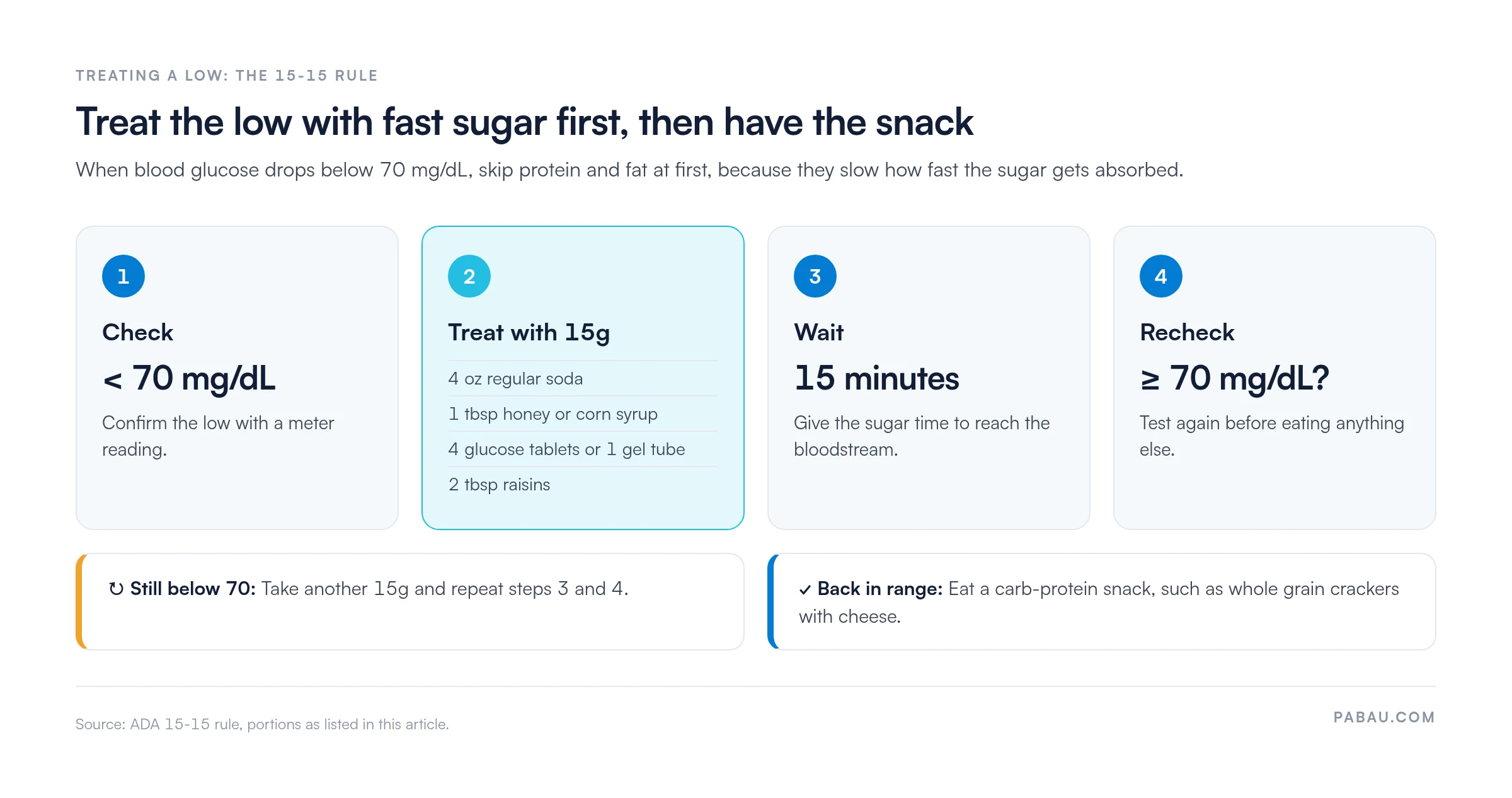
Once glucose is back in range, eat a carbohydrate-protein snack, such as whole grain crackers with cheese, to stop it dropping again.
High-sugar, high-GI snacks cause rapid glucose spikes. Avoid them, or save them for rare occasions when blood sugar is being monitored.
Healthcare teams can adapt this template and share it with patients. Send it through your patient portal, attach it to meal-planning consultations, or print it as an in-office handout.
Ask patients to record readings in a blood glucose log for two or three weeks. You’ll see which snacks keep them steady and which cause spikes, then refine the list at their next visit. Medication, activity, stress, and baseline metabolic health all change how a person responds.
Clinical note: This guide is educational and doesn’t replace personalized medical advice. Patients should check with a registered dietitian, certified diabetes educator, or their healthcare provider before making major dietary changes. That matters most for anyone taking insulin or other diabetes medication.
A printed snack sheet often ends up in a kitchen drawer. An emailed PDF leaves no record of who received which version, so the next clinician can’t tell what the patient was advised.
Practice management software like Pabau lets you send the list as a digital form before or after a nutrition consult. Patients open it in the Client Portal, and a copy is saved to their patient record. Automated reminders then prompt them to book their follow-up and bring their glucose log.
For practices running dietitian-led or metabolic programs, Pabau’s weight loss practice software keeps meal plans, check-ins, and progress photos in one record. You spend follow-ups reviewing results instead of hunting for paperwork.

Send diabetes snack lists as digital forms, save every copy to the patient record, and automate follow-up reminders with Pabau.

A snack list only helps when it matches the patient’s medication and meal plan. Set each person’s carb target first, then mark the options that fit it before you hand the list over.
Walk through the low blood sugar section separately. Patients on insulin should know that a rescue portion is fast sugar with no protein or fat, and that’s exactly why it works.
Review glucose logs at each follow-up and swap out the snacks that cause spikes. Book a demo to see how Pabau sends snack lists to patients, stores every copy, and reminds them to book their next review.

Planning full days, not just snacks? Type 2 diabetes diet food list groups everyday foods by what to eat often and what to limit.
Building a care plan around the snack list? Diabetes management plan sets out targets, medication, and monitoring in one document.
Need target ranges to share with patients? Blood sugar chart shows normal and target glucose readings before and after meals.
Managing lows on a ward or in your practice? Hypoglycemia nursing care plan covers assessment, treatment, and follow-up for low blood sugar.
Supporting a plant-based patient? Vegan diabetes meal plan adapts carb-balanced eating to a fully plant-based diet.
Safe snacks pair low-GI foods with protein, fiber, or healthy fat. Nuts, Greek yogurt, cheese, non-starchy vegetables, and berries are all good choices. Measured portions and glucose checks show which ones work best for each person.
Limit high-sugar, high-GI snacks like regular soda, candy, cookies, white bread crackers, and pastries. They cause rapid glucose spikes and make diabetes harder to control over time.
The best bedtime snacks combine protein with complex carbs. Try an apple with almond butter, whole grain toast with peanut butter, or Greek yogurt with ground flax. These help prevent overnight hypoglycemia and support steadier morning readings.
Yes, as long as the portion is measured and paired with protein or fat. Berries, apples, and oranges are lower-GI fruits. Dried fruit and tropical fruit like mango and pineapple carry more sugar, so measure them carefully.
Most diabetic snacks target 15–30g of carbohydrates, depending on the person’s meal plan and medication. A registered dietitian or diabetes educator can set a target that fits their glucose goals.
Eat 15g of fast-acting carbohydrate right away, such as glucose tablets, regular soda, or honey. Wait 15 minutes and recheck, following the ADA’s 15-15 rule. Once your glucose is back above 70 mg/dL, eat a protein-carb snack to keep it steady.