Professional development record
A professional development record is a structured log of a healthcare practition...

7
Last Updated: Oct 8, 2026
Group therapy informed consent is the signed agreement, backed by an ongoing conversation, that tells each member what the group involves before they join. It covers purpose, risks, benefits, confidentiality limits, member rules, boundaries, telehealth, crisis steps and how to leave. Members sign before the first session, and sign again when the group changes.
Confidentiality is the hardest clause. You can promise to keep what members say private, but you can’t promise the other members will. If the form never said so, one repeated story leaves you defending a rule nobody signed. Below you’ll find sample wording for each clause, a signature page and a three-step plan for when to ask.

Group therapy informed consent is a signed form plus an ongoing conversation covering purpose, risks, confidentiality limits, norms, boundaries, telehealth, crisis steps and leaving.
No therapist can guarantee that group members keep information confidential, so the form explains the limits and asks members to promise privacy to each other.
A group form adapts the nine components in APA’s consent guidance and adds group clauses on format, peer confidentiality and outside contact.
The Three-Moment Group Consent sequence asks for consent before session one, walks through it aloud in that session, and repeats it when the group changes.
Store the signed form version and date for every member, so you can prove who agreed to which rules when a clause changes.
A group therapy informed consent form should cover the group’s purpose, risks and alternatives, confidentiality limits, fees, contact rules, boundaries, emergency steps, records and withdrawal.
Informed consent in psychotherapy means the patient agrees to treatment after hearing what it involves, what it risks and what else is available. The American Psychological Association’s practice guidance lists nine minimum components for therapy consent. It also describes consent as an ongoing process rather than a one-off form.
Informed consent in group counseling should include all nine, plus the clauses that only exist because other members are in the room. The table below adapts APA’s nine components for a group, then adds two group-only clauses at the end.
APA also suggests a two-part structure. A detailed information sheet explains your policies, and a short signature page records the key acknowledgments. Group forms suit that split well. The information sheet can stay the same while the signature page changes.
This group therapy informed consent form template gives you a sample clause for each section, with a short note on why it is there. Treat it as a starting point rather than legal advice. State law sets the details, so adapt it with your licensing board, malpractice insurer or counsel.
For one-to-one patients, our counseling informed consent form covers individual therapy. The clauses below are written for a group.
Start with the kind of group, how often it meets and whether membership is fixed. A closed group keeps the same members from start to finish. An open group lets new members join over time, so say which one yours is.
If you run a structured program, attach the session outline, such as an 8-week group counseling plan. Members then know what each week covers.
“This group meets weekly for [number] sessions of [length]. It focuses on [goal]. The group is [open/closed], and new members [may/may not] join after the first session.”
Group therapy can bring peer support and fresh perspective. It can also bring discomfort, conflict and the risk that a member repeats something outside. Name both sides, and name the alternatives, such as individual therapy, so members make an informed choice to join.
“Group members often gain support and new skills. Sessions may also feel uncomfortable at times. Individual therapy is available as an alternative, and I can discuss it with you at any point.”
A therapist cannot guarantee that group members will keep information confidential, so consent explains the limits instead. The form also asks every member to protect each other’s privacy.
The leader’s own duty of confidentiality still applies, with three common legal exceptions. State law sets the details, so check yours.
Any sample group therapy informed consent form should also turn the members’ side into a promise they sign. Spell out what the promise covers, and what happens when someone breaks it.
“I will not share the names, identifying details or stories of other members outside the group. I understand the leader cannot guarantee that other members will do the same.”
“If a member breaks this agreement, the leader will discuss it with the group and may ask that member to leave.”
Norms protect the group as a unit, so state the expected attendance, punctuality and level of participation. Make it clear that members choose how much to disclose. Respect for emotional boundaries applies to everyone.
Groups run by federally assisted substance use programs may also fall under 42 CFR Part 2. Those rules add confidentiality and consent requirements, so check them before you finalize the form.
Friendships, business deals or romance between members change how they behave in session. So the boundaries clause limits contact between members outside the group. It also confirms that the leader keeps a strictly professional relationship with every member.
“I agree not to form social, romantic or business relationships with other members while the group runs. If I meet a member outside, I will mention it at the next session.”
In an online group, each member’s home becomes part of the therapy room. That’s why these groups need extra clauses on privacy, recording and location. Ask every member to confirm where they are and give an emergency contact at the start of each session.
Telehealth is also a compliance step. Use a video platform that signs a business associate agreement with you. Check that your license covers the state where each member is located.
State plainly that the group is not an emergency service, then tell members exactly who to contact instead. In the US, members can call or text 988 to reach the 988 Suicide and Crisis Lifeline, or call 911.
For members at known risk, attach an individual mental health safety plan to their record rather than relying on the group.
“This group is not a crisis service. In an emergency, I will call 911 or 988. For urgent but non-emergency concerns, I can contact the leader at [contact details].”
Members can leave a group at any time. Where possible, the form asks them to say goodbye in a final session. It should also explain when the leader may ask a member to leave, and how referrals to other care work.
When a member leaves, a short therapy termination letter closes the episode on record and lists their next options.
“I may leave the group at any time. I agree to tell the leader first and, if possible, attend one final session. The leader will offer referrals if I need further care.”
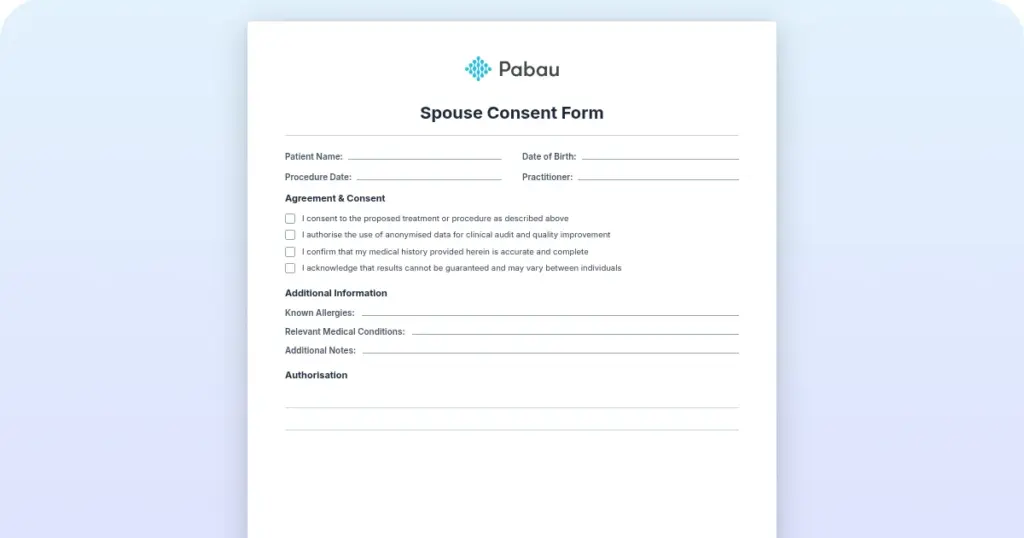
The signature page records that the member read the information sheet, asked their questions and agreed to the group’s rules. Add a form version and date. The version number shows which rules each member agreed to.
Need a group therapy consent form PDF? Build this wording as a digital form that members sign online, then export or print each signed copy. Put the version date in the footer of every page.
Ask for group therapy consent three times: before the first session, aloud in the first session, and again whenever the group changes. We call this the Three-Moment Group Consent sequence.
April Fallon’s 2006 paper in the International Journal of Group Psychotherapy frames group consent as four questions. Who obtains consent, when it happens, how it is communicated and what information it includes. The Three-Moment Group Consent sequence answers the “when” and “how” for a working practice.
The diagram shows what happens at each moment and what to record.
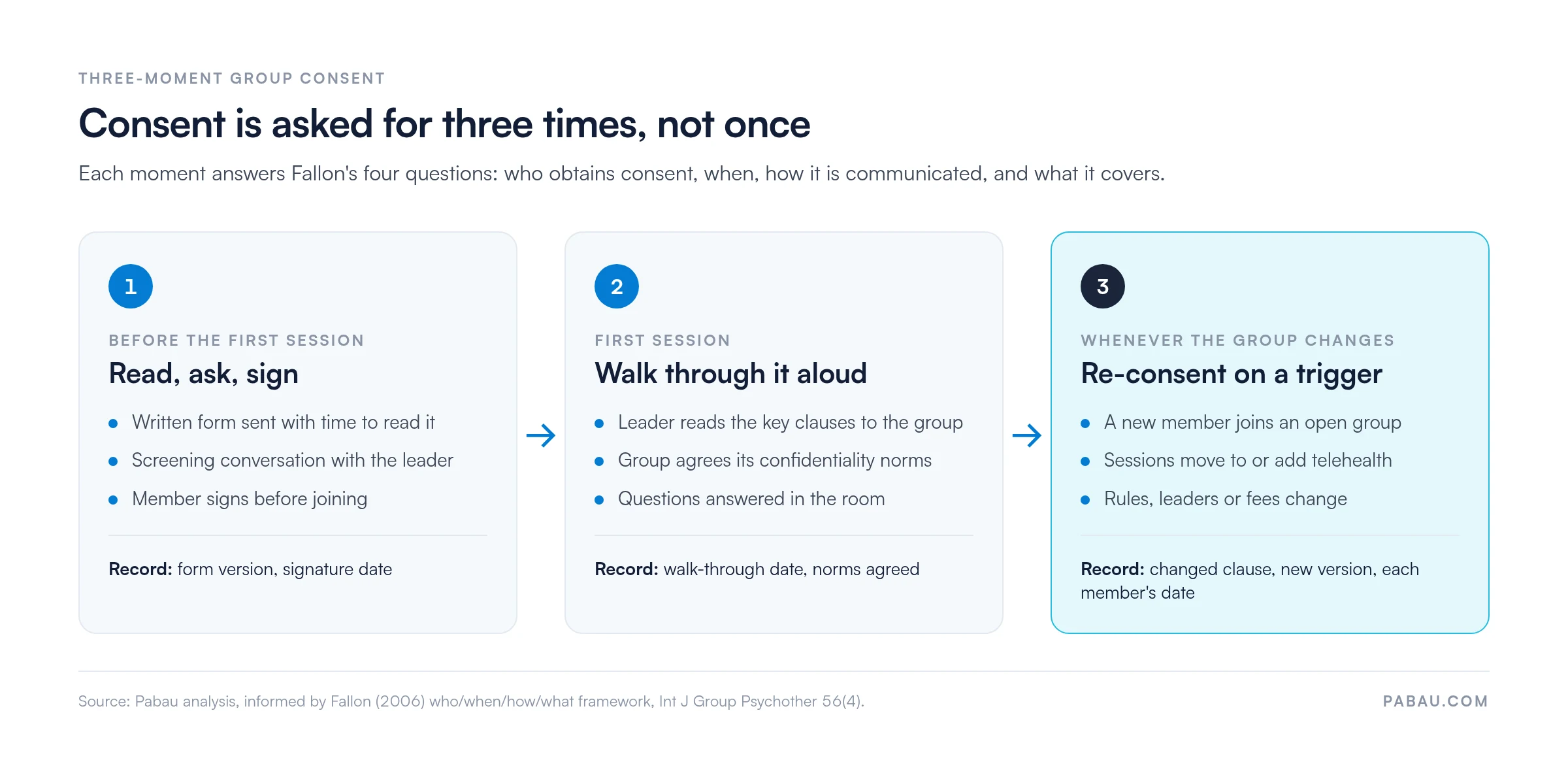
Moment 3 runs whenever one of these changes happens. Each trigger means the whole group re-acknowledges the changed clause, not just the person it affects.
Moment 2 works best as a short, plain walk-through rather than a recital of the whole form. A sample verbal informed consent script for counseling groups looks like this.
“Before we begin, I want to go over what you signed. What is said here stays here. I will keep it private, with three exceptions. Those are a risk of serious harm, possible harm to a child or vulnerable adult, or a court order.”
“I can’t promise that every member will keep things private, so we each agree to it now. You choose how much you share. Any questions before we start?”
When a practice moves paper consent forms into a digital system, the first question is which version each current member signed. So for every member, keep the signed form version, the signature date and the date of the first-session walk-through. Those three records let you prove who agreed to which rules.
Psychoeducational group informed consent, support group consent and adolescent group consent share the same core clauses. However, each type changes what members are agreeing to. Adjust the purpose, disclosure and confidentiality clauses for the group you run.

A psychoeducational group teaches skills or information. Its consent form should describe the curriculum and set lower expectations for personal disclosure. Members should know they can learn without sharing personal stories, and that homework or handouts may be part of the program.
Support group informed consent should say who leads the group, because a peer-led group and a clinician-led group carry different duties. In a peer-led group, confidentiality is a shared norm rather than a professional promise. Say so plainly, and say what happens in a crisis when no clinician is present.
An informed consent form for adolescent group counseling usually needs a parent or guardian’s consent plus the young person’s own assent. The age at which minors can consent to their own mental health care varies by state. Check your state’s rules before you finalize the form.
Explain what parents will and won’t hear about sessions, because teenagers share more when they know the limits. A separate parental consent form keeps the guardian’s agreement on record.
Before you send the form to anyone, read it once as a new member would. Then work through this list.
These are the errors that tend to surface later, usually when a member complains or a group changes.
On paper, the Three-Moment Group Consent sequence means printing forms, chasing signatures and checking a binder before every session. Pabau, the practice management platform we build for therapy and other healthcare practices, moves those steps onto each patient’s record.
Build the form once in digital consent forms and send it automatically before the first appointment. Moment 1 then happens without a reminder from you. Members sign on their phone, and each signed form is timestamped and stored on that member’s record.
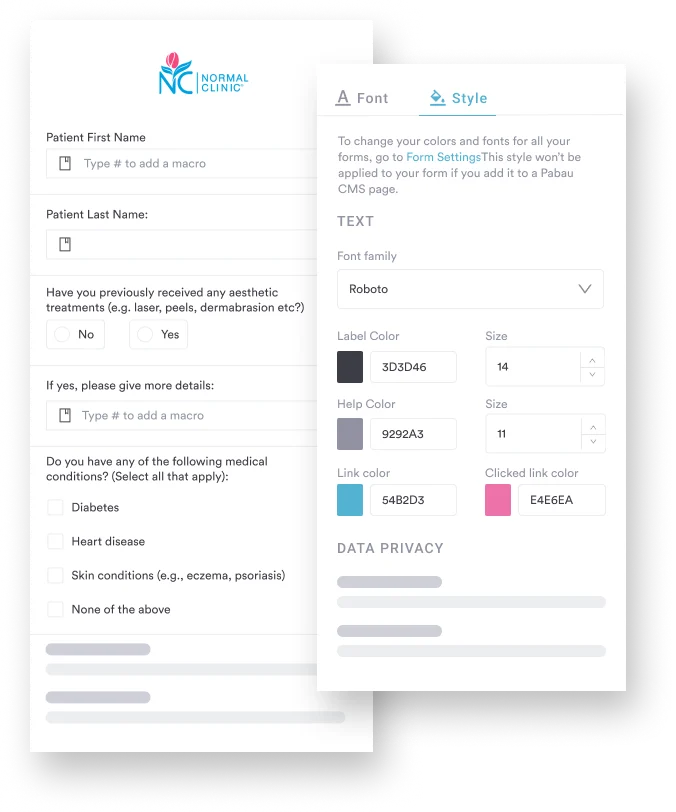
When a clause changes, save the updated form under a new version name and send it to every current member. Their records then show who signed which version and when, so you can run your therapy practice without a signature binder.
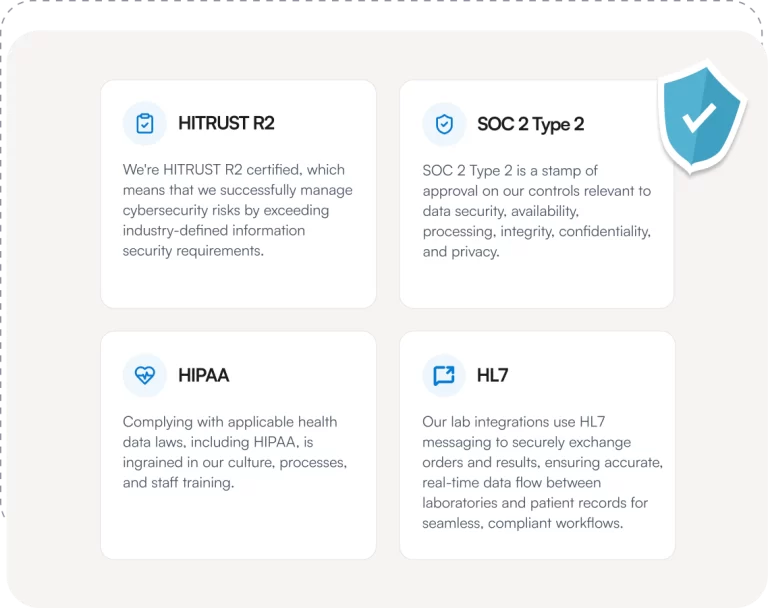
For online groups, video consultations run inside Pabau as well. Telehealth consent and session history then stay together on one record.


Pabau sends your group consent form before the first appointment, stores each signed version on the member’s record, and makes re-sending a changed clause quick. So you always know who agreed to what.

A group consent form earns its keep on the day something goes wrong. A member repeats a story outside, a new member joins mid-cycle, or sessions move online. If the form already named that limit and the member signed the current version, the conversation that follows is short and fair.
So write the confidentiality limit plainly and version-date every form. Then treat each change to the group as Moment 3 of the Three-Moment Group Consent sequence. The extra signatures cost minutes, and the clarity protects the group. Book a demo to see how Pabau sends, signs and tracks group consent forms for your therapy practice.

Setting the terms for individual patients too? Counseling contract sets out fees, cancellations and boundaries for one-to-one therapy.
Need a plan for when a member is in crisis? Crisis intervention strategies for clinicians walks through de-escalation and safety steps you can use in session.
Documenting group sessions consistently? SOAP note for counseling gives you a structure for session notes that stays the same across members.
Comparing software for your practice? Best therapy practice management software compares tools that handle consent forms, scheduling and notes.
No. HIPAA binds covered entities, such as your practice and its staff, not individual group members. That is why the members’ privacy promise is a signed agreement rather than a legal duty.
It depends on the state. Some states extend privilege to group sessions, while courts elsewhere may treat other members’ presence as a waiver. Tell members that privilege may not fully protect what they share.
The five elements commonly listed are capacity, disclosure, understanding, voluntariness and authorization. The person must be able to decide, hear the facts, grasp them, choose freely and then agree.
Yes. Under APA Ethics Code Standard 10.01(c), a trainee whose supervisor holds legal responsibility must tell patients they are supervised and name the supervisor. Name any co-leader or observer in the purpose clause too.
Follow your state’s record retention law first. Without a stricter rule, APA’s record keeping guidelines suggest seven years after the last service for adults. For a minor, keep them seven years after the last service or three years after they reach adulthood, whichever is later.