Nursing narrative note template
A nursing narrative note template is a structured PDF that guides you through re...

3
Last Updated: Oct 21, 2026

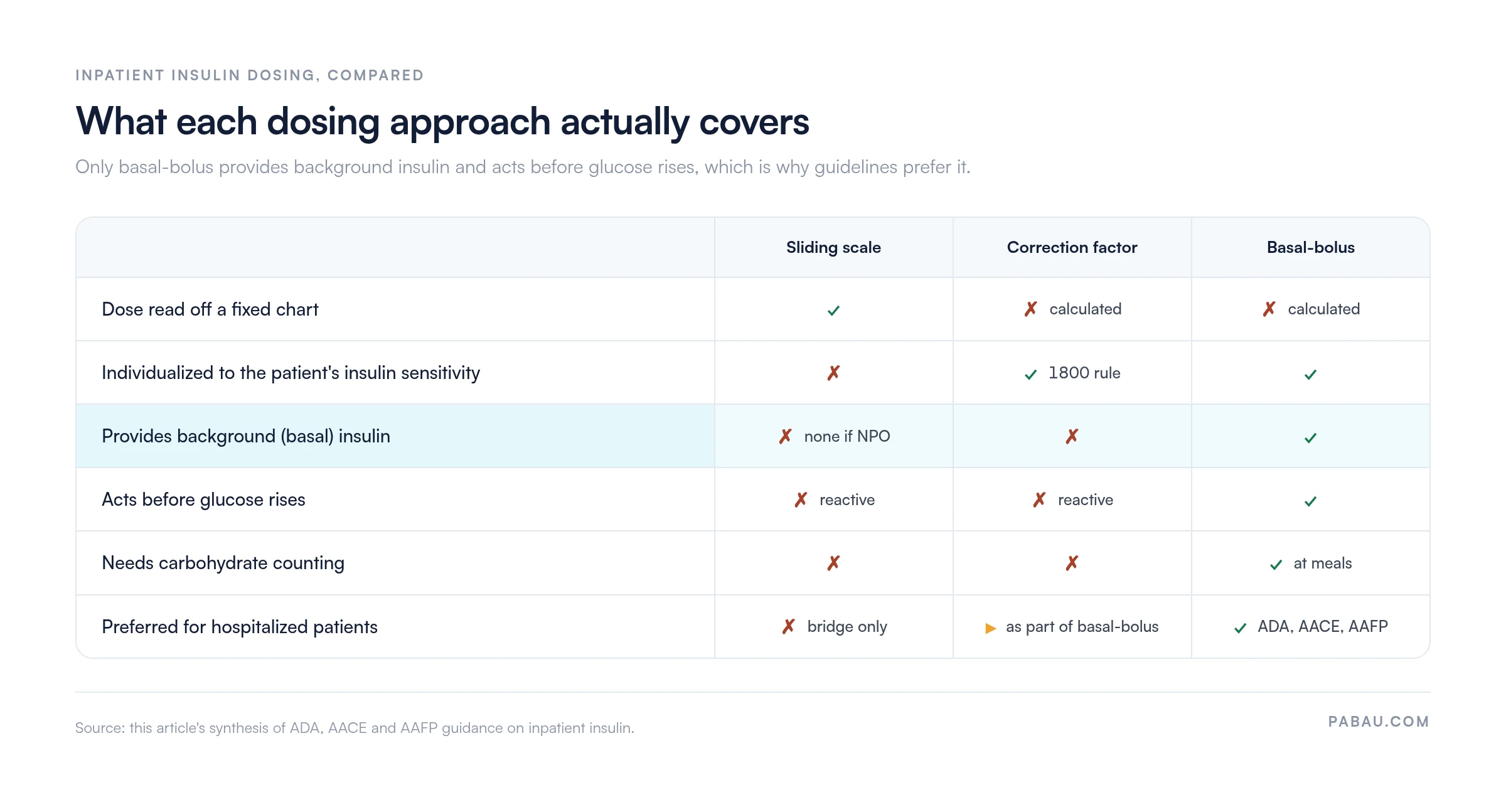
Sliding scale insulin sets each dose from the patient’s current glucose reading, using a fixed chart rather than a calculation.
A typical chart pairs a glucose band with a fixed increment, for example 151 to 200 mg/dL matched to 4 units of lispro.
Guidelines from the ADA, the AACE and the AAFP prefer scheduled basal-bolus insulin for hospitalized patients.
A sliding scale has no basal component, so a fasting or NPO patient with type 1 diabetes receives no insulin at all.
The download on this page is a patient understanding questionnaire rather than a dosing chart.
A two-page self-report form with 10 rating-scale items on how well a patient understands their insulin regimen. It closes with an office-use scoring and interpretation section for the reviewing clinician. This form is a patient check-in tool, not a dosing chart.
Download templateSliding scale insulin is still one of the most recognizable insulin regimens in US practice. Two decades of guideline change point to better alternatives, yet the charts stay pinned to nursing station walls.
This guide covers what the approach is, how a dose gets read off a chart, and how it compares to basal-bolus and correction factor dosing. It also sets out the narrow cases where a sliding scale is still defensible. You will see what your notes need to say when you use one.
Sliding scale insulin sets each dose from the patient’s blood glucose at the moment of administration. The higher the reading, the higher the dose. A nurse takes a fingerstick or lab glucose, then matches the result to a band on a printed or digital chart. The row specifies the units to give.
Scheduled regimens work differently. They give a fixed basal insulin dose for background coverage, plus mealtime doses calculated from carbohydrate intake. A sliding scale sets every dose from the current glucose value alone.
A typical chart pairs a band with a fixed increment. For example, 151 to 200 mg/dL is matched to 6 units of regular insulin. That simplicity made it the dominant inpatient protocol for decades, well before electronic records and continuous glucose monitors were common.
The American Diabetes Association (ADA) and the American Academy of Family Physicians (AAFP) now treat a sliding scale as a short-term or transitional tool. It is no longer the first-line approach for sustained glycemic control. Dosing after the reading leaves patients swinging between hyperglycemia and hypoglycemia, which scheduled dosing is designed to prevent.
Administration follows five straightforward steps.
Sliding scales usually run on rapid-acting insulin, either lispro (Humalog) or aspart (Novolog). Both peak within one to two hours, which matches the glucose rise after a meal. Older protocols use regular human insulin, which peaks at two to three hours. That later peak raises hypoglycemia risk when a patient skips or delays a meal.
Timing matters. Give a rapid-acting dose about 15 minutes before the meal, so the insulin peak lands with the post-meal glucose rise. Correction doses outside mealtimes are given whenever glucose passes the protocol threshold, often above 200 mg/dL.
Step five carries the audit risk. A structured record of every reading, dose, and time is what makes the protocol defensible later. A dedicated blood glucose log gives nursing staff one consistent place to put it.
In an electronic record, the chart appears inside the medication administration record. An alert can then hold a dose when glucose falls below 70 mg/dL, before anyone draws it up.

The chart below shows how glucose bands map to insulin units for a patient with average insulin sensitivity. For the target ranges themselves, a general blood sugar chart is the better reference.
Doses must be individualized. A more insulin-sensitive patient needs fewer units per band, and a more resistant patient needs more. Treat the chart above as a starting structure rather than a finished order set.
The prescribing physician or advanced practice provider writes the order. An example dosing table published in an open nursing skills textbook shows the same banded pattern at different unit values.

Basal-bolus therapy is the bigger change in inpatient diabetes care over the past 15 years. It gives a steady background insulin dose, plus separate rapid-acting doses at meals. Those mealtime doses are calculated from expected carbohydrate intake and the patient’s own correction factor.
On control, basal-bolus wins. It produces lower glucose variability, fewer hypoglycemic events, and better A1C reduction than reactive correction alone. An A1C conversion chart is useful alongside it, because it translates a percentage into the average glucose your daily readings show.
The AAFP recommends basal-bolus as the preferred approach for most hospitalized patients with diabetes. A sliding scale can only answer a high reading after it happens, while basal-bolus works to stop the rise.
In current practice, a sliding scale should rarely stand alone. It works as a short bridge, such as the first 24 hours of an admission. It also works as a supplement to basal insulin in carefully selected patients.
Correction factor dosing, also called the insulin sensitivity factor (ISF), calculates each dose for the individual patient. It replaces the fixed chart with the 1800 rule for rapid-acting insulin, or the 1500 rule for regular insulin.
The formula is 1800 divided by the total daily insulin dose. A patient on 60 units a day has a correction factor of 30 mg/dL per unit. So one unit of lispro is expected to drop glucose by about 30 mg/dL. At a reading of 240 mg/dL against a 150 mg/dL target, the correction dose is 3 units.
Correction factor dosing is more physiologic than a fixed chart, because it reflects the patient’s own sensitivity. It underpins modern basal-bolus and carbohydrate-counting regimens. Both approaches are still reactive though, and current care is shifting toward proactive basal coverage.
Set side by side, the three approaches separate on the handful of axes that actually decide the choice.
A sliding scale carries three clinical limitations.
Older adults carry a higher hypoglycemia risk on a sliding scale, because of polypharmacy, reduced renal function, and blunted hypoglycemia awareness. AAFP clinical guidance recommends against sliding scale monotherapy in hospitalized patients.
Rarely, and only in a short list of scenarios.
In every one of those cases the scale is temporary. The treating team should write down why basal-bolus was not started, and set a date to reassess.
The download on this page is a patient-facing form, so it suits teams who need to check understanding before discharge or between visits:
The form asks the patient to rate 10 statements about their regimen, from never to always, then scores the answers for the reviewing clinician. That gives you a written record of what the patient has taken in, which is a different job from the dosing chart above.
Outpatient metabolic and weight management programs run into the same problem with insulin-treated patients. Purpose-built weight loss clinic software keeps the questionnaire, the readings, and the follow-up on one record.
Review your practice’s sliding scale protocol at least once a year. Update the insulin agents if your facility switches brands, adjust thresholds when guidelines move, and ask nursing staff what slows them down. A maintained protocol is safer than a static one.
Sliding scales are still common in inpatient practice, despite years of guidance against using them alone. The ADA, the American Association of Clinical Endocrinology (AACE), and the AAFP all prefer scheduled basal-bolus insulin for hospitalized patients. Joint Commission standards for inpatient care require documented glucose monitoring and protocol-based dosing decisions.
The clinical literature on geriatric diabetes cautions specifically against sliding scale insulin in older patients, citing hypoglycemia risk and worse outcomes than basal-bolus regimens. If your patient population skews older, moving off sliding scale monotherapy is a quality improvement priority.
Most practices run this on paper. A chart on a clipboard, readings written into a nursing note, and a scramble to reconcile the two before a review. Practice management software like Pabau replaces that with structured digital forms. Each reading, dose, and time lands in the patient record as it happens.
Automated workflows carry the protocol rules for you. When a reading passes the threshold you set, the system notifies the prescriber instead of waiting for someone to notice. Pending doses get flagged rather than forgotten.
Insulin orders go through e-prescribing workflows, which standardizes how each order is written and leaves an audit trail behind it. So the record you hand a reviewer shows the reading, the dose, the time, and who signed it. No paper reconciliation needed.

Automate insulin ordering, reduce charting errors, and ensure every glucose reading and dose is documented and reviewed in real time.

A sliding scale is a legacy protocol with a narrow set of defensible uses. It should not be a practice’s default for diabetes management. Knowing when it holds, and when to move a patient onto basal-bolus or correction factor dosing, is still core clinical knowledge.
The practical step is documentation. Write down why the scale is in place, write down when it comes off, and then hold yourself to that date. That one line in the notes separates a considered decision from an inherited habit.
The questionnaire above helps on the patient side, by showing you what they have actually taken in. Book a demo to see how Pabau keeps insulin readings, doses, and patient questionnaires on one record.

Documenting metabolic care? Metabolic health EMR covers the record-keeping and workflow design behind diabetes and metabolic disorder management.
Interpreting insulin resistance results? Insulin resistance levels chart gives you the reference bands for putting a patient’s numbers in context.
Reviewing what a patient takes? Diabetes medication list is a printable record of current drugs, doses, and timings for a diabetes review.
Writing a care plan? Diabetes mellitus nursing care plan walks through the diagnoses, goals, and interventions for an insulin-treated patient.
Sliding scale insulin sets each dose from the patient’s blood glucose reading at the time of injection. A fixed chart maps glucose bands to insulin units, so the reading decides the dose. It is a reactive method, used mainly in hospital and long-term care settings.
Take the patient’s current blood glucose reading. Find the band on the chart that contains it, for example 180 to 210 mg/dL. Read the units in that row, give the dose subcutaneously, then record the reading, dose, and time. No calculation is involved, because the chart carries the arithmetic.
Not on its own. The American Diabetes Association, the AAFP, and the AACE all prefer scheduled basal-bolus insulin for most hospitalized patients with diabetes. A sliding scale is appropriate as a short bridge, such as the first 24 hours, or in a few narrow cases. Document why basal-bolus was not started.
Rarely. The defensible cases are a type 1 patient with an established correction factor, or a stable stay of 24 to 48 hours. A short NPO period before surgery also qualifies, as does a setting without pharmacist oversight. In each case, a transition plan to basal insulin belongs in the notes.
Rapid-acting insulins are preferred, either lispro (Humalog) or aspart (Novolog). Both peak one to two hours after injection, which matches the glucose rise after a meal. Some older protocols use regular human insulin, which peaks at two to three hours and raises hypoglycemia risk if a meal is delayed.