OSHA respirator medical evaluation questionnaire
The OSHA respirator medical evaluation questionnaire is the mandatory health for...

3
Last Updated: Oct 15, 2026
Neuro assessment documentation is the systematic recording of neurological examination findings, including level of consciousness, pupillary response, motor and sensory function, reflexes, and coordination.
Accurate documentation protects patient safety, supports clinical decision-making, and establishes a legal record of the assessment performed.
Hospital floors and outpatient practices alike rely on a standardized format to catch early deterioration, track recovery, and meet compliance requirements. Whether you are recording a routine check or a post-fall assessment, seven core domains form the foundation. They are level of consciousness (LOC), PERRLA, cranial nerves, motor function, sensory function, reflexes, and coordination and gait.
This guide walks through each domain with example documentation language and shows where the common scoring errors start. A free downloadable checklist follows, ready to print or import into your notes system.
A bedside checklist for all seven domains, with prompts for Glasgow Coma Scale and NIHSS scoring, pupil measurements, and the red flags that need escalation. It leaves space for timed entries on post-fall and hourly neuro checks.
Download template
Neuro assessment documentation covers seven domains: level of consciousness, PERRLA, cranial nerves, motor function, sensory function, reflexes, and coordination and gait.
The Glasgow Coma Scale is the standard for recording level of consciousness in acute settings, scored from 3 to 15.
Post-fall neuro checks are documented immediately and again at the intervals your facility protocol sets.
Unequal pupils, a sudden drop in level of consciousness, and new focal deficits need escalation and a timed note.
The free checklist below carries the wording for each domain, so notes stay consistent across the team.
Neurological assessment documentation captures a structured evaluation of brain and nervous system function. The exam covers seven core domains that clinicians assess and record in the patient’s notes. Those domains also make up the neurological section of a full physical exam documentation note, which records findings one body system at a time.
Recording every domain the same way each time reduces missed findings and creates a defensible medical record. Digital forms for clinicians hold the structure for you, so nobody has to remember the order. Joint Commission standards and CMS Conditions of Participation require nursing documentation to reflect the full scope of the assessment performed.
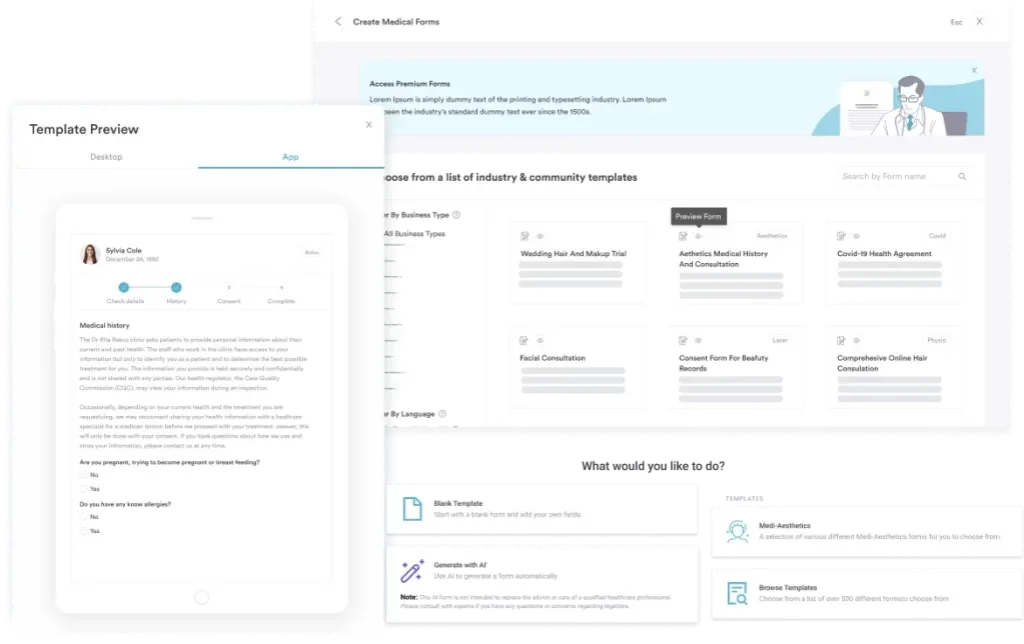
Each domain serves a specific clinical purpose and needs precise wording to communicate the finding clearly.
The Glasgow Coma Scale (GCS) is the validated tool for recording level of consciousness in acute care. Three components make up the score, and each has its own range.
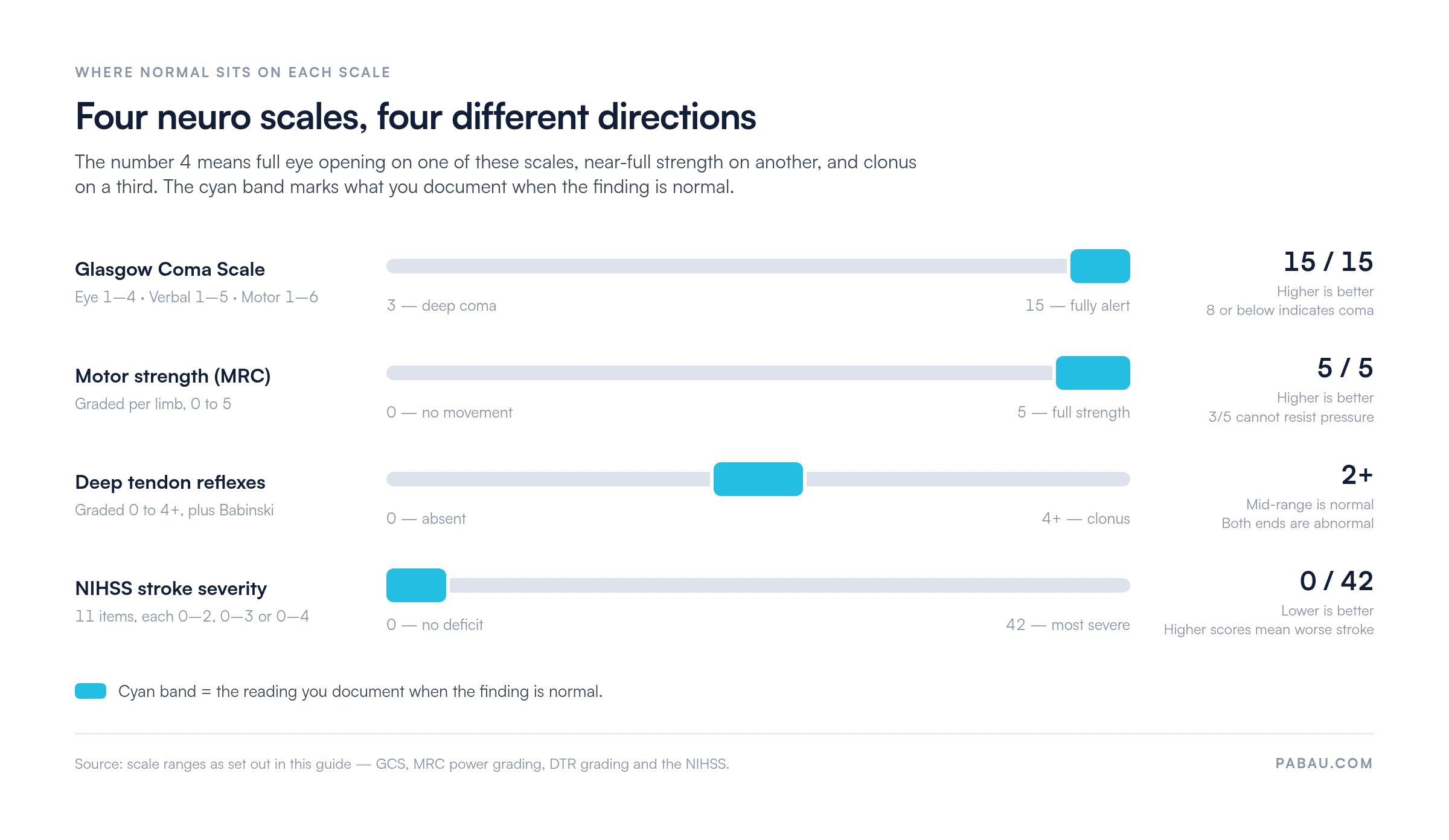
The three components add up to a total between 3 and 15. A score of 15 is fully alert, and 8 or below indicates coma.
Normal documentation example: “Patient alert and oriented to person, place, time, and date. GCS 15/15 (E4, V5, M6). Responding appropriately to questions.”
Post-procedure or acute change: “Patient aroused to voice, confused about location. GCS 12/15 (E3, V4, M5). Eyes open to verbal command, speech confused, localizing to pain.”
Always record the numeric score and the component breakdown, so clinical teams can track the trend. A drop from GCS 15 to 13 signals possible deterioration and needs escalation. Our level of consciousness assessment template covers the LOC wording in more depth.
PERRLA stands for pupils equal, round, reactive to light and accommodation. Abnormal pupillary findings are red flags for acute neurological change. Unequal size, sluggish reactivity, and a fixed pupil all qualify.
Normal documentation: “Pupils 3mm equal, round, reactive to light bilaterally. No afferent pupillary defect.”
Abnormal finding: “Right pupil 4mm, left pupil 2mm; right pupil sluggish to light. Left pupil reactive.”
Record pupil size in millimeters, equality or difference (anisocoria), shape, and exact reactivity. Brisk, sluggish and fixed are the reactivity words to use. A newly unequal pupil is a medical emergency.
Motor strength is graded on the 0–5 Medical Research Council scale, one limb at a time.
Normal motor documentation: “Strength 5/5 bilateral upper and lower extremities; able to flex and extend all joints against resistance; grip strength 5/5 bilaterally.”
Abnormal finding: “Left arm weakness 3/5; unable to lift against resistance. Right arm 5/5. Gait favors right side.”
For sensory testing, document the response to light touch and pain across the body. Reflexes use a separate 0 to 4+ grading: 0 is absent, 1+ diminished, 2+ normal, 3+ hyperactive, and 4+ clonus. Record the Babinski response as well, where downgoing is normal and upgoing is abnormal.
Certain findings need documenting and escalating in the same moment.
Structured assessment templates keep red flags in the same place on every note, so the next clinician finds them without reading the whole entry.
A focused neuro assessment targets a specific concern rather than the full seven-domain exam. Use one for post-fall checks, acute stroke evaluation, or when a patient reports a new neurological symptom.
Post-fall neuro check documentation steps:
Repeat the check at the intervals your facility protocol sets, and timestamp every entry. Our nursing neuro checks template lays those intervals out in a ready-made observation chart.
Document the assessment timing, the findings, and any intervention that followed. That sequence of problem, intervention, and evaluation is the one a PIE nursing note format follows. AI-assisted clinical documentation speeds up note entry without loosening the structure.
The National Institutes of Health Stroke Scale (NIHSS) is the standardized tool for documenting acute stroke severity. It scores 11 neurological items for a total between 0 and 42, and a higher score means a more severe stroke.
Stroke assessment documentation includes: level of consciousness (three questions), eye movement, visual fields, facial droop, arm drift, speech, language, dysarthria, extinction and inattention, and ataxia. Individual items are scored 0–2, 0–3, or 0–4 depending on the item, and the total goes in the chart and to the stroke team.
NIHSS scoring determines thrombolytic eligibility, so precision matters more here than anywhere else in the exam. Train staff on the standardized scoring, so two clinicians reach the same number on the same patient.
The four numbered scales in this guide do not run in the same direction, which makes a bare number easy to misread.
Side-by-side examples make the pattern easier to recognize. A vague note and a specific one differ by a handful of words, and those words are what the next clinician acts on.
The downloadable checklist gives you a line for each of the seven domains and space for red flag documentation. Fields for GCS and NIHSS scores sit alongside them, for the assessments where those scales apply.
Print it and laminate it for bedside use, or rebuild it as a form inside your documentation system. Teams that do the second get the same prompts plus a timestamped record they can search.
A neuro check often ends up wherever there is room: a free-text note, a paper observation chart, a scanned PDF. Reading the trend back then means opening three places.
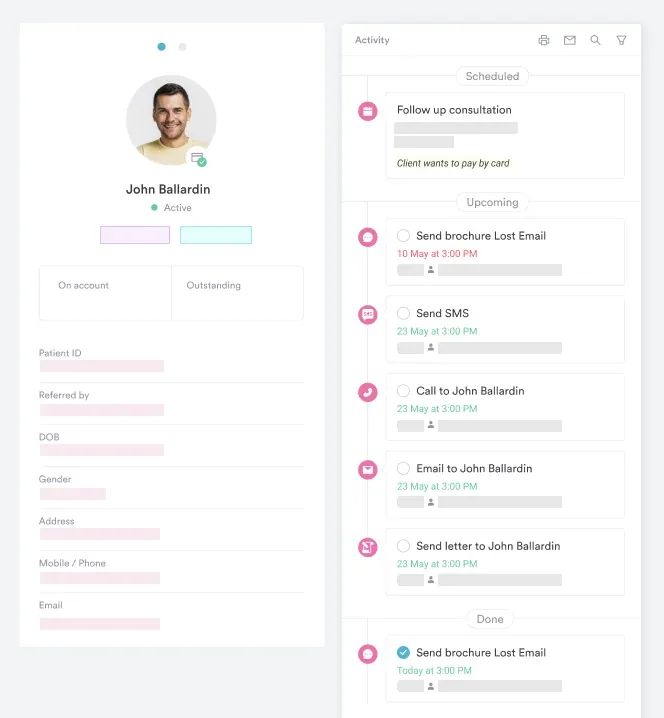
Pabau holds the assessment as a structured form on the patient record instead. Each domain is its own field, so a GCS of 12 recorded on Tuesday sits next to the 15 recorded on Monday.
Centralized patient records keep those entries with the appointment, the photos, and the letters they relate to. Pabau Scribe can draft the narrative part of the note from the consultation recording, leaving you to check the numbers.
The outcome is a neuro record that a colleague, an auditor, or a court can read in one pass.

Pabau holds your neuro assessment as a structured form on the patient record, so each domain has its own field. Scores, timings and red flags stay searchable instead of buried in free text.

The seven-domain framework is only as useful as the wording that goes into it. A note reading “neuro intact” leaves the next clinician guessing, while “GCS 15/15, PERRLA, strength 5/5 bilaterally” does not.
Pick one format, write it into the checklist your team carries, and hold every shift to it. Consistency is what turns a stack of individual notes into a trend somebody can read.
The trade-off worth remembering is time. A full seven-domain exam takes longer to write than a free-text line, and the structure is what buys that time back at handover. Book a demo to see how Pabau keeps neuro assessments structured, timestamped and searchable.

Working in an emergency department? Emergency nursing assessment template covers the rapid head-to-toe exam that a neuro check sits inside.
Want the wider documentation standard? Nursing documentation explains what a defensible note needs, whatever the assessment.
Choosing a charting format? Focus charting compares it with narrative and SOAP notes, using worked examples.
Escalating a red flag? SBAR examples gives you the handover wording for calling a physician about a neuro change.
PERRLA stands for Pupils Equal, Round, Reactive to Light and Accommodation. It is the standardized assessment of pupil appearance and light reactivity. Always document pupil size in millimeters and specify whether pupils are equal, and note any sluggish or fixed reactivity.
Document a normal neuro exam by stating alertness and orientation level (A&Ox4), plus the GCS score in an acute setting. Then record PERRLA findings, strength 5/5 in all extremities, intact sensation, normal reflexes, and normal gait. Include: “Alert and oriented x4. GCS 15/15. PERRLA. Strength 5/5 bilateral. Gait steady. No focal deficits.”
The Glasgow Coma Scale (GCS) measures level of consciousness on a 3-15 scale: Eye opening (1-4), Verbal response (1-5), Motor response (1-6). A score of 15 is fully alert; 8 or below indicates coma. Always record the individual components (E/V/M) and total score in the patient chart.
In a post-fall assessment, document the time of the fall and whether the patient lost consciousness, with the duration if they did. Record LOC and orientation immediately after the fall, PERRLA, cranial nerve findings such as facial symmetry and speech, and motor strength in all extremities. Add gait safety, any head or neck injury, and confirmation that the facility post-fall protocol was followed. Include physician notification and any imaging ordered.
Red flags requiring immediate escalation include an acute drop in LOC or GCS, and unequal pupils with sluggish or fixed reactivity. A new focal neurological deficit also qualifies, whether that is weakness, a speech change, or facial droop. So do loss of consciousness or seizure, severe headache with neuro changes, an upgoing Babinski sign, and inability to protect the airway. Document the findings and notify the physician immediately.