Vancouver scar scale template & scoring guide
Download your free Vancouver Scar Scale template A ready-to-use scoring form cov...

44
Last Updated: Sep 16, 2026

A cosmetic surgery intake form is a pre-operative assessment document that gathers medical history, surgical goals, and informed consent from patients before cosmetic procedures.
Comprehensive intake forms help identify contraindications and reduce surgical complications by capturing current medications, allergies, previous cosmetic procedures, and nutritional status.
Digital cosmetic surgery intake forms streamline patient onboarding, reduce paperwork, and ensure HIPAA-compliant data collection within practice management software.
Pabau’s digital forms feature lets aesthetic clinics customize intake templates, automate workflows, and store patient data securely-improving both clinic efficiency and patient safety.
A comprehensive pre-operative assessment covering patient demographics, medical history, current medications, cosmetic procedure history, contraindications screening, consent declarations, and signature fields-ready to download and customize for your aesthetic clinic.
Download templateA cosmetic surgery intake form is a critical pre-operative document used by aesthetic clinics and plastic surgery practices to assess a patient’s medical status, aesthetic goals, and readiness for cosmetic procedures. This form captures essential information-from medical history and current medications to previous cosmetic treatments and informed consent-before any surgical or injectable intervention.

Many clinics still collect intake data on paper or through generic form builders. Yet a well-designed cosmetic surgery intake form does far more than file paperwork. It identifies contraindications that could affect surgical safety, documents informed consent to reduce liability, and creates a clinical baseline for evaluating outcomes.
This guide covers what a comprehensive cosmetic surgery intake form includes, why each field matters clinically, and how to digitize the intake workflow to improve clinic efficiency while keeping patient data secure.
A cosmetic surgery intake form is a structured document that gathers essential medical and aesthetic information from a patient before a cosmetic procedure or consultation. Unlike generic patient registration forms, a cosmetic surgery intake form is specifically designed to assess risk factors, surgical candidacy, and aesthetic goals unique to cosmetic procedures.
The form serves two critical functions: clinical safety and informed consent.
The American Society of Plastic Surgeons (ASPS) emphasizes that comprehensive pre-operative assessment reduces surgical complications. A well-structured cosmetic surgery intake form captures the information needed for this assessment, helping clinicians screen for absolute contraindications (conditions that eliminate candidacy) and relative contraindications (conditions requiring modification or medical clearance).
Legal and regulatory frameworks also support thorough intake. HIPAA requires that patient health information-including intake data-be collected and stored securely. Under HIPAA compliance for clinic software, aesthetic practices collecting intake data digitally must ensure encryption, access controls, and audit trails.
A cosmetic surgery intake form is typically completed before the first consultation or immediately at the start of the appointment. The workflow depends on whether the clinic uses paper forms or digital intake.
Step 1: Patient information section. Collect name, date of birth, contact information, emergency contact, and insurance details. This demographic section ensures accurate record-keeping and billing.
Step 2: Medical history screening. Ask about past surgeries (general, orthopedic, cosmetic), current medical conditions (diabetes, autoimmune disorders, bleeding disorders), and family history of complications. This section identifies absolute contraindications and informs surgical planning.
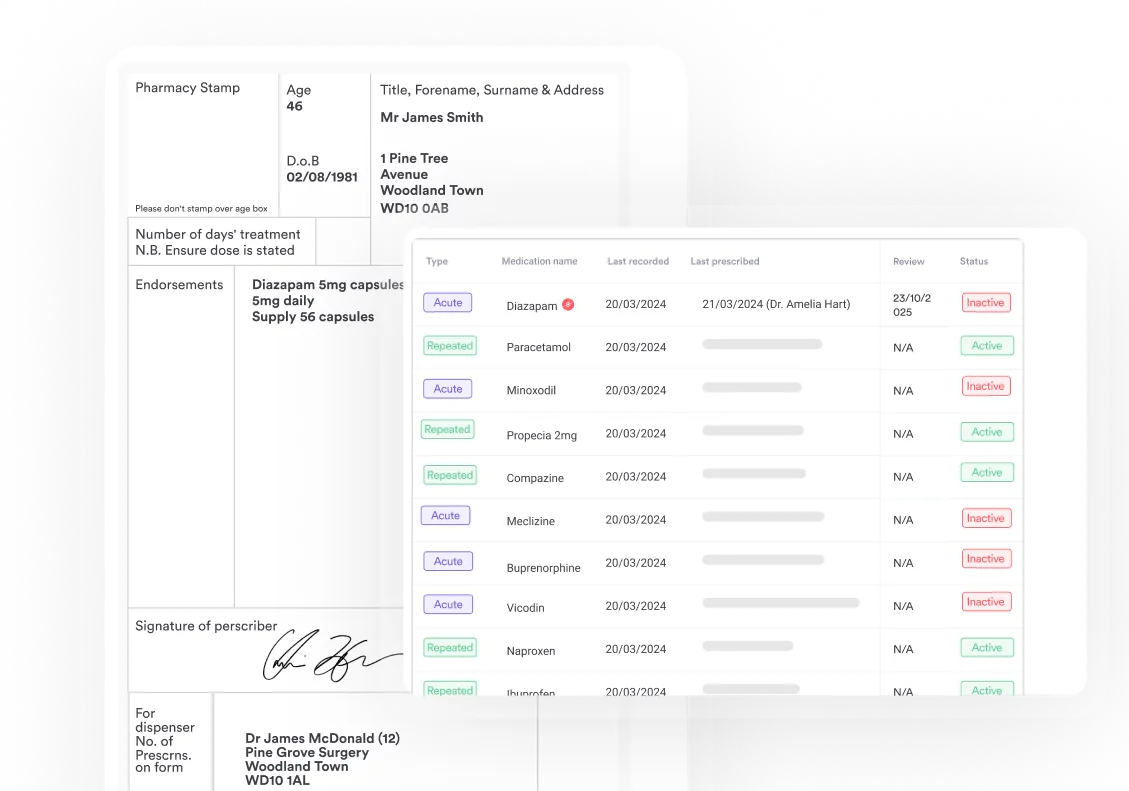
Step 3: Current medications and supplements. List all prescription medications, over-the-counter drugs, and supplements. Include topical medications-tretinoin, retinoids, and other skin-sensitizing agents can affect wound healing and must be paused before procedures.
Step 4: Allergies and adverse reactions. Document drug allergies, latex sensitivity, and reactions to anesthetics. This prevents intraoperative complications.
Step 5: Previous cosmetic or surgical procedures. Ask about prior cosmetic treatments (Botox, fillers, lasers), surgical procedures, and any complications. Previous cosmetic treatments influence the approach to the current procedure and set baseline expectations.
Step 6: Contraindication screening. Include targeted yes/no questions about absolute contraindications: active skin infections, uncontrolled diabetes, bleeding disorders, keloid formation, or immunosuppression. Relative contraindications-unrealistic expectations, pregnancy, recent medications like isotretinoin, or active acne-require discussion but don’t eliminate candidacy.
Step 7: Informed consent. Present clear statements about the procedure, potential risks (infection, scarring, asymmetry, nerve injury), benefits, and realistic timeline for results. The patient signs to confirm understanding.
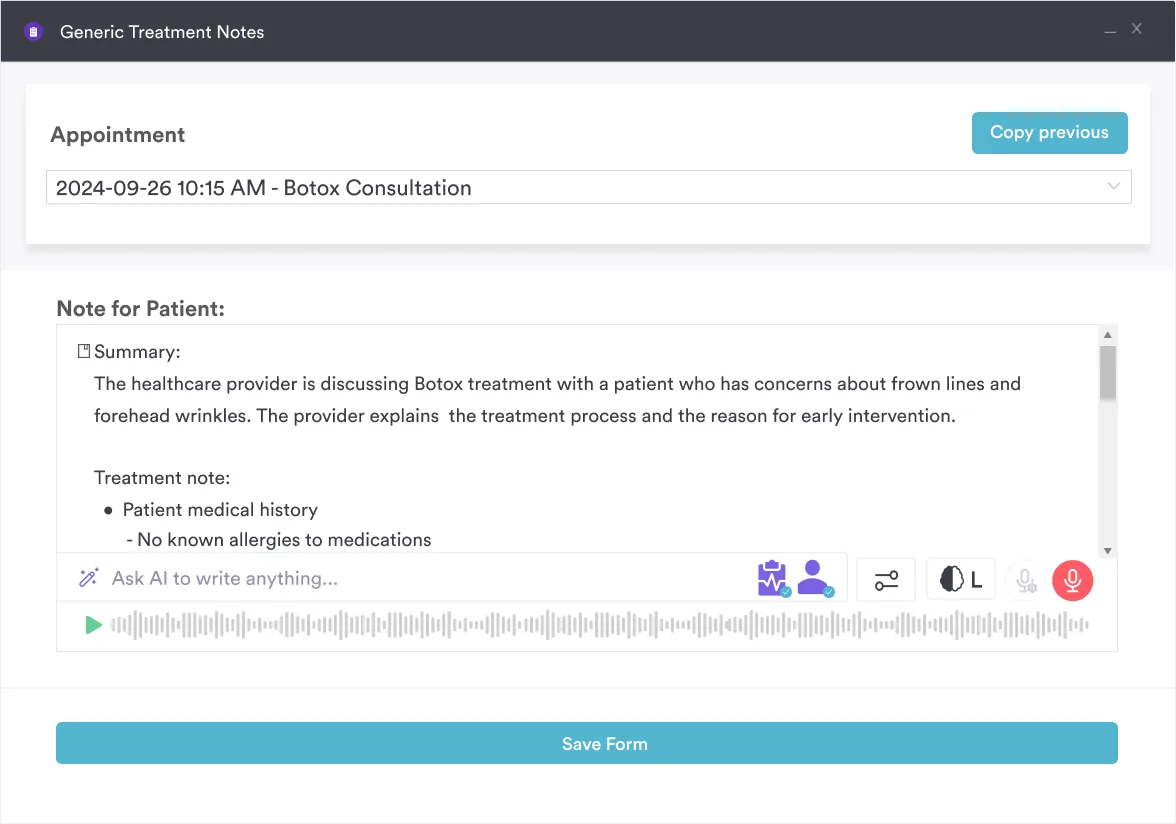
Many clinics now use digital intake forms to streamline this process. Patients complete the form on a tablet or via a patient portal before arrival, reducing check-in time and ensuring consistent data capture.
For clinics wanting to automate this workflow further.
A cosmetic surgery intake form is essential for any clinic offering cosmetic procedures. This includes:
Any medical spa software user performing cosmetic procedures should integrate a cosmetic surgery intake form into their patient onboarding workflow. Even non-surgical aesthetic clinics (esthetician-led skincare practices) benefit from basic intake to screen for contraindicated skin conditions (active rosacea, severe acne, open lesions).
A well-designed cosmetic surgery intake form delivers multiple clinic and patient benefits.
Research published in peer-reviewed journals underscores the importance of comprehensive pre-operative assessment. A PMC study on nutritional preparation for aesthetic procedures found that nutritional screening before cosmetic surgery reduces healing complications and improves outcomes-a factor many clinics capture in their intake forms.
Create separate intake form versions for different procedure categories (surgical vs. injectables vs. laser). A patient undergoing Botox needs different contraindication screening than a patient considering blepharoplasty. Procedure-specific intake forms improve clinical relevance and patient clarity.
Many aesthetic clinics use two intake moments: a pre-consultation intake completed before the first appointment, and a pre-operative intake completed closer to the surgery date.
Pre-consultation intake gathers baseline medical history, aesthetic goals, and contraindications. It screens for procedure candidacy and informs the consultation discussion. This form is lighter-focusing on fitness-for-procedure and setting expectations.
Pre-operative intake (closer to the surgery date) is more comprehensive. It includes updated medication lists, confirmation of any new medical events, nutritional status assessment, smoking/alcohol use, and detailed informed consent. This form ensures nothing has changed since consultation and confirms the patient still meets candidacy criteria.
Clinics using patient portal software can deliver both forms at the right time, automating reminders and ensuring patients complete intake before key workflow milestones.
Collecting cosmetic surgery intake data digitally requires HIPAA compliance. Paper forms introduce data loss and security risk; digital forms with encrypted storage, access logs, and secure transmission protect patient privacy and clinic liability.
HIPAA’s Security Rule requires that covered entities (which include aesthetic practices collecting protected health information) implement:
Aesthetic clinics should avoid generic form builders (Google Forms, SurveyMonkey) that lack healthcare-grade encryption. Instead, use compliance management software specifically built for healthcare, or integrate intake within a certified practice management platform like Pabau that includes built-in HIPAA protections, encrypted storage, and audit trails.
Book a demo with Pabau to see how digital intake forms integrate with secure patient records, automated workflows, and compliance tracking-all designed for aesthetic clinics.
The template provided above covers core cosmetic surgery intake fields. Customize it based on your clinic’s scope and patient population.
For surgical practices: Expand the surgical history section to include specific questions about implant types (breast implant history, valve replacement), previous anesthesia reactions, and current implanted devices (pacemakers, neurostimulators). Add detailed informed consent covering specific surgical risks.
For med spas offering injectables and lasers: Focus intake on topical medication use (tretinoin, hydroquinone, vitamin C serums), recent laser treatments, and realistic expectation-setting. Shorten the surgical history section but include cosmetic procedure frequency. Non-surgical body-contouring treatments such as CoolSculpting need a procedure-specific CoolSculpting consent form covering contraindications and PAH risk disclosures.
For multi-specialty practices: Use procedure-specific versions of the intake form. A patient scheduling Botox needs a 2-minute intake; a patient considering liposuction needs a 15-minute comprehensive assessment. Eyelid procedures need their own detail, so a ptosis surgery template records levator function, MRD1 measurements, and visual field results.
Always have a physician or medical director review your intake form for clinical accuracy and completeness. An outdated or incomplete intake form undermines patient safety and clinic credibility.
A comprehensive cosmetic surgery intake form is a cornerstone of safe, professional aesthetic practice. By capturing medical history, contraindications, aesthetic goals, and informed consent, the form identifies at-risk patients, supports clinical decision-making, and protects clinic liability.
Digitizing your intake workflow transforms this document from static paperwork into an actionable clinical tool. Pabau’s practice management platform lets you customize intake forms, automate delivery and reminders, store data securely under HIPAA, and integrate intake data into patient records and clinical workflows. Schedule a demo to see how digital intake improves both patient safety and clinic efficiency.

Taking in a patient for a specific facial procedure? Cheek lift template covers pre-treatment consultation, informed consent, contraindication screening, and post-operative aftercare for mid-face lifts.
Sending a patient home after a different surgery? Lipedema surgery aftercare instructions covers post-operative protocols, compression garment schedules, lymphatic drainage timing, and wound care.
Need consent forms for injectable treatments? Dermal filler consent form template provides all the essential sections for documenting informed consent before a filler treatment.
Running a CoolSculpting session next? CoolSculpting consent form covers contraindication screening and the disclosures it needs.
A cosmetic surgery intake form is a pre-operative document that captures a patient’s medical history, medications, contraindications, aesthetic goals, and informed consent before a cosmetic procedure.
It should cover patient demographics, medical and surgical history, current medications, allergies, previous cosmetic treatments, contraindications, lifestyle factors, informed consent statements, and a patient signature.
A pre-consultation intake should be completed before the first appointment. For surgical procedures, an updated pre-operative intake should follow 1–2 weeks before surgery to confirm no changes in medical status.
Use HIPAA-certified practice management software with encrypted storage, role-based access controls, and audit logs. Avoid generic tools like Google Forms that lack healthcare-grade security.
No. Surgical procedures need comprehensive intake covering anesthesia history and bleeding disorders; non-surgical procedures need a shorter form focused on topical medications and procedure-specific contraindications.
Send digital forms via patient portal before the appointment, use conditional logic to hide irrelevant fields, and pre-populate returning patients’ demographic data. Most clinics cut completion time to under 5 minutes.