CCSD code F3070: Suture of palate billing guide
CCSD code F3070 covers stitching a wound in the palate CCSD code F3070 is the co...

Last Updated: Oct 12, 2026

CPT code 15822 covers upper eyelid blepharoplasty where the excess skin does not weigh down the lid margin.
Medicare pays for 15822 only when functional impairment is on file: visual fields, an MRD-1 measurement, and pre-op photographs.
The 2026 national non-facility payment is about $471.62, built from 14.12 total RVUs and a $33.4009 conversion factor.
Bilateral upper lid surgery goes out on two lines, one carrying modifier E1 and the other modifier E3.
Practice management software like Pabau keeps consents, photos, and test results on the client file, so nothing is missing at billing.
CPT code 15822 is the billing code for upper eyelid blepharoplasty without excessive skin weighing down the lid. Medicare covers it, but only when the chart proves the surgery restored vision. Miss one required measurement and the payer reclassifies the same operation as cosmetic.
Cosmetic blepharoplasty is explicitly non-covered, per the CMS Medicare Coverage Database. Functional cases have to clear a documented threshold first. Most denials on this code come from that threshold rather than from the surgery itself.
CPT code 15822 reports blepharoplasty of the upper eyelid, without excessive skin weighing down the lid. The American Medical Association maintains the code set and places 15822 in the Repair section of the Integumentary System chapter. It sits alongside the rest of the blepharoplasty family, 15820 to 15823.
The code applies when dermatochalasis, or skin laxity, is present but the redundant skin has not reached the lid margin. Ophthalmologists and oculoplastic surgeons bill it most often.
Plastic surgery practices see it too, usually on lid revision work, where Medicare coverage is rare without strong functional documentation.
A common mix-up is worth clearing up here. Codes 15824 and 15825 are rhytidectomy codes for the forehead and neck, so they belong to a different family. The blepharoplasty range stops at 15823.
The choice between the two upper lid codes turns on a single clinical finding. Does the redundant skin press down on the lid margin? If it does, the case belongs to 15823. If it does not, you are in 15822 territory.
Getting this wrong costs money in both directions. Coding CPT 15823 when the operative note does not support it invites an audit. Coding 15822 when the heavier finding was present leaves reimbursement behind. The operative note decides, never the pre-op photograph.
Medicare pays for 15822 when the chart shows that eyelid skin measurably impairs vision. Cosmetic blepharoplasty is a non-covered service, whatever the surgical result. Blepharoplasty is also one of the most common cosmetic procedures in the US, so contractors review these claims closely.
Local Coverage Determinations spell out what that impairment has to look like. Medicare Administrative Contractors are looking for the following findings in the record:
A general aesthetic compliance policy will not carry a blepharoplasty claim on its own. The functional threshold is specific to the eyelid, and reviewers check it line by line. So the operative note and the pre-op record have to make that argument in full before anything goes out the door.
Four documents decide a 15822 claim: the visual field study, the MRD-1 measurement, the pre-op photographs, and the surgeon’s own attestation. All four belong in the record before the procedure date, not after it.
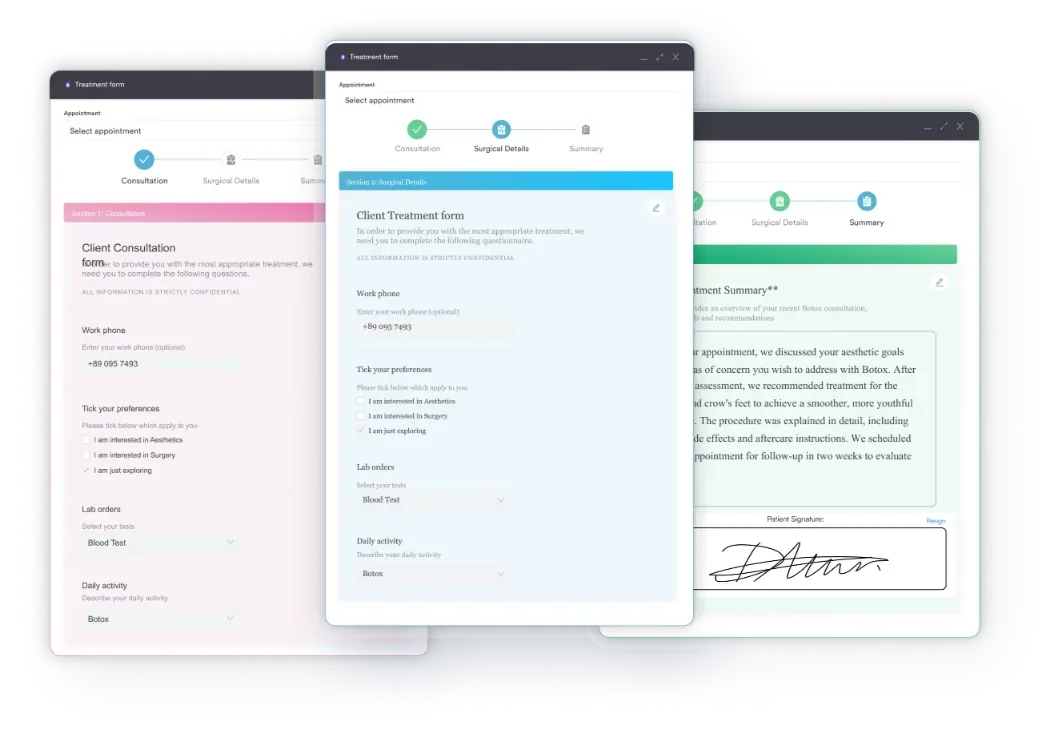
Structured medical forms built around those five rows keep the capture consistent from one surgeon to the next. Photographs need their own paperwork too, and the photo consent requirements vary by state.
Where you store all of this matters as much as capturing it. Visual field reports, clinical photographs, and signed attestations are protected health information, so HIPAA compliance shapes the software choice. Digital intake forms put the same prompts in front of every clinician before the patient leaves the pre-op consultation. Checking insurance eligibility before the visit catches terminated coverage while the appointment can still be rescheduled. The visit level rests on documented history, examination and medical decision making, not on the minutes spent.
Practices billing UnitedHealthcare for a functional blepharoplasty should have the payer’s own paperwork ready before the visit. Pulling the UnitedHealthcare prior authorization form early avoids a same-day scheduling delay.
Build the taped and untaped visual field comparison into your pre-operative order set. Reviewers look for both states, every time. A record that carries only the untaped field gives them grounds to request more documentation or deny outright, even when the results are strong.
A 15822 claim passes through five stages. Four of them finish before the patient reaches the operating room, which is why billing teams rarely rescue a case after the fact.
Stage five is where a practice finds out how well stage one went. Records requests come with short response windows, so the file has to be assembled already rather than gathered in a hurry.
Run this list before the claim leaves the practice. It takes about five minutes and catches the errors that generate most of the rework.
Three errors show up again and again in payer denial guidance. The first is an untaped visual field with no taped comparison. Next comes an MRD-1 written as a comment rather than a number. Third, the attestation lives in the referring physician’s letter instead of the surgeon’s note.
Modifier and place-of-service slips make up most of the rest. A medical coding cheat sheet pinned at the billing desk clears up a surprising number of them.
Upper lid surgery takes E1 for the left eye and E3 for the right. The E-series is anatomy specific, so the two lower lid modifiers, E2 and E4, never belong on a 15822 line.
For a bilateral upper lid case billed to Medicare, report 15822 twice. Put E1 on one line and E3 on the other. The second line is usually paid at a reduced rate under the bilateral surgery rules.
Policy varies here more than coders expect. Do not standardize a claim template on what a colleague in another state does. Confirm the convention with your own Medicare Administrative Contractor and the AMA CPT resources.
CPT code 15822 carries 4.50 work RVUs and 14.12 total RVUs in a non-facility setting under the 2026 CMS Physician Fee Schedule. In a facility setting, the total drops to 10.65.
The practice expense line is the one that moves. Doing the case in your own procedure room adds 3.47 practice expense RVUs. That extra covers the supplies, staff time, and room that a hospital would otherwise bill separately.
CMS republishes these values every year. Check the CMS fee schedule tool before you build any of them into a financial projection.
The national non-facility payment for CPT code 15822 in 2026 is about $471.62. In a facility setting it is about $355.72.
Both figures are national unadjusted amounts. They come from multiplying total RVUs by the 2026 conversion factor of $33.4009, before any Geographic Practice Cost Index adjustment. Your own locality will land above or below them.
Geographic swings here are wide. High-cost localities such as Manhattan and San Francisco sit well above the national figure, while rural jurisdictions fall below it. Pull the rate for your own MAC jurisdiction before either number goes into a budget.
The diagnosis code has to carry the functional argument. A cosmetic or unspecified diagnosis on a 15822 line guarantees a denial, however complete the rest of the file is.
Two rows deserve a closer look. H02.403 exists so you never have to stack the two unilateral ptosis codes on a bilateral claim. And while H57.8 looks usable, it is a category header rather than a billable code, so use H57.89 instead.
Structured patient records keep the confirmed diagnosis, the operative note, and the supporting test results on one file. Verify your selection against the AAPC crosswalk and your payer’s LCD for each encounter.
Eyelid work rarely arrives alone on an operative note. These are the codes that turn up next to 15822, along with the distinction that separates each one from it.
CPT 15821 follows the same logic on the lower lid, where the fat pad rather than the skin drives the choice. Free grafts to the eyelid sit outside this family altogether and fall under CPT 15260.
When a levator repair happens in the same session, 15822 and 67904 can both go on the claim, with modifier 51 on the secondary procedure. Each code still needs its own medical necessity documentation. Bundling edits will not stop you billing both, but a reviewer will read both notes.
When 15822 and 67904 go on the same claim, write separate operative notes for each procedure. Reviewers want distinct documentation supporting medical necessity for both. A single combined note that blurs the blepharoplasty into the ptosis repair is a well-known audit trigger.
Blepharoplasty claims usually fail at the front end rather than the back end. The visual field report sits in a scanner folder. The MRD-1 note lives on paper. Photographs are still on somebody’s phone.
Practice management software like Pabau keeps all of it on one client file. Pre-op questionnaires, consent forms, and the surgeon’s attestation are completed digitally and stored against the patient record. Clinical photographs upload to that same file instead of a camera roll.
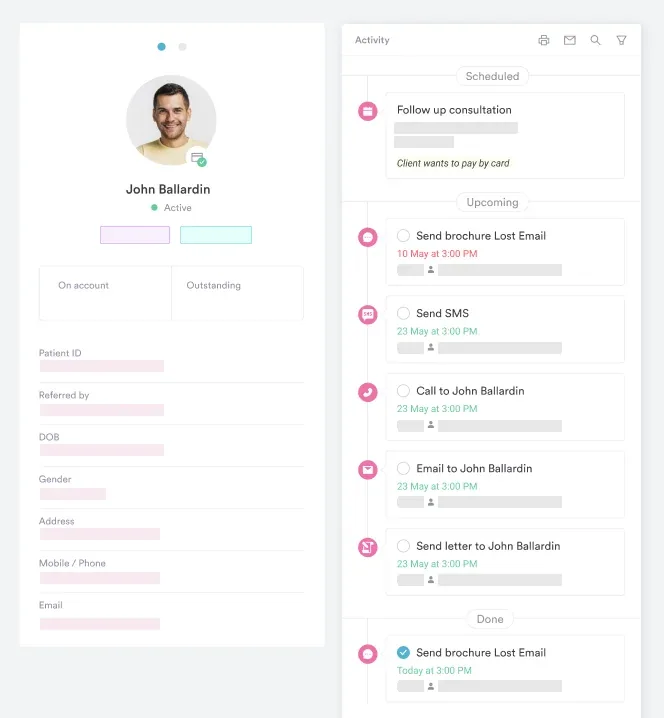
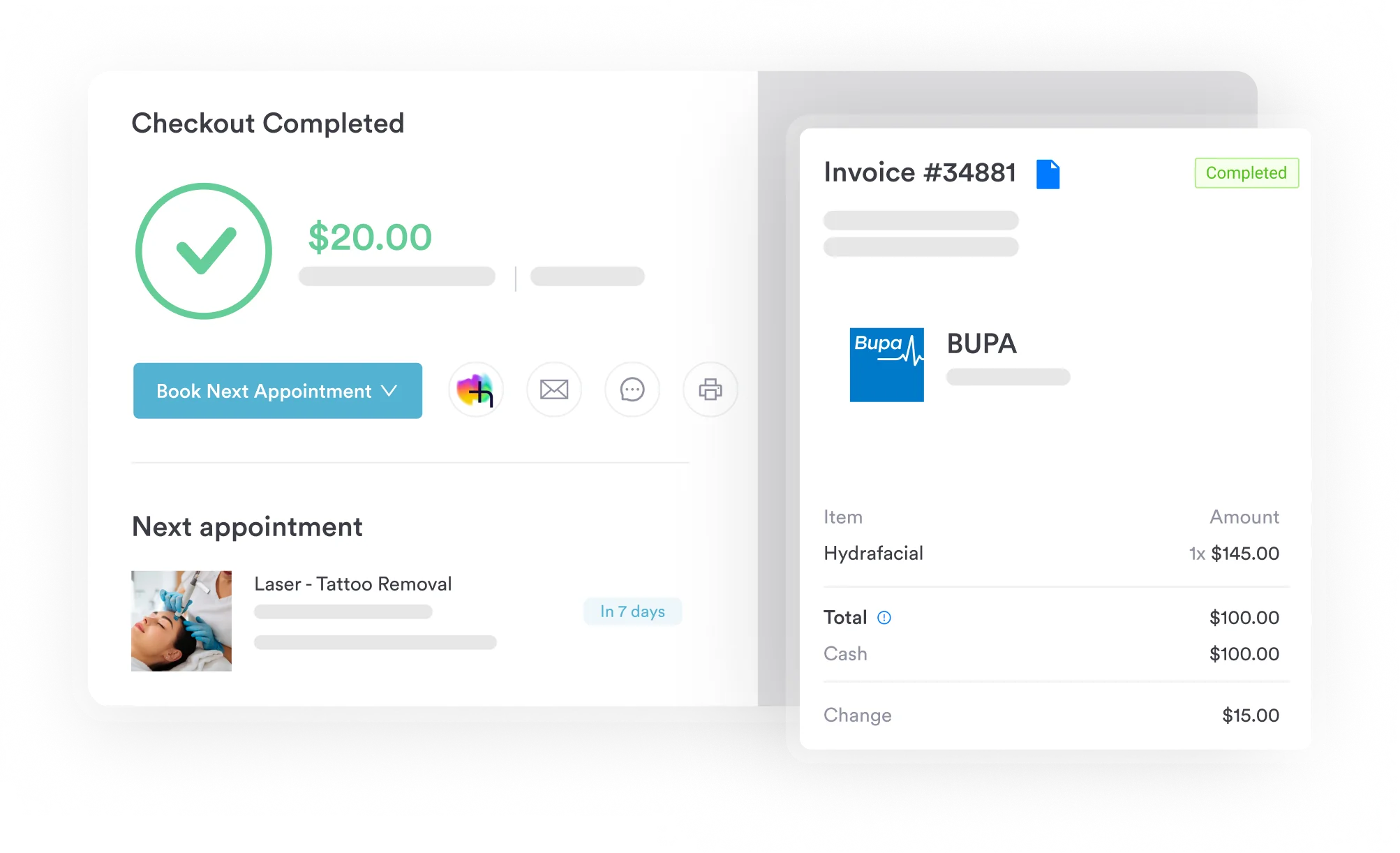
Claims and billing tools sit on the same record, so an invoice and the clinical file never end up in different systems.
That matters most when a contractor asks to see the file. Everything supporting the claim is already attached to the encounter, dated and signed, so your biller is not chasing four documents from four people. It is the same reason plastic surgery software gets judged on documentation rather than scheduling.
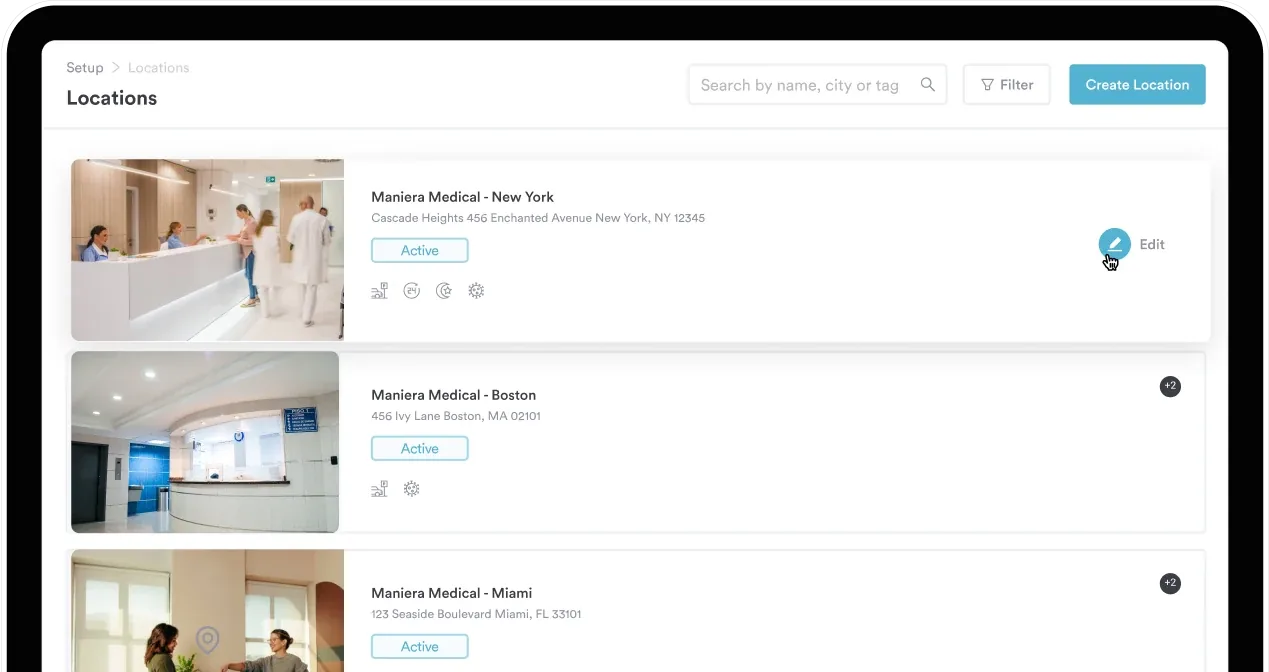
Groups running multiple locations get the same picture across every site. Reporting and analytics come with every Pabau subscription. That way a documentation problem found at one site gets reviewed everywhere, instead of being resubmitted once and forgotten.
The same setup carries over to neighboring specialties. Dermatology practices coding lesion work face the same evidence problem, just with different photographs and a different code set.

Pabau stores pre-op questionnaires, consent forms, photographs, and test results on the client file. When a payer asks for the documentation behind a claim, your team produces it from one record.

Surgery is the easy part of 15822. The pre-op visit decides the claim weeks earlier, and it comes down to a caliper measurement and a visual field run both taped and untaped.
So treat this as a workflow problem rather than a coding one. Build the four required documents into the pre-op order set and the coding mostly takes care of itself. Practices that do this appeal fewer claims and wait less time to get paid.
Keeping every consent, photograph, and test result on a single client file is what makes that possible. Book a demo to see how Pabau organizes surgical documentation for practices billing functional blepharoplasty.

Coding other integumentary repairs? CPT 15274 covers skin substitute application, with its own wound size thresholds and documentation rules.
Billing more than one lesion in a session? CPT 15787 explains how the add-on lesion count works once the first lesion is treated.
Coding a disorder of the eye globe? ICD-10 code for disorder of globe It covers H44.9’s billable status, its place in the H44 hierarchy, and documentation requirements.
Sequencing a toxic optic neuropathy diagnosis? ICD-10 code for toxic optic neuropathy It explains when a toxin code comes first and when H46.3 leads the claim instead.
Coding optic neuritis without a specific subcode? ICD-10 code for other optic neuritis It covers documentation, DRG groupings, and how H46.8 relates to diagnoses like multiple sclerosis.
Yes. It carries a 90-day global period, which covers one day before surgery plus the day of the procedure. Routine post-operative visits inside that window are not billed separately.
Traditional Medicare does not require prior authorization for 15822. Many Medicare Advantage and commercial plans do, and they usually want the visual fields and photographs attached to the request. Check the plan before you schedule the case.
Yes, with the right paperwork in place. Medicare never covers a purely cosmetic case, so bill the patient and append modifier GY. Where you expect a medical necessity denial instead, have the patient sign an ABN before surgery and append modifier GA.
Use place of service 11 for an office procedure room, 22 for hospital outpatient, and 24 for an ambulatory surgery center. That choice decides whether Medicare pays you the non-facility or the facility rate.
Most borrow the same functional criteria, but the thresholds move. Some plans set a specific degree of superior field improvement, while others apply their own MRD-1 cut-off. Read the plan’s medical policy rather than assuming the Medicare LCD applies.