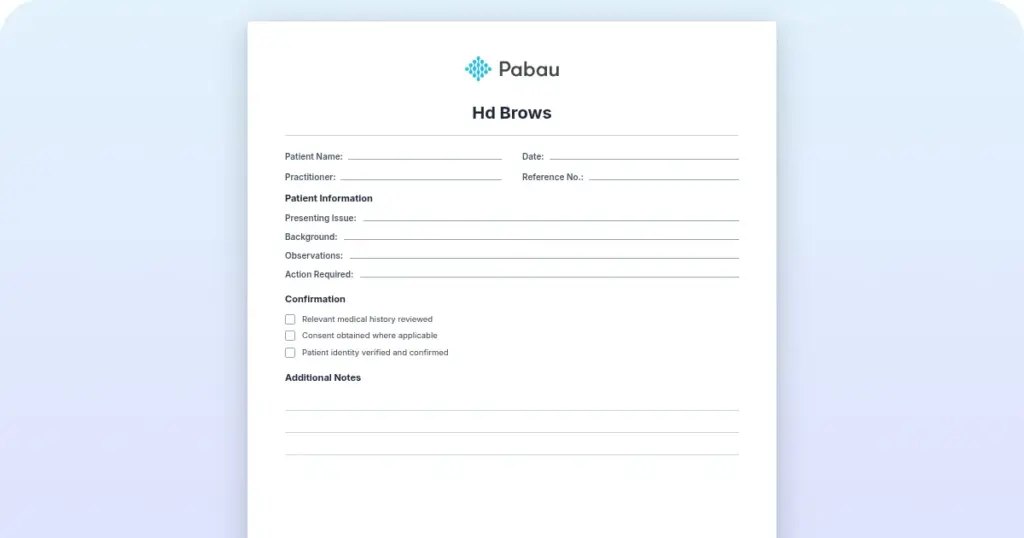
HD Brows consultation form: Free template and guide
HD Brows is a seven-step brow treatment that combines consultation, tinting, wax...

2
Last Updated: Oct 13, 2026

Cryolipolysis is a non-invasive fat reduction procedure using controlled cooling to eliminate stubborn fat cells without damaging surrounding skin.
A comprehensive cryolipolysis form ensures proper patient screening for absolute contraindications (cryoglobulinemia, cold agglutinin disease, pregnancy).
Pre-treatment assessment, informed consent documentation, and clear aftercare instructions reduce liability and improve patient outcomes.
Practice management software like Pabau streamlines cryolipolysis documentation and automates client follow-up communications.
A ready-to-use treatment documentation form covering patient assessment, informed consent, contraindications screening, body area mapping, treatment planning, and post-treatment care instructions for cryolipolysis procedures.
Download templateA cryolipolysis consent form gives practices a defensible record of every session, from contraindications screening through aftercare. This template covers patient assessment, informed consent, treatment planning, and follow-up care in one document, so practitioners can standardize how they record non-invasive fat freezing. Store completed forms in practice management software like Pabau to keep every client’s history in one place. Our ranking of med spa management software compares how eight platforms handle charting, scheduling, and total cost.
Cryolipolysis is a non-invasive fat reduction procedure that uses controlled cooling to selectively target and destroy subcutaneous adipose tissue (fat cells) without damaging surrounding skin, nerves, or muscle. The term derives from “cryo” (cold), “lipo” (fat), and “lysis” (breakdown). Practices typically screen candidates for the procedure during intake.
The procedure is commonly known by the brand name CoolSculpting and has been FDA-cleared since 2010 for non-invasive body contouring. Fat cells are uniquely susceptible to cold temperatures compared to other tissue types, making cryolipolysis an effective targeted approach for stubborn, localized fat deposits that resist diet and exercise.
From a legal and regulatory perspective, cryolipolysis is a non-invasive procedure that generally falls outside the Care Quality Commission’s regulated-activities scope in the UK. It isn’t currently subject to CQC registration or inspections, though practices should still maintain thorough informed consent and safety documentation.
Practices should also prepare for the UK’s upcoming non-surgical cosmetic procedures licensing scheme under Section 180 of the Health and Care Act 2022, which introduces local-authority licensing rather than CQC oversight.
In the US.
A properly structured cryolipolysis form guides practitioners through five essential operational steps that ensure clinical safety and regulatory compliance.
Practices running CoolSculpting-branded devices specifically can adapt this framework using a dedicated CoolSculpting treatment form or CoolSculpting consent form, both of which follow the same manufacturer-specific applicator settings.
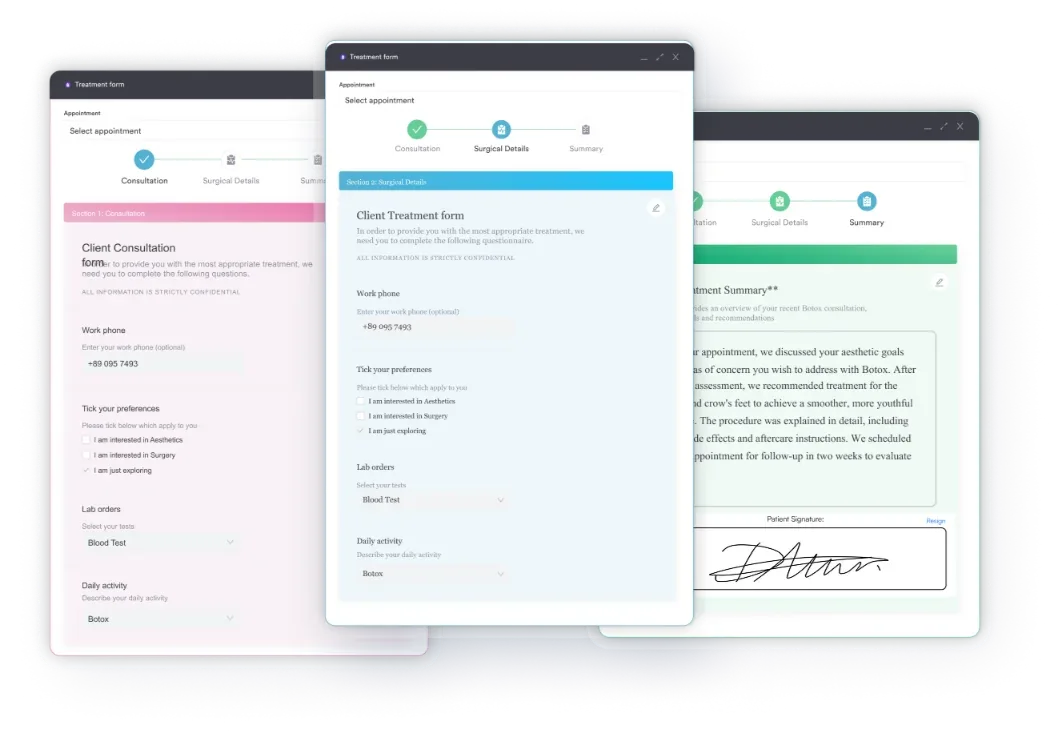
Using integrated client record management and personalized treatment planning tools streamlines this workflow, centralizes all documentation, and automates post-treatment reminder communications.
Cryolipolysis treatment forms are essential for any practice offering non-invasive body contouring, including med spas, dermatology practices, and plastic surgery offices. This includes solo practitioners, multi-location chains, and integrated wellness centers blending aesthetics with health and fitness.
Practices that also treat clients with other body contouring devices can apply the same documentation approach. Try the Emtone aftercare instructions or AccuTite aftercare form for radiofrequency-based treatments. The ultrasound facial consent form does the same job for focused ultrasound skin tightening, covering screening, risk disclosure and photo permissions. Practices that also offer injectables.
The form is specifically valuable for practices where practitioners conduct thorough consultation processes and need to document client assessment, consent, and post-treatment expectations clearly. It supports regulatory compliance across multiple jurisdictions and protects both the practice and the client by establishing a clear record of informed decision-making.
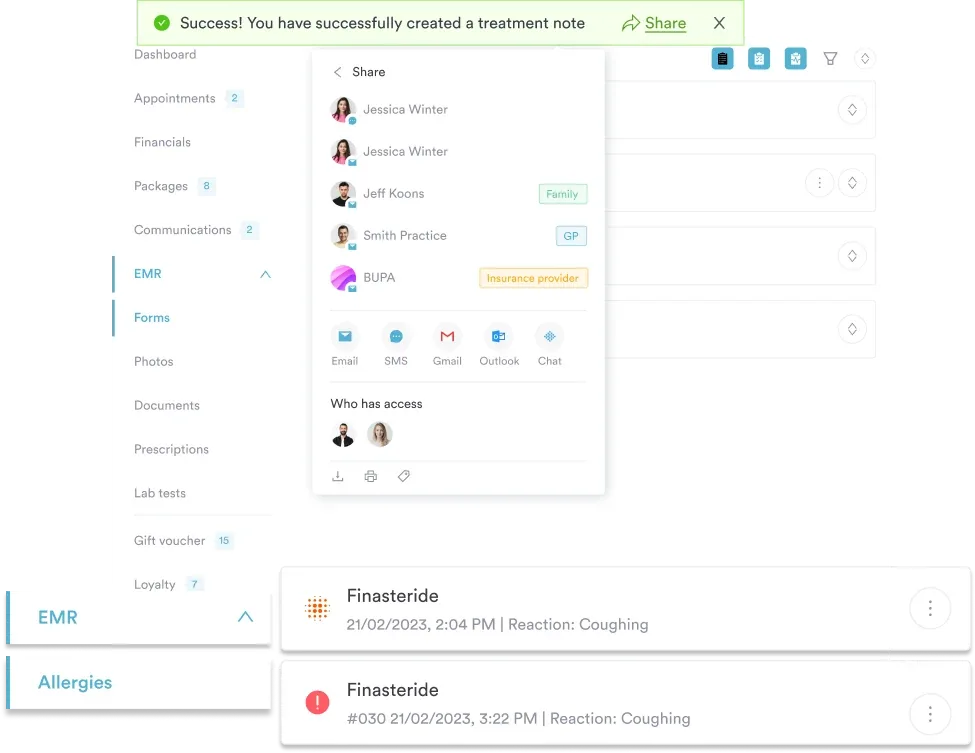
Most medspas store completed forms like this in a medical spa EMR, beside photos and consents.
Compliance and legal protection: A standardized form ensures every client receives consistent informed consent documentation, supporting the safety and compliance records practices will need ahead of the UK’s upcoming non-surgical cosmetic procedures licensing scheme, and for state health department reviews in the US. Clear contraindications screening demonstrates due diligence in client safety.
Pair this template with a HIPAA privacy policy and a HIPAA compliance checklist to cover how the practice stores and shares client data.
Workflow efficiency: Pre-formatted templates eliminate the need to recreate consent language for each client. A broader med spa compliance review helps confirm the practice covers licensing, staffing, and data requirements beyond this one template.
Documentation clarity: A structured form captures essential clinical data (treatment areas, settings, baseline measurements) in one place, enabling better continuity of care if the client returns for additional sessions or if another practitioner takes over future treatments.
Patient confidence: Clients see that the practice takes the procedure seriously and understands the science behind it. Clear aftercare instructions and realistic outcome expectations improve satisfaction and reduce post-treatment complaints.

See how private GPs reduce admin, improve clinical safety, and increase revenue with Pabau.

Effective cryolipolysis outcomes depend heavily on proper patient selection and realistic expectation-setting.
This supports better continuity and reduces the risk of missing critical contraindication flags.
A well-structured cryolipolysis consent form protects both client and practitioner. It documents informed consent, screens contraindications, and sets clear expectations around outcomes and aftercare. Keeping this record consistent for every client supports regulatory compliance and reduces the chance of post-treatment disputes.
Book a demo to see how Pabau’s digital forms and client management system automate cryolipolysis documentation and client follow-up workflows.

Need a structured aesthetic intake form? Aesthetic interest questionnaire template provides a foundational client discovery tool before any aesthetic procedure.
How should before and after photos be captured and consented? Photo management features ensure GDPR-compliant image storage and client consent tracking.
What about packaging cryolipolysis as part of a treatment plan? Packages and bundles guide shows how to structure multi-session cryolipolysis treatments as revenue-generating service offerings.
Cryolipolysis is a non-invasive fat reduction procedure that uses controlled cooling to freeze and destroy subcutaneous fat cells without damaging surrounding skin or tissue. It is commonly known as CoolSculpting and has been FDA-cleared for reducing localized fat deposits in specific body areas.
Absolute contraindications are the cold-related blood disorders: cryoglobulinemia, cold agglutinin disease, and paroxysmal cold hemoglobinuria. Any client with one of these must be excluded from treatment, and cryolipolysis is also avoided during pregnancy and breastfeeding. Relative contraindications (recent surgery, active herpes simplex in the treatment area, numbness, severe skin conditions) require individual assessment before proceeding.
Clinical studies and FDA-cleared data show that cryolipolysis reduces treated fat by approximately 20-25% per session. Results are gradual, with visible changes appearing at 2-3 weeks and maximum results typically visible at 8-12 weeks post-treatment.
PAH is a rare but documented complication where treated fat cells increase in size after cryolipolysis rather than reducing. It occurs in less than 1% of cases but must be disclosed on all consent forms as a known risk. Clients must acknowledge understanding this possibility before treatment.
Yes. Cryolipolysis requires minimal downtime – clients can return to work and exercise immediately. Temporary side effects (redness, bruising, numbness) may occur but typically resolve within days to weeks without medical intervention.
Practices should use a standardized form documenting patient medical history, contraindications screening, informed consent, treatment areas and settings, baseline measurements or photos, treatment duration, and post-treatment instructions. This documentation demonstrates due diligence during regulatory audits and protects both the practice and the client.