Mental health self-care checklist
A mental health self-care checklist is a structured daily tool for tracking the ...

5
Last Updated: Oct 20, 2026

A coping with auditory hallucinations worksheet gives a patient one structured place to describe their voices and plan how to respond.
This worksheet covers identifying hallucinations, a single 1 to 10 distress rating, sensory grounding, differentiation, coping strategies, and support contacts.
The form has no trigger log and no clinician assessment section, so treatment planning and risk screening still belong in your clinical notes.
Research supports CBT for psychosis and grounding techniques, and the worksheet turns both into prompts a patient can complete in session.
Practice management software like Pabau stores each completed sheet in the patient record, so the whole care team works from the same history.
A printable clinical worksheet with space to describe the voices, rate distress from 1 to 10, and work through sensory grounding. It also covers differentiation, coping strategies, five support contacts, and practitioner details.
Download templateAuditory hallucinations mean hearing voices when no external sound is present. They are a symptom of psychotic disorders such as schizophrenia, and they can surface at any of the stages of psychosis.
A structured coping with auditory hallucinations worksheet gives clinicians and patients a shared place to record what the voices are like and what helps. This guide explains what the worksheet contains, what it leaves to your notes, and how to use it across a course of sessions. Practices that already run digital intake and assessment forms can file every completed sheet in the same patient record.
A coping with auditory hallucinations worksheet is a structured clinical tool. It helps a patient describe the voices they hear, rate the distress those voices cause, and choose coping steps drawn from CBT for psychosis (CBTp).
The worksheet serves two functions. First, it creates a shared record. Both clinician and patient work from the same description of the voice and the same distress rating. Second, it moves the session from assessment to action, because the patient names activities, people, and relaxation techniques they can use.
It is a session aid rather than a validated instrument. In the US, HIPAA-covered practices document patient experience and treatment response as a matter of course. UK services regulated by the CQC face the same expectation. The worksheet supports that record while keeping person-first language and respecting the patient’s own account of voice hearing.
The downloadable coping with auditory hallucinations worksheet is a short printable form. It opens with the patient’s name, age, date of session, and practitioner, then runs through six sections.
Two things are worth flagging before you hand it out. There is no trigger log, and the distress scale is rated once rather than before and after a coping attempt.
The practitioner block records who you are rather than what you assessed. So treatment planning, medication review, and risk screening stay in your clinical record. Our guide to writing safer clinical notes covers how to document that side well.
Clinicians and patients complete this worksheet collaboratively in session, or as homework between appointments.
Grounding interrupts the voice experience by anchoring attention to the present moment. It is core to CBTp, and it is the part of this worksheet most patients complete first.
The sensory grounding section asks for three things the patient can see, hear, smell, and taste. There is no touch category and no 5-4-3-2-1 sequence on the form, so keep the instruction simple. Three items per sense, written down as they notice them.
These techniques are worth teaching alongside the sheet, even though only the sensory list and relaxation prompt appear on it:
The sheet has no scale for rating individual techniques. Note in the patient record which ones they say helped, so their personal toolkit builds session by session.
Differentiation is the reality-testing element printed on the form. The patient compares the sensations they just listed with the hallucination they described at the top. They then write down how the two differ. The coping section adds one more check, which is asking someone they trust whether they can hear the same sounds.
The questions below are ones you ask in session. They are not printed prompts, so record the patient’s answers in your notes rather than expecting space on the sheet.
The worksheet asks the patient to list three activities that distract them from the sounds. Those three lines are easier to fill when the patient has a menu to draw from, such as a coping wheel. The five categories below cover the options clinicians and researchers use most.
Patients discover through repeated use which strategies suit their style and circumstances. A systematic patient care workflow helps clinicians track which strategies each patient has tried, rated as helpful, and committed to using.
The structured coping with auditory hallucinations worksheet earns its place in a session for several reasons:
The coping with auditory hallucinations worksheet suits several clinical contexts:
Safety note: The worksheet is a support tool, not a crisis intervention, and it carries no risk screening prompts. Run your own risk assessment separately, and agree escalation pathways in advance. If voices command self-harm or harm to others, the patient contacts crisis services rather than relying on coping strategies.
A worksheet like this is usually printed, filled in by hand, then scanned or filed in a drawer. The next clinician who sees the patient rarely has last month’s sheet in front of them, so the distress rating trend is lost.
Practice management software like Pabau handles the sheet as a digital form instead. You send it before the appointment or complete it on screen together, and the answers attach to the patient record automatically. Each new sheet sits beside the last one, so the rating history is there when you open the chart.
Everything the form leaves out still has a home. Risk screening, medication review, and treatment planning go in the clinical note attached to the same appointment. That keeps the psychiatrist, therapist, and case manager working from one record.

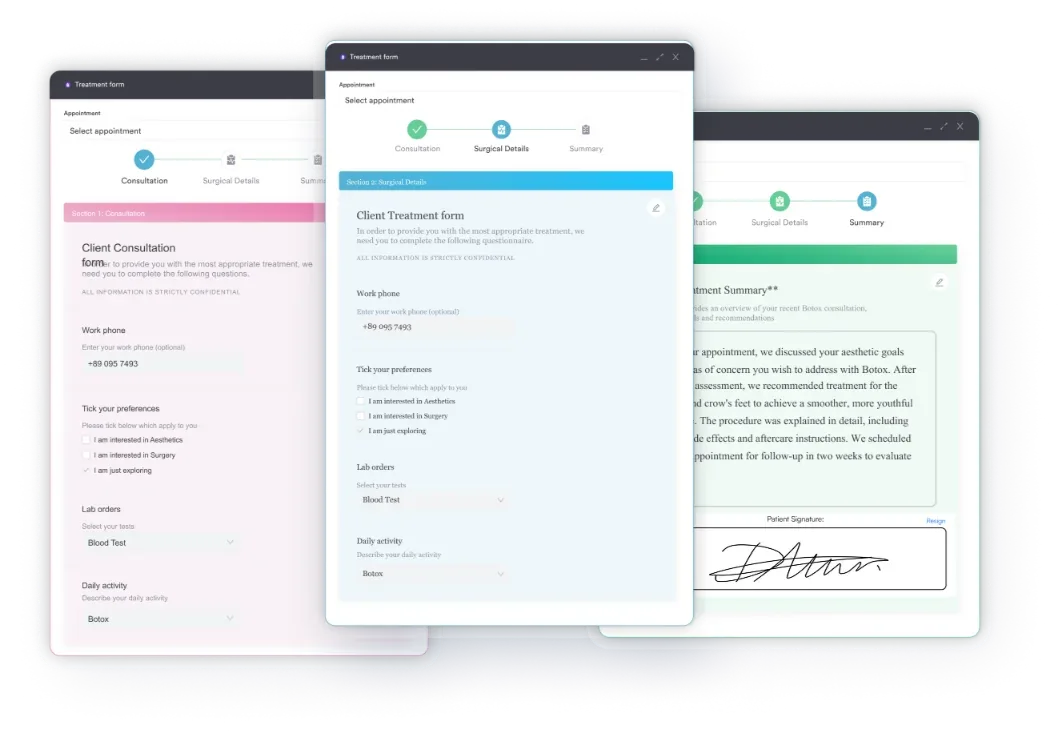
Pabau turns the coping with auditory hallucinations worksheet into a digital form patients complete before or during a session. Every answer files straight to their record, so your whole team works from the same history.

Use the worksheet for what it does well. It gives a patient one place to describe the voices and rate the distress once. The patient also grounds themselves across four senses and names five people they can call. That is a strong session structure and a good psychoeducation prop.
It is not an assessment tool. Trigger patterns, risk screening, medication review, and progress across a course of treatment all stay with you. Knowing that split before you print the form keeps your documentation honest.
Download it, use it in your next psychoeducation session, and file each sheet against the patient record. Book a demo to see how Pabau stores completed worksheets alongside the rest of a patient’s mental health history.

Need a plan for the moments between sessions? Mental health safety plan gives you the risk and escalation structure this worksheet deliberately leaves out.
Writing up the session afterwards? Progress notes for psychotherapy shows how to record what the patient reported without padding the note.
Working on the beliefs behind the voices? Core beliefs inventory maps the assumptions a patient tests during CBTp.
Want a measure that tracks change over weeks? Outcome questionnaire template scores four domains, so you see more than one distress rating.
Teaching skills for high distress? Dialectical thinking worksheet adds DBT practice alongside the coping list on this form.
It is a structured clinical form. The patient describes the sounds they hear, rates the distress from 1 to 10, then works through sensory grounding and differentiation. The last sections cover coping activities, five support contacts, and the practitioner’s details.
Yes. The template is available as a free PDF download above. You can print it or fill it in digitally, depending on your practice workflow.
Yes. Some voices sound like the patient’s own inner monologue, or like a remembered voice such as a parent or teacher. The differentiation section is where you explore that. The patient compares the hallucination with what they can genuinely see, hear, smell, and taste.
Thought-stopping is a cognitive technique. The patient says stop, aloud or silently, when a distressing thought or voice intrudes, then switches to a coping strategy. It is not printed on this worksheet, so teach it in session and record it among their distraction activities.
The worksheet is not a validated instrument. It draws on CBT for psychosis (CBTp), which NICE recommends and which randomized controlled trials support for schizophrenia spectrum disorders and early psychosis.
Yes. The format stays the same for everyone, which suits psychiatry, psychology, occupational therapy, nursing, and case management. Storing completed sheets in a shared patient record keeps every team member on the same information.