Reflection questions: 14 examples and a free template
Reflection questions are open-ended prompts that guide a person through structur...

Last Updated: Oct 16, 2026

Progress notes are clinical documents that record what happened in a therapy session and become part of the patient’s medical record.
Psychotherapy notes are private clinician notes stored separately and receive special HIPAA protections under 45 CFR 164.508.
SOAP, DAP, BIRP, and GIRP are the four primary formats used to structure progress notes in mental health practice.
Pabau automates progress note templating so clinicians spend less time documenting and more time on patient care.
A ready-to-use progress notes template covering session documentation, treatment planning, and clinical record-keeping with sections for subjective, objective, assessment, and plan components.
Download templateProgress notes are the foundation of mental health practice. They document what happened during a therapy session, track patient outcomes, support treatment planning, and become part of the official medical record.
Many clinicians struggle with the time commitment and legal complexity of writing notes that are both thorough and compliant. This guide explains what progress notes are, covers the four primary formats (SOAP, DAP, BIRP, GIRP), and provides worked examples and free templates you can use immediately.
Progress notes for psychotherapy are formal clinical documents that record the details of a therapy session. They capture what the client presented, what interventions the clinician used, how the client responded, and what the plan is going forward.
Unlike casual session summaries, progress notes are part of the patient’s designated medical record and may be requested by insurers, courts, or other authorized parties.
A progress note typically includes:
The note links the session to a specific CPT code, such as 90837 for 60-minute individual psychotherapy, for insurance billing.
The purpose is threefold:
That’s why template-based progress notes reduce errors and save time compared to writing from scratch each session.
The distinction between progress notes and psychotherapy notes confuses many clinicians because both document therapy sessions. However, the law treats them differently.
Progress notes (also called clinical progress notes) are the standard. They go into the patient’s chart and are the document insurers request. Psychotherapy notes are the clinician’s private thoughts: personal reflections on the session, countertransference, diagnostic hypotheses still being tested, or supervision notes. Psychotherapy notes are optional and, if kept, must be stored separately from the medical record.
Most small and solo practices keep only progress notes, not separate psychotherapy notes. The progress notes are detailed enough for clinical purposes and require only standard HIPAA authorization to share. This simplifies compliance and is why mental health EMR systems focus on progress note templates rather than dual documentation systems.
Understanding the HIPAA rules is essential because they govern when and how psychotherapy notes and progress notes can be disclosed. The distinction matters legally and ethically.
For a solo practitioner or small practice, the simplest approach is: keep only progress notes (not separate psychotherapy notes). This reduces legal exposure and makes HIPAA compliance straightforward.
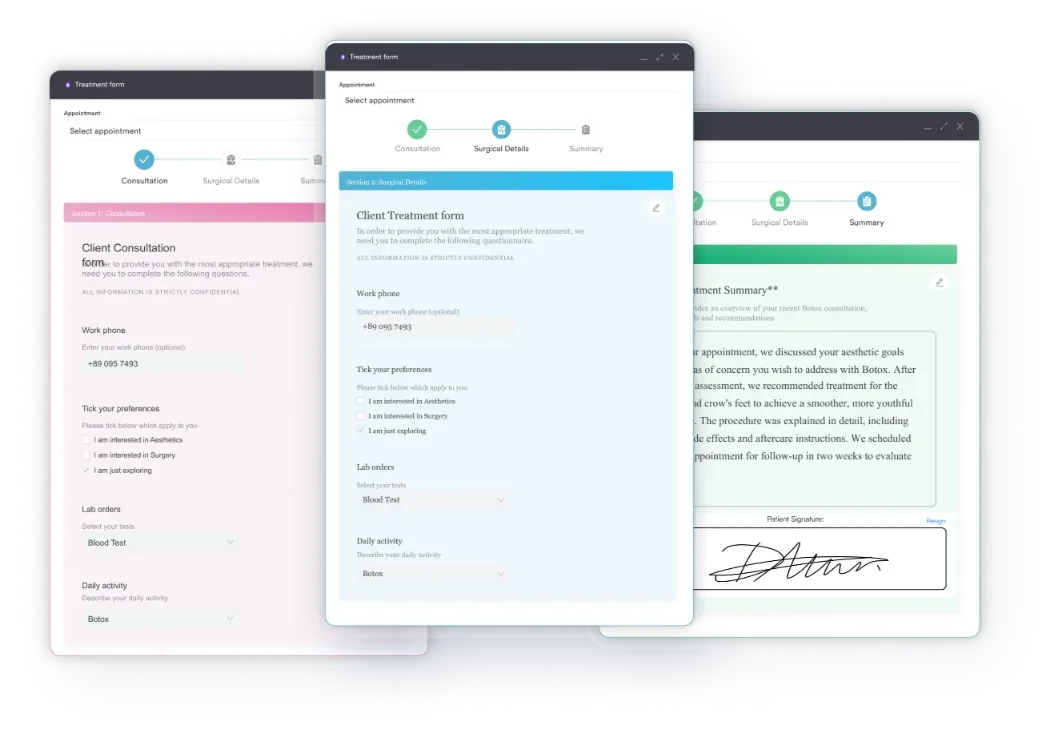
Psychologists often assign tools like this through psychology practice software, tracking completion between sessions.
Four main formats are used in mental health and therapy practice management: SOAP, DAP, BIRP, and GIRP. Each has a specific structure and is suited to different contexts.
SOAP is the gold standard. It maps cleanly to how clinicians think about a session and is the format most insurance companies and regulators expect. DAP is a lighter version, removing the separate “subjective” section by combining it with data.
BIRP and GIRP focus on observable behaviors and measurable goals. Most clinicians stick with SOAP unless there’s a strong reason to switch, such as a school district requirement for BIRP.
SOAP stands for Subjective, Objective, Assessment, Plan. Each section answers a specific question about the session.
The clinical content differs slightly by discipline, but the framework stays identical. A typical SOAP note runs 200-400 words for a 50-minute session.
DAP (Data, Assessment, Plan) collapses the Subjective and Objective sections into one “Data” section, then proceeds to Assessment and Plan.
DAP is faster to write and works well for brief sessions or high-volume practices. It’s also mandated by some organizations. Choose based on what your clinical setting or supervisor requires.
Regardless of format, every progress note must answer these core questions: When did the session happen? What was the client’s status? What did we do? How did they respond? What happens next?
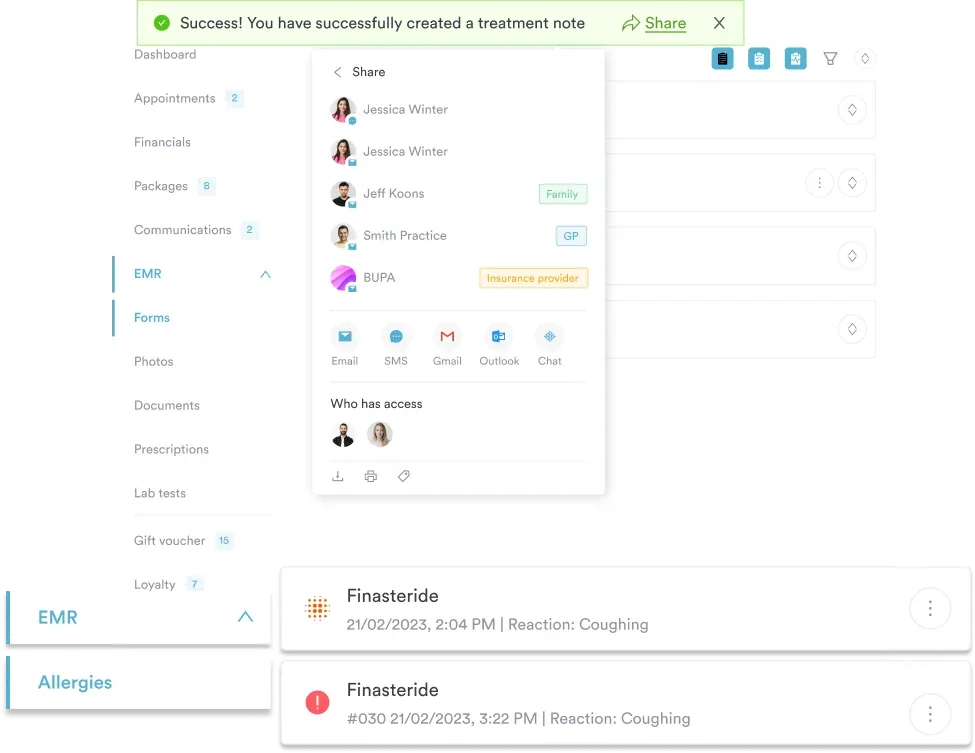
Concrete examples help. Here’s a sample SOAP note and a DAP note from real-world scenarios.
SOAP Note Example (Individual Psychotherapy, 60 minutes):
S: Client reports significant reduction in panic attacks (2 this week vs. 6 last week). Attributes improvement to practicing grounding techniques at first sign of anxiety. Also mentioned upcoming family visit causing some worry, but feels “more in control” than before. Mood “better, less heavy.”
O: Client appeared calm, maintained good eye contact, smiled at one point during session. Speech rate normal. No signs of distress. Demonstrated grounding technique accurately when asked to practice.
A: Client continues to meet criteria for panic disorder; anxiety symptoms improving with CBT intervention. Appears engaged in therapy and practicing skills outside session. On track with treatment goals. Introduced cognitive challenging for anticipatory anxiety regarding family visit to prevent relapse.
P: Continue weekly individual psychotherapy. Practice cognitive challenges for family-visit anxieties daily. Reduce SSRI dose? Discussed with client-will coordinate with prescriber. Next session in one week. CPT code: 90837.
DAP Note Example (Brief Counseling, 30 minutes):
D: Client attended session on time. Reports stress at work (new manager, unclear expectations). States “I’m handling it okay but don’t sleep well.” Appears alert, maintains eye contact, denies sadness or panic. Discussed workplace communication strategies and boundary-setting in the session.
A: Client is coping, not in crisis. Work stress is situational and responsive to skill-building. No mental health diagnosis currently active; counseling for stress management.
P: Taught assertiveness framework. Client will practice with one coworker interaction before next session. Continue weekly brief counseling. Sleep hygiene review at next visit. CPT code: 90832.
These examples show that progress notes don’t need to be elaborate. They need to be specific, link interventions to the session, and document progress. Psychiatric evaluation templates follow similar logic for initial comprehensive evaluations.
The template at the top of this page is ready to download. Many clinicians also benefit from a clinical language cheat sheet: a quick reference of words and phrases that strengthen progress notes. Instead of “Client felt bad,” you might note, “Client endorsed depressed mood with persistent anhedonia.” The difference is clarity and documentation strength. Common clinical vocabulary includes:
Using precise language protects you in audits and legal discovery. Courts and insurers take notice when your notes read professionally.
Writing progress notes takes time. Manual SOAP templates help, but they still require you to type each section from scratch. Pabau’s AI medical scribe. You then review, edit, and approve, turning a 15-minute task into a two-minute task.
Beyond AI, Pabau’s clinical notes feature includes:
All notes are HIPAA-compliant and support direct insurance submission. For multi-therapist practices, notes are auditable and searchable, useful for supervision and quality improvement.
Progress notes for psychotherapy form the legal and clinical spine of your practice, protecting both you and your clients. Whether you choose SOAP, DAP, or another format, the key is consistency and specificity.
Start with the free template above, use it for a month, then adjust based on what works for your workflow. If documentation is eating 20+ hours a week from your schedule, book a demo to see how practice management software with AI-assisted notes can reclaim that time.

Documenting behavior-focused sessions? BIRP note template gives you a ready-made structure for behavior, intervention, response, and plan documentation.
Screening for depressive symptoms? Depression self-assessment template helps you track patient-reported mood changes between sessions.
Working on communication patterns in session? Communication styles worksheet supports sessions focused on interpersonal and relational goals.
Progress notes are part of the patient’s medical record and document the session facts, interventions, and outcomes. Psychotherapy notes are private clinician reflections stored separately and receive special HIPAA protections. Most practices keep only progress notes.
Typically 200-400 words for a 50-minute session. Longer is not better. Clarity and specificity matter more than length. Insurance companies and auditors expect concise notes that document the standard of care without fluff.
Psychotherapy notes receive special protections under 45 CFR 164.508 and generally cannot be subpoenaed without a specific court order and showing of good cause. State law varies, so always check your jurisdiction. Progress notes can be subpoenaed through routine legal discovery.
SOAP (Subjective, Objective, Assessment, Plan) is the gold standard and most widely recognized. DAP is a faster alternative for brief sessions. Choose based on your clinical setting, supervisor preference, or organizational requirement.
CPT code 90837 is used for individual psychotherapy, 53 minutes or more of clinician time. For 38-52 minutes, use 90834. For 16-37 minutes, use 90832. Your progress note must document the actual time spent and justify the CPT code billed.
Yes. CMS and most state licensing boards require contemporaneous, legible documentation of every clinical encounter. Failure to maintain adequate progress notes can result in regulatory findings, billing denials, or loss of licensure. Documentation is your legal shield.