GLP-1 diet plan
A GLP-1 diet plan is a structured eating framework for patients taking semagluti...

2
Last Updated: Oct 13, 2026

A bariatric diet plan guides patients through four post-operative phases, from clear liquids to solid foods, ensuring safe healing and optimal nutrition after weight loss surgery.
A two-week pre-operative liver reduction diet (low-carb, high-protein, calorie-restricted) shrinks the liver before surgery, giving the surgical team safer access during the procedure.
Patients must consume 60-80g of protein daily and take lifetime vitamin supplements (calcium citrate, iron, B12, vitamin D) to prevent nutritional deficiencies post-surgery.
Foods high in fat, sugar, carbonated beverages, and alcohol must be avoided post-operatively to prevent dumping syndrome and support long-term weight loss.
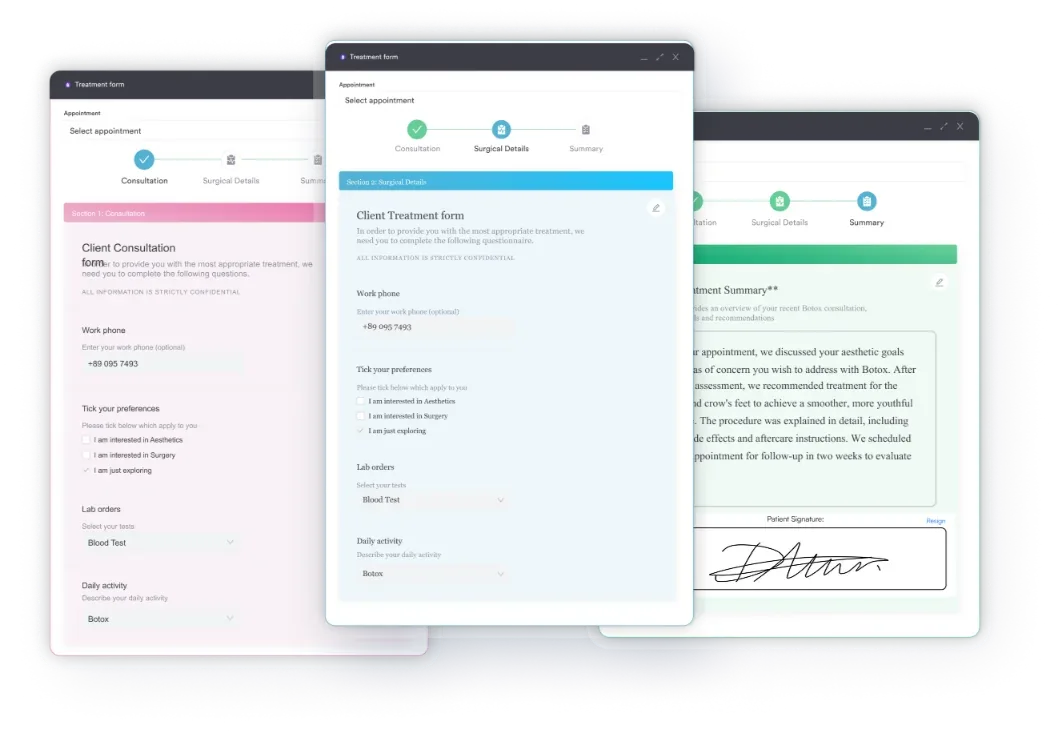
Pabau’s patient portal and automated follow-up workflows help clinics distribute diet plans, track patient progress, and send post-operative care reminders, reducing no-shows and improving dietary compliance.
A fillable bariatric diet plan template you can personalize with your practice’s branding, patient details, and surgery date, then print or share through your patient portal as a takeaway reference. Pair it with the phase-by-phase guidance, supplement schedule, and sample meal plan covered in this article.
Download templatePost-operative bariatric surgery requires strict dietary management to ensure safe healing, prevent complications, and maximize weight loss. A structured bariatric diet plan guides patients through four distinct phases, from clear liquids immediately after surgery to regular solid foods weeks later, with precise protein targets, supplement protocols, and foods to avoid.
This guide covers the complete post-operative nutritional roadmap and shows practices how to distribute and monitor the plan with their patients.
A bariatric diet plan is a structured, medically-supervised nutritional guide designed for patients who have undergone weight loss surgery (gastric bypass, gastric sleeve, duodenal switch, or lap-band procedures). It specifies which foods are safe to eat at each stage of recovery, portion sizes, nutrient targets, and supplement timing to support healing and prevent complications.
The plan serves multiple clinical purposes. Post-operatively, it reduces the risk of anastomotic leaks, dehydration, and protein malnutrition by controlling portion sizes and food textures during early healing.
It also prevents dumping syndrome, a condition where food moves too rapidly from the stomach to the small intestine, causing nausea, dizziness, and abdominal cramping, by limiting sugar and high-fat foods.
Over the long term, the plan supports sustained weight loss and helps patients maintain lean muscle while losing fat mass through consistent protein intake.
Clinically, the bariatric diet plan is non-negotiable. Patients who follow the plan strictly lose more weight, experience fewer post-operative complications, and maintain their results longer than those who deviate.
Insurance carriers (Medicare, Medicaid, private payers) often require documented nutritional counseling and adherence as a condition of surgical approval, making the plan part of your practice’s compliance and risk management framework.
The Bariatric Diet Plan template is designed to be printed, customized, and distributed to patients immediately after surgery (typically 1-2 days post-op).
Here are the five operational steps to integrate this template into your post-operative workflow.
A wellness practice platform turns templates like this into trackable client programs.

Automate diet plan distribution, schedule follow-up appointments, send compliance reminders, and track patient progress-all in one unified platform designed for weight loss clinics.

This bariatric diet plan template is essential for any healthcare practice offering weight loss surgery or post-operative care.
A templated timeline showing typical phase durations (7 days clear liquids, 3-4 weeks full liquids, 2-3 weeks pureed.
Create a bariatric surgery support group and email the diet plan template to all group participants at the start of each quarter. New post-operative patients see real examples of meal progression from patients 3-12 months ahead in their recovery. This peer reinforcement improves dietary compliance and reduces the sense of isolation many patients feel during the first weeks post-op.
Before any of the post-operative phases begin, most surgical programs place patients on a pre-operative liver reduction diet for roughly two weeks immediately before the procedure date. The liver sits directly over the stomach, and in patients carrying excess weight, an enlarged, fatty liver can block the surgeon’s view during laparoscopic access.
This raises the risk of a longer operation or a conversion to open surgery. A low-carbohydrate, high-protein, calorie-restricted diet depletes liver glycogen stores and shrinks liver volume in as little as two weeks, giving the surgical team a safer, clearer working space.
Compliance here isn’t optional. Surgeons routinely postpone or cancel procedures when a patient’s liver hasn’t visibly reduced in size.
Explain the rationale clearly at the pre-operative consultation, and document it in the patient’s chart the same way you’ll document post-operative adherence. Consider a short compliance check-in call 2-3 days before the scheduled surgery date to catch anyone who has drifted off plan while there’s still time to intervene.
The post-operative bariatric diet progresses through four distinct phases over approximately 8 weeks. Each phase balances gastric healing, nutrient absorption, and patient tolerance.
Your template should specify both the typical timeline and the progression criteria. Patients move forward only if they tolerate the current phase without nausea, vomiting, or dumping symptoms.
Progression through phases depends on individual tolerance. A patient who tolerates full liquids well by week 3 (instead of week 4) can advance early. Conversely, a patient with delayed gastric emptying may remain in full liquids for 5-6 weeks.
Document phase progression in your weight loss clinic software and have registered dietitians review each patient’s tolerance before clearance to the next phase.
Protein is the nutritional cornerstone of post-operative bariatric recovery. The goal is 60-80g daily by week 8 post-op.
Protein preserves lean muscle during aggressive weight loss, supports wound healing, prevents hair loss and skin breakdown, and keeps patients satiated between meals. Most patients naturally consume only 30-40g daily through food alone-supplementation with protein shakes becomes essential.
Hydration is equally critical. Post-operative gastric capacity is 1-2 ounces initially and expands only to 4-6 ounces by 12 weeks. Patients must sip fluids continuously throughout the day to reach 48-64 ounces daily.
The cardinal rule is to never drink liquids with meals, since this empties the stomach of solid food before the patient feels satiated and triggers hunger shortly after eating. Instruct patients to finish all meals, then wait 30 minutes before drinking any fluid.
The mechanism behind these deficiencies differs by procedure. Gastric bypass and duodenal switch reroute food past part of the small intestine, so nutrients have less absorptive surface to pass through.
Sleeve gastrectomy removes the stomach’s fundus, the main acid-producing region. Patients eat far less overall and absorb iron, B12, and calcium less efficiently from the reduced stomach acid.
Lap-band procedures are purely restrictive. No stomach tissue is removed and acid production is unaffected, so the deficiency risk there comes mainly from reduced food intake rather than reduced acid.
Whichever procedure your patient had, the result is the same. Lifetime vitamin and mineral supplements are needed to prevent iron-deficiency anemia, calcium and vitamin D deficiency, B12 deficiency, and folate deficiency.
Your diet plan should include a detailed supplement schedule with product recommendations and dosing, typically starting in Phase 2 (weeks 2-4) and continuing lifelong.
Calcium carbonate requires stomach acid for absorption and is ineffective after bariatric surgery. Always specify calcium citrate instead. Iron and calcium should be separated by at least 2 hours because they compete for absorption.
Annual blood work (CBC, CMP, B12, iron panel, vitamin D 25-OH) is standard. Adjust supplement doses based on serum levels.
Certain foods trigger complications post-bariatric surgery. High-fat, high-sugar items cause dumping syndrome (rapid gastric emptying leading to nausea, dizziness, and abdominal pain). Hard, dry, or high-fiber foods can cause obstruction or discomfort in the small pouch.
Your template should clearly list restricted foods with clinical rationales so patients understand why, not just blindly follow rules.
By week 8 post-op, most patients have reached Phase 4 and can build meals around regular solid foods. The same rules still apply: protein first at every meal, roughly 1 cup portions, three meals plus 1-2 protein-rich snacks daily, and no drinking within 30 minutes of eating.
Here’s a representative week using the bariatric-friendly foods and portion guidance covered above. Treat it as a starting template your dietitian can adjust for each patient’s preferences and tolerance.
Encourage patients to keep protein at 60-80g daily across the day’s meals and snacks, and to swap in other bariatric-friendly proteins and soft vegetables from the food list above for variety. If a patient tolerates a food poorly, have them pause and reintroduce it later rather than pushing through discomfort.
Distributing and tracking a bariatric diet plan across dozens of post-operative patients is a logistics challenge. Manual processes, such as printing copies, filing signed acknowledgments, scheduling follow-ups, and sending reminder texts, consume 5-10 hours per week of administrative staff time. Practice management software automates these workflows and centralizes patient compliance tracking.
A bariatric-focused practice software should include four core capabilities.
This reduces administrative overhead while improving patient outcomes through consistent follow-up.
A standardized bariatric diet plan is non-negotiable in weight loss surgery practice. It ensures consistent patient education, prevents post-operative complications, and demonstrates compliance with insurance and regulatory requirements.
This guide covers every critical element: the pre-operative liver reduction diet, four post-operative phases with clear progression criteria, protein and hydration targets, lifetime supplement schedules, foods to avoid, and a sample 7-day meal plan.
Use the downloadable template above to build your own branded, patient-ready handout, and lean on the explanations here when you walk patients through the reasoning behind each phase.
But a template alone isn’t enough. It’s a tool to enable better follow-up. Pabau’s practice management platform automates the distribution, tracking, and compliance monitoring of your diet plan, freeing your team to focus on clinical decision-making rather than administrative overhead.
Your patients get faster phase clearance, fewer missed appointments, and better long-term weight loss outcomes. Your practice gets measurable improvements in no-show rates and patient retention. Start with this template, then scale it across your patient population using integrated practice software.

Managing patients with insulin resistance alongside bariatric surgery? Ketogenic diet plan template gives you another structured meal framework for patients whose needs fall outside the standard post-op phases.
Treating patients with elevated cholesterol after surgery? High cholesterol diet plan template pairs heart-healthy food swaps with the same portion-control principles used here.
Ready to add movement once patients reach solid foods? Weight loss workout plan template gives your team a printable exercise progression to hand out alongside this diet plan.
A bariatric diet plan is a structured nutritional guide that specifies which foods, portion sizes, and eating patterns are safe at each post-operative phase. It’s essential because it supports gastric healing, prevents dumping syndrome and nutritional deficiencies, maximizes weight loss, and satisfies insurance company requirements for documented patient education.
Typically: Phase 1 (clear liquids) lasts 7 days; Phase 2 (full liquids and protein shakes) lasts 3-4 weeks; Phase 3 (pureed foods) lasts 2-3 weeks; Phase 4 (solid foods) begins at week 8 and continues lifelong. Progression depends on individual tolerance-patients with slow gastric emptying may spend 5-6 weeks in Phase 2, while those tolerating foods well advance early.
Calcium carbonate requires stomach acid for absorption, which is significantly reduced after bariatric surgery. Calcium citrate is absorbed efficiently even with reduced stomach acid, making it the clinically appropriate choice. Using calcium carbonate post-bariatric surgery risks calcium deficiency and secondary hyperparathyroidism.
The post-operative bariatric diet plan is specifically designed for patients with a surgically reduced stomach pouch. Without surgery, patients have normal stomach capacity and can tolerate regular portion sizes, making the restrictive phases unnecessary. However, patients pursuing non-surgical weight loss may benefit from a general high-protein, low-carbohydrate diet; consult a dietitian for individualized guidance.
Dumping syndrome occurs when food moves too rapidly from the small pouch into the small intestine, causing nausea, dizziness, sweating, and abdominal cramping 15-30 minutes after eating. The diet plan prevents it by avoiding high-sugar and high-fat foods, spacing protein throughout the day to maintain satiety, and ensuring patients eat slowly and stop before feeling full.
All post-bariatric patients require lifelong supplementation with: a bariatric multivitamin, calcium citrate (1,200-1,500 mg daily), iron (325 mg ferrous sulfate daily), vitamin B12 (1,000 mcg monthly, sublingual or intramuscular), and vitamin D3 (2,000-4,000 IU daily). Annual blood work monitors for deficiencies and guides dose adjustments.