What state has the most plastic surgery per capita? America’s cosmetic map in 20 numbers
What state has the most plastic surgery per capita? Florida is America’s p...

Last Updated: Oct 16, 2026

Areola reduction surgery aftercare instructions guide patients through immediate wound care, compression garment use, activity restrictions, and pain management for optimal healing.
Sutures typically remove within 7-10 days; ice packs reduce swelling for the first 48 hours; compression bras should be worn 24/7 for the first 3-6 weeks post-op.
Common complications include infection, sensitivity changes, and minor asymmetry – patients must know when to contact their surgeon and follow all aftercare instructions precisely.
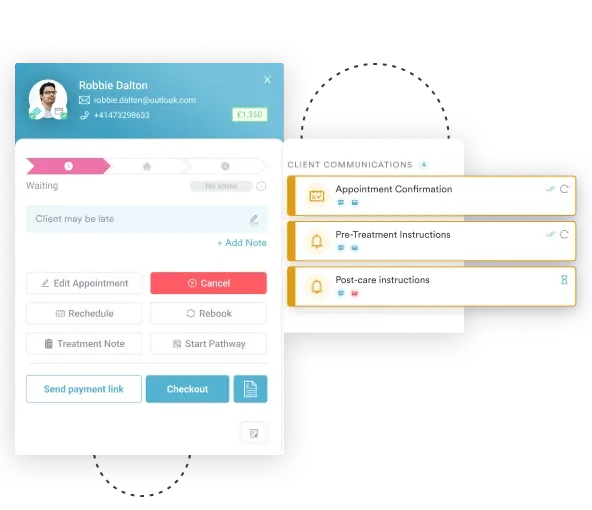
Pabau’s digital forms and patient portal enable practices to deliver customized aftercare instructions, track compliance, and maintain secure post-op communication.
A comprehensive post-operative care guide covering wound care, compression garment instructions, activity restrictions, pain management protocols, follow-up scheduling, and warning signs of complications – ready to customize and hand to patients before discharge.
Download templateProper post-operative care determines both healing outcomes and patient satisfaction after areola reduction surgery.
This guide explains what those instructions should cover, why each element matters clinically, and how to implement them using practice management software that keeps both practitioners and patients aligned.
Aftercare instructions are the documented protocols clinicians provide to patients immediately following areola reduction surgery. These instructions define the safe recovery pathway, establish boundaries on activity, specify wound care steps, clarify medication use, and outline the warning signs that require urgent clinical assessment. Unlike generic post-op guidance, areola reduction-specific instructions address the nipple-areolar complex’s unique healing physiology.
From a regulatory perspective, documented patient care management protocols meet American Society of Plastic Surgeons (ASPS) guidelines for surgical aftercare and support the documentation standards set by state medical boards. HIPAA-compliant delivery of these instructions is mandatory, with audit trails confirming patient receipt. The template format – downloadable, customizable, and patient-accessible – enables practices to meet both regulatory requirements and patient safety standards.
Implementing aftercare instructions across your plastic surgery practice management workflow requires five operational steps that begin during pre-op planning and extend through the final follow-up appointment.
This template benefits multiple practitioner types and practice settings:
These practices often pair the template with a breast reduction consultation form for patients considering combined breast procedures.
The template is equally valuable for surgeons working under different anesthesia protocols. Local anesthesia patients discharge almost immediately and may return to light activity sooner; general anesthesia patients require extended monitoring and more conservative activity restrictions. A single template with clearly marked anesthesia-dependent sections accommodates both pathways without creating separate documents.
Infection risk reduction: Clear wound care instructions (No hydrogen peroxide, avoid immersion, keep dressings dry) directly lower infection rates, which remain the most preventable complication post-operatively.
Scar optimization: Documented scar management timing (When to start massage, topical treatments, silicone products) and sun avoidance guidance improve long-term cosmetic outcomes. Published research shows scars typically mature over 12 months; structured aftercare protocols accelerate fading.
Compliance and accountability: A signed or digitally acknowledged document. This protects both the practitioner and the patient in cases of atypical healing or disputes about aftercare adherence.
Pain and swelling management: Structured guidance on ice timing (First 48 hours), compression wear duration (3-6 weeks continuous).
Reduced emergency calls: Clear warning signs (Fever, excessive pain, discharge, signs of infection) educate patients on what is normal post-op discomfort versus a genuine emergency. This reduces non-urgent calls and improves resource efficiency.
When areola reduction is combined with breast augmentation, mastopexy, or inverted nipple correction, customize the template to reflect dual incision sites, staggered suture removal schedules, and layered activity restrictions. A patient undergoing simultaneous augmentation and areola reduction needs different lifting restrictions (No heavy lifting for 6 weeks vs. 2 weeks) and separate compression protocols per procedure. Use your practice management software to flag these customizations during the discharge summary so nothing is missed.
Cosmetic surgery standards: Accreditation bodies and state medical boards expect documented post-operative care protocols for all cosmetic procedures. Digital templates stored in your practice management system.
Data protection obligations: Patient aftercare instructions contain sensitive health information. Ensure delivery via encrypted patient portals, not unencrypted email or SMS. Practices must ensure HIPAA-compliant transmission of all patient-facing documents.
Signature and acknowledgement: A digital signature or checkbox confirming patient understanding creates a legal record. This protects the practice if a patient claims they were not informed of specific restrictions or warning signs.
Patient satisfaction depends heavily on meeting realistic expectations about recovery speed. Aftercare instructions must clearly define what patients can and cannot do at each phase:
Pregnancy and long-term outcomes: Inform patients that areola reduction results may be partially reversed by pregnancy, breastfeeding, significant weight gain, or hormonal changes. This sets realistic expectations about permanence and future aesthetic needs.
Aftercare instructions must include a placeholder section for surgeon-specific pain medication prescriptions – never include fixed dosages in the template, as these vary by anesthesia type, patient comorbidities, and regional prescribing guidelines. Common guidance includes:
Aftercare instructions must clearly delineate what is normal post-op discomfort versus a complication requiring urgent assessment.
Normal post-op symptoms:
Warning signs requiring immediate contact:
Provide clear contact information for the surgeon’s office, an emergency contact number, and guidance on when to go to an emergency department.
Documentation of these warning signs in the aftercare template provides a safety net: patients know when clinical intervention is needed, and the practice has evidence that warnings were communicated.
The compression garment is the single most critical tool for achieving optimal areola reduction outcomes. Aftercare instructions should specify:
Many patients release compression too early, resulting in residual swelling and suboptimal scarring. Clear, repeated messaging improves compliance.
Detailed wound care protocols prevent infection and optimize scar appearance.
Immediate post-op (First 48 hours): Keep dressings dry and intact; do not shower or bathe; use ice packs 15 minutes on, 15 minutes off for the first 48 hours.
Dressing removal (Typically 24-48 hours): Once dressings are removed, inspect incisions for normal healing (Slight redness, minimal swelling) versus warning signs.
Incision care (Weeks 1-4): Gently wash with mild soap and water; pat dry; do not submerge in water (No baths, pools, or hot tubs); allow air exposure during the day to support healing.
Scar management (Weeks 4-12): Once incisions are fully closed. Silicone-based scar products, topical vitamin E, and sun protection (SPF 30+, 12 months minimum) all improve final scar appearance.
Structured follow-up intervals ensure early detection of complications and optimal aesthetic assessment.
Documenting these appointments in your practice management system ensures continuity and creates an audit trail for regulatory compliance.
Use automated appointment reminders, post-op surveys, and educational content between visits to keep engagement high during the critical recovery window.
Post-operative instructions include wound care, compression garment wear (24/7 for 3-6 weeks), activity restrictions, pain management, suture removal scheduling (7-10 days), warning signs of complications, and follow-up appointments. Patients should avoid heavy lifting, strenuous exercise, and water immersion for at least 2 weeks.
Most patients return to light daily activities within 3-5 days. Full recovery, including return to exercise and heavy lifting, typically takes 4-6 weeks. Scar maturation continues for 12 months; final aesthetic assessment should occur at 8-12 weeks post-op.
Avoid strenuous exercise, heavy lifting, and high-impact activities for at least 4-6 weeks post-op. Light walking and gentle movement are encouraged from day 3 onwards. Surgeon clearance at the intermediate follow-up (4-6 weeks) should precede return to full activity.
Keep incisions dry for the first 48 hours; avoid submersion in water. After dressing removal, gently wash with mild soap and water daily, pat dry, and allow air exposure. Once fully closed (weeks 3-4), begin scar massage and sun protection (SPF 30+ for 12 months).
Contact your surgeon immediately if you experience fever (over 101°F/38.3°C), excessive pain unrelieved by medication, purulent discharge (pus or foul odor), spreading redness or warmth around incisions, or worsening swelling after day 3. Early intervention prevents serious complications.
Wear a compression surgical bra 24 hours per day for the first 3-6 weeks post-op, then day-only use for an additional 2-4 weeks. Your surgeon will specify the exact timeline based on your anatomy and healing progress. Compression optimizes swelling reduction and scar appearance.