CRM for chiropractors: how to manage patients, bookings and marketing
A CRM for chiropractors is a patient relationship management system built around...

Last Updated: Oct 13, 2026

Acute pain is a NANDA-I diagnosis (code 00132) representing the state of sudden pain with an identifiable cause and expected resolution within 3 months.
Pain assessment must include quality, severity (0-10 scale), location, onset, duration, and relieving/precipitating factors using structured frameworks like OLDCART or PQRST.
SMART goals for acute pain focus on pain reduction, improved mobility, and recovery milestones (e.g., ‘Patient will report pain ≤4/10 within 24 hours and ambulate without assistance by discharge’).
Multimodal analgesia combining pharmacologic (NSAIDs, opioids, adjuvants) and non-pharmacologic interventions (positioning, guided imagery, heat/cold therapy) is the evidence-based standard.
Practice management software like Pabau, with digital pain assessment forms and patient record management, streamlines documentation and keeps pain monitoring consistent across care episodes.
A structured NANDA-I format template covering pain assessment, nursing diagnoses, SMART goals, pharmacologic and non-pharmacologic interventions with evidence-based rationales, expected outcomes, and condition-specific examples (post-surgical, labor and delivery, hip fracture, abdominal pain) for clinical and educational use.
Download templateAn acute pain nursing care plan turns a patient’s pain into a documented, measurable plan. It pairs a NANDA-I diagnosis (00132) with SMART relief goals and multimodal interventions, each backed by a rationale. This guide walks through how to write a nursing care plan for acute pain step by step, then gives you a free template to download and adapt to your patient.
An acute pain nursing care plan is a standardized clinical documentation tool that guides nurses through systematic assessment, diagnosis, goal-setting, and intervention planning for patients experiencing sudden-onset pain. The plan translates the NANDA-I taxonomy into actionable care strategies grounded in evidence-based pain assessment and management tailored to each patient’s pain source and clinical context.
NANDA-I defines acute pain (diagnosis code 00132) as the state in which an individual experiences and reports the presence of severe discomfort or an uncomfortable sensation lasting less than three months and associated with a defined injury, surgical procedure, or pathology. Unlike chronic pain, acute pain typically has a clear onset and expected resolution date.
The American Pain Society proposed pain as the “fifth vital sign” to drive consistent documentation and quality monitoring. The Joint Commission now requires accredited hospitals to treat pain assessment and management as an organizational priority, with leadership monitoring performance improvement. That makes structured care plans essential for regulatory compliance and patient safety.
The acute pain nursing diagnosis (NANDA-I code 00132) anchors the whole care plan. You build it from three parts: the diagnosis label, the related factor that caused the pain, and the defining characteristics you actually observed. Written out, it reads “Acute pain related to [cause] as evidenced by [defining characteristics].” Get this statement right and the goals and interventions follow logically from it.
Related factors name the source of the pain and become the “related to” clause:
Envenomation injuries belong in the same group, and their pain follows a predictable curve. Pain from a man o’ war sting peaks 5 to 30 minutes after contact, then throbs for one to three hours.
Defining characteristics are the subjective and objective findings that justify the diagnosis and fill the “as evidenced by” clause:
Because acute pain resolves within three months, the diagnosis also carries an expected end point that separates it from chronic pain. That distinction shapes every goal you set next.
An effective acute pain nursing care plan follows five operational steps that translate clinical judgment into systematic, documented action.
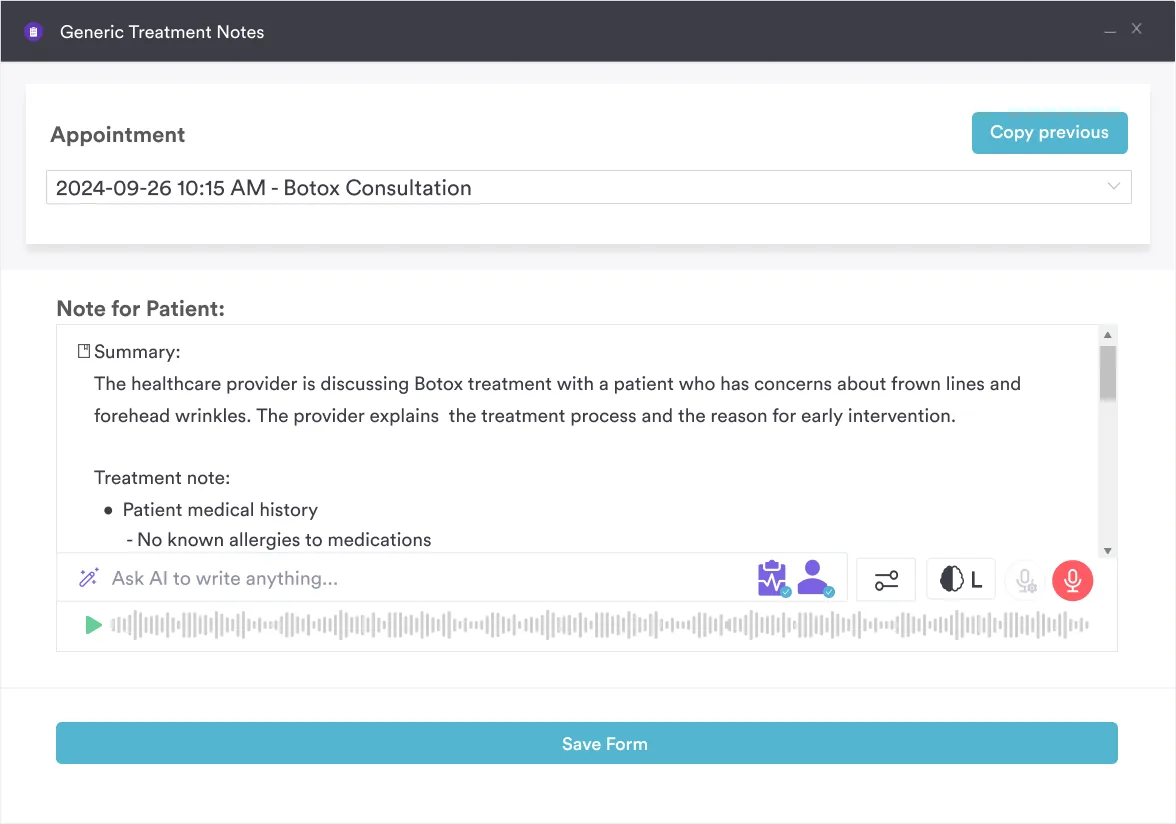
A patient management platform stores every completed form against the right patient record automatically.
Acute pain nursing care plans are essential across multiple clinical settings and healthcare specialties wherever sudden-onset pain requires coordinated, evidence-based management and documentation. Gastrointestinal specialties document reflux flare-ups the same way, through a GERD nursing care plan built on NANDA-I diagnoses. An acid reflux care plan then logs trigger foods, medication use, and symptom severity between visits.
Structured acute pain care plans deliver measurable clinical and operational benefits across patient safety, regulatory compliance, and staff efficiency.

Digital pain assessment forms (OLDCART, PQRST, FLACC), SMART-goal templates, and integrated patient records make NANDA-I care plans faster to complete and safer to audit.

Accurate pain assessment is the foundation of effective care planning. Multiple validated frameworks help nurses capture the full pain picture.
| Assessment tool | Best for | Format |
|---|---|---|
| Numeric Rating Scale (NRS) 0-10 | Cooperative adults; quick severity rating | Patient rates pain: 0 = no pain, 10 = worst imaginable |
| Visual Analog Scale (VAS) | Quantifying pain intensity over time; research | 10 cm line; patient marks pain location |
| OLDCART mnemonic | Comprehensive pain history during assessment | Onset, Location, Duration, Character, Aggravating factors, Relieving factors, Timing |
| PQRST framework | Cardiac and visceral pain; clinical interviews | Provokes, Quality, Radiates, Severity, Timing |
| FLACC Scale | Non-verbal or pediatric patients <7 years | Scoring Face, Legs, Activity, Cry, Consolability (0-10 total) |
| Critical-Care Pain Observation Tool (CPOT) | Non-verbal ICU or intubated patients | Behavioral indicators; 0-8 scale |
For physical therapy and sports medicine clinics, the same pain assessment tools integrate into electronic records and support longitudinal outcome tracking across multiple visits.
Multimodal analgesia combines pharmacologic and non-pharmacologic strategies, and it is the evidence-based standard for acute pain management. Each intervention targets pain through a different mechanism, reducing the need for high-dose single agents and their side effects.
Pharmacologic interventions
Non-pharmacologic interventions
These modalities are free or low-cost, carry minimal side effects, and give patients an active role in their recovery. Consistent reassessment between doses keeps the plan matched to how the pain actually responds. Closing gaps in a patient’s understanding of the treatment plan is the job of a knowledge deficit nursing care plan.
The nursing care plan must justify why each intervention is chosen for this specific patient. For example: “Administer ketorolac 30 mg IV q6h because the patient has post-operative incision pain with inflammation (rationale: NSAID reduces prostaglandin-mediated pain and swelling); offer guided imagery q2h to activate parasympathetic response and reduce opioid requirement (rationale: imagery lowers pain perception and improves coping in high-anxiety patients).” Software for primary care practices links the recall to the result, which is where manual systems lose patients.
Acute pain presentations vary by source. Condition-specific examples show how the general template adapts to real clinical scenarios.
Post-surgical incision pain: Diagnosis: “Acute pain related to surgical tissue trauma as evidenced by patient report 8/10 pain at incision site, splinting on movement, elevated HR 102.” Goal: “Patient reports pain ≤4/10 by POD 1 and ambulates 100 feet unassisted by POD 2.” Interventions: Ketorolac + opioid, ice packs q2h, splinting pillow, incentive spirometry, early mobilization. Gallbladder removal recovery follows a similar structure, documented instead through a cholecystitis nursing care plan.
Labor and delivery pain: Diagnosis: “Acute pain related to uterine contractions and cervical dilation as evidenced by patient report 9/10 pain, grimacing, rapid breathing.” Goal: “Patient copes with contractions and achieves a vaginal delivery with pain management choices she selected.” Interventions: Continuous labor support, position changes, breathing coaching, shower/tub access, epidural if requested, delayed cord clamping.
Hip fracture or orthopedic trauma: Diagnosis: “Acute pain related to bone fracture and muscle trauma as evidenced by severe pain 10/10, inability to bear weight, muscle spasm.” Goal: “Patient achieves pain ≤5/10 within 2 hours and begins passive range of motion by POD 1.” Interventions: Opioids, NSAIDs, regional anesthesia block, ice, elevation, immobilization, physical therapy within tolerance.
Abdominal pain (acute surgical abdomen, pancreatitis, renal colic): Diagnosis: “Acute pain related to visceral inflammation/obstruction as evidenced by severe cramping pain 9/10, nausea, inability to find comfortable position.” Goal: “Patient achieves pain ≤4/10 within 1 hour and tolerates clear liquids by 4 hours post-intervention.” Interventions: Opioids and antiemetics, NPO status, IV hydration, heat or cold based on diagnosis, positioning. Kidney involvement behind that abdominal pain may point toward an acute kidney injury nursing care plan to track fluid balance.
Each example demonstrates how to customize the template while maintaining the NANDA-I structure and evidence-based framework.
Expected outcomes for acute pain care plans focus on pain reduction, improved function, and recovery milestones. Measurable outcomes enable nurses to evaluate care effectiveness and adjust interventions if goals are not met within specified timeframes.
Quality metrics tracked across acute pain care include percentage of patients achieving pain goal within target timeframe, opioid reduction trends over recovery episodes, patient satisfaction scores, and adverse event rates.
Acute pain nursing care plans translate clinical assessment into systematic, evidence-based action that improves patient outcomes and supports regulatory compliance. By combining NANDA-I diagnosis structure, multimodal interventions, and patient-centered goal-setting, nurses deliver safer, more coordinated care across hospital, surgical, and community settings.
Downloadable templates remove the burden of recreating care plans from scratch. They standardize the format, make sure no assessment steps are missed, and keep interdisciplinary handoff clear. Book a demo to see how Pabau’s digital forms and patient record systems streamline acute pain documentation while keeping clinical data secure and audit-ready.

Want to write faster clinical notes? GP’s guide to clinical notes shows how AI tools speed up note-taking while keeping practices compliant with HIPAA and GDPR.
Thinking about opening your own practice? Starting a private GP practice walks GPs through breaking away from the NHS to run their own practice.
Assessing a patient’s pressure ulcer risk? Norton Scale is the standard clinical tool for identifying patients at risk of pressure ulcers before they occur.
The NANDA-I nursing diagnosis for acute pain is code 00132. It is defined as the state in which an individual experiences and reports the presence of severe discomfort or an uncomfortable sensation lasting less than three months and associated with a defined injury, surgical procedure, or acute pathology.
Nursing interventions include pharmacologic options (NSAIDs, opioids, regional anesthesia, adjuvants) and non-pharmacologic modalities (repositioning, heat/cold, guided imagery, breathing techniques, distraction, early mobilization). Multimodal analgesia combining both approaches is the evidence-based standard.
SMART goals are Specific, Measurable, Achievable, Relevant, and Time-bound. Example: “Patient will report pain ≤4/10 within 24 hours of intervention initiation and ambulate 100 feet without assistance by postoperative day 2.” Goals align with the patient’s expected recovery milestones and discharge plan.
Acute pain has a defined onset, identifiable cause, and expected resolution within 3 months; goals focus on pain reduction and recovery. Chronic pain persists beyond 12 weeks or the normal healing period; goals emphasize functional improvement and coping. Documentation, assessment tools, and intervention strategies differ accordingly.
Use the NANDA-I three-part format: “Acute pain related to surgical tissue trauma as evidenced by [specific assessment findings: pain 8/10, guarding, elevated vital signs].” Set measurable goals (pain ≤4/10 by POD 1, ambulation by POD 2), select multimodal interventions (opioids, NSAIDs, ice, splinting, early movement), and document expected outcomes and reassessment intervals.
Common tools include Numeric Rating Scale (0-10 for conscious adults), Visual Analog Scale, OLDCART and PQRST frameworks for comprehensive history, FLACC scale for non-verbal or pediatric patients, and Critical-Care Pain Observation Tool (CPOT) for intubated ICU patients. The choice depends on patient ability to self-report and clinical context.
The 5 P’s are a neurovascular check used when acute musculoskeletal injury threatens circulation: pain, pallor, pulselessness, paresthesia, and paralysis. In fracture, cast, or post-orthopedic care, worsening discomfort alongside any of these signs can point to compartment syndrome or limb ischemia and calls for urgent escalation rather than routine analgesia.