Anja Dodevska
Reflection questions: 14 examples and a free template
Reflection questions are open-ended prompts that guide a person through structur...

11
Last Updated: Oct 16, 2026
Free PDF 1 page, print-ready Clinician-reviewed
The 10 10 10 worksheet is a short journaling exercise built around three lists of 10: 10 things you want, 10 things you’re grateful for, and 10 things you enjoy doing. Writing all 30 down in one sitting pulls your attention away from whatever’s stressing you and back toward what you already have and where you’re headed.
It spread widely on TikTok and Pinterest as a manifestation and mood-reset method. Coaches, wellness practitioners, and therapists use a gentler version of it with clients, and practice management software like Pabau lets you hand it over as a digital form that saves back to the client’s record.
A printable journaling exercise with three lists of 10: the things you desire, the things you’re grateful for, and the things you enjoy doing. Hand it to clients as a mindset reset between sessions, or use it yourself.
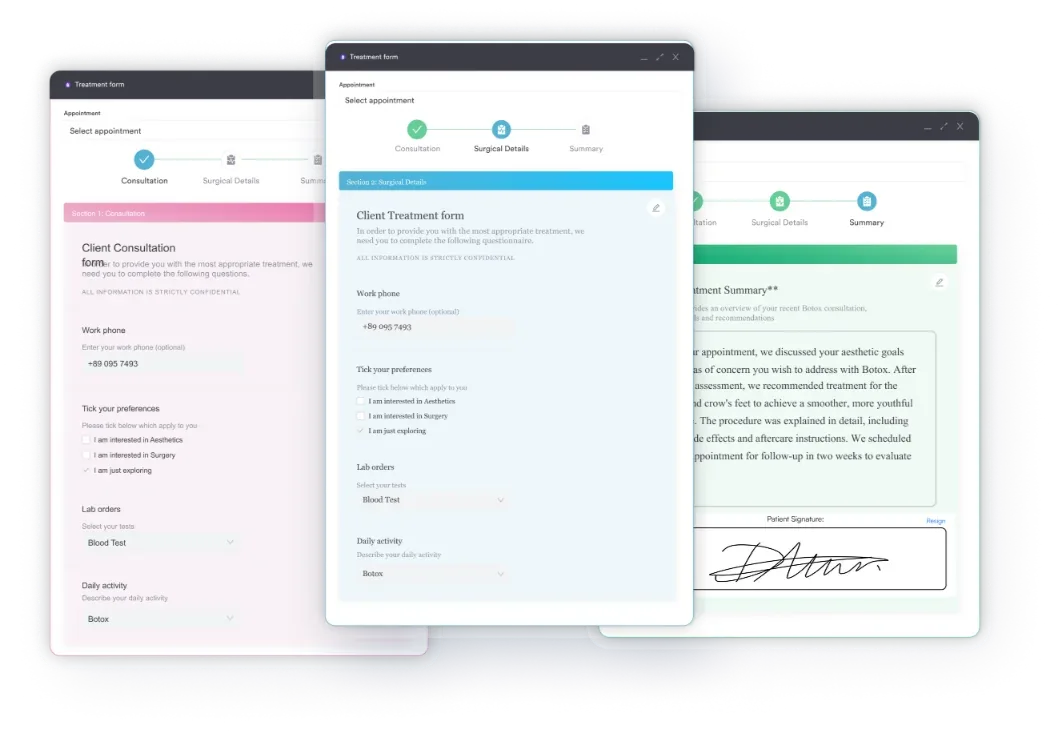
Start from scratch, or upload this PDF or any form you already use, and Pabau's AI Form rebuilds it with tick boxes, text fields and a signature. Attach it to the treatment once, and every patient gets it on time.
AI Form rebuilds the consent, history and aftercare forms you already use. You review each one, then publish.
Patients complete forms on their phone before they arrive, so the front desk stops retyping paper.
Every signed form is versioned and attached to the treatment record, ready when you need it.
Set how long a consent stays valid. Returning patients skip forms they have already signed.
Supports HIPAA and GDPR compliance AES-256 encryption 4.8 on G2 4.7 on Capterra Trusted by 4,000+ practices worldwide

The 10 10 10 worksheet is a short journaling exercise built around three lists of 10: things you want, things you’re grateful for, and things you enjoy doing.
Filling all three lists in one sitting shifts attention away from stress and toward abundance and direction, which is why it spread on social media as a manifestation and mood-reset method.
Coaches, wellness practitioners, and therapists use it as a low-pressure reflection and goal-setting exercise clients can complete between sessions.
With practice management software like Pabau, you can send the 10 10 10 worksheet as a digital form so each client’s responses save straight to their record.
The 10 10 10 worksheet, also called the 10 10 10 method, is a structured way to reset your mindset. Instead of dwelling on a single worry, you fill three separate lists of 10 and read them back together.
The point isn’t any single answer. It’s the shift that happens when someone who feels stuck writes 30 concrete, positive things about their own life and sees them side by side.
The worksheet takes about 10 to 15 minutes. Download the 10 10 10 worksheet PDF, or send it to a client as a digital form, and work through it in order.
Search for “10 10 10” and you’ll find two unrelated tools sharing the name. The journaling worksheet above is the one that spread on social media as a 10 10 10 manifestation method.
The other is Suzy Welch’s 10-10-10 decision rule, which asks how a choice will feel in 10 minutes, 10 months, and 10 years. That one is for making decisions under pressure. If a client needs help choosing between options rather than resetting their outlook, the decision rule is the better fit.
The manifestation framing says that listing your desires helps attract them. That claim has no evidence behind it, and it’s worth being straight with clients about that. The worksheet still earns its place, because two of its three lists map onto exercises that are well studied.
Framed this way, the 10 10 10 worksheet is a gratitude, goal-setting, and mood exercise in one page, not a shortcut to getting what you want. It supports professional care and doesn’t replace it.
The worksheet suits practitioners who work on mindset, motivation, and wellbeing rather than acute clinical symptoms:
For coaching practices and mental health and therapy teams, it’s an easy first exercise to standardize across clients. It also pairs naturally with structured intake tools like a group therapy consent form when you run it in a group. Therapy and counseling teams that build this into intake often run on practice management software designed for talk therapy workflows.
Treat the 10 10 10 worksheet as a recurring check-in rather than a one-off. Ask clients to redo it monthly and keep the old copies. Comparing this month’s desires and gratitude lists with last month’s shows what has shifted, what keeps reappearing, and which goals are quietly losing importance, which often opens up more than the individual answers do.
The friction with paper worksheets is what happens after: they get lost, or they never make it into the client’s file. Sending the 10 10 10 worksheet as a digital form removes that step. Clients complete it on their own device before a session, and their answers land directly in their record.
That does a few things at once. It keeps clients engaged between visits, it documents the work without extra typing, and it gives you a dated record you can compare over time. When clients fill it in through a client portal, you also save the back-and-forth of emailing forms around.
The worksheet is strongest for clients who feel flat, stuck in a rut, or unclear on what they want next. It’s a good fit for goal-setting sessions, New Year check-ins, and moments when someone needs to zoom out from day-to-day stress.
It’s the wrong tool for acute crisis or safety-risk situations, where direct clinical support comes first. Introduce it once a client is stable and has some basic coping in place, not in the middle of a difficult episode.
Attention problems are a different question, and the worksheet won’t answer them. A scored screener such as the Vanderbilt ADHD scoring template gives structured data on focus and behavior.
The 10 10 10 worksheet is a simple, honest exercise: 10 desires, 10 gratitudes, and 10 things you enjoy, read back as one picture of a client’s life. Skip the manifestation promises and it’s still a useful gratitude and goal-setting prompt that clients can repeat on their own.
Download the template to use it as-is, or send it as a digital form so responses save to each client’s record. Book a demo to see how Pabau turns worksheets like this into part of your session workflow.

Need a full psychiatric intake framework? Psychiatric Evaluation Template provides a full framework for conducting a thorough mental health assessment, from patient intake onward.
Want a validated cognitive assessment tool? WAIS-IV Template captures cognitive test results across four index domains, with scoring and narrative reporting sections.
Need to measure OCD symptom severity? Y-BOCS OCD assessment template scores obsessive and compulsive symptoms across 10 clinical items to guide treatment planning.
The 10 10 10 worksheet is a journaling exercise with three lists of 10: 10 things you desire, 10 things you’re grateful for, and 10 things you enjoy doing. Writing all three lists in one sitting is meant to shift your mindset toward abundance and clarity. It’s also called the 10 10 10 method.
Set aside 10 to 15 minutes somewhere quiet. Write 10 things you want, 10 things you already have and appreciate, then 10 activities you enjoy. Be specific rather than generic, so “a weekend with no work email” instead of “be happier.” Finish with the enjoyment list so you end on something you can act on today.
It’s the same three-list exercise, under the name it picked up on TikTok and Pinterest. The “manifestation” framing says listing your desires helps attract them. The parts with actual research behind them are the gratitude list and naming activities you enjoy, both of which are well-studied mood and wellbeing exercises.
No. Suzy Welch’s 10-10-10 rule is a decision-making tool that asks how a choice will feel in 10 minutes, 10 months, and 10 years. The 10 10 10 worksheet in this guide is a separate journaling exercise about desires, gratitude, and enjoyment. They share a name but do different jobs.
No. It’s a self-help reflection tool that supports professional care rather than replacing it. For clients in acute distress or crisis, direct clinical support takes priority. The worksheet works best as a low-stakes exercise once someone is stable and looking for perspective or direction.