HCPCS code G0143: Thin-layer Pap screening with rescreening
HCPCS code G0143 means two manual reads of one liquid-based slide HCPCS code G01...

Last Updated: Oct 19, 2026

A 12-point review of systems is a structured assessment of 12 major body systems to identify symptoms and health concerns during patient evaluation.
Traditional CMS E/M guidelines defined a complete ROS as at least 10 organ systems. The term ’12-point’ is colloquial, so document which systems you reviewed by name.
Since 2023, ROS no longer counts toward your E/M billing level, but clear system-by-system documentation still supports medical necessity and lowers audit and claim-denial risk.
Pabau’s digital forms and client records automate ROS data capture, reduce manual documentation errors, and streamline clinician workflows.
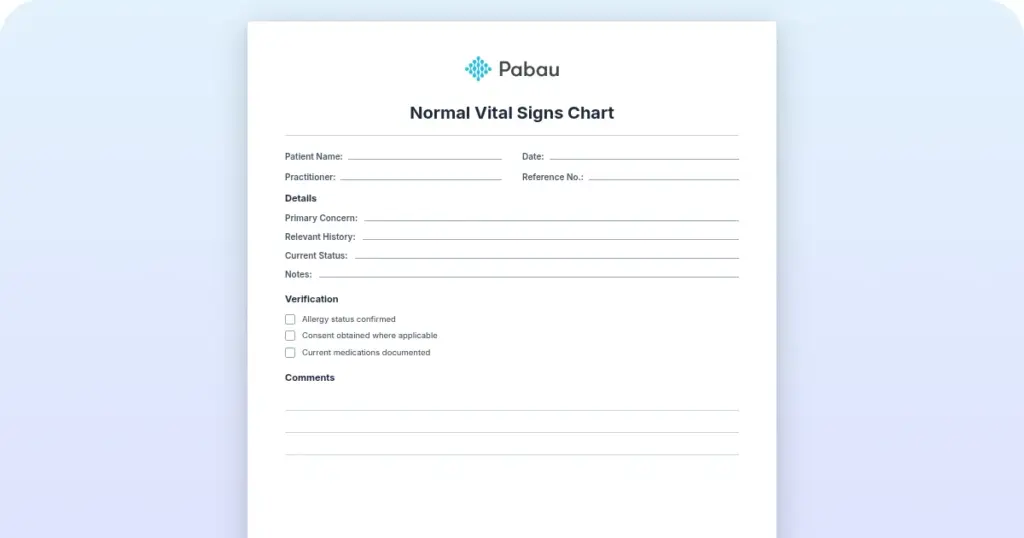
A ready-to-use clinical assessment form covering constitutional symptoms, HEENT, cardiovascular, respiratory, gastrointestinal, genitourinary, musculoskeletal, neurological, psychiatric, integumentary, endocrine, and hematologic systems. Includes checkboxes for present/absent symptoms and space for pertinent positives and negatives.
Download templateA 12-point review of systems (ROS) is a systematic clinical assessment where practitioners ask patients about symptoms across major body systems. This structured approach uncovers hidden health concerns, supports accurate diagnosis.
Under the traditional CMS E/M documentation guidelines, a complete ROS covered at least 10 organ systems. The 2021 and 2023 E/M revisions changed this: history and exam elements, including the ROS, no longer set the billing level for any visit type. A medically appropriate ROS is still expected, and it remains clinically valuable for catching symptoms the chief complaint would otherwise miss.
This guide explains what a 12-point ROS covers, how to complete it correctly, which healthcare professionals rely on it, and how practice management software like Pabau streamlines ROS documentation.
A review of systems (ROS) is a practitioner-led clinical interview where you ask patients a standardized set of questions about symptoms and health status across major organ systems.
The term “12-point” refers to the typical number of systems covered, though The Hospitalist notes that CMS recognizes 14 body systems, with at least 10 traditionally needed for “complete” ROS documentation.
ROS is distinct from the physical examination and the History of Present Illness (HPI). The HPI describes why the patient came in, while the ROS explores 12 additional organ systems not directly related to the chief complaint to identify previously unreported symptoms.
That distinction starts at intake. A reason for visit form records why the patient booked in their own words, so the ROS can look beyond it.
This comprehensive approach — a complete ROS — safeguards against missed diagnoses and supports better clinical outcomes.
Why these 12? They represent the organ systems CMS recognizes for billing and coding purposes. However, newer coding guidance emphasizes documenting which specific systems you reviewed (by name), rather than just stating “12-point ROS performed.”
The template provides a structured checklist of systems and symptoms. Here’s the five-step workflow clinicians follow:
The 2021 revision removed point counting for office and outpatient visits, and the 2023 revision extended the same framework to hospital, skilled nursing facility (SNF), and emergency department (ED) encounters. History and exam no longer set the billing level in any setting, but a medically appropriate ROS is still expected in the clinical record. Always document which systems you asked about.
Any healthcare professional conducting patient evaluations relies on the ROS. This template is essential for:
Any practice that bills E/M codes or documents clinical encounters needs a standardized ROS workflow.
Filing completed forms in patient management software keeps documentation consistent across your whole team.
Completeness and accuracy: A checklist format ensures no systems are overlooked. Paper or digital templates reduce the cognitive load on busy clinicians and lower the risk of missing rare presentations.
Billing and coding compliance: Auditors look for documented evidence that ROS was performed, and a template provides that audit trail.
Clinical safety: Systematically asking about all 12 systems uncovers asymptomatic or subclinical conditions (e.g., hematologic abnormalities, endocrine changes) before they become acute, improving patient outcomes.
Time efficiency: Pre-printed or digital ROS templates, especially with checkboxes or toggle fields, complete the assessment in minutes rather than through lengthy free-text entry. Patient-facing digital forms — administered before or during the visit — save clinician time.
Standardization across providers and locations: Multi-disciplinary or multi-location practices benefit from using the same ROS template. This standardizes documentation quality and simplifies staff training.

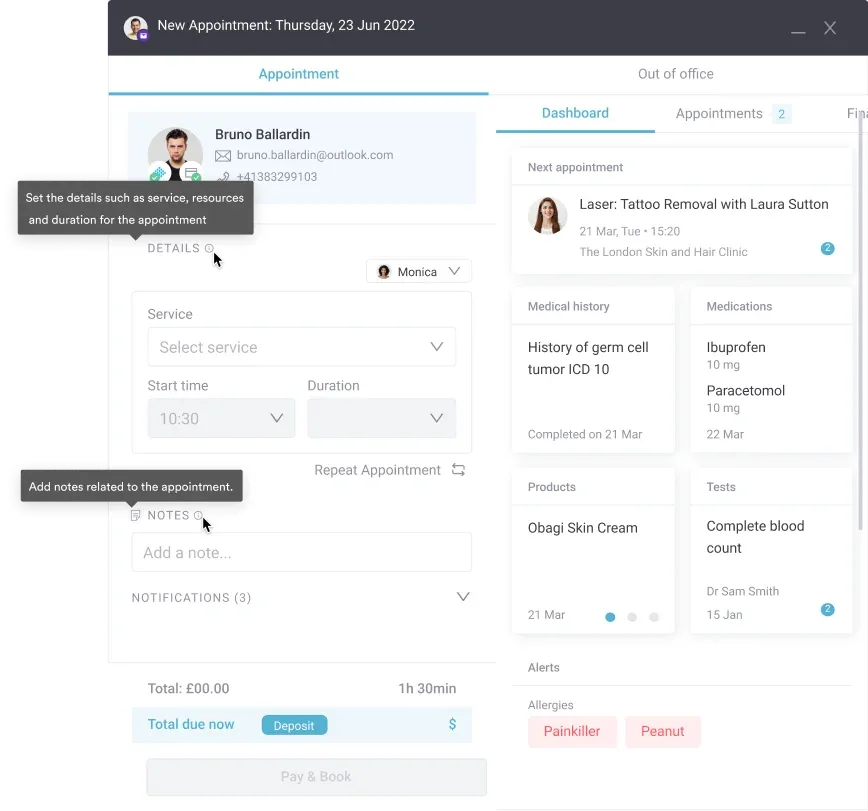
ROS workflows are error-prone when done manually. Pabau’s digital forms and client records automatically capture and organize ROS data, reducing clinician burden and supporting compliance across your entire practice.

ROS documentation no longer counts toward E/M code selection, but it still matters during audits and for showing medical necessity. Here’s what auditors and payers look for:

Flag any unexplained constitutional symptoms (fever, night sweats, weight loss) immediately. These can signal serious underlying disease (infection, malignancy, autoimmune) that requires urgent investigation. ROS is your safety net to catch these red flags before they escalate into emergencies.
Until 2021, E/M level selection used a points system that counted ROS elements, physical exam elements, and decision-making factors. A “12-point review of systems” was literally scored in billing.
The 2021 revisions eliminated this. For office/outpatient E/M levels (99202-99215), the level is now determined by medical decision-making complexity or time spent, not by counting history or exam elements.
A straightforward visit might qualify for CPT code 99202. This means a practice can provide a thorough ROS without “billing for it” as a separate level component.
Effective January 1, 2023, the same framework was extended to hospital, SNF, ED, and other inpatient services, so history and exam no longer set the billing level anywhere. A medically appropriate ROS is still expected clinically and forms part of a defensible medical record.
The upshot: Document your ROS thoroughly using system names (not “12-point ROS performed”). Modern automated clinical workflows make this effortless.
A structured 12-point review of systems is fundamental to safe, compliant clinical practice. It identifies hidden health threats, supports accurate coding and billing, and demonstrates thorough documentation to auditors and regulators.
The 2021 and 2023 E/M revisions mean ROS elements no longer count toward your billing level in any setting. You should still perform and document a medically appropriate ROS, because it is standard of care and part of a defensible record.
Using a standardized template — whether paper or digital — ensures consistency, completeness, and speed. Pabau’s client record and digital forms automate ROS capture, eliminate transcription errors, and integrate ROS data into every patient’s permanent record. Ready to streamline your ROS workflow? Book a demo today.

Need plain-language terms for your notes? Medical terminology glossary gives plain-language definitions and example sentences for 30 common clinical terms.
Need to track medications alongside your review? Medication schedule template shows how to fill in one sheet per medicine and the checks to run first.
Sharing clinical documentation with an outside vendor? Non-disclosure agreement template compares one-way and mutual clauses and flags when vendors still need a BAA.
A 12-point review of systems is a structured clinical assessment where practitioners ask patients about symptoms across 12 major body systems (constitutional, HEENT, cardiovascular, respiratory, GI, GU, musculoskeletal, neurological, psychiatric, integumentary, endocrine, and hematologic). It uncovers health concerns beyond the chief complaint and supports accurate diagnosis, billing, and regulatory compliance.
The traditional CMS E/M documentation guidelines defined a “complete” ROS as covering at least 10 of the 14 recognized organ systems. The term “12-point” is colloquial. The key is naming which systems you reviewed and documenting pertinent positives and negatives.
Yes, but only in specific settings. Hospital and SNF documentation can use “all other systems reviewed and negative” if you’ve already documented pertinent systems by name. However, outpatient E/M coding post-2021 AMA guidelines does not penalize detailed ROS documentation — in fact, it rewards thoroughness. Naming systems explicitly is always safer than generic catchall phrases.
The 2021 revision removed point counting for office and outpatient visits, and the 2023 revision extended that to hospital, ED, SNF, and other inpatient services. ROS no longer sets the billing level in any setting. It is not a billing requirement now, but a medically appropriate ROS is still expected as standard of care and as part of a defensible record.
Because the HPI describes why the patient came in (chief complaint and related symptoms), while ROS systematically asks about 12 additional systems unrelated to the presenting problem. Keeping ROS separate makes it auditable, ensures completeness, and creates a clear legal record that you performed a thorough assessment. Auditors look for ROS as its own section.