Printable values cards: What they are and how to use them in therapy
Printable values cards are a reflection tool that helps a patient work out which...

14
Last Updated: Sep 30, 2026

An intention setting worksheet helps a client name how they want to feel, then turn that into concrete action steps.
Intentions describe how someone wants to show up, while goals name a measurable outcome to hit.
Both belong in therapy and coaching, and the worksheet puts the values work first.
Used in session, it gives clients homework they can hold and gives you a record of their stated direction.
Pabau’s digital forms deliver the worksheet, and Pabau Scribe, our AI scribe, drafts the session note afterward.
A structured worksheet for therapy and coaching that helps clients identify intentions, clarify motivations, plan action steps, and reflect on progress. It includes prompts for values exploration, intention statements, action steps, and weekly reflection.
Download templateAn intention setting worksheet turns a vague hope into a written intention and a short list of actions. Goals measure outcomes. Intentions describe how a client wants to feel and behave while working toward them.
This guide walks through every section of the worksheet and when to hand it to a client. It also covers how to keep completed copies somewhere you can find them. Practice management software like Pabau does that last part through its digital forms, so responses sit in the client record instead of a desk drawer.
An intention setting worksheet is a structured template that moves a client from a vague aspiration to a written intention. It gives them room to clarify their values, write the intention down, name what motivates it, plan action steps, and reflect on progress over time.
The worksheet does three jobs at once. Clients leave the session with something they can hold. Writing the intention down turns it into a commitment they can be held to. And you end up with a record of what the client said they wanted, in their own words.
For therapists, counselors, coaches, and wellness practitioners, that makes it both a clinical tool and a piece of homework. Here is what the sections do:
A goal is specific, measurable, and focused on an outcome. “Lose 10 pounds” and “secure a new job” are goals. An intention is values-aligned and ongoing, such as “move my body with joy” or “approach my career with confidence.”
Both earn their place in therapy and coaching. Goals give a client a target to aim at. Intentions give them the mindset they want to bring to the attempt. Many clients do best holding both, using the intention as the anchor and the goals as the steps.
The worksheet puts the values work first. That makes it useful for clients thinking about identity, meaning, or where the next few years should go.
Setting an intention takes reflection more than time. Here is the sequence the worksheet walks a client through:
That structure is why the worksheet holds up in mental health practice. It moves a client from an abstract conversation about values into something documented they can revisit and revise.
The PDF is divided into clear sections so clients can work through it alone or with you in session. Knowing what each one asks for makes it easier to facilitate.
Clients own the content while the worksheet supplies the scaffolding. Hand it over the way you would hand over an informed consent form. You can also work through it together in session, or bring it into a crisis conversation when emotions run high.
Examples help clients hear what a strong intention sounds like. These come up often across therapy and coaching:
Clients pick up the pattern quickly. An intention points in a direction rather than demanding perfection, which is what makes it easier to return to after a bad week.
Pair the intention with a measure where one helps. A client working on anxiety might complete the Taylor Manifest Anxiety Scale at the same time, giving you a baseline to revisit. Separating parents often keep their intention alongside a parallel parenting plan, so the language stays consistent across both documents.
Many clients find that a daily or weekly reset amplifies the work. A morning practice takes two to five minutes. The client rereads the intention and decides how it applies to the day in front of them.
The worksheet adapts to that rhythm. Some clients use a shortened version on Monday morning to set the week, then reread it each day after that. Repetition keeps the intention available at the moments when a decision has to be made.
Recorded in your clinical notes as a homework assignment, this cadence creates accountability without punishment. That distinction is what keeps clients engaged when a week goes badly, instead of quietly dropping the practice.
The worksheet does the most work when it is built into your practice rather than handed out as a generic self-help tool. Here is how practitioners use it:
When you store completed worksheets, client records in Pabau keep everything secure and searchable. You can pull up an intention from six months ago and show a client how their own language has changed.
Documentation gets easier too. Pabau Scribe, our AI scribe, drafts the session note while the completed form sits in the same record. Your clinical progress notes can then reference the intention rather than repeat it.
Clarity: Moving from “I want to feel better” to a written intention gives a client somewhere to aim. The worksheet forces precision.
Ownership: Clients write the worksheet in their own words, so the commitment belongs to them rather than to you. That tends to improve follow-through.
Documentation: The completed worksheet is a clinical artifact. It records the client’s values, their intention, and their action plan. That supports continuity if they move to a new provider, and it evidences the work if records are ever reviewed.
Flexibility: Intentions are allowed to evolve. If a client’s intention shifts halfway through, that tells you something useful about what they want rather than marking a failure.
Values alignment: The worksheet keeps clients working toward intentions grounded in their own values, not the ones they think they should hold. Borrowed ambitions usually start to sound thin in the motivation section, which is a useful conversation to have early.
Once you have downloaded the PDF, here is how to put it to work:
Practices running automated workflows can take one more step off the list. Pabau sends the weekly reflection prompt on its own, so nobody has to remember to chase it.
Most practices distribute a worksheet like this by hand. You print it, hand it over, and hope it comes back. When it does, someone scans it and files the PDF somewhere the rest of the team may never think to look.
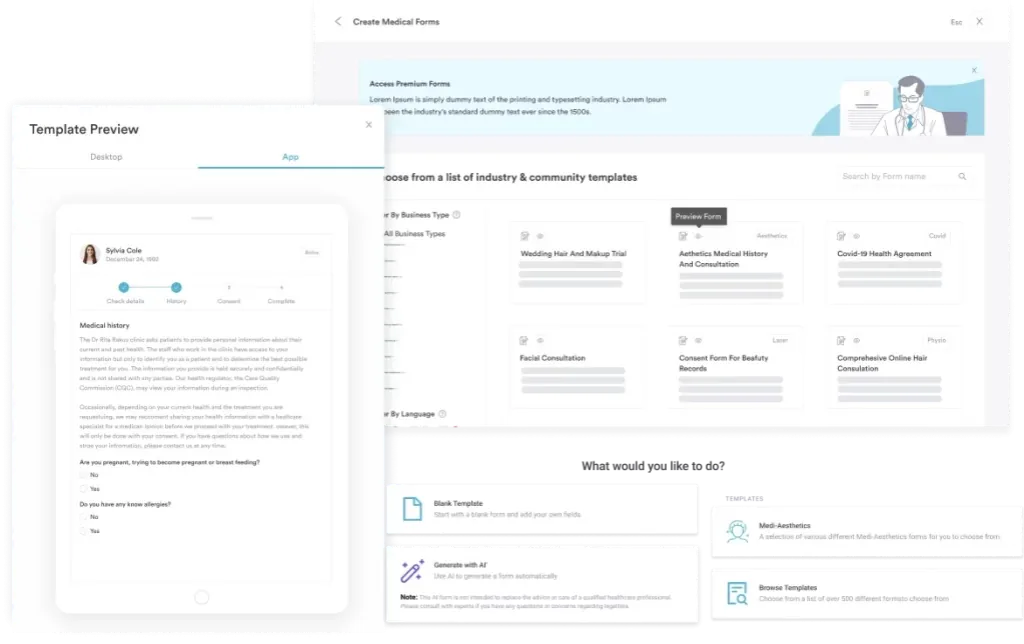
Pabau replaces that loop with digital forms. You rebuild the worksheet once, send it before or after a session, and the client completes it on their phone. Their answers land straight in the client record, timestamped and searchable.
From there the system handles the follow-up. Reminders for the weekly reflection go out automatically, and Pabau Scribe drafts the session note against the same file. You spend the session talking about the intention instead of hunting for the paperwork.

Pabau’s digital forms send the intention setting worksheet straight to your clients, automate the weekly reflection reminder, and file every response in the client record. Completed worksheets sit beside your clinical notes, so nothing goes missing between sessions.

The worksheet earns its place because it makes a client’s direction explicit. Once an intention is written down, it can be reviewed, questioned, and revised. A conversation about values that stays verbal rarely survives the week.
Download the PDF and use it with the next client who is circling something they cannot quite name. Keep the completed copies together, because the value compounds when a client can read what they wrote six months ago.
Book a demo to see how Pabau sends worksheets to clients, stores every response in their record, and chases the weekly reflection for you.

Curious how emotion and physical sensation connect? Cannon-Bard Theory explains whether physical sensations trigger emotion or whether both arise together.
Asked to write an ESA letter for a client? ESA letter example covers what every valid emotional support animal letter must include.
Running intention work in a group setting? Group Therapy Informed Consent explains what to include, from confidentiality limits to participation boundaries.
Noticing existential themes come up in session? Existential dread vs existential crisis separates the two states by their clinical trajectory, treatment, and prognosis.
An intention setting worksheet is a therapeutic tool that walks a client through their values, a written intention, their motivation, and concrete action steps. It closes with reflection prompts for weekly or monthly check-ins. Where goal-setting tracks an outcome, this worksheet starts with the values sitting underneath it.
Positive intentions read like this: “I intend to face challenges with curiosity rather than fear,” or “I want to feel at ease in my body.” Others cover showing up honestly in relationships and practicing self-compassion after a mistake. Each one names a way of being rather than a target to hit.
Most clients complete the full worksheet once, in about 20 to 30 minutes, then use the reflection section weekly. Five to 10 minutes is enough for that check-in. A deeper monthly review helps when circumstances change or the intention starts to feel stale.
Yes. Therapists, counselors, life coaches, and wellness practitioners all use it, both in session and as homework. It creates accountability, documents the client’s stated values, and carries session insight into everyday behavior. It suits clients in recovery or in the middle of a life transition particularly well.
Goals are specific, measurable, and outcome-focused, such as running a 5K in eight weeks. Intentions are values-aligned and ongoing, such as moving your body with joy. Goals answer what you want to achieve. Intentions answer how you want to feel while doing it.
Start with three to five core values, then write the intention as a statement about how you want to feel or show up. Explain why it matters in your own words. Add three to five actions for the coming week. Finish by booking a weekly time to reflect and adjust.