

HCPCS code E0198: Water pressure pad billing guide
HCPCS code E0198 is a water pad for a standard mattress HCPCS code E0198 is the ...

Last Updated: Oct 13, 2026
V5299 is the HCPCS Level II code for hearing service, miscellaneous.
Let Pabau's smart automation suggest the right codes, reduce claim denials, and keep your practice compliant—effortlessly.
Automate repetitive tasks and focus on what matters most—your patients.
Reduce coding errors and ensure compliance with the latest regulations.
Clean claims, fewer denials, and faster reimbursements.
Powerful insights and reporting to help your practice thrive.
HIPAA compliant SOC 2 certified GDPR-compliant Trusted by 4,000+ clinics worldwide

HCPCS code V5299 describes “Hearing Service, Miscellaneous” and is used when no specific V5xxx code covers the service or supply provided
Traditional Medicare Part B generally excludes routine hearing aids and exams, and V5299 reimbursement under Medicare is rare and highly payer-dependent
Because V5299 is a miscellaneous code, payers require detailed narrative documentation of medical necessity. Insufficient justification is the leading cause of claim denial
Practice management software like Pabau helps audiology practices keep V5299 documentation, authorization details, and medical-necessity narratives organized and audit-ready
Most hearing service claims fit neatly into a specific V5xxx code. But some services, supplies, or devices don’t map cleanly to any of them. That’s where HCPCS code V5299 applies.
The official descriptor is “Hearing Service, Miscellaneous,” and it exists as a catch-all for billing scenarios that fall outside the detailed hearing supply and service codes in the V5000-V5999 range.
Before using it, coders and audiologists should exhaust every specific code in the family first. V5299 carries extra scrutiny from payers precisely because it’s non-specific. Solid HIPAA-compliant practice software and documentation habits make that scrutiny easier to withstand.
The table below captures the reference data coders need when working with HCPCS code V5299. Medicare coverage status reflects traditional Part B only, and Medicare Advantage and Medicaid policies vary significantly by plan and state.
Always verify HCPCS code V5299 coverage with the specific payer before rendering service. Prior authorization requirements and covered diagnoses differ materially between state Medicaid programs, Medicare Advantage plans, and commercial insurers. A quick eligibility check at scheduling prevents a denial after the fact.
The word “miscellaneous” in a HCPCS descriptor always signals the same thing: this code is the option of last resort. The CMS Level II code set maintains dozens of specific codes for hearing aids, earmolds, batteries, repairs, and evaluations. V5299 applies only when none of those specific codes adequately describes what was provided.
Audiologists and hearing instrument specialists use it for services and supplies that are genuinely outside the scope of existing V5xxx codes. Common examples from audiology billing guidance include custom hearing protection devices, specialty earmolds not described by a specific code, and miscellaneous hearing-related repair or fitting services not captured elsewhere.
The same logic runs throughout HCPCS Level II. Durable medical equipment coders exhaust specific codes such as A4258 and A4281 before falling back to a miscellaneous designation, exactly as audiologists exhaust the V5000 range before reaching V5299.
The audit-before-billing principle: Before assigning V5299, a coder should systematically review the full V5000-V5999 range. Payers treat miscellaneous codes as a red flag for upcoding or unbundling.
If a more specific code exists and fits the service, that code should be used. V5299 submitted when a specific code was available is grounds for claim denial and, in audit scenarios, potential recoupment. Good clinical documentation workflows make this review traceable and defensible.
A disposable hearing aid fitted to one ear, for example, belongs under V5262 rather than the miscellaneous code.
The best medical practice management tools let you standardize how unlisted and miscellaneous codes get documented.
V5299 is appropriate in a limited set of scenarios. The AAPC HCPCS code reference and ASHA both describe it as a catch-all for hearing services not captured by a specific code. Practical applications include:
Because the category is intentionally broad, documentation carries the weight. The coder’s narrative must explain specifically what was provided and why no other HCPCS code applied. Generic descriptions like “hearing device accessory” will not survive a payer review.
Managing this through structured patient care workflows that capture the specific supply or service at the point of documentation reduces the rework burden at billing time.
The table below covers the hearing V5xxx codes most frequently confused with V5299. When one of these more specific codes accurately describes the service, use it instead of HCPCS code V5299. Refer to the PGM Billing lookup tool or the full CMS code set for codes not listed here.
Specific codes continue beyond the table. A television caption decoder, for example, carries its own assistive listening device code in V5271, so V5299 does not apply.
Traditional Medicare Part B excludes routine hearing aids and the hearing exams required to prescribe them. This exclusion is longstanding and applies to most V5xxx codes, including HCPCS code V5299.
The Medicare Benefit Policy Manual, Chapter 16, Section 100 (“Hearing Aids and Auditory Implants”), is explicit: hearing aids and related fitting services are a statutory exclusion from Part B coverage under Social Security Act §1862(a)(7) and 42 CFR 411.15(d).
There are narrow exceptions worth knowing. Medicare may cover certain diagnostic hearing evaluations under CPT codes, not HCPCS V codes, when ordered by a physician to determine treatment. But the supply or device component generally remains excluded. Flagging Medicare patients at scheduling prevents wasted claim submissions and avoidable write-offs.
State Medicaid programs have more flexibility than traditional Medicare to cover hearing services, and many do. Coverage for HCPCS code V5299 under Medicaid depends entirely on the state. Wisconsin’s ForwardHealth program, for example, covers certain hearing services with prior authorization requirements. Nevada Medicaid has its own coverage rules. No single national policy governs Medicaid V5299 reimbursement. Benefit verification tells the practice what the plan covers, which is a separate question from whether the patient is active.
Commercial payers and Medicare Advantage plans each maintain their own medical policies. Some cover miscellaneous hearing codes with strong medical necessity documentation; others exclude them categorically. The HIPAA-compliant billing records requirement means every coverage determination and prior authorization approval should be documented in the patient file before rendering service.
Prior authorization is frequently required for V5299. Medicaid programs routinely require pre-authorization for miscellaneous hearing codes; commercial plans often apply the same rule. Submitting a V5299 claim without the required authorization is one of the fastest paths to a denial. Verify with each payer at intake and document the authorization number on the claim.

Pabau helps audiology and hearing service practices keep authorization details, supporting documentation, and treatment records organized from intake through billing.

Miscellaneous codes carry a higher documentation burden than specific codes. When a payer sees V5299, the question they’re asking is: why couldn’t a more specific code be used? The answer must be in the record.
Effective digital intake forms and chart templates that prompt for this detail at the point of care make the difference between a clean claim and a denial. Required documentation for HCPCS code V5299 typically includes:
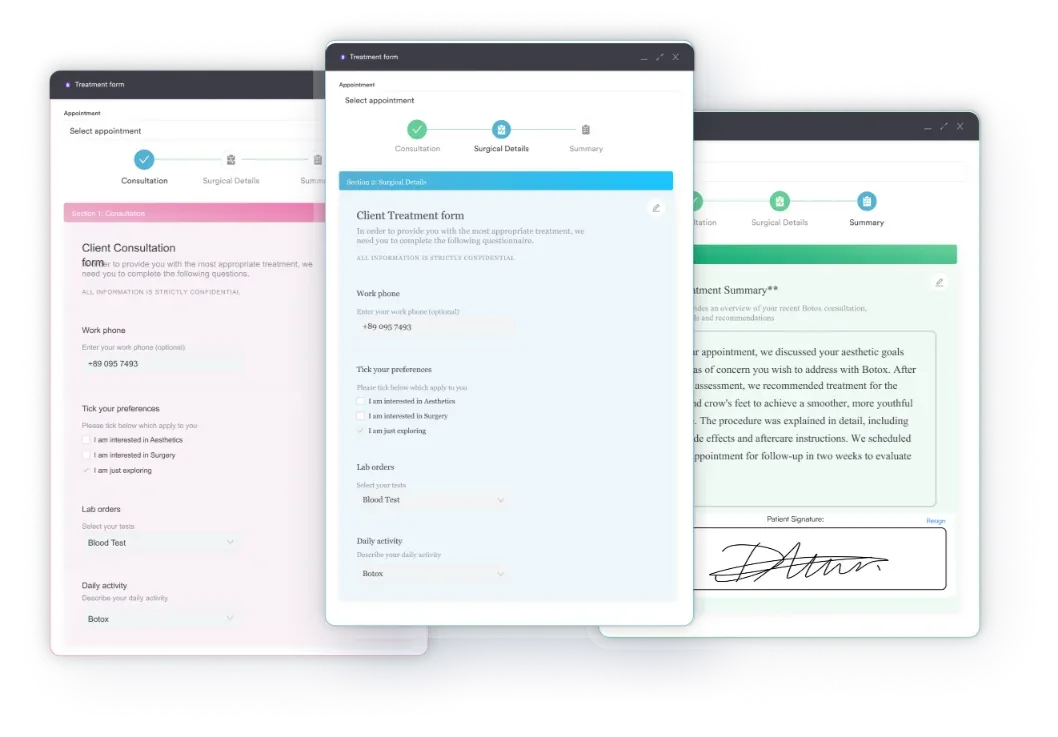
Because V5299 is a miscellaneous code, payers may also request an invoice or manufacturer documentation for novel devices or supplies. Build this into the clinical documentation workflow so the information is captured before the claim is submitted.
Modifiers clarify claim specifics and can affect reimbursement. For audiology billing codes in the V5xxx range, the following modifiers may apply to V5299 depending on the service.
Verify applicability with the specific payer before appending, since incorrect modifier use can trigger a denial. Related hearing-service codes such as V5020 carry their own modifier and documentation rules worth checking before billing.
Note: KH and KI modifiers are associated with hearing aid benefit tracking under CMS DMEPOS guidelines. Their applicability to V5299 specifically depends on whether the item falls under the DMEPOS benefit category. Confirm with current CMS guidance and your payer contracts before using these modifiers with a miscellaneous code.
GY is the standard modifier for billing a statutorily excluded item like V5299 when a mandatory Medicare denial is needed to bill a secondary payer or the patient. DMEPOS rental-vs-purchase modifiers like KH and KI aren’t unique to hearing services either. Practices in physical therapy bill the same codes for durable equipment.
V5299 does not carry a fixed Medicare fee schedule rate in the way that specific HCPCS codes do. As a miscellaneous code, CMS pricing methodology typically follows invoice-based or billed-charge pricing.
This means reimbursement, when applicable, is based on the supplier’s invoice or the allowed charge rather than a predetermined rate in the CMS fee schedule. Check with your local Medicare Administrative Contractor, or DME MAC where applicable, or the payer’s medical policy for the by-report pricing that actually applies to a specific claim.
For Medicaid and commercial payers, reimbursement rates for V5299 are payer-contract-specific. Some state Medicaid programs have established a maximum allowable for miscellaneous hearing codes, while others reimburse at invoice.
Good EHR billing integration that surfaces payer-specific fee schedules at the point of claim creation helps practices avoid billing above the allowed amount and triggering a balance billing issue.
Check your payer contracts and the CMS HCPCS fee data annually. Fee schedules update each fiscal year, and miscellaneous codes like V5299 can shift from invoice-based pricing to a fixed rate or vice versa when payers update their medical policies. Set a recurring review in the first quarter of each calendar year.
V5299 claims fail more often than specific V5xxx claims. The reasons are consistent across payers and are preventable with the right pre-submission process.
Keeping V5299 documentation, authorization numbers, and modifier choices organized in one record. The most common errors:
Audiology and speech-language practices that build a pre-submission checklist for V5299 claims catch most of these errors before they reach the payer. The checklist should confirm: specific code reviewed and ruled out, narrative attached, authorization obtained, modifier verified, POS confirmed.
Miscellaneous hearing codes require more manual oversight than specific codes. The documentation is more involved, prior authorization is more common, and denial rates are higher. Practices that manage these claims through a structured practice management software workflow reduce the administrative overhead considerably.
Pabau’s practice management tools let audiology practices attach supporting documentation directly to the patient record, log authorization numbers at the point of care, and flag charts for pre-submission review.
Keeping the medical-necessity narrative, code justification, and authorization details together in one record makes it easier to catch a missing piece of documentation before a claim goes out, rather than after a denial arrives.

Billing a facial lesion removal instead? CPT code 11311 guide CPT code 11311 bills the shave removal of a lesion on the face, ears, eyelids, nose, or lips.
Billing a benign lesion excision instead? CPT Code 11424 guide CPT Code 11424 covers excision of a 3.1 to 4.0 cm benign lesion, including margins.
Billing a facial excision instead? CPT Code 11441 guide CPT Code 11441 covers benign lesion excision on the face and ears, sized 0.6 to 1.0 cm.
V5299 is a necessary code for genuine miscellaneous hearing service scenarios, but it carries a higher denial risk than specific V5xxx codes. Practices that use it correctly, with thorough documentation and verified prior authorization, can bill it successfully. Those that treat it as a default rather than a last resort face predictable claim rejections.
Practice management software like Pabau gives audiology and hearing service practices the workflow structure to handle V5299 correctly: attaching documentation at the point of care, logging authorization numbers, and keeping the medical-necessity narrative organized for every claim. To see how it works for your practice, book a demo.
HCPCS code V5299 is a Level II HCPCS code used to report hearing service, miscellaneous. It applies when no specific code in the V5000-V5999 range accurately describes the service or supply being billed.
Traditional Medicare Part B generally does not cover routine hearing aids or related services, so V5299 is rarely reimbursed under Part B. Medicare Advantage plans may include hearing benefits, so verify with the specific plan before service.
Billing V5299 requires a specific narrative describing the service or supply, an explanation of why no other V5xxx code applied, evidence of medical necessity, provider credentials, date and place of service, and a prior authorization number if required.
Prior authorization is required by many payers, including most state Medicaid programs and many commercial plans. Always verify with the specific payer before rendering service and document the authorization number on the claim.
Common modifiers include LT (left side), RT (right side), NU (new item), RR (rental), and the ABN-related GA, GZ, and GY. DMEPOS modifiers KH and KI may apply in specific Medicare scenarios but should be verified against current CMS guidelines before use.
V5299 has no fixed CMS fee schedule rate. Medicare typically prices it on an invoice or billed-charge basis when coverage applies. Check with your local MAC or DME MAC, and your payer contracts, annually for current figures.



