

CCSD code G5100: Bypass of duodenum billing guide
CCSD code G5100 bills a bypass that leaves the duodenum in place CCSD code G5100...

Last Updated: Oct 16, 2026
S9480 is the HCPCS Level II code for intensive outpatient psychiatric services, per diem.
Let Pabau's smart automation suggest the right codes, reduce claim denials, and keep your practice compliant—effortlessly.
Automate repetitive tasks and focus on what matters most—your patients.
Reduce coding errors and ensure compliance with the latest regulations.
Clean claims, fewer denials, and faster reimbursements.
Powerful insights and reporting to help your practice thrive.
HIPAA compliant SOC 2 certified GDPR-compliant Trusted by 4,000+ clinics worldwide

HCPCS Code S9480 covers intensive outpatient psychiatric services billed per diem to commercial payers, not Medicare.
S9480 is a Temporary National S-code because no permanent HCPCS code adequately describes this bundled IOP service.
S9480 applies to mental health IOP programs; H0015 is the parallel code for substance use disorder IOP programs.
Pabau’s claims management software helps behavioral health practices track per diem claims, modifiers, and payer-specific documentation in one place.
S9480 is a Level II HCPCS S-code, meaning it is a Temporary National Code. These codes exist because no permanent HCPCS or CPT code adequately describes the service. Per the Centers for Medicare and Medicaid Services (CMS) HCPCS overview, S-codes are maintained for use by commercial payers and state Medicaid programs, not Medicare. The code properties are listed below.
S9480 is a bundled code. Rather than billing each service component individually, one unit covers everything provided during that treatment day. The scope of that bundle varies by payer contract, so always verify with the specific commercial plan before submitting.
Services that commercial payers typically include in the S9480 per diem are:
Because S9480 is per diem, practices using mental health EMR workflows need to confirm that no individual CPT codes for those same services are billed on the same date. For example, group behavioral health services billed separately could overlap with bundled per diem rates . Conversely, a specialty infusion given for a comorbid medical condition . Unbundling a per diem code is a common audit trigger.
Both S9480 and H0015 cover intensive outpatient program services, but they apply to different patient populations. Using the wrong code leads to systematic claim denials.
Programs treating patients with a primary psychiatric diagnosis (depression, bipolar disorder, PTSD, anxiety disorders) bill S9480. Programs focused primarily on alcohol or drug dependence bill H0015. For dual diagnosis patients, the governing factor is the payer’s contract language and the primary diagnosis on the claim. Verify with each psychiatry practice management workflow whether the contract specifies S9480 or H0015 for co-occurring disorders. Practices that also manage crisis cases should review the CPT 90839 psychotherapy for crisis billing guide to understand how crisis codes relate to IOP-level care. Where a practice bills both markets, mapping between code sets is manual, so MBS item numbers are checked separately.
Audit your IOP roster quarterly: sort patients by primary ICD-10 diagnosis. If a patient’s primary diagnosis has shifted from a psychiatric condition to a substance use disorder (or vice versa), the billed code may need to change to reflect the updated clinical picture. Document the rationale in the treatment record.
S9480 carries a Medicare coverage indicator of “I,” which means it is not payable by traditional Medicare fee-for-service. This is confirmed across multiple code reference databases and aligns with the S-code category’s designation as a temporary commercial-payer code.
Payer coverage for S9480 varies considerably. Before credentialing and contracting for an IOP program, verify the following with each payer:
Use the CMS Physician Fee Schedule lookup to confirm payment indicators and then cross-reference against each commercial plan’s behavioral health fee schedule. Pabau’s claims management software allows practices to track payer-specific acceptance rules, flag S9480 claims before submission, and manage eligibility checks for each patient’s plan.
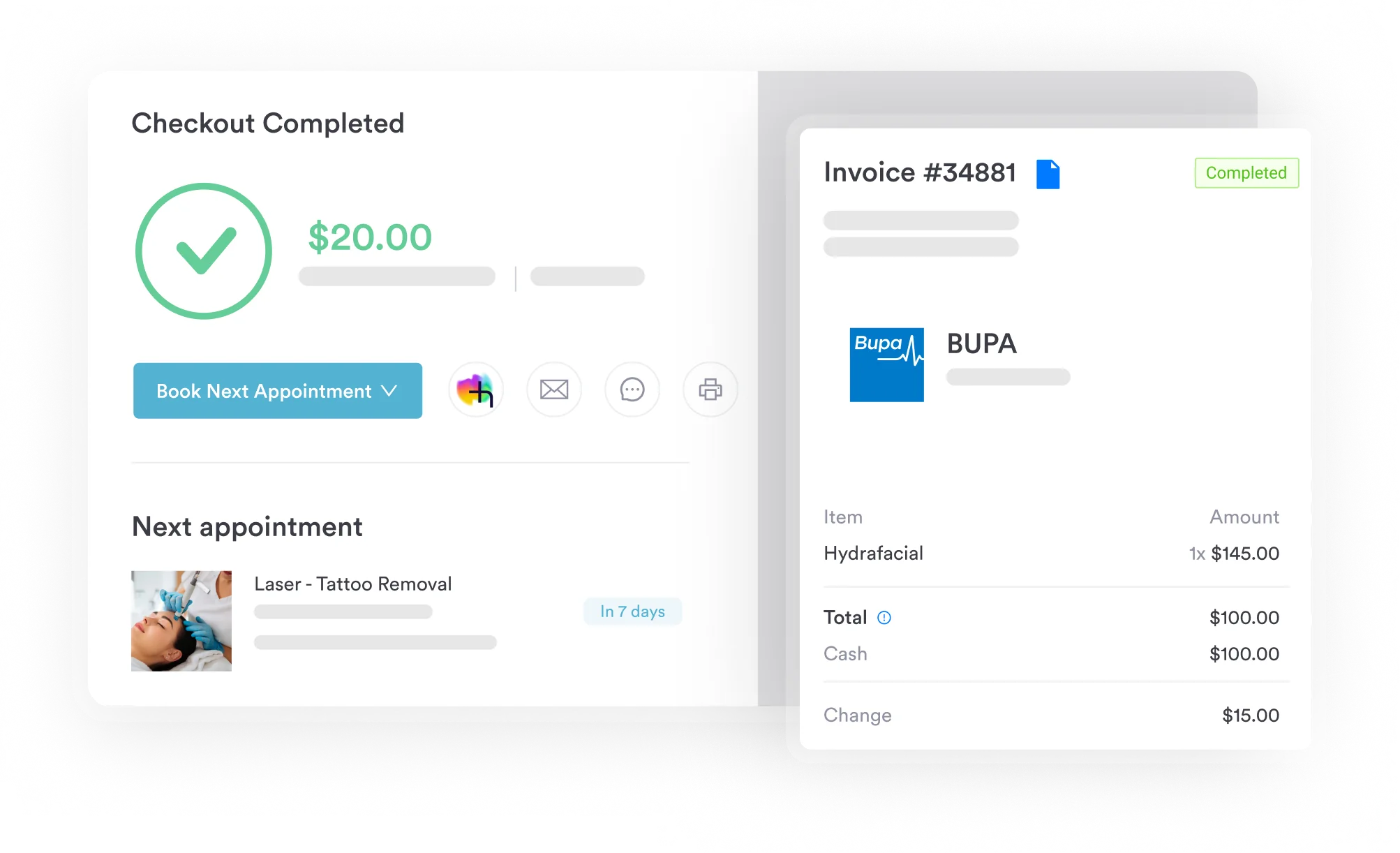

Pabau brings per diem claim tracking, modifier management, and patient documentation into one place for behavioral health practices running IOP programs.

S9480 is billed as one unit per treatment day. The claim reflects the full calendar date on which IOP services were delivered, not the number of hours.
Accurate HIPAA-compliant recordkeeping is required for every S9480 claim. Payers conducting post-payment audits will request the treatment record for that specific date of service, and the documentation must clearly support the level of care billed. Key documentation elements include:
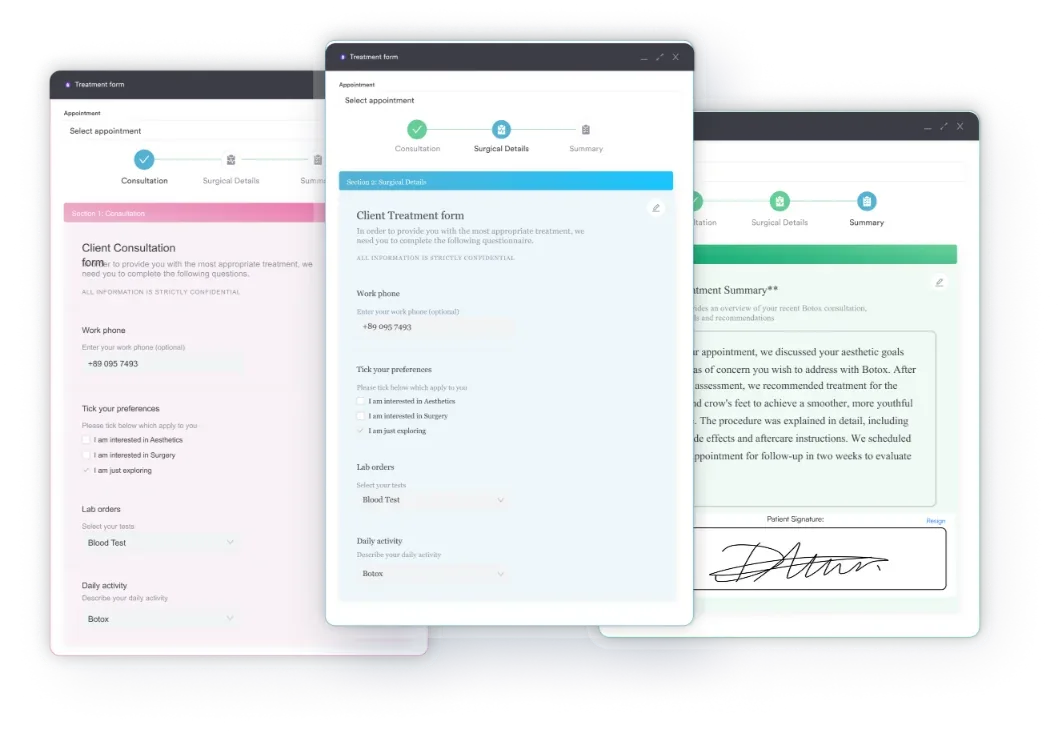
Using digital intake and consent forms that capture this data at the point of care reduces incomplete records that delay or void S9480 reimbursement. For adolescent IOP patients.
On institutional (UB-04) claims, S9480 is reported under revenue code 0905 — Intensive outpatient services, psychiatric. Payer policies that reimburse IOP at a per diem rate, such as Molina Healthcare’s intensive outpatient program payment policy, pair S9480 (mental health) or H0015 (substance use) with revenue code 0905 at one unit per treatment day. Confirm the required revenue code and claim format — institutional UB-04 versus professional CMS-1500 — in each payer’s behavioral health billing manual before submitting.
Modifiers provide additional context to the payer about how or where the service was delivered. S9480 accepts several common modifiers depending on the clinical scenario.
Telehealth modifier selection for S9480 has evolved since the end of the COVID-19 Public Health Emergency. Some commercial payers switched from GT to modifier 95 or introduced Place of Service codes (POS 02 for telehealth other than patient’s home; POS 10 for patient’s home). Always check the current telehealth billing workflows against each payer’s current behavioral health policy before submitting. Chronic care management codes sometimes accompany IOP discharge planning . State laws also affect which telehealth modalities qualify for reimbursement.
Check each commercial payer’s behavioral health billing manual at least once per contract year. Modifier requirements for telehealth IOP services shift without broad announcement. A policy update that removes GT acceptance can result in an entire month of S9480 claims being denied before the billing team notices the pattern.
S9480 claims deny for predictable reasons. Most denials trace back to incomplete documentation, incorrect modifier use, or billing the wrong code for the patient’s primary diagnosis. The most frequent errors are:
Setting up automated claim submission workflows that cross-check diagnosis code validity and flag missing documentation before a claim leaves the practice reduces denial rates on S9480. Practices billing subsequent hospital care alongside IOP services should also review CPT 99232 for subsequent hospital inpatient or observation care to avoid same-day conflicts.
S9480 sits within a cluster of behavioral health HCPCS codes. Knowing how adjacent codes interact with S9480 prevents unbundling errors and helps practices choose the right code when clinical scenarios fall outside standard IOP delivery.
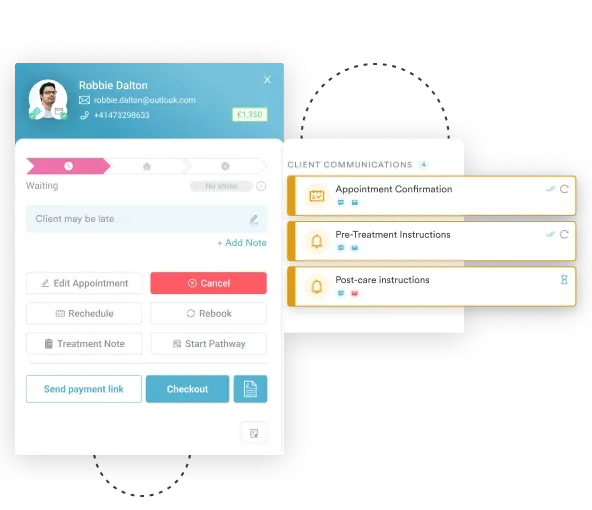
Practices managing both IOP and PHP tracks need to ensure their practice management system distinguishes these levels of care at the claim level. Pabau’s HIPAA-compliant documentation workflows support documentation that clearly delineates service level by date. Teams coordinating multidisciplinary care should also review CPT 99366 medical team conference billing to understand how collaborative care codes interact with IOP per diem claims.
Verify specific code interactions against the PGM Billing HCPCS lookup tool, which cross-references CMS data and is updated regularly. For deeper code research, the AAPC Codify is the industry standard reference.
Commercial payers denying S9480 claims rarely do so arbitrarily. The pattern almost always traces to incomplete documentation, a modifier mismatch, or the wrong code for the patient’s primary diagnosis. Addressing those three elements consistently keeps IOP programs out of the appeals queue.
Pabau’s claims management software helps behavioral health practices build the documentation and submission workflows that keep S9480 claims clean from day one. Practices looking to grow their patient base alongside optimizing billing should read how to get more patients: 7 strategies that fill schedules. To see how it works for IOP billing, book a demo.

Billing anesthesia for an ear procedure? Ear surgery anesthesia billing guide explains the catch-all anesthesia code for external, middle, and inner ear procedures.
Billing anesthesia for a tympanotomy? Tympanotomy anesthesia billing guide covers how ENT and surgical practices bill anesthesia for ear biopsy and tympanotomy.
Billing anesthesia for an eye procedure? Eye procedure anesthesia billing guide explains the updated 2026 descriptor for anesthesia on eye procedures not otherwise specified.
HCPCS Code S9480 is a per diem billing code for intensive outpatient psychiatric services provided to patients with primary mental health diagnoses. It covers a full treatment day within a structured IOP program and is used primarily with commercial payers, not Medicare. For facilities that also provide FQHCs or community health center services.
No. S9480 carries a Medicare coverage indicator of “I,” meaning it is not payable by traditional Medicare fee-for-service. Some Medicare Advantage plans may extend coverage; verify directly with the specific plan’s behavioral health benefit documentation.
S9480 applies to mental health IOP programs serving patients with primary psychiatric diagnoses. H0015 applies to substance use disorder IOP programs. The codes are not interchangeable; payer contracts and the patient’s primary diagnosis determine which code applies.
The most common modifier is GT (or modifier 95) for telehealth delivery. Modifier KX may be required by some payers to attest that medical necessity criteria are documented. Modifiers Q5 and Q6 apply for reciprocal billing and locum tenens scenarios. Always confirm current modifier requirements with each payer’s behavioral health manual.
Yes, if the payer’s behavioral health policy permits telehealth IOP reimbursement. Append modifier GT or 95 (depending on the payer) to indicate synchronous audio-video delivery. Post-COVID, some payers have switched to Place of Service codes 02 or 10 instead of or alongside telehealth modifiers; verify each payer’s current policy before submitting. Practices using TMS therapy alongside IOP should also review the CPT 90868 billing guide for subsequent TMS therapy sessions.
Most large commercial payers accept S9480 for contracted mental health IOP providers. State Medicaid acceptance varies by state. Medicare fee-for-service does not accept S9480. Verify coverage for each payer individually before contracting for IOP services, as acceptance policies are not standardized. Practices billing principal care management alongside IOP should also review CPT 99424 principal care management billing to understand concurrent billing rules.



