Pabau Engage inbox

Pabau Engage is here: every patient conversation in one inbox.

Learn more
Book a demo Book a demo
☰
HCPCS Code

HCPCS code S0039 – Registered nurse home visit


Code Definition

S0039 is the HCPCS Level II code for injection, sulfamethoxazole and trimethoprim, 10 ml.

Most denials on this code come from a single mistake: billing it when an LPN or LVN performed the visit instead of a registered nurse, or submitting without a signed physician order.

Level
S0000-S9999 Temporary national codes (non-Medicare)
Code also known as
skilled nursing visit, home nursing visit, RN home visit, home health nursing
Save time. Improve accuracy. Get paid faster.
Automate coding with Pabau

Let Pabau's smart automation suggest the right codes, reduce claim denials, and keep your practice compliant—effortlessly.

  • AI-powered code suggestions
  • Real-time compliance checks
  • Faster claims, fewer denials
Why practices choose Pabau
Save hours every week

Automate repetitive tasks and focus on what matters most—your patients.

Improve accuracy

Reduce coding errors and ensure compliance with the latest regulations.

Get paid faster

Clean claims, fewer denials, and faster reimbursements.

Grow with confidence

Powerful insights and reporting to help your practice thrive.

HIPAA compliant SOC 2 certified GDPR-compliant Trusted by 4,000+ clinics worldwide

Key Takeaways

Key Takeaways

HCPCS Code S0039 covers an RN visit to the home for skilled nursing care – LPN/LVN visits use S0040, not S0039

S0039 is NOT covered by Medicare Part B; use G-codes and OASIS instruments for Medicare home health billing instead

Most Medicaid programs and many commercial payers accept S0039, but prior authorization requirements vary by payer and state

Pabau’s claims management software supports HCPCS code documentation, claim submission workflows, and denial tracking for home health practices

HCPCS Code S0039: official descriptor and code overview

HCPCS Code S0039 is classified under the S-code series of HCPCS Level II, which covers codes historically maintained by the Blue Cross Blue Shield Association rather than CMS directly. S-codes are used primarily by state Medicaid programs and private commercial payers to bill services not adequately described by CPT codes or CMS-maintained HCPCS codes. The CMS HCPCS Level II overview explains the distinction between S-series codes and CMS-maintained codes.

Field Detail
Code S0039
Official descriptor Skilled nurse visit, up to 60 minutes (registered nurse visit to home)
Code series HCPCS Level II S-codes (S0000-S9999)
Maintaining body Blue Cross Blue Shield Association (non-CMS)
Clinician type Registered nurse (RN) only
Medicare coverage Not covered – S-codes are non-covered by Medicare
Primary payers State Medicaid programs, commercial/private insurers

What S0039 covers: included services and clinical scope

S0039 covers a single skilled nursing visit of up to 60 minutes performed by a registered nurse in the patient’s home. The visit must involve skilled nursing care – activities that require the training and judgment of a licensed RN and cannot safely be performed by an unskilled caregiver.

Qualifying clinical activities billed under S0039 include:

  • Wound assessment and dressing changes requiring clinical evaluation
  • Medication administration, including injections and IV infusion setup
  • Medication reconciliation and patient education on complex regimens
  • Post-surgical monitoring and vital sign assessment
  • Catheter care and management
  • Chronic disease monitoring (blood glucose monitoring, cardiac rhythm checks)
  • Ostomy care and teaching
  • Drawing blood or collecting specimens for laboratory analysis

Each visit is billed as one unit. If a visit runs beyond 60 minutes, payer policies vary on whether additional units may be billed, and many Medicaid programs require prior authorization before authorizing extended visits. Confirm the unit-billing rules in your specific state’s Medicaid fee schedule before submitting.

What S0039 does NOT cover: exclusions and limitations

Billing S0039 for a service performed by anyone other than a registered nurse is a coding error. This is the single most common source of audits and overpayment demands on this code.

  • LPN or LVN visits: Use S0040 (licensed practical nurse or licensed vocational nurse visit to home). S0039 is RN-only.
  • Telehealth and remote monitoring visits: S0039 requires physical presence in the home. Remote check-ins and telephone triage are billed under different codes depending on payer policy.
  • Supplies separately billed: Wound care supplies, IV supplies, and medications are billed separately using appropriate supply or drug codes. Do not bundle them into S0039.
  • Non-skilled nursing activities: Personal care, homemaking, or custodial services that do not require RN-level clinical judgment are not billable under S0039.
  • Medicare claims: S0039 is non-covered by Medicare. Submitting it to Medicare Part B will result in an automatic denial.

S0039 vs S0040: key differences and when to use each

S0039 (RN) and S0040 (LPN/LVN) are the most commonly confused code pair in home-visit billing. The distinction hinges entirely on the credential of the clinician who performed the visit, not the tasks performed during it.

Feature S0039 S0040
Clinician type Registered nurse (RN) Licensed practical nurse (LPN) / licensed vocational nurse (LVN)
Typical use Complex wound care, medication management, post-surgical monitoring Routine care under RN supervision, medication administration per protocol
Reimbursement level Typically higher (reflects RN credential and clinical complexity) Typically lower
Payer acceptance Wider acceptance; most Medicaid programs and commercial payers Accepted by Medicaid and some commercial payers; narrower than S0039
Documentation key RN license number in visit note; skilled care rationale documented LPN/LVN license number; supervising RN or physician documented
Medicare coverage Not covered Not covered

Always document the visiting clinician’s credential explicitly in the visit note. Payer audits on home nursing codes frequently target the credential-to-code match first.

Which payers accept HCPCS Code S0039: Medicare, Medicaid, and private insurance

Payer acceptance for S0039 follows the structure of the S-code series generally: state Medicaid programs and commercial insurers use it, while Medicare does not recognise it at all.

Payer type S0039 accepted? Notes
Medicare Part B No S-codes are non-covered; Medicare home health uses G-codes and OASIS
Medicare Advantage Varies by plan Some MA plans accept S-codes; verify with the specific plan before billing
State Medicaid (fee-for-service) Yes (most states) Accepted in Kansas KMAP, Colorado Medicaid, and many others; always verify state-specific fee schedule
Medicaid managed care Varies by MCO Managed care organisations set their own codes; check the plan’s provider manual
Commercial/private insurance Most accept Blue Cross Blue Shield plans, United Healthcare, Aetna, and Cigna plans typically accept S039; always verify with insurance eligibility verification before the visit
TRICARE Yes TRICARE reimbursement manuals include S-code coverage for home nursing

Is HCPCS Code S0039 covered by Medicare?

No. S0039 is not covered by Medicare Part B. S-codes are not CMS-maintained HCPCS Level II codes and Medicare explicitly excludes the entire S-series from coverage. Submitting S0039 on a Medicare claim will generate an automatic non-covered denial.

For Medicare patients receiving home health services, the correct approach is to bill under the Medicare Home Health Prospective Payment System using G-codes and complete the required OASIS assessment instruments. Practices serving both Medicare and Medicaid patients commonly maintain two separate billing workflows for home nursing visits, precisely because the code sets do not overlap.

Pro Tip

Before submitting any home nursing claim, confirm the patient’s active insurance through your payer’s eligibility portal. A Medicaid patient who recently enrolled in a Medicare Advantage plan may have coverage rules that differ from standard fee-for-service Medicaid, including whether S0039 is accepted.

Documentation requirements for billing S0039

Insufficient documentation is the second most common reason S0039 claims are denied after credential mismatches. Every claim submission needs the following on file before the claim is transmitted:

  • Physician order or plan of care: A signed order from the supervising physician or authorised prescriber specifying skilled nursing care, the frequency of visits, and the clinical goals.
  • Nurse credentials: The visiting nurse’s RN license number must appear in the visit note. Payer auditors check this directly against state nursing board records.
  • Visit note with date, time, and services rendered: Document start and stop times, all clinical activities performed, and the patient’s response. Vague notes (“patient seen, doing well”) are insufficient for S-code claims.
  • ICD-10-CM diagnosis codes: One or more supporting diagnosis codes that establish medical necessity for skilled nursing care at home.
  • Place of service code: POS 12 (home) is the standard code for patient’s private residence; POS 11 may apply in certain assisted-living scenarios depending on payer policy.
  • Units billed: Standard billing is 1 unit per visit up to 60 minutes. Extended visits require documented clinical justification and, for most Medicaid programs, prior authorisation.
  • Prior authorisation number (if required): Enter the authorisation number in Box 23 of the CMS-1500. A missing auth number on a payer that requires it is an automatic denial.

Prior authorisation requirements for S0039

Prior authorisation requirements for S0039 vary significantly by payer and state Medicaid program. There is no universal rule.

  • State Medicaid (fee-for-service): Many states require prior authorisation for home nursing visits beyond a set number per month (often 4 to 6 visits). Check the state-specific provider manual.
  • Medicaid managed care organisations: Auth requirements differ by MCO contract; some require auth for every visit, others for visit counts beyond a threshold.
  • Commercial payers: Most commercial plans require prior authorisation for ongoing home nursing. One-time post-discharge visits may be covered without auth on some plans.
  • TRICARE: Generally requires authorisation for non-emergency home health services.

When auth is required, obtain it before the visit takes place. Retro-authorisation is not reliably granted and claims submitted without auth are denied even when the visit was medically necessary.

How to bill HCPCS Code S0039: step-by-step claims submission

S0039 claims are submitted on the CMS-1500 claim form for professional billing. A clean claim for S0039 requires accurate entries in several key fields. Follow these steps to reduce first-pass denial rates. Pabau’s claims management software automates the capture of these fields from the patient encounter record.

Track claims from start to Finish
  1. Verify payer acceptance and eligibility before the visit. Confirm the plan accepts S-codes and that the patient’s coverage is active on the date of service.
  2. Obtain prior authorisation if required by the payer. Record the auth number before the visit.
  3. Enter S0039 in Box 24D (procedure code field) of the CMS-1500.
  4. Apply the correct modifiers. Common modifiers on S0039 claims include modifier GT (telehealth – only where permitted for this code), modifier 59 (distinct procedural service), and any payer-specific modifiers required by the Medicaid program.
  5. Enter POS 12 (home) in Box 24B unless the payer requires a different place of service.
  6. Link supporting ICD-10-CM diagnosis codes in Box 21, and map them to the procedure code in Box 24E.
  7. Enter the number of units in Box 24G. Standard is 1 unit per visit.
  8. Include the authorisation number in Box 23 if prior auth was obtained.
  9. Attach or flag supporting documentation (visit note, physician order, RN credential) for payers that require documentation at the claim level.
CMS-1500 field Required entry for S0039
Box 21 ICD-10-CM diagnosis codes (up to 12)
Box 23 Prior authorisation number (if required)
Box 24B POS 12 (home)
Box 24D S0039 (procedure code)
Box 24E Diagnosis pointer(s) from Box 21
Box 24G Units (typically 1 per visit)
Box 24H EPSDT/Family plan indicator (Medicaid only, where applicable)

Understanding the full medical billing workflow for home health services helps practices build consistent internal processes that reduce claim errors before they reach the payer.

Streamline your home nursing claims workflow

Pabau helps home health and outpatient practices manage HCPCS code documentation, track prior authorisations, and submit clean claims with fewer denials.

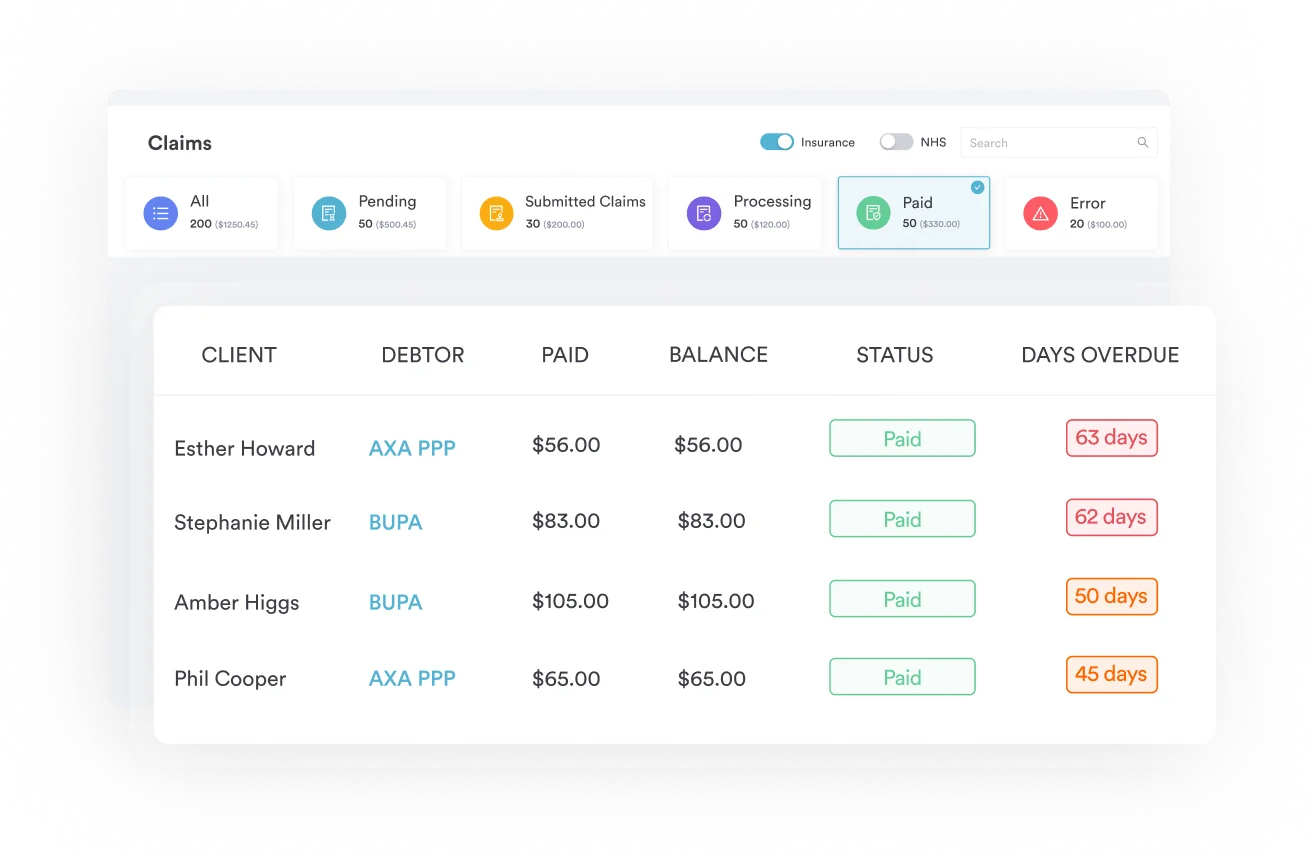
Pabau claims management dashboard

Common reasons S0039 claims are denied and how to fix them

Systematic denial management in healthcare starts with knowing which denial patterns are specific to the code being billed. For S0039, the table below covers the top denial reasons, the associated remark or adjustment codes, and the resolution action.

Denial reason Remark / adjustment code Resolution
Non-covered by payer (Medicare) CO-4 / CO-97 Do not bill S0039 to Medicare; route to correct Medicare home health billing pathway
Missing prior authorisation CO-15 / CO-197 Obtain retro auth if payer allows; otherwise appeal with medical necessity documentation
Wrong clinician credential (LPN billed as S0039) CO-11 / CO-4 Correct code to S0040; resubmit with corrected claim and LPN/LVN credential documented
Invalid or unsupported ICD-10 pairing CO-11 / N130 Review the diagnosis codes; ensure the pairing establishes medical necessity for skilled RN care at home
Place of service mismatch CO-4 / CO-58 Verify the correct POS code; home visits require POS 12 for most payers
Units exceed authorised limit CO-119 / CO-4 Request auth expansion before billing additional units; document clinical necessity for extended frequency
Physician order missing or expired CO-50 / N130 Obtain signed order from supervising physician; resubmit with corrected claim
RN credential not documented in visit note CO-11 / N10 Amend visit note to include RN license number; resubmit or appeal with corrected documentation

Reimbursement rates for HCPCS Code S0039

There is no single national fee schedule rate for S0039. Because S-codes are not CMS-maintained, CMS does not publish a Physician Fee Schedule rate for this code the way it does for CPT or G-codes. Reimbursement is set independently by each payer.

Representative contexts for rate research:

  • State Medicaid fee-for-service: Each state publishes a Medicaid fee schedule that includes S-code rates where applicable. Kansas KMAP and Colorado Medicaid are examples of states that publish S039 rates in their provider fee schedules. Rates typically reflect the payer’s valuation of a 60-minute RN home visit and vary considerably by state.
  • Commercial payer contracts: Rates are negotiated as part of provider contracts. A starting point is to request the plan’s home health fee schedule from the payer’s provider relations team.
  • Medicare Advantage: Plans that accept S039 set rates by contract; no public reference rate applies.

To look up whether CMS has assigned any cross-reference rate, use the CMS Physician Fee Schedule lookup tool. For S-codes you will typically find no national rate, which confirms that payer-contract rates apply. Understanding how reimbursement flows through the full revenue cycle management process helps practices project net collections on S0039 more accurately.

ICD-10-CM codes commonly billed with S0039

The diagnosis codes submitted with S0039 must establish that skilled nursing care at home was medically necessary. Payers review the ICD-10-CM codes to confirm the clinical scenario justifies an RN visit rather than a less-intensive level of care.

ICD-10-CM code Description Common S0039 scenario
L89.xx Pressure ulcer (stage-specific) Wound assessment, dressing changes, debridement assessment
T81.40XA / T81.49XA Infection following a procedure, initial encounter Post-surgical wound monitoring and IV antibiotic administration
E11.65 / E11.649 Type 2 diabetes mellitus with hyperglycemia / foot ulcer Blood glucose monitoring, diabetic wound care, medication management
I50.9 / I50.32 Heart failure, unspecified / chronic diastolic heart failure Fluid status monitoring, weight assessment, diuretic management education
Z79.01 Long-term (current) use of anticoagulants INR monitoring, anticoagulation education, bleeding risk assessment
Z87.39 / N39.0 Personal history of other musculoskeletal disorders / urinary tract infection Catheter care, urinary management, specimen collection
Z45.2 Encounter for adjustment and management of vascular access device PICC line or central line care, IV medication administration
C34.xx / C50.xx Malignant neoplasm of bronchus/lung or breast Post-chemotherapy monitoring, symptom management, medication administration

Verify each ICD-10-CM code against current coding guidelines before submitting. Pairings must reflect the actual documented clinical scenario, not a generic diagnosis. Use the AAPC HCPCS code lookup or the PGM Billing HCPCS tool to cross-reference S0039 with payer-specific code pairing requirements. Practices that systematically track which ICD-10 pairings are producing denials build a feedback loop that improves first-pass acceptance rates over time. Pabau’s clean claim submission guidance covers the broader framework for reducing these pairing errors across your billing operation.

Pro Tip

Run a quarterly audit of your S0039 denial patterns. Group denials by reason code (CO-4, CO-11, CO-15, CO-197) and identify whether failures cluster around a specific nurse, diagnosis type, or payer. A pattern across one payer usually signals a policy change; a pattern across one clinician usually signals a documentation training gap.

Conclusion

S0039 claims fail most often for two avoidable reasons: billing the code for an LPN instead of an RN, and submitting without the documentation to support medical necessity. Getting both right before the claim leaves the practice eliminates the bulk of denials on this code.

Pabau’s claims management platform helps home health and outpatient practices capture HCPCS code documentation at the point of care, flag missing authorisations before submission, and track denial patterns by code and payer. To see how Pabau handles home nursing billing workflows, book a demo.

Continue your research

Continue your research

Need to understand how denials get resolved at scale? Denial management in healthcare covers the full appeal and correction workflow for common HCPCS claim failures.

Billing across multiple payers and need a single source of truth? Claims management software shows how Pabau centralises HCPCS code submission and tracks payer-specific rules.

Want to reduce coding errors before claims are submitted? Clean claim submission explains the pre-submission checks that prevent the most common S-code denials.

Frequently Asked Questions

What does HCPCS Code S0039 cover?

HCPCS Code S0039 covers a registered nurse visit to the home for skilled nursing care, up to 60 minutes per visit. Qualifying services include wound care, medication administration, post-surgical monitoring, catheter care, IV infusion management, and patient education on complex care regimens requiring RN-level clinical judgment.

Is HCPCS Code S0039 covered by Medicare?

No. S0039 is not covered by Medicare Part B. S-codes are non-CMS-maintained HCPCS Level II codes and Medicare explicitly excludes the entire S-series. Medicare home health services are billed through the Home Health Prospective Payment System using G-codes and OASIS instruments instead.

What is the difference between S0039 and S0040?

S0039 is for registered nurse (RN) home visits; S0040 is for licensed practical nurse (LPN) or licensed vocational nurse (LVN) home visits. The distinction is based entirely on the credential of the clinician performing the visit. Billing S0039 when an LPN performed the visit is a coding error that will be flagged on audit.

Which payers accept HCPCS Code S0039?

Most state Medicaid fee-for-service programs, TRICARE, and the majority of commercial insurers accept S0039. Medicare does not. Medicare Advantage plans and Medicaid managed care organisations vary by plan, so always verify coverage before billing.

What documentation is required to bill S0039?

Required documentation includes a signed physician order or plan of care, a visit note with start and stop times and all clinical activities performed, the RN’s license number in the visit note, supporting ICD-10-CM diagnosis codes, place of service POS 12, units billed, and the prior authorisation number if the payer requires it.

Why is HCPCS Code S0039 getting denied?

The most common denial reasons are: the code was submitted to Medicare (non-covered), the visiting clinician was an LPN rather than an RN (use S0040 instead), prior authorisation was missing, the ICD-10 diagnosis codes did not support medical necessity for skilled nursing, or the RN credential was not documented in the visit note. Check the Claim Adjustment Reason Code on the remittance advice to identify the exact cause.

What is the reimbursement rate for S0039?

There is no single national reimbursement rate for S0039. Because S-codes are not CMS-maintained, CMS does not publish a Physician Fee Schedule rate for this code. Rates are set by individual state Medicaid fee schedules and commercial payer contracts. Contact your state Medicaid program or payer’s provider relations team for the applicable rate.

×