HCPCS code L1210: TLSO lateral thoracic extension billing guide
HCPCS code L1210 covers the lateral extension on a TLSO HCPCS code L1210 is the ...

Last Updated: Oct 20, 2026
L1200 is the HCPCS Level II code for thoracic-lumbar-sacral-orthosis (tlso), inclusive of furnishing initial orthosis only.
Let Pabau's smart automation suggest the right codes, reduce claim denials, and keep your practice compliant—effortlessly.
Automate repetitive tasks and focus on what matters most—your patients.
Reduce coding errors and ensure compliance with the latest regulations.
Clean claims, fewer denials, and faster reimbursements.
Powerful insights and reporting to help your practice thrive.
HIPAA compliant SOC 2 certified GDPR-compliant Trusted by 4,000+ clinics worldwide

HCPCS code L1200 is the Level II code for a thoracic-lumbar-sacral orthosis (TLSO), covering the cost of furnishing the initial orthosis only, not ongoing adjustments or additions.
Modifier KX is required under Medicare to certify medical necessity; claims submitted without it are routinely denied by Medicare Administrative Contractors.
Add-on codes L1210 through L1290 (lateral thoracic extension, lumbar derotation pad, etc.) are billable separately but will be denied if submitted without L1200 as the base code.
Practice management software like Pabau includes claims management tools that help DME and orthotic practices track HCPCS L-codes, apply correct modifiers, and reduce orthotic claim denials.
HCPCS code L1200 describes a thoracic-lumbar-sacral-orthosis (TLSO), inclusive of furnishing the initial orthosis only. The official 2026 description reads: Thoracic-lumbar-sacral-orthosis (TLSO), inclusive of furnishing initial orthosis only.
| Property | Detail |
|---|---|
| Code | L1200 |
| Code set | HCPCS Level II |
| Category | Low-profile Additions, Thoracic-lumbar-sacral Orthotics (L1200-L1290) |
| BETOS classification | Prosthetic/Orthotic |
| Claim type | Lump sum purchase of DME, prosthetics, orthotics |
| Effective date | January 1, 1986 |
| 2026 status | Valid, active |
The Centers for Medicare and Medicaid Services (CMS) maintains HCPCS Level II codes, including the L1200-L1290 range covering low-profile spinal orthotic additions. L1200 sits within the DMEPOS (Durable Medical Equipment, Prosthetics, Orthotics, and Supplies) category, and Medicare Part B administers reimbursement when the claim meets medical necessity criteria.
A TLSO brace is a rigid or semi-rigid orthosis that spans the thoracic (mid-back), lumbar (lower back), and sacral (pelvis) regions of the spine. It is prescribed to limit spinal motion, offload vertebral compression, or stabilize the spine following injury, surgery, or progressive deformity. L1200 specifically covers the base orthosis itself. Structural additions, such as lateral thoracic extensions or derotation pads, are billed separately using add-on codes in the L1210-L1290 range.
L1200 is a HCPCS Level II code, not a CPT code. This trips up a lot of billers, who search for a “TLSO brace CPT code” or an “L1200 CPT code” and come up empty. CPT codes, maintained by the American Medical Association, report physician services and procedures. Durable medical equipment and orthotics like a TLSO are billed under HCPCS Level II, the code set CMS maintains for products, supplies, and devices.
The practical consequence is that no valid “TLSO CPT code” exists for the brace itself. Enter L1200 as the HCPCS code (often searched as the “TLSO brace HCPCS code”), and reserve any CPT codes for the separately documented clinical evaluation that supports the order. A CPT procedure code submitted in the item field for a TLSO returns an invalid-code rejection before the claim is ever assessed for medical necessity.
L1200 also sits in a specific corner of the scoliosis brace family. It is one of only two base codes, alongside L1000 (the cervical-thoracic-lumbar-sacral orthosis, or Milwaukee brace), that accept separate add-on codes. The all-inclusive base codes L1005, L1006, L1007, L1300, and L1310 do not. L1200 covers a prefabricated orthosis, so both off-the-shelf and custom-fitted braces map to it, while a custom-fabricated scoliosis brace is coded elsewhere. The same prefabricated-versus-custom split runs through the rest of the orthosis range.
Seven base HCPCS codes describe scoliosis braces in total, and DME MACs and the Pricing, Data Analysis and Coding (PDAC) contractor jointly maintain guidance on all seven. Two of the newest, L1006 and L1007, only became billable in the last two years, so a biller working from an older code list can easily miss them.
| Base code | Device | Effective date |
|---|---|---|
| L1000 | CTLSO (Milwaukee type), initial orthosis, including model | Long-standing code |
| L1005 | Tension-based scoliosis orthosis | Long-standing code |
| L1006 | Rigid lateral frame, prefabricated or customized | October 1, 2024 |
| L1007 | Rigid lateral frame, custom-fabricated | October 1, 2025 |
| L1200 | TLSO, initial orthosis only | January 1, 1986 |
| L1300 | Body jacket molded to patient model | Long-standing code |
| L1310 | Post-operative body jacket | Long-standing code |
If a structural addition doesn’t map cleanly to any code in the L1210-L1290 range, don’t default to a miscellaneous code without checking first. The PDAC HCPCS Helpline (877-735-1326, weekdays 9:30 AM to 5:00 PM ET) verifies correct code assignment for DME, prosthetics, and orthotics, and a five-minute call there is cheaper than a denied claim.
Medicare Part B covers HCPCS code L1200 under the DMEPOS benefit when the following conditions are satisfied. Individual Medicare Administrative Contractors (MACs) issue Local Coverage Determinations (LCDs) that govern coverage, which means requirements can differ slightly by geographic jurisdiction. CGS Administrators, LLC, for example, is the DME MAC for Jurisdiction B, covering Illinois, Indiana, Kentucky, Michigan, Minnesota, Ohio, and Wisconsin; suppliers outside those states answer to a different DME MAC and a different published LCD.
Pabau’s claims management software helps DME and orthotic practices track MAC-specific LCD requirements, flag missing documentation before submission, and manage the coinsurance tracking that comes with DMEPOS billing.
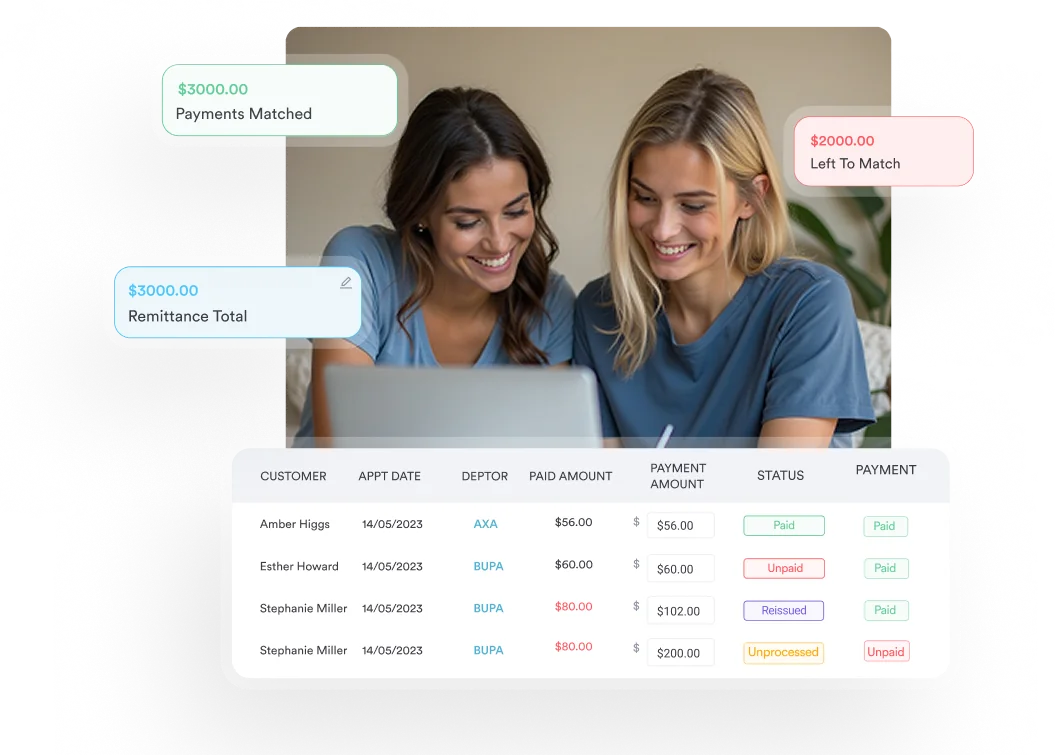
A physical therapy platform tracks how patients progress with their orthotic, not just that one was supplied.
Modifier selection is the single most common cause of L1200 claim denial. Billers regularly use three modifiers with this code, each serving a distinct billing purpose.
| Modifier | Name | When to use |
|---|---|---|
| KX | Medical necessity confirmed | Medicare requires this modifier. It attests that the claim meets the LCD medical necessity criteria. Without KX, Medicare will deny the claim. |
| NU | New equipment | Use when furnishing a new orthosis. Standard for most L1200 claims on initial delivery. |
| RR | Rental | Use when the orthosis is provided on a rental basis. Less common for TLSOs but applicable in some payer contracts. |
| GA | Waiver of liability on file | Use when the supplier expects non-coverage and has an Advance Beneficiary Notice (ABN) on file. |
| GZ | Item expected to be denied | Use when the item is not medically necessary and no ABN is on file. Claims with GZ are automatically denied. |
For most initial L1200 claims under Medicare, the correct modifier combination is KX + NU. The KX modifier is the critical component: omitting it removes the medical necessity attestation and the MAC will deny the claim without requesting additional documentation.
Practices focused on physical therapy and rehabilitation should also review their payer contracts before applying RR. Some commercial payers do not permit rental billing for rigid orthotics and require NU on all initial furnishings regardless of the arrangement. Checking compliance requirements for therapy practices ahead of submission can prevent a batch of identical rejections.
Audit your L1200 claims from the past 90 days. Filter by denial reason code CO-50 (not medically necessary) or CO-4 (incorrect modifier). If either denial appears without KX on the original claim, implement a modifier pre-submission checklist in your billing workflow. A single field check at submission prevents the most avoidable denial category for HCPCS L-codes.
L1200 covers the base TLSO only. When a physician orders structural modifications or additions to the orthosis, the supplier bills each addition using a separate add-on code from the L1210-L1290 range. These codes are not standalone: the claim must include L1200 as the primary (base) code. An anterior thoracic extension, for example, is billed as HCPCS code L1220.
According to AAPC Codify, payers may deny add-on codes for L1200 as not separately payable when billed without the appropriate base code. Medicare and most commercial payers strictly enforce this bundling rule.
| Add-on Code | Description |
|---|---|
| L1210 | Addition to TLSO (low profile), lateral thoracic extension |
| L1220 | Addition to TLSO (low profile), anterior thoracic extension |
| L1230 | Addition to TLSO, Milwaukee type superstructure (Milwaukee collar) |
| L1240 | Addition to TLSO, lumbar derotation pad |
| L1250 | Addition to TLSO, anterior ASIS pad |
| L1260 | Addition to TLSO, anterior thoracic derotation pad |
| L1270 | Addition to TLSO, abdominal pad |
| L1280 | Addition to TLSO, rib gusset, each |
| L1290 | Addition to TLSO (low profile), lateral trochanteric pad |
A key distinction from adjacent codes: HCPCS codes L1005, L1006, L1007, L1300, and L1310 are all-inclusive and carry no associated add-on codes. Billing any addition codes against those three base codes constitutes incorrect coding (unbundling) and will result in denial or audit exposure. L1200 does support add-on codes, but each requires a corresponding prescription entry that documents the specific structural modification ordered.
Using a practice management platform that structures orthotic claims by base code plus additions reduces the risk of submitting L1210-L1290 codes without the L1200 anchor, a mistake that triggers automatic denial in most clearinghouses.

Pabau’s claims management tools help DME and orthotic practices track HCPCS L-codes, apply correct modifiers, and maintain the documentation trails Medicare requires.

A TLSO claim without a supporting ICD-10 code that establishes medical necessity will not pass payer edit checks. The diagnosis must reflect a condition for which spinal immobilization, offloading, or deformity correction is clinically indicated. The following ICD-10 categories pair most commonly with L1200 billing.
| ICD-10 Category | Codes | Clinical Context |
|---|---|---|
| Thoracic vertebral fracture | S22.0xx, S22.1xx | Acute or subacute thoracic compression fractures requiring immobilization |
| Lumbar/sacral fracture | S32.0xx, S32.1xx | Lumbar and sacral fractures with instability or pain requiring brace support |
| Spinal stenosis | M48.06, M48.07 | Lumbar or lumbosacral stenosis where bracing reduces neural load |
| Scoliosis (idiopathic) | M41.00-M41.129 | Idiopathic scoliosis in adolescents or adults requiring spinal deformity control |
| Kyphosis | M40.0xx, M40.2xx | Postural or structural kyphosis requiring thoracic support |
| Osteoporotic vertebral fracture | M80.08x, M80.08xA | Pathological fractures secondary to osteoporosis with spinal instability |
| Post-laminectomy instability | M96.1 | Post-surgical spinal instability following laminectomy or fusion |
| Intervertebral disc degeneration | M51.16, M51.17 | Lumbar/lumbosacral disc degeneration with radiculopathy requiring stabilization |
MAC LCDs for spinal orthotics often include specific ICD-10 code coverage tables. Check your regional MAC’s LCD for L-codes (typically titled “Spinal Orthoses” or “Orthopedic Footwear and Custom Fabricated Orthotics”) to confirm which codes clear without additional clinical review. Billing with an ICD-10 code that does not appear on the covered diagnosis list triggers a records request or automatic denial at many MACs.
Verify the fee schedule amount for L1200 in your MAC jurisdiction using the CMS Physician Fee Schedule lookup tool. Reimbursement rates vary by locality and the DMEPOS fee schedule is updated annually. Using digital intake forms that capture diagnosis-linked referral data at the point of care shortens the lag between clinical assessment and claim submission.
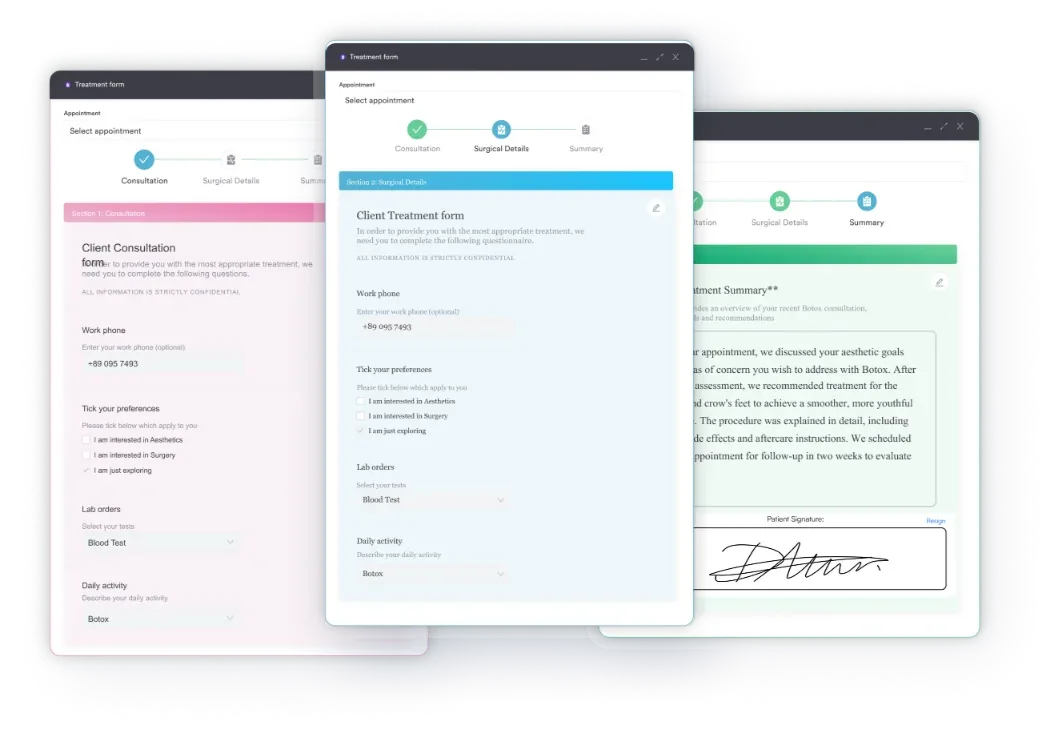
Complete documentation is the foundation of a defensible L1200 claim. Medicare and most commercial payers request records on any DMEPOS claim they select for review. Incomplete files take the fastest path to denial or post-payment audit.
Practices that maintain clinical documentation practices using digital records reduce the time spent locating and compiling records during a payer audit. Paper-based orthotic files routinely contain unsigned orders and missing delivery confirmations — both automatic denial triggers that Medicare’s documentation requirements catch immediately.
Transitioning to paperless clinic workflows also creates a timestamped audit trail that demonstrates the order-to-delivery sequence Medicare DMEPOS rules require. Each step — from the written order through delivery confirmation — must carry a verifiable date so your team can confirm chronological compliance on demand.
Separate your L1200 documentation into three folders: pre-delivery (written order, clinical evaluation, diagnosis), delivery (proof of delivery, signed receipt), and post-delivery (follow-up notes, ABN if applicable). When a MAC audit request arrives, this structure lets your billing team respond within the required 45-day window without scrambling for records.
Most L1200 denials fall into predictable categories. When you track denial reason codes against claim types, the same patterns emerge across DME and orthotic practices.
| Denial Reason | Common Cause | Prevention |
|---|---|---|
| CO-50 (not medically necessary) | Missing KX modifier; ICD-10 not on covered diagnosis list | Confirm KX applied; cross-check diagnosis against MAC LCD before submission |
| CO-4 (incorrect modifier) | NU omitted on new equipment; RR used when payer requires NU | Verify modifier requirements per payer before submitting each claim type |
| CO-B7 (provider not enrolled) | DMEPOS accreditation lapsed or supplier not enrolled in Part B | Monitor accreditation renewal dates; confirm active enrollment before billing |
| CO-57 (no prior authorization) | Prior authorization required but not obtained | Check payer prior authorization requirements at order intake, not at submission |
| CO-16 (claim lacks information) | Missing DWO, unsigned order, or incomplete CMN | Use a documentation checklist at every order; confirm signature and date fields before filing |
| Add-on code denied | L1210-L1290 submitted without L1200 on same claim | Build claim editing rules that require L1200 as a prerequisite for any L121x-L129x code |
| Unbundling / incorrect NOC use | L1499 (orthotic, not otherwise specified) billed for a modification a specific L1210-L1290 code already covers | Confirm no specific add-on code applies before defaulting to L1499; call the PDAC HCPCS Helpline if the correct code is unclear |
Prior authorization drives the highest variability in denials. Medicare does not universally require prior authorization for L1200, but Medicare Advantage plans and commercial payers frequently do. Check authorization requirements at order intake, not at claim submission — payers that require pre-authorization routinely reject post-delivery authorization requests.
Practices using automated billing workflows can build pre-submission checks that flag missing modifiers, unmatched ICD-10 codes, and absent add-on prerequisites before a claim reaches the clearinghouse. Your team catches a denial at the workflow stage in seconds; Medicare returning a denial costs 45–90 days of rework.
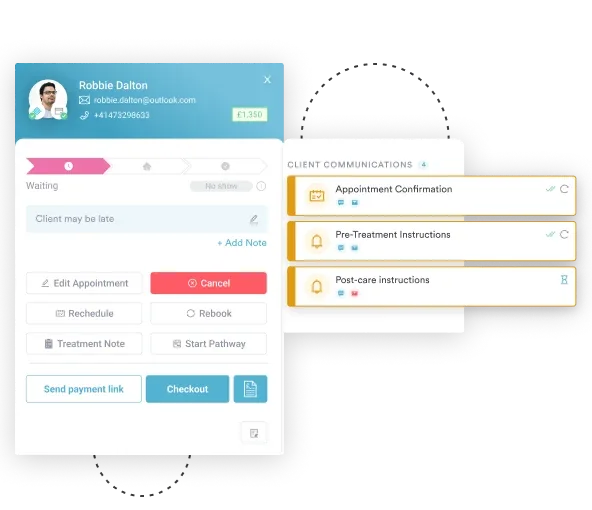
HCPCS code L1200 is a straightforward code with a narrow and precise scope: the initial furnishing of a thoracic-lumbar-sacral orthosis. Most billing problems stem not from misidentifying the right code, but from modifier gaps, missing documentation, and add-on codes submitted without the base code anchor. Apply the two-modifier rule — KX for medical necessity plus NU for new equipment — and pair it with a covered ICD-10 diagnosis and a complete documentation file to cover the majority of Medicare claims correctly.
For practices managing DMEPOS billing alongside clinical workflows, Pabau’s claims management software centralizes HCPCS L-code tracking, modifier application, and documentation requirements in one place. To see how Pabau handles orthotic and DME billing workflows, book a demo.

Billing a molecular pathology test instead? CCSD code 0035G billing guide covers the CD279 PD-1 mutation analysis, a blood-based molecular pathology test.
Billing an iron regulatory gene panel? CCSD code 0043G billing guide covers the iron regulatory gene panel test billed across major UK private insurers.
Billing a lupus antibody test instead? CCSD code 0046B billing guide covers the Sm IgG antibody test ordered after a positive ANA screen for suspected lupus.
HCPCS code L1200 is the billing code for a thoracic-lumbar-sacral orthosis (TLSO), used to report the cost of furnishing the initial spinal brace to a patient. It is billed by DMEPOS-accredited suppliers and orthotists when providing a TLSO for conditions such as spinal fractures, scoliosis, kyphosis, or post-surgical spinal instability. The code covers the base orthosis only; structural additions are billed separately using add-on codes L1210-L1290.
No. A TLSO brace has no CPT code; it is billed with HCPCS Level II code L1200. CPT codes cover physician procedures, while durable medical equipment and orthotics use HCPCS L-codes. If you are searching for a “TLSO brace HCPCS code,” L1200 is the base code for the initial orthosis, with add-ons L1210 through L1290 for structural modifications.
TLSO stands for thoracic-lumbar-sacral orthosis, a type of spinal brace that spans the thoracic (mid-back), lumbar (lower back), and sacral (pelvis) regions. In medical billing, TLSO refers to a category of HCPCS Level II codes in the L1200-L1290 range maintained by CMS under the DMEPOS benefit.
Yes, Medicare Part B covers HCPCS code L1200 when the TLSO is medically necessary, the supplier holds active DMEPOS accreditation, and the claim is submitted with modifier KX to attest to medical necessity. Coverage is subject to the Local Coverage Determination (LCD) published by the beneficiary’s Medicare Administrative Contractor (MAC), and covered ICD-10 diagnoses vary by MAC jurisdiction. Medicare typically covers 80% of the approved fee schedule amount after the Part B deductible.
The add-on codes for L1200 are L1210 through L1290 and cover specific structural modifications to the TLSO: lateral thoracic extension (L1210), anterior thoracic extension (L1220), Milwaukee type superstructure (L1230), lumbar derotation pad (L1240), anterior ASIS pad (L1250), anterior thoracic derotation pad (L1260), abdominal pad (L1270), rib gusset (L1280), and lateral trochanteric pad (L1290). Each add-on requires L1200 as the base code on the same claim; submitting add-ons without the base code results in denial.
Common ICD-10 codes paired with HCPCS L1200 include thoracic fracture codes (S22.0xx, S22.1xx), lumbar and sacral fracture codes (S32.0xx, S32.1xx), spinal stenosis (M48.06, M48.07), idiopathic scoliosis (M41.00-M41.129), kyphosis (M40.0xx), osteoporotic vertebral fracture (M80.08x), post-laminectomy instability (M96.1), and intervertebral disc degeneration with radiculopathy (M51.16, M51.17). The specific ICD-10 codes covered under Medicare depend on each MAC’s LCD for spinal orthoses.
Check the L1210-L1290 range first: it covers the common structural additions (lateral and anterior thoracic extensions, derotation pads, rib gussets, and similar modifications). If none of those descriptions match, don’t default to the miscellaneous orthotic code L1499 without confirming there isn’t already a specific code, since billing a not-otherwise-specified code for a modification a named code already covers is treated as unbundling. The PDAC HCPCS Helpline (877-735-1326) will confirm the correct code before you submit.