CPT Code 62284: Injection procedure for myelography
CPT Code 62284: official descriptor and procedure overview The American Medical ...

Last Updated: Oct 19, 2026
B4176 is the HCPCS Level II code for parenteral nutrition solution; amino acid, 7% through 8.5%, (500 ml = 1 unit) - home mix.
Per CMS's HCPCS Level II coding system, the B4176 descriptor specifically covers home-mixed amino acid solutions in this concentration range. The billing unit is set at 500 mL of solution. That home-mix designation distinguishes B4176 from the general amino acid codes below, which apply regardless of where the solution is compounded.
Let Pabau's smart automation suggest the right codes, reduce claim denials, and keep your practice compliant—effortlessly.
Automate repetitive tasks and focus on what matters most—your patients.
Reduce coding errors and ensure compliance with the latest regulations.
Clean claims, fewer denials, and faster reimbursements.
Powerful insights and reporting to help your practice thrive.
HIPAA compliant SOC 2 certified GDPR-compliant Trusted by 4,000+ clinics worldwide

HCPCS Code B4176 describes a home-mix parenteral nutrition solution with amino acid concentrations from 7% through 8.5%. It is billed under Medicare Part B in units of 500 mL.
Claims are processed by a DME Medicare Administrative Contractor (DME MAC), not a standard Part B carrier. Submitting to the wrong contractor is a top denial cause.
Coverage requires documented inability to absorb nutrients via the GI tract, a physician order specifying the formulation, and ongoing monitoring notes. Missing any one element triggers denial.
Modifier KX must accompany the claim to attest that LCD L38953 coverage criteria are met; omitting it is a common cause of denial.
Pabau’s claims management software supports HCPCS code entry, documentation tracking, and claim submission for IV therapy and infusion practices.
B4176 is reimbursed under the Medicare Part B Durable Medical Equipment (DME) fee schedule. The billing unit for B4176 is 500 mL of solution. The total reimbursement amount therefore depends on the daily volume of amino acid solution ordered and the number of days supplied.
The 2026 Medicare DMEPOS fee schedule lists the payment rate for B4176 and can be verified through the CMS DMEPOS fee schedule. Rates are updated annually, so confirm any figure against the current CMS HCPCS code file before billing. Geographic locality adjustments apply and can result in different allowable amounts by DME MAC jurisdiction.
Key reimbursement facts for billing teams:
Medicare coverage for parenteral nutrition, including the solution billed under HCPCS Code B4176, is governed by Local Coverage Determination (LCD) L38953. This LCD is issued by the DME MACs. Coverage is not automatic, and the patient must meet specific criteria before any PN solution claim will be paid.
Strong clinical documentation practices are essential here. An incomplete chart leads to a denial even when the clinical situation clearly warrants coverage.
Medicare coverage requires all of the following:
Verify the current criteria against the active LCD in your DME MAC jurisdiction, as CGS Administrators and Noridian Healthcare Solutions each publish jurisdiction-specific guidance. Per CGS Medicare’s parenteral nutrition correct coding article, providers must also document the specific formula ordered by the physician. They must also record the patient’s inability to absorb nutrients via the GI tract as a prerequisite for billing.
Claim denials for B4176 often trace back to missing documentation rather than coding errors. The following records must be present in the patient file before submitting a claim.
Thorough clinical documentation at healthcare practices reduces audit risk and supports medical necessity on every claim. Practices managing IV hydration business compliance requirements in regulated states have found that standardised documentation templates cut pre-submission errors significantly.
Digital intake forms that prompt for each required data element at the point of care reduce the risk of missing documentation. The HIPAA-compliant medical records management requirements that govern PN documentation mean that records must also be retained and accessible for audit review.
The most common billing mistake with HCPCS Code B4176 is misunderstanding the unit of service. Each billing unit represents 500 mL of solution. Billing one unit regardless of the actual volume prescribed will result in systematic underpayment or, in some cases, a discrepancy that triggers a post-payment audit.
To calculate units, divide the total volume of solution prescribed per claim period, in milliliters, by 500 and round to the nearest whole number. For example:
Modifier KX matters most on the B4176 solution line itself. Other modifier requirements vary by DME MAC jurisdiction and claim type.
Always verify current modifier requirements with your specific DME MAC before submitting. Modifier rules change with annual HCPCS updates and are jurisdiction-specific.
B4176 claims are processed by DME MACs, not by the standard Medicare Part B administrative contractors. The four DME MAC jurisdictions are Jurisdiction A, B, C, and D. Submit to the DME MAC that corresponds to the patient’s home state:
Submitting B4176 to a standard Part B carrier rather than the DME MAC will result in automatic rejection. For practices opening an IV therapy clinic for the first time, confirming the correct contractor before billing is one of the most important setup steps.
DME MACs process many other HCPCS supply codes beyond B4176, including E0197 for air pressure mattress pads and peritoneal dialysis catheter tips for peritoneal dialysis catheter tips.
Before billing any PN solution code for the first time, call your DME MAC’s provider relations line. Confirm your supplier number is enrolled, the patient’s benefit eligibility covers home PN, and the specific modifier combination expected for your jurisdiction. One call prevents months of rejected claims.
The B-series PN codes are organised by amino acid concentration. Selecting the wrong code for the concentration ordered is a direct cause of claim denials and, in audit contexts, potential overpayment liability. The table below maps each adjacent code to its concentration range so billing teams can select the correct code based on the physician’s order.
The amino acid series runs B4168, B4172, B4176, and B4178 in ascending concentration order. Once the ordered strength goes above 8.5%, the amino acid line is billed under HCPCS code B4178 instead. There is no gap-filling code at B4174 — that code does not exist in the current HCPCS Level II code set.
B4164 and B4180 sit in the same B4000 range, but they describe dextrose (carbohydrate) concentrations, not amino acid. Billing teams should not substitute them for the amino acid codes above. Verify the exact boundary criteria against the AAPC HCPCS code lookup or the current CMS annual HCPCS Level II code file before billing. Self-pay patients submitting to their own insurer need the code and the charge on one patient receipt template.
The most common clinical setting for HCPCS Code B4176 is home total parenteral nutrition (TPN). Patients with conditions such as short bowel syndrome receive PN formulas at home through central venous access. These claims are typically billed to Medicare Part B through their home infusion provider or DME supplier.
Home TPN billing under Medicare Part B involves multiple HCPCS codes beyond B4176. The solution code covers only the amino acid component. Additional codes are required for:
For practices that provide or coordinate home infusion services, the best EMR for IV therapy practices handles the multi-code billing workflows that home TPN generates. Linking each claim line to the corresponding physician order and monitoring note reduces the manual reconciliation burden significantly.
Per CGS Medicare’s correct coding guidance and Noridian’s PN billing articles, the following errors account for the majority of B4176 claim denials.
Similar denial patterns turn up in other supply codes processed by the same DME MACs, including A4750 for hemodialysis blood tubing.
Run a pre-billing audit on every B4176 claim before submission. Confirm the code matches the ordered concentration and verify the unit count against the total volume for the claim period. Also check that the physician order is signed and dated. This three-step check catches the top five denial causes before they cost you a resubmission cycle.
No competitor reference page connects HCPCS code content to the practice management workflow that supports it. That matters, because the most common B4176 billing errors trace back to documentation and claim submission processes. They rarely trace back to coders who don’t know what the code means.
Pabau’s claims management software gives infusion and IV therapy practices a structured workflow for HCPCS billing. Providers can enter HCPCS Code B4176 directly, attach the corresponding physician order, and link monitoring notes to the claim record before submission. The patient care management layer keeps all documentation connected to the right encounter, reducing the manual file-pulling that slows down pre-submission audits.
This workflow serves dedicated IV therapy and infusion practices as well as wellness clinics that coordinate nutrient therapy alongside home PN care.
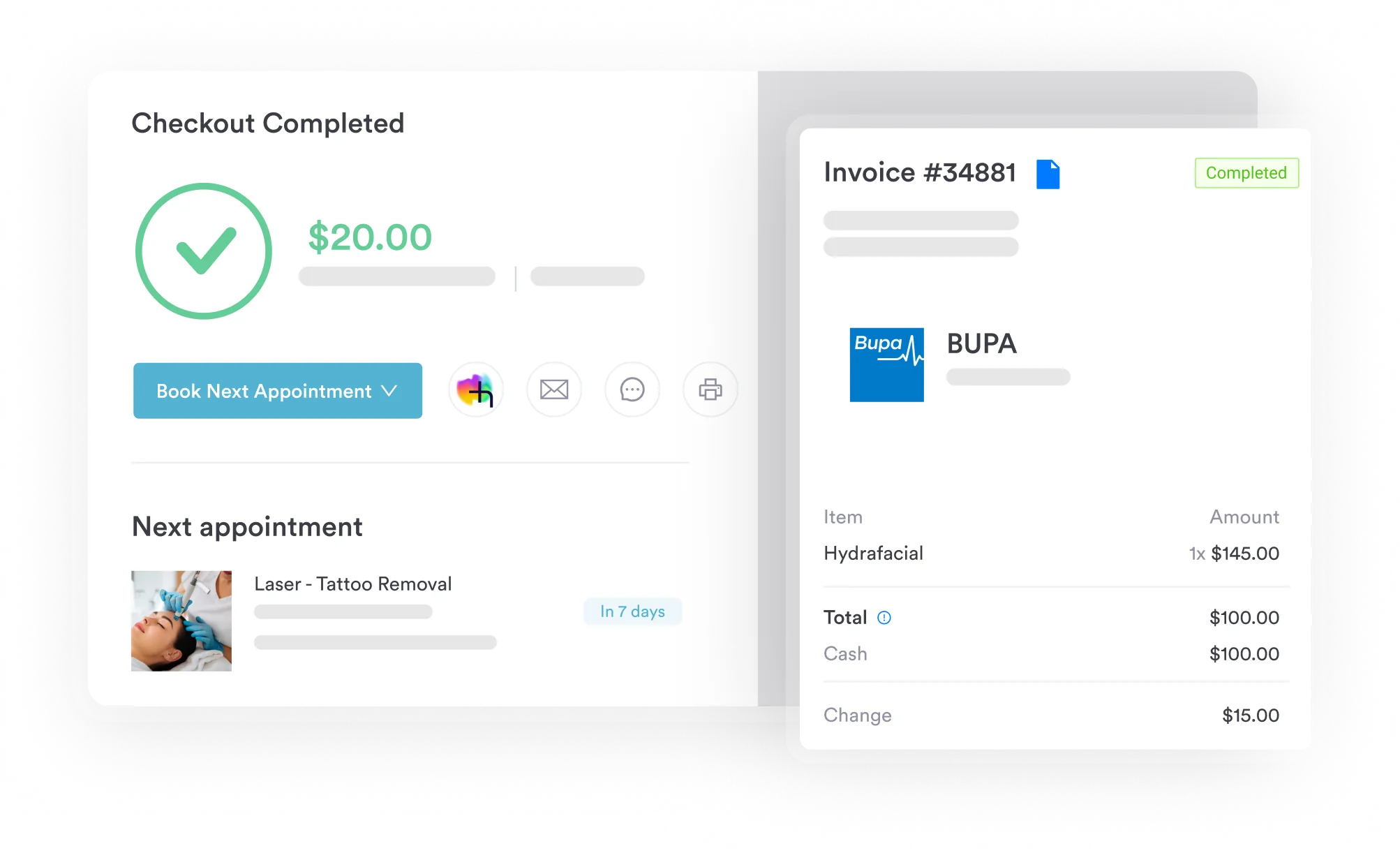
Pabau’s digital record system keeps physician orders, monitoring results, and claim data in one place. That helps practices providing home TPN or managing IV therapy intake form workflows across multiple patients. That structure directly addresses the missing documentation that causes the majority of PN claim denials outlined above.

Pabau’s claims management software helps IV therapy and infusion practices track HCPCS codes, document physician orders, and submit claims without jumping between systems.

HCPCS Code B4176 is a straightforward code with a high denial rate because the errors happen upstream: wrong contractor, wrong unit count, or missing documentation. Getting those three elements right before submission converts most B4176 claim issues into non-issues.
Pabau’s claims management software is built to support exactly this kind of structured pre-submission workflow for infusion and IV therapy practices. To see how it handles HCPCS billing end to end, explore Pabau’s practice management tools or book a demo with the team.

Billing a HER2 biosimilar infusion? trastuzumab biosimilar billing guide covers the 10 mg unit dosing and FDA-approved diagnoses required for this biosimilar.
Billing other DME supply codes routed to the same contractors? A4870 covers the plumbing and electrical setup work for home hemodialysis equipment.
Curious how DME MACs price lab supply codes? A4774 walks through billing for the ammonia test strips used in home dialysis monitoring.
HCPCS Code B4176 is used to bill Medicare Part B for a home-mix parenteral nutrition solution. The amino acid concentration ranges from 7% through 8.5%. It applies when a physician has ordered this specific PN formulation for a patient with a documented non-functional gastrointestinal tract. That patient cannot absorb nutrients through normal enteral routes.
One billing unit for B4176 equals 500 mL of solution. To calculate the correct number of units on a claim, divide the total volume of solution prescribed for the billing period, in milliliters, by 500. A patient receiving 1,500 mL per day for 30 days would generate 90 units on the claim.
B4172 covers amino acid concentrations from 5.5% through 7%, B4176 covers 7% through 8.5% for home-mixed solutions, and B4178 covers concentrations greater than 8.5%. The correct code is determined by the amino acid concentration specified in the physician’s order and whether the solution is home-mixed. Using B4172 for a solution ordered at 8% when B4176 applies is a coding error that may trigger a claim adjustment or denial.
B4176 claims are processed by DME Medicare Administrative Contractors (DME MACs), not standard Medicare Part B carriers. CGS Administrators handles Jurisdictions B and C. Jurisdictions A and D are handled by Noridian Healthcare Solutions. Submitting to the wrong contractor results in automatic rejection without review.
Required documentation includes a physician order specifying the formulation and amino acid concentration. It also includes clinical evidence of GI dysfunction, such as imaging, endoscopy, or surgical reports, and a medical necessity statement. Ongoing laboratory monitoring results and the applicable ICD-10-CM diagnosis code(s) on the claim round out the file. Missing any one element is sufficient grounds for denial under LCD L38953.
Medicare covers parenteral nutrition under LCD L38953 when the patient has a documented non-functional GI tract expected to last at least 90 days. Coverage also requires a physician order for the specific PN formulation, plus either homebound status for home PN or care in a qualifying clinical setting. Conditions that commonly qualify include short bowel syndrome, radiation enteritis, and severe Crohn’s disease with GI failure.