CCSD code H4430: Examination of rectum under anaesthetic
CCSD code H4430 pays for the examination alone CCSD code H4430 is the UK private...

Last Updated: Oct 20, 2026
H0022 is the HCPCS Level II code for alcohol and/or drug intervention service (planned facilitation).
Let Pabau's smart automation suggest the right codes, reduce claim denials, and keep your practice compliant—effortlessly.
Automate repetitive tasks and focus on what matters most—your patients.
Reduce coding errors and ensure compliance with the latest regulations.
Clean claims, fewer denials, and faster reimbursements.
Powerful insights and reporting to help your practice thrive.
HIPAA compliant SOC 2 certified GDPR-compliant Trusted by 4,000+ clinics worldwide

HCPCS code H0022 describes a planned alcohol and/or drug intervention, or facilitation, service under HCPCS Level II. The billing unit is defined by each payer, not fixed at per hour.
Medicaid is the primary payer for H0022. Medicare does not routinely cover this code under traditional fee-for-service.
Missing modifiers and insufficient documentation are the most common reasons H0022 claims are denied.
Pabau’s claims management software helps behavioral health teams track H0022 units, attach required documentation, and submit cleaner claims.
HCPCS code H0022 is a Level II code maintained by the Centers for Medicare and Medicaid Services (CMS). Its official long descriptor is: Alcohol and/or drug intervention service (planned facilitation). The descriptor carries no “per hour” qualifier. Each payer decides the billing unit, which can be hourly, per diem, or per service, rather than the HCPCS code fixing it.
H0022 falls within the H0001-H0030 range, which covers drug, alcohol, and behavioral health services under HCPCS Level II. The “planned” designation distinguishes it from crisis or unplanned interventions. The billing unit itself is payer- and state-defined. Some Medicaid programs pay H0022 per hour, while others pay per diem or per service. Oregon Medicaid, for example, reimburses H0022 per service rather than per hour. Whatever unit applies, documentation must reflect the exact time or service delivered, not a rounded session length.
Provider eligibility for H0022 billing depends heavily on state Medicaid program rules. Most states require providers to be enrolled in Medicaid as a behavioral health or substance use disorder treatment facility. Individual credential requirements vary by state, so always confirm with your specific state Medicaid agency before billing.
Providers working within a mental health EMR platform or therapy practice management system can typically verify their credentialing status. They can also confirm their enrollment type within their billing profile.
Generally recognized eligible provider types include:
Key point: Individual practitioners billing independently (not under a licensed treatment facility) may face additional credentialing requirements or may not be eligible in their state. Confirm billing privileges with your state Medicaid manual before submitting.
Reimbursement for H0022 varies significantly by payer, state Medicaid program, and contract year. The CMS fee schedule tool doesn’t include H-series HCPCS codes in the national Medicare fee schedule for traditional fee-for-service Medicare. This reflects the limited coverage noted below.
Traditional Medicare (Parts A and B) generally does not cover H0022. The code is not included in the national Medicare Physician Fee Schedule under standard fee-for-service rules. However, Medicare Advantage (Part C) plans may cover H0022 depending on the plan’s behavioral health benefits. Always verify coverage directly with the specific Medicare Advantage plan before billing.
State Medicaid is the primary payer for H0022. Coverage, reimbursement rates, and billing rules differ significantly across states. Some states bundle H0022 into a per-diem or bundled SUD treatment rate rather than paying per hour. Others reimburse per-hour units with specific daily or weekly unit limits. Still others pay a flat per-service rate. Oregon Medicaid, for instance, reimburses H0022 at $15.67 per service rather than by the hour.
Reimbursement typically ranges from approximately $15 to $60 per billing unit, depending on the state and facility type. That unit may be an hour, a day, or a single service, since it’s defined by the payer rather than the code. Rates and units both vary considerably, so confirm both before billing. Always verify current rates directly with your state Medicaid agency, as figures change with each state fiscal year. A useful starting point is your state’s published Medicaid fee schedule or provider bulletin.
Practices that also bill commercial payers for H0022 should apply the same patient collections discipline they use elsewhere. Keeping HIPAA-compliant payment processing in place protects any patient responsibility balance too. When patients cover their portion out of pocket, what a superbill includes decides whether their insurer processes or rejects the reimbursement request.
Inadequate documentation is the single most common reason H0022 claims are denied on audit. Payers expect documentation that directly supports the units billed. Reviewing HIPAA compliance guide is a useful foundation, but H0022 billing adds SUD-specific requirements on top of baseline HIPAA obligations.
Each billable unit of H0022 services typically requires:
Managing patient compliance documentation and digital intake forms within a structured system lowers the risk of missing documentation at audit time. Progress notes should be completed on the day of service, not reconstructed later.
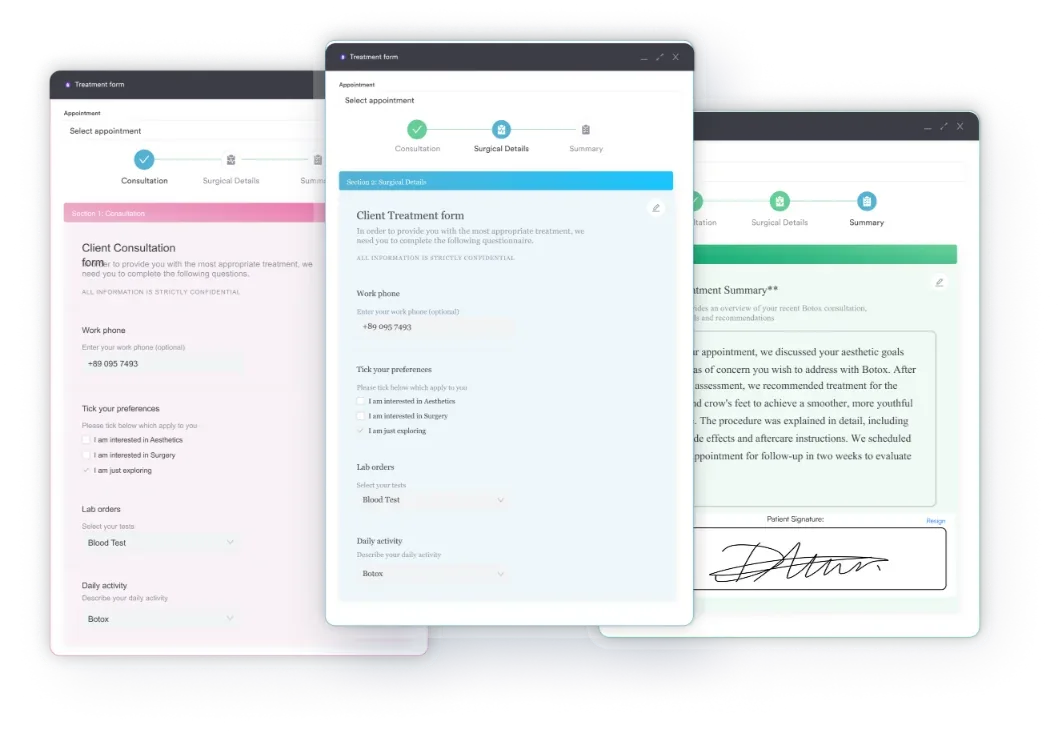
Maintaining thorough medical forms is not just a billing requirement. It protects the patient record and supports clinical continuity across care episodes.
Modifiers refine the billing context for H0022 and are often required by state Medicaid programs. Submitting H0022 without a required modifier is a common denial trigger. Modifier applicability varies by payer, so always verify against current payer-specific guidelines before appending.
Confirm your modifier use aligns with HIPAA security rule requirements and your payer contract terms before submitting claims.
Note: Modifier requirements for H0022 are payer-specific. The modifiers listed above represent commonly reported usage patterns. Verify applicability against your state Medicaid provider manual and individual payer contracts before billing.
The place of service (POS) code on your claim must match where the intervention took place. Billing H0022 with a POS code that does not align with your facility type is a common cause of outright rejection or post-payment audit recovery.
Check your state Medicaid provider manual before assigning a POS code to H0022. Some states restrict H0022 to POS 57 or require the facility’s licensed setting to match the POS exactly. A mismatch between your enrollment type and your POS code is one of the fastest paths to a claim denial.
H0022 does not exist in isolation. Behavioral health billers typically submit it alongside ICD-10 diagnosis codes and may transition clients between adjacent H-series codes as treatment progresses. The AAPC HCPCS code lookup and PGM Billing’s HCPCS lookup tool are useful references for verifying adjacent code descriptors and crosswalk relationships.
H0022 claims fail for predictable reasons. The table below captures the most frequent denial triggers identified across behavioral health billing audits, paired with the corrective action for each. Reviewing your HIPAA-compliant documentation practices before claim submission, and running a periodic medical chart audit, can catch many of these before they reach the payer.
Behavioral health practices billing H0022 face a specific operational challenge. They must track billable units accurately across multiple clients, maintain treatment plan renewal schedules, and generate documentation audit trails. These are exactly the workflows that practice management software is designed to handle.
Pabau’s claims management software lets behavioral health teams configure HCPCS code H0022 within their billing workflows and attach progress notes directly to claims. It also flags claims that are missing required modifiers before submission. The system’s automated billing workflows can trigger treatment plan renewal reminders based on clinical intervals. This helps prevent one of the most common documentation problems behind H0022 denials.
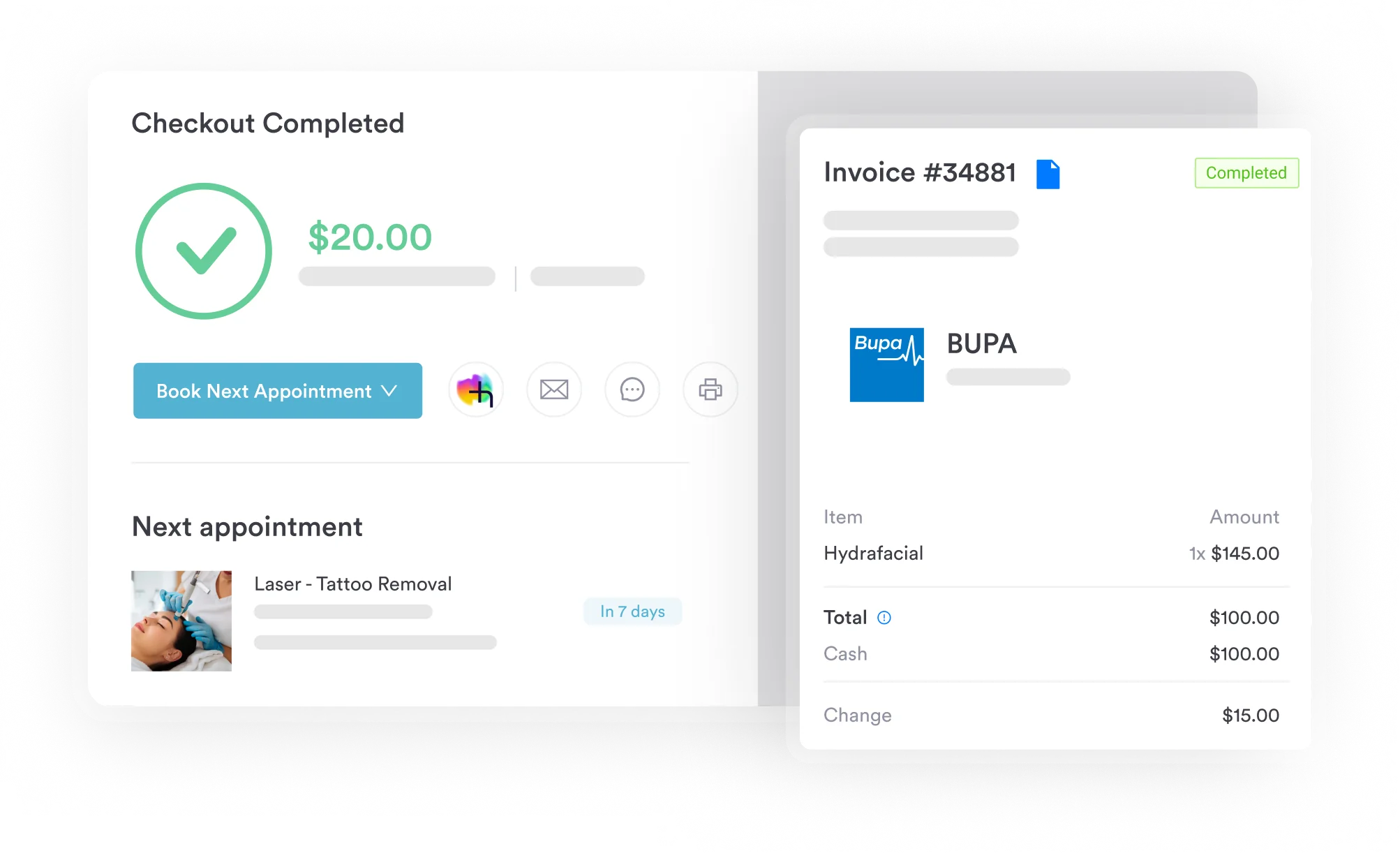
Practices that also manage direct primary care or outpatient medical services alongside SUD treatment often face billing across multiple service lines. Direct primary care software can integrate that billing within a single platform, which reduces administrative fragmentation.
Key capabilities that support H0022 billing workflows:
Run a monthly denial review specifically for H0022 claims. Sort rejections by denial code and look for patterns. Repeated modifier errors point to a payer setup issue, and repeated documentation omissions point to a clinical workflow issue. Fixing the root cause takes 30 minutes. Chasing individual remittances takes hours.

Pabau helps outpatient SUD and behavioral health teams manage H0022 claims, track documentation for any billing unit, and reduce denials with built-in workflow automation.

H0022 billing fails when documentation does not match the billed unit, whether that unit is hourly, per diem, or per service. It also fails when required modifiers are missing or treatment plans are not kept current. These are fixable, process-level problems.
Pabau’s built-in claims management and workflow automation tools help behavioral health teams catch these issues before claims reach the payer, not after a denial. To see how Pabau supports behavioral health billing workflows, book a demo.

Coding an anemia diagnosis too? Iron deficiency anemia coding guide explains why vague documentation pushes coders toward the unspecified D50.9 code and risks audits.
Coding a B12 deficiency case? Pernicious anemia coding guide explains how intrinsic factor deficiency blocks B12 absorption and differs from other anemia codes.
Coding sudden blood loss instead? Acute blood loss anemia guide covers when rapid blood loss lowers red blood cell counts enough to impair oxygen delivery.
HCPCS code H0022 describes an alcohol and/or drug intervention service, planned facilitation. Outpatient substance use disorder programs bill it to state Medicaid and some commercial payers. The billing unit depends on the payer, and it can be hourly, per diem, or per service.
Traditional Medicare (Parts A and B) generally does not cover H0022 under fee-for-service rules. Medicare Advantage (Part C) plans may cover it depending on the plan’s behavioral health benefit design. Always verify coverage directly with the specific Medicare Advantage plan before billing.
Commonly used modifiers include HF (substance abuse program), HH (integrated mental health/substance abuse program), and SA (nurse practitioner rendering service in collaboration with a physician). State Medicaid programs may require state-specific modifiers such as U-series codes. Verify modifier requirements with your payer before every claim submission, as requirements are not universal.
H0022 reimbursement rates vary by state Medicaid program, payer contract, and facility type. The billing unit itself varies too. Some states pay $15 to $60 per hour, others use a per-diem SUD rate, and Oregon Medicaid pays a flat $15.67 per service. Verify current rates and billing units directly with your state Medicaid agency or payer contract.
The most common place of service code for H0022 is POS 57 (non-residential substance abuse treatment facility) for outpatient SUD programs. POS 11 (office) and POS 53 (community mental health center) may also apply depending on the setting. The POS code on the claim must match the provider’s licensed facility type and Medicaid enrollment.
H0022 is specific to planned alcohol and/or drug intervention services. Adjacent codes serve different purposes: H0001 covers initial assessment, H0004 covers ongoing counseling billed per 15 minutes, and H0015 covers intensive outpatient programs (IOP). The choice of code depends on the specific service delivered, its duration, and the level of care. Billing the wrong code for the service provided is a compliance risk.