

CCSD code G5100: Bypass of duodenum billing guide
CCSD code G5100 bills a bypass that leaves the duodenum in place CCSD code G5100...

Last Updated: Oct 16, 2026
K0606 is the HCPCS Level II code for automatic external defibrillator, with integrated electrocardiogram analysis, garment type.
HCPCS Code K0606 bills an automatic external defibrillator with integrated electrocardiogram analysis, garment type — the wearable cardioverter defibrillator (WCD), also known as the LifeVest. It is a Medicare DMEPOS supply code, covered under LCD L33690 when a patient meets one of four cardiac criteria, and every claim line requires the KF modifier.
Let Pabau's smart automation suggest the right codes, reduce claim denials, and keep your practice compliant—effortlessly.
Automate repetitive tasks and focus on what matters most—your patients.
Reduce coding errors and ensure compliance with the latest regulations.
Clean claims, fewer denials, and faster reimbursements.
Powerful insights and reporting to help your practice thrive.
HIPAA compliant SOC 2 certified GDPR-compliant Trusted by 4,000+ clinics worldwide

HCPCS Code K0606 bills an automatic external defibrillator with integrated ECG analysis, garment type (wearable cardioverter defibrillator), added to HCPCS on July 1, 2003.
Medicare covers K0606 under LCD L33690 when a beneficiary meets one of four criteria: a documented VF or sustained VT episode, a high-risk inherited arrhythmia condition, a prior MI or dilated cardiomyopathy with LVEF of 0.35 or less, or a previously implanted defibrillator that requires explantation.
Related codes K0607 (replacement battery), K0608 (replacement garment), and K0609 (replacement electrodes, billed each) cover consumables separately from the base device, and all four codes require the KF modifier because the FDA classifies the devices as Class III.
Pabau’s claims management software helps DMEPOS suppliers track K0606 authorizations, store LCD-compliant documentation, and reduce claim denials across payer types.
HCPCS Code K0606 describes a vest or harness-style garment worn on the torso. The garment holds electrodes that continuously monitor cardiac rhythm and can deliver an external shock if it detects ventricular fibrillation or sustained ventricular tachycardia, without a bystander needing to act. Pabau’s claims management software helps DMEPOS suppliers track authorization status and documentation across every K-code claim.
K0606 sits in the HCPCS Level II K-code range that CMS maintains for durable medical equipment items that have not been assigned a permanent code. CMS added K0606 on July 1, 2003, and classifies it under BETOS as “Other DME,” with Medicare coverage determined at MAC/carrier judgment.
K0606 is a DMEPOS supply code, not an evaluation and management code, and billing it under E/M logic will trigger a denial. Two WCD systems are commercially available and billed under K0606: ZOLL’s LifeVest, on the market since 2001, and Kestra Medical Technologies’ ASSURE system, FDA-approved in 2021.
Suppliers should confirm which device a patient received, since prescribing and follow-up workflows differ slightly between manufacturers even though both bill under the same code.
Specificity matters just as much on the diagnosis side of a claim. Reviewers notice when documentation supports only an unspecified variant such as T22.629S, rather than a fully specified code.
K0606 covers the complete WCD unit: the garment, the electrodes, the monitor, and the battery supplied at initial fitting. It does not cover replacement components purchased later. Those are billed separately using K0607, K0608, or K0609, described in the related codes section below.
Medicare coverage for K0606 is set by Local Coverage Determination (LCD) L33690 and its companion Policy Article A52458, both maintained by CMS in the Medicare Coverage Database. A beneficiary must meet at least one of four clinical criteria before a claim will be covered.
Missing or vague documentation against these criteria is the leading reason K0606 claims are denied on initial submission.
LVEF values must come from echocardiography, nuclear imaging, or cardiac MRI, with the test date documented alongside the result. Patients meeting criterion 3 are also frequently managed with cardiac risk-reduction therapies such as HCPCS Code J1306 (inclisiran), so the chart should show both the LVEF workup and any concurrent drug therapy.
Always check the current version of LCD L33690 in the CMS Medicare Coverage Database before finalizing a coverage determination, since criteria are periodically revised.
Physicians typically track a patient’s evolving arrhythmia risk during the inpatient stay. Carrying that inpatient documentation forward into the DME order strengthens the coverage file.
Injury diagnoses carry that same timeline inside the code. A seventh character on S99.221G tells the payer which encounter in the treatment course the claim covers.
K0606 is not covered when the arrhythmia was due to a transient or reversible cause, when it occurred within the first 48 hours of an acute MI, or when the beneficiary already has an active implanted ICD.
Claims are also denied when the order does not identify which of the four criteria applies. Commercial payers and state Medicaid programs may publish narrower or differently worded criteria, so verify each payer’s policy independently before submitting.
Pabau’s HIPAA compliance for medical offices resource outlines how to structure documentation workflows that satisfy both clinical and regulatory requirements at once.
Document the specific LCD L33690 criterion (1, 2, 3, or 4) that the patient meets directly in the order. Reviewers look for an explicit criterion citation tied to test results. A note that says only ‘patient has low ejection fraction,’ without naming the criterion and the supporting test, will not survive an appeal.
CMS Policy Article A52458 specifies what suppliers must obtain and retain before submitting a K0606 claim. It also confirms a modifier rule that is easy to miss: because the FDA classifies K0606, K0607, K0608, and K0609 as Class III devices, every claim line for these codes must carry the KF modifier.
A claim line submitted without the KF modifier is rejected as missing information, regardless of how complete the rest of the documentation is. Pabau’s patient care management tools help suppliers keep modifier rules and documentation checklists consistent across multiple ordering physicians.
Suppliers who also bill unclassified drug codes such as HCPCS Code J3590 already know that incomplete documentation is the top reason MACs issue additional documentation requests.
Written orders and clinical notes also decide how precisely a coder can report the site. Left or right matters for burn codes like T22.332S, so the note should say which.
Using structured medical documentation and digital intake forms to collect physician signatures reduces the risk of incomplete records reaching the claims desk.
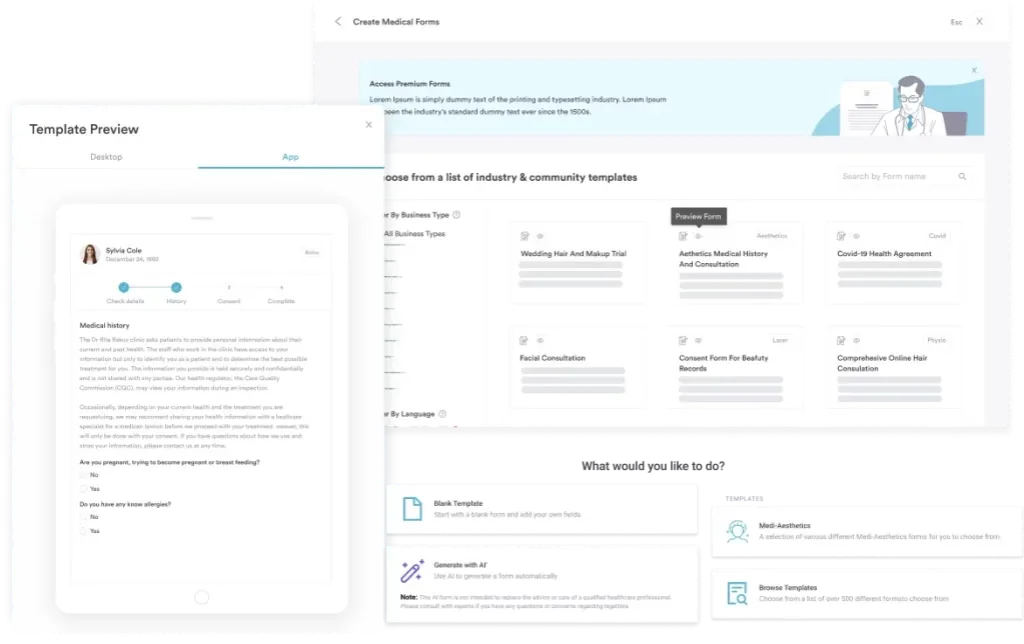

Pabau helps DMEPOS suppliers and cardiology practices track K0606 authorizations, store supporting clinical documentation, and submit cleaner claims. See how it works for your team.

The K0606 through K0609 range covers the full WCD billing ecosystem. K0606 bills the base device; the three companion codes bill the consumables that wear out with regular use.
Other DME code families follow the same base-plus-consumable pattern. Billing the base device code when only a replacement supply was provided, or the reverse, is a common error that leads to denials and overpayment risk.
When a patient receives a WCD for the first time, bill K0606 for the device. Later consumable replenishment is billed using K0607, K0608, or K0609 as applicable, each with the KF modifier attached.
Reviewing patient data security practices ensures that consumable reorders, which reference sensitive cardiac history, are stored and transmitted in compliance with HIPAA.
Check payer-specific frequency limits before billing K0607 through K0609. Medicare and Medicaid programs may allow a set number of replacement garments or electrodes per coverage period. Billing above the allowed frequency without prior authorization results in automatic denial.
With built-in stock tracking, every brace or device billed under these codes is deducted from inventory automatically.
Billing K0606 follows DMEPOS supplier rules under Medicare Part B. The supplier must be enrolled with the National Supplier Clearinghouse (NSC) and must bill through the correct Medicare Administrative Contractor (MAC).
Every claim line for K0606 through K0609 requires the KF modifier. A replacement device issued after loss or irreparable damage may also need the KX modifier to affirm that coverage criteria are still met.
Good EHR integration with your billing platform keeps modifier rules applied consistently and tied to the correct clinical justification in the patient record.
Template design decides what the record captures. Discrete fields for burn site, degree, and encounter type keep a code like T23.052D accurate.
Medicare does not require prior authorization for K0606 at the national level, but this varies by MAC jurisdiction and by payer. Several commercial insurers, including Blue Cross Blue Shield plans, require prior authorization before delivery.
TRICARE West Region authorization requirements should be verified directly with the current TRICARE West contractor, since the contractor changed on January 1, 2025.
Confirm prior authorization rules with each payer before delivering the device; a coverage decision made after delivery without authorization is a financial risk the supplier carries alone.
Payer policy lookups follow the same habit across code types. Before scheduling treatment tied to a fracture code like S99.239A, check whether the plan wants authorization first.
K0606 is billed as a monthly rental item, not a one-time purchase. Each monthly rental claim line carries the RR (rental) modifier in addition to the mandatory KF modifier, and the covered rental duration is tied to the physician-documented period of medical need. Rental-month caps differ by payer — several state Medicaid programs set an explicit maximum number of rental months — so confirm the applicable rental limit with each payer before billing. An eligibility check at booking and again at arrival catches mid-month plan changes. The CARC denial code list is short enough to learn, and most rework traces to a handful of entries.
K0606 claims are submitted on a CMS-1500 or its electronic equivalent, using the billing provider’s DMEPOS enrollment NPI. Reimbursement rates change annually with each CMS fee schedule update, so confirm the current allowed amount for your MAC jurisdiction rather than citing a prior year’s figure.
Every CMS-1500 also needs diagnosis codes in box 21, pointed at the right service line. Hand injuries reported with T23.309A follow that same pointer discipline.
Cross-check the code descriptions and billing notes with an official HCPCS lookup for K0606 through K0609 before submitting.
Patients discharged with a WCD are often also enrolled in chronic care management (CPT Code 99490) or principal care management (CPT Code 99424) for reduced LVEF while their long-term arrhythmia risk is reassessed. Keep both billing streams documented separately from the WCD claim.
Pabau’s revenue cycle management guide covers how to build an auditable record linking fee schedule lookups to specific claim submissions.
K0606 carries some of the highest documentation stakes in the DMEPOS code set. LCD L33690 ties coverage to four specific clinical criteria, and any mismatch between the physician’s records and the supplier’s file creates denial risk.
Confirming the correct criterion, applying the KF modifier on every K0606 through K0609 claim line, and keeping a clean documentation chain from order to delivery are the habits that separate practices with clean claim histories from those spending time on appeals.
Pabau’s practice management software brings authorization tracking, documentation storage, and billing workflows into one platform, cutting down on the handoff errors that drive K0606 denials.

Coding an ENT device complication? ENT device coding guide ICD-10 Code Y72.8 covers adverse incidents involving miscellaneous otorhinolaryngological devices that fall outside the more specific Y72 subcategories.
Coding a complication after organ removal? organ removal complication code ICD-10 Code Y83.6 is the secondary code for a partial or total organ removal that led to a later complication.
Coding a confirmed but unmeasured alcohol level? blood alcohol presence code ICD-10 Code Y90.9 is the secondary-only code for a confirmed blood alcohol test with no specific concentration documented.
HCPCS Code K0606 bills a wearable cardioverter defibrillator (WCD): an automatic external defibrillator with integrated electrocardiogram analysis, garment type. It is a DMEPOS supply code billed when a patient at risk of sudden cardiac arrest is fitted with the device and meets Medicare’s clinical coverage criteria.
K0606 covers the base wearable defibrillator device, while K0607 covers a replacement battery for that device, billed each. K0606 requires full LCD L33690 documentation and a detailed written order. K0607 is a supply replenishment code with payer-specific frequency limits, but both codes require the KF modifier.
Yes. Medicare covers K0606 under LCD L33690 when the beneficiary meets one of four criteria: a documented episode of ventricular fibrillation or sustained ventricular tachycardia, a high-risk inherited arrhythmia condition such as long QT syndrome, a prior MI or dilated cardiomyopathy with an LVEF of 0.35 or less, or a previously implanted defibrillator requiring explantation.
Billing K0606 requires a physician-signed detailed written order, clinical records supporting the specific LCD criterion cited, and signed proof of delivery. Some MAC jurisdictions also require a certificate of medical necessity. Every claim line must carry the KF modifier because CMS classifies the device as FDA Class III.
Prior authorization requirements for K0606 vary by payer. Medicare does not mandate it at the national level, but individual MAC jurisdictions and commercial payers, including Blue Cross Blue Shield plans, may require it before delivery. TRICARE authorization procedures should be verified with the current TRICARE West contractor.



