

HCPCS code E0198: Water pressure pad billing guide
HCPCS code E0198 is a water pad for a standard mattress HCPCS code E0198 is the ...

Last Updated: Oct 13, 2026
J3380 is the HCPCS Level II code for injection, vedolizumab, intravenous, 1 mg.
Vedolizumab is a gut-selective monoclonal antibody marketed by Takeda Pharmaceuticals under the brand name Entyvio, FDA-approved for moderately to severely active ulcerative colitis and Crohn's disease.
Let Pabau's smart automation suggest the right codes, reduce claim denials, and keep your practice compliant—effortlessly.
Automate repetitive tasks and focus on what matters most—your patients.
Reduce coding errors and ensure compliance with the latest regulations.
Clean claims, fewer denials, and faster reimbursements.
Powerful insights and reporting to help your practice thrive.
HIPAA compliant SOC 2 certified GDPR-compliant Trusted by 4,000+ clinics worldwide

HCPCS code J3380 describes injection, vedolizumab, intravenous, 1 mg – the billing code for Entyvio (vedolizumab) infusions used to treat ulcerative colitis and Crohn’s disease.
A standard 300 mg Entyvio dose requires 300 billable units of J3380 per infusion session – each unit equals 1 mg.
Prior authorization is required by most payers; some commercial payers cap home infusion reimbursement at 13 units per claim, so outpatient and home billing rules differ significantly.
Pabau’s claims management software supports infusion billing workflows, helping practices track drug administration codes, attach correct modifiers, and reduce J3380 claim denials.
The unit-based structure of J3380 means a single 300 mg infusion generates a 300-unit claim line. Any documentation error can trigger a denial on every one of those units. This article covers the complete billing workflow: dosage-to-unit conversion, administration codes, ICD-10 pairing, prior authorization requirements, and Medicare reimbursement.
One billable unit of J3380 equals 1 mg of vedolizumab. The standard induction and maintenance dose of Entyvio is 300 mg administered intravenously. That means most infusion sessions generate a claim for 300 units of J3380.
| Vedolizumab dose | J3380 units to bill | Infusion phase |
|---|---|---|
| 300 mg IV | 300 units | Induction (weeks 0, 2, 6) and maintenance (every 8 weeks) |
| Partial dose (non-standard) | Bill actual mg administered | Dose adjustment or wastage |
The NDC for the Entyvio 300 mg single-use vial should be verified on the vial label or the FDA NDC Directory before billing (the Takeda labeler code is 64764). NDC reporting is required on most commercial and Medicaid claims. For claim submission, bill the 11-digit NDC in the appropriate claim field — CMS requires zero-padding the product or package segment to reach 11 digits, formatted as 5-4-2 (labeler-product-package).
Subcutaneous vedolizumab (Entyvio SC) uses a different billing code — J3285 (Injection, vedolizumab, subcutaneous, 1 mg) — and must not be billed under J3380, which is specific to the intravenous route.
Pabau’s claims management software lets infusion practices configure drug dosage defaults so that every 300 mg vedolizumab infusion automatically populates 300 units on the claim line, reducing the manual calculation errors that generate short-unit denials.
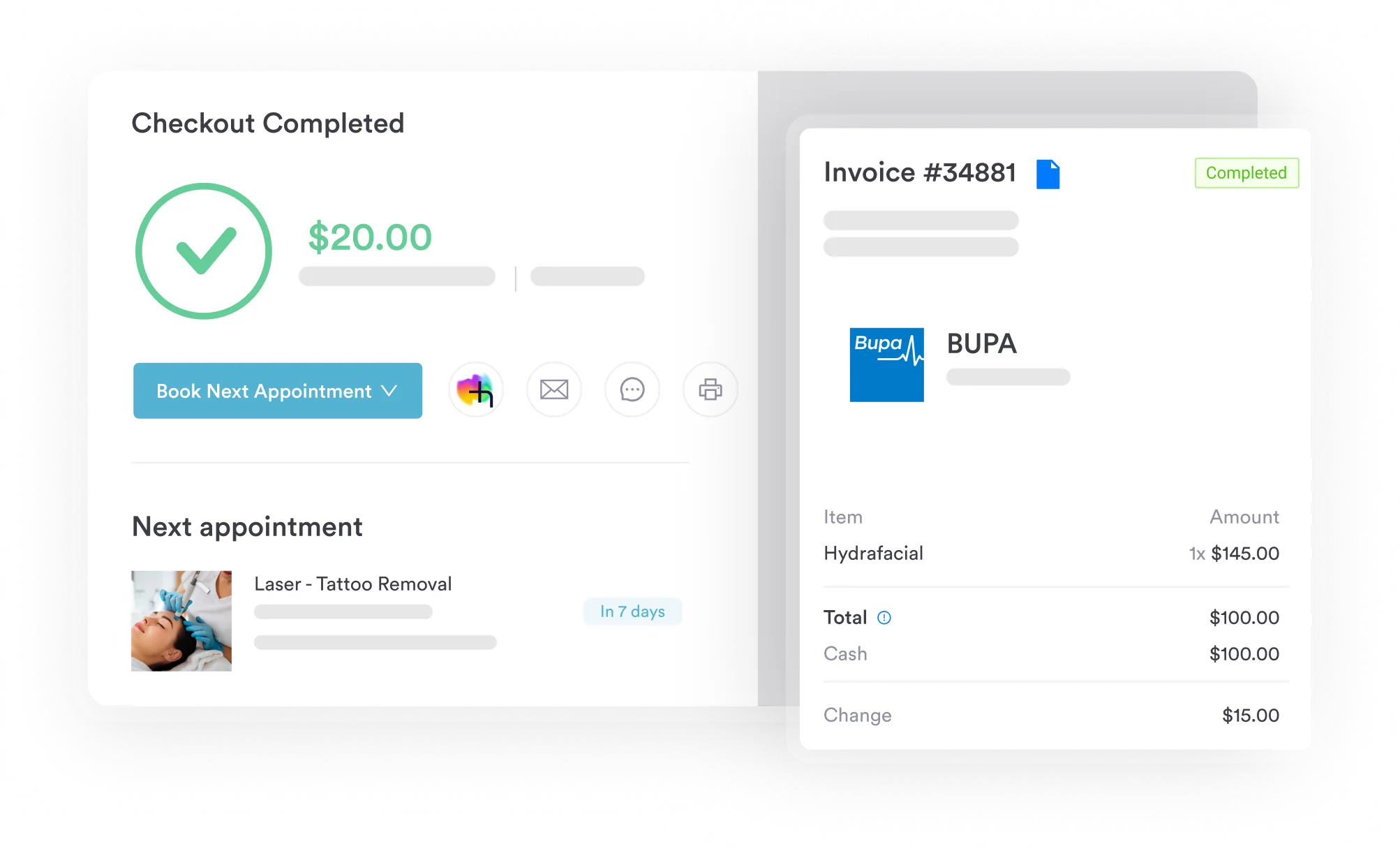
J3380 covers the drug only. The intravenous infusion service must be billed separately using the appropriate administration CPT codes. Most infusion centers billing vedolizumab pair J3380 with one or more of the following:
Under National Correct Coding Initiative (NCCI) edits, CPT 96365 and J3380 are billable together on the same claim. However, if J3380 is administered in a physician office setting, verify that the place of service code and supervising provider credentials align with payer infusion coverage policies. Most payers require the infusion to be performed in a facility or outpatient infusion center for full reimbursement.
Practices offering IV biologic therapy alongside other infusion services can find additional clinical and operational context in this overview of EMR built for IV therapy workflows. Practices also billing self-administered injection supplies alongside infusion services may reference HCPCS code A4211 (supplies for self-administered injections) for guidance on coding ancillary items.
An inventory tracking tool logs lot numbers and expiry dates for every drug you bill under these codes.
Every J3380 claim requires a supporting diagnosis code that establishes medical necessity for vedolizumab. The FDA-approved indications for Entyvio are ulcerative colitis and Crohn’s disease, so the paired ICD-10-CM codes come from the K50 and K51 code families.
| ICD-10-CM code | Description | Notes |
|---|---|---|
| K51.00 | Ulcerative (chronic) pancolitis without complications | Most common pairing for UC maintenance |
| K51.01 | Ulcerative (chronic) pancolitis with complications | Use when a complication is present but not further specified |
| K51.011 | Ulcerative (chronic) pancolitis with rectal bleeding | 6th character specifies rectal bleeding as the complication; use when active bleeding is documented |
| K51.90 | Ulcerative colitis, unspecified, without complications | Use when site of UC is not specified |
| K50.00 | Crohn’s disease of small intestine without complications | Small intestine Crohn’s |
| K50.10 | Crohn’s disease of large intestine without complications | Colonic Crohn’s |
| K50.90 | Crohn’s disease, unspecified, without complications | Unspecified Crohn’s |
Select the most specific code available based on clinical documentation. “Unspecified” codes are acceptable when disease site is genuinely not documented, but they increase prior authorization scrutiny. Always code to the highest level of specificity to support medical necessity.
Coders working with colorectal conditions may also reference ICD-10 code C20 (malignant neoplasm of rectum) when patients transition from IBD management to oncology follow-up.
Practices using Pabau’s IV therapy EMR software can attach diagnosis codes to patient treatment protocols so that each infusion encounter pulls the correct ICD-10 pair automatically, reducing coder review time per session.
Bill the most specific ICD-10-CM code available for each J3380 claim. Payers using LCD (Local Coverage Determination) policies for biologics often require that the submitted diagnosis code appears on their covered-diagnosis list. An unspecified K50.90 or K51.90 code may pass a clearinghouse edit but still trigger a medical necessity denial at adjudication.
Most commercial payers, Medicare Advantage plans, and Medicaid managed care organizations require prior authorization (PA) before reimbursing J3380. The PA requirement reflects vedolizumab’s status as a high-cost specialty biologic, with a list price exceeding $6,000 per 300 mg vial.
Common PA criteria across major payers typically include:
Home infusion reimbursement rules differ from outpatient infusion billing. Louisiana Medicaid (Humana home infusion benefit) limits reimbursement for J3380 to no more than 13 units per claim under the home infusion benefit. This is a policy-specific cap, not a clinical dosing restriction. Practices billing home infusion for vedolizumab should verify the applicable unit cap with the patient’s specific payer before submission.
Practices building new infusion programs can find payer contracting and clinical setup guidance in this guide to setting up an IV therapy clinic. For practices considering broader strategies to grow their patient base.

Pabau’s claims management tools help infusion centers automate unit calculations, attach the right modifiers, and track prior authorization status so vedolizumab billing runs cleanly from first submission.

Medicare Part B reimburses J3380 under the Average Sales Price (ASP) methodology. CMS updates ASP-based drug payment rates quarterly. The reimbursement rate is calculated as ASP plus 6% (ASP + 6%), which represents the drug acquisition cost plus a payment adjustment intended to cover infusion center handling and overhead.
Because payment rates change each quarter, practices should verify the current ASP payment rate using the CMS ASP Drug Pricing files published quarterly at cms.gov/medicare/payment/part-b-drugs. Do not rely on prior-year rates when submitting claims.
Key Medicare billing rules for J3380:
Practices managing the full infusion billing cycle can look up HCPCS codes, verify unit billing requirements, and cross-reference fee schedules using the AAPC Codify HCPCS lookup. Related drug-code references such as HCPCS code J3590 (unclassified biologics) also provide useful billing reference data alongside coverage notes.
Staff preparing for infusion program expansion will find workflow and compliance considerations in this guide to IV therapy clinic best practices.
Always report the JW or JZ modifier on J3380 claims for Medicare. CMS made both modifiers mandatory for single-dose vials effective January 1, 2023. Missing either modifier is an automatic claim edit trigger at many MAC contractors. Document the amount administered and any discarded drug in the infusion note to support the modifier choice on audit.
Documentation must establish both the clinical justification for vedolizumab and the specific infusion encounter details. Incomplete records are the leading cause of J3380 denials on post-payment audit.
Each infusion encounter record should include:
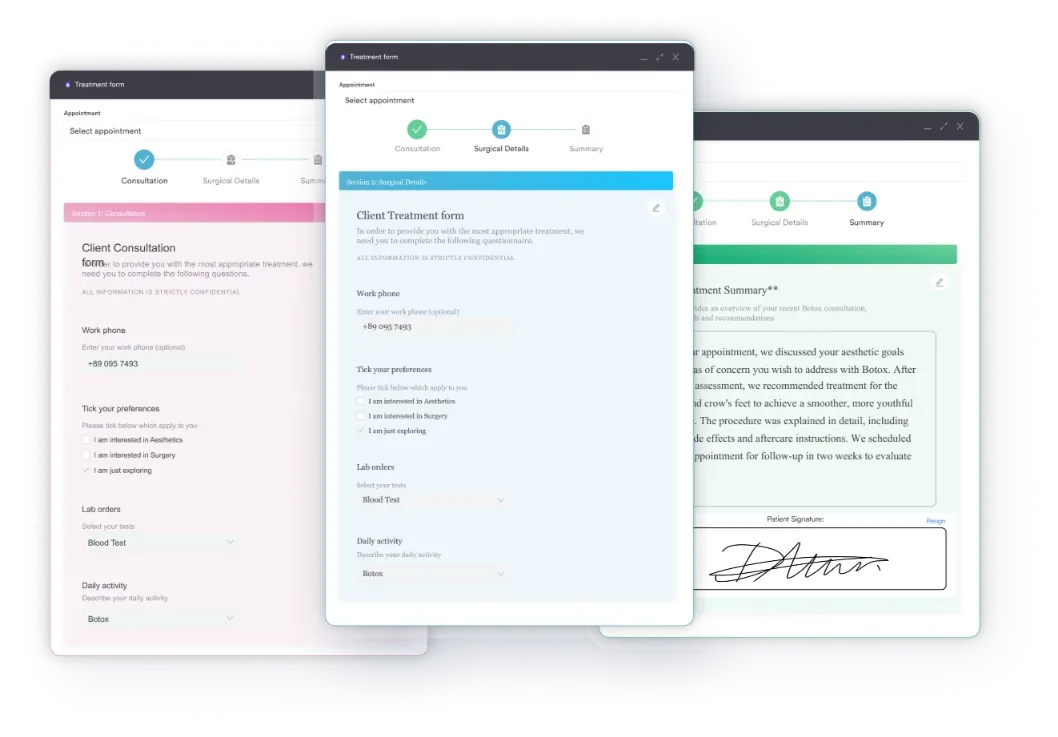
Practices should keep a standardized infusion record template in the patient chart. Pabau’s digital intake forms can be configured to capture all required infusion documentation fields, creating a structured clinical record that satisfies both prior authorization and audit requirements.
Practices new to infusion documentation can also reference this resource on who can administer IV therapy for clarity on scope-of-practice documentation requirements that may affect claim validity. For practices that also manage chronic-care patients receiving biologic therapy.
Vedolizumab claims most commonly fail due to missing or mismatched NDC, wrong unit count, or prior authorization not on file at time of service.
These steps prevent the most common J3380 claim failures:
Teams managing IV therapy billing workflows can also review the operational guidance in this article on IV therapy intake form documentation for a closer look at how structured intake data reduces downstream billing errors. Practices billing IV infusion hydration services alongside biologic infusions should also review CPT code 96360 (IV hydration billing guide) for guidance on correctly separating hydration and drug-administration claim lines. Payment for this code arrives with a remittance advice that explains any adjustment line by line.
Billing J3380 accurately depends on three things: the right unit count per infusion, a paired ICD-10 code that satisfies the payer’s medical necessity criteria, and prior authorization confirmed before the patient arrives. Miss any one of those and the claim fails, often on all 300 units.
Pabau’s claims management tools give infusion centers a structured way to manage J3380 billing: configure drug defaults, attach modifiers, track PA status, and document infusion encounters in one place. To see how Pabau supports infusion and specialty clinic billing workflows, book a demo.

Coding an unexplained abnormal lab result? ICD-10 code R79.89 covers abnormal blood chemistry findings that are documented but don’t fit a more specific category.
Coding an incidental lung finding on imaging? ICD-10 code R91.1 covers a solitary pulmonary nodule found on chest imaging.
Coding an unusual mammogram finding? ICD-10 code R92.8 covers abnormal breast imaging findings that don’t map to a specific diagnosis.
HCPCS code J3380 is the billing code for injection, vedolizumab, intravenous, 1 mg. It is used to bill for infusions of Entyvio (vedolizumab), a biologic monoclonal antibody manufactured by Takeda Pharmaceuticals and FDA-approved for moderately to severely active ulcerative colitis and Crohn’s disease. One unit equals 1 mg of vedolizumab administered intravenously.
Bill 300 units of J3380 for a standard 300 mg intravenous dose of vedolizumab. Each unit represents 1 mg, so the unit count must always match the number of milligrams actually administered. If a partial dose is given, bill only the milligrams administered.
J3380 is most commonly billed with ICD-10-CM codes from the K50 (Crohn’s disease) and K51 (ulcerative colitis) families. Frequently used codes include K51.00 (ulcerative pancolitis without complications), K50.90 (Crohn’s disease, unspecified), and K51.90 (ulcerative colitis, unspecified). Always use the most specific code available to support medical necessity.
Yes, most commercial payers, Medicare Advantage plans, and Medicaid managed care organizations require prior authorization for J3380. PA criteria typically include confirmed moderate-to-severe disease activity, documented failure of conventional therapies, and gastroenterologist prescribing. Traditional Medicare Part B does not require PA for J3380, but Medicare Advantage plans apply their own requirements.
CPT 96365 (IV infusion, initial, up to 1 hour) is the primary administration code billed alongside J3380 for a standard vedolizumab infusion. CPT 96366 is added for each additional hour if the infusion extends beyond the first hour. The drug code J3380 and administration code 96365 are billable together and are not bundled under NCCI edits.
Medicare requires either the JW modifier (drug wasted and discarded from a single-dose vial) or the JZ modifier (no drug was wasted) on all J3380 claims for single-use vials. Both modifiers became mandatory January 1, 2023. Submitting a J3380 claim to Medicare without one of these modifiers will trigger an edit at most MAC contractors.



