

CCSD code G5100: Bypass of duodenum billing guide
CCSD code G5100 bills a bypass that leaves the duodenum in place CCSD code G5100...

Last Updated: Oct 16, 2026
H2017 is the HCPCS Level II code for psychosocial rehabilitation services, per 15 minutes.
HCPCS Code H2017 represents psychosocial rehabilitation (PSR) services delivered in 15-minute billing increments for individuals with severe and persistent mental illness. CMS classifies it under "Other Mental Health and Community Support Services" within mental health EMR software billing categories. It is a Medicaid-only code — Medicare does not cover it (Coverage Code I).
The short descriptor used in the CMS database is "Psysoc rehab svc, per 15 min." The code was added to the HCPCS code set on April 1, 2003, with Action Code N (no further maintenance required), and remains a valid code for 2026.
Psychosocial rehabilitation (PSR) is a structured, goal-oriented approach to helping individuals with severe and persistent mental illness (SPMI) develop the functional skills they need to live, work, and participate in their communities.
Services typically include skills training, community integration activities, and support groups delivered in outpatient or community-based settings. The clinical focus is on functional improvement rather than symptom management through medication or individual psychotherapy.
Unlike many behavioral health CPT codes that describe specific clinical interventions, HCPCS Code H2017 is a Medicaid-only code used when the payer is a state Medicaid plan or a Medicaid managed care organization (MCO). It does not appear on Medicare fee schedules as a payable service.
Behavioral health practices serving psychiatric and mental health populations with Medicaid coverage need to understand this distinction clearly before submitting claims.
Let Pabau's smart automation suggest the right codes, reduce claim denials, and keep your practice compliant—effortlessly.
Automate repetitive tasks and focus on what matters most—your patients.
Reduce coding errors and ensure compliance with the latest regulations.
Clean claims, fewer denials, and faster reimbursements.
Powerful insights and reporting to help your practice thrive.
HIPAA compliant SOC 2 certified GDPR-compliant Trusted by 4,000+ clinics worldwide

HCPCS Code H2017 describes psychosocial rehabilitation services billed in 15-minute increments for individuals with severe and persistent mental illness.
H2017 is not payable by Medicare (Coverage Code I); reimbursement comes exclusively through state Medicaid programs, with rates varying significantly by state.
The HQ modifier is permitted (not required) by AHCCCS (Arizona Medicaid) for group-delivered services, effective retroactively to January 1, 2022; modifier requirements differ by state payer and must be verified locally.
Practice management software like Pabau helps behavioral health practices track H2017 billing units, attach modifiers accurately, and reduce claim denials.
The table below summarizes the key administrative properties of HCPCS Code H2017 as maintained by CMS and verified against the AAPC Codify HCPCS database.
Provider eligibility for HCPCS Code H2017 is not defined at the federal level. Each state Medicaid program sets its own qualified provider types, supervision requirements, and service definitions. That said, common eligible provider types across multiple state programs include:
Individual licensed practitioners billing independently may not be eligible unless the service is delivered within a certified PSR program that holds a Medicaid provider agreement. Teams operating in therapy practice management settings should verify eligibility requirements with their state Medicaid agency before billing this code.
Clinical social workers billing independently should also review HCPCS Code G0155 for home health billing rules, and where PSR is delivered alongside case coordination.
Qualifying services under HCPCS Code H2017 generally include structured activities designed to restore or improve daily living and social functioning. Common examples are:
Services must be goal-directed and tied to a documented treatment plan. Clinical or recreational activities delivered without a structured rehabilitation goal generally do not qualify for H2017 billing. This is one of the most common audit triggers for behavioral health agencies.
Verify your state Medicaid provider enrollment category before billing HCPCS Code H2017. Many state programs require the agency to be separately certified as a psychosocial rehabilitation provider, separate from general outpatient behavioral health certification. Contact your state Medicaid office or managed care plan to confirm eligibility before your first claim submission.
Each unit of HCPCS Code H2017 equals 15 minutes of psychosocial rehabilitation service. A 60-minute group PSR session billed to Medicaid would therefore be reported as 4 units. Most state Medicaid programs and MCOs cap the maximum units billable per session or per day; check your payer’s billing guidelines for the applicable unit ceiling.
Rounding rules for partial 15-minute increments vary by payer. Some Medicaid plans follow the 8-minute rule (the same rule applied to CPT therapy codes), rounding up for any segment of 8 minutes or more. Others require full 15-minute increments. Document total service time in minutes in the clinical note so the claim unit calculation can be audited against the record.
Modifier requirements for HCPCS Code H2017 differ significantly by state. The table below covers commonly applied modifiers; confirm requirements with your specific payer before billing.
Medicare does not pay for HCPCS Code H2017. The CMS-assigned Coverage Code I means the code is explicitly excluded from Medicare reimbursement. Submitting H2017 on a Medicare claim will result in denial. Do not bill Medicare for psychosocial rehabilitation services under this code, even for dual-eligible patients.
Medicaid coverage is the primary reimbursement source for HCPCS Code H2017. Coverage policies, reimbursement rates, and service limits vary substantially by state. Two notable state-specific frameworks are worth understanding:
For current Medicaid reimbursement rates, use the CMS Physician Fee Schedule lookup tool and contact your state Medicaid agency or MCO directly. Rates differ by state, locality, and managed care contract terms. Publishing specific dollar amounts without a current state fee schedule reference would be misleading.
H2017 requires a supporting ICD-10-CM diagnosis code on every claim, since psychosocial rehabilitation is defined by the underlying SPMI diagnosis rather than the service itself. Commonly paired codes include:
Always select the most specific ICD-10 code documented in the clinical record; using an unspecified code when a more precise diagnosis is available is a common audit trigger. For clients with a documented psychotic disorder.
Miscellaneous codes are easy to mishandle, and medical practice management software keeps their documentation attached and auditable.

Pabau’s claims management software helps behavioral health practices track 15-minute billing units, attach the right modifiers, and catch missing documentation before claims go out the door. See how it works for your team.

Adequate documentation is the single most effective way to protect an H2017 claim from denial or audit recovery. Each claim should be supported by a clinical record that demonstrates medical necessity and confirms the service was delivered as billed. Behavioral health agencies billing HCPCS Code H2017 should maintain the following in every client file:
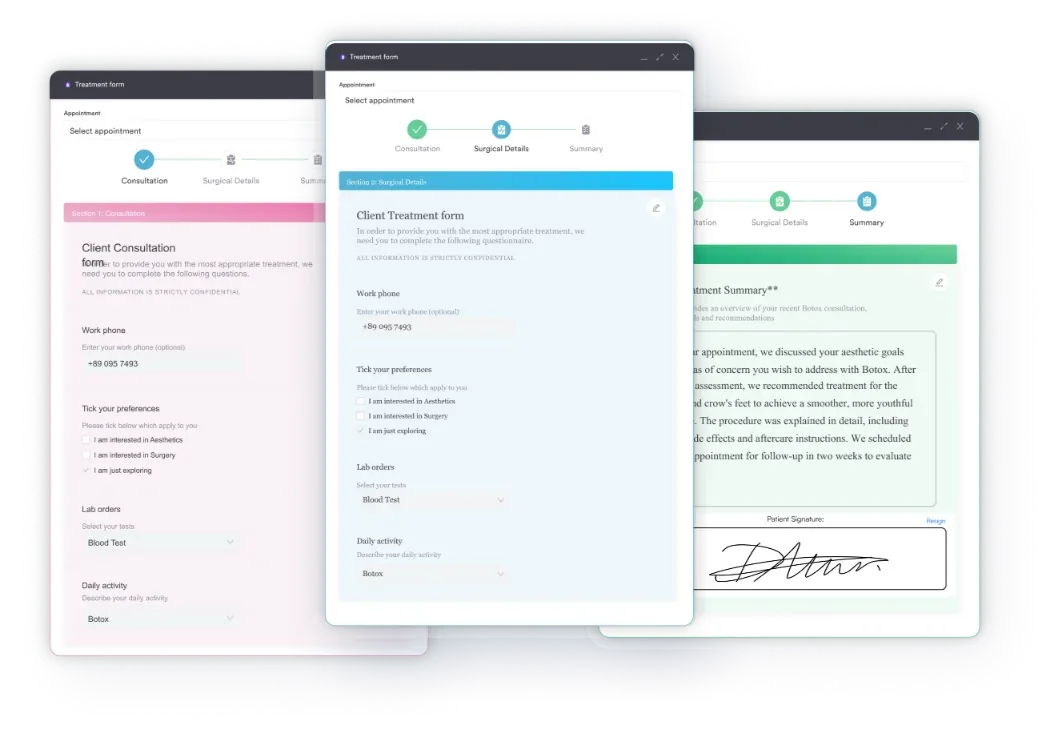
Using digital forms for intake, consent, and session documentation significantly reduces the risk of missing fields at audit. Paper-based workflows are the most common source of documentation deficiencies flagged during Medicaid audits. Teams using psychology practice software with structured note templates can reduce documentation time and improve audit readiness simultaneously.
Structured tools such as an aberrant behavior checklist or a 7-column thought record standardize how functional progress gets captured across sessions, which makes audits faster to prepare for.
Clinically, progress notes must show that the client is making progress toward rehabilitation goals or that continued services are medically necessary despite plateau. A note that reads “client attended group, participated appropriately” without functional detail does not meet most Medicaid documentation standards and is likely to be flagged for recovery.
Run a quarterly internal audit of a random sample of H2017 claims against your source documentation. Verify that every claim unit is supported by a timed progress note, that the note includes the staff member name and credential, and that the treatment plan was active and authorized on the date of service. Catching issues internally is far less costly than a post-payment audit recovery request.
HCPCS Code H2017 is one of several H-codes used for community-based behavioral health services. Understanding the differences prevents miscoding and supports accurate claims management. Compare H2017 with the most commonly confused related codes:
Choosing between H2017 and H2015 is the most common coding decision behavioral health teams face. The distinction generally comes down to whether the services are specifically structured as psychosocial rehabilitation (H2017) or broader community support activities (H2015).
Practices that also bill individual or group counseling should review HCPCS Code H0004 for behavioral health counseling, since counseling and psychosocial rehabilitation delivered in the same time block cannot both be billed.
Your state Medicaid program’s billing manual will define which code applies to your specific program model. SPMI caseloads frequently include co-occurring substance use diagnoses; pairing the correct ICD-10-CM code.
For practices looking at broader behavioral health billing workflows or behavioral health coaching codes, review both HCPCS H-codes and relevant CPT codes alongside your state Medicaid guidelines. Some payers accept either H-code or CPT billing for overlapping services; others require the H-code specifically for Medicaid claims.
Practices that also bill prolonged evaluation and management visits should check HCPCS Code G2212 for billing thresholds separate from time-based H-codes like H2017. Always check the current provider manual for your plan.
Common billing errors to watch for with HCPCS Code H2017 include: billing Medicare when only Medicaid covers the code; omitting the HQ or other required state modifier; submitting units without corresponding timed progress notes; billing H2017 for services that meet the definition of H2015 or H2019; and failing to maintain current service authorizations. Common claim denial codes repeat by specialty, so the pattern is worth reading before reworking.
Each of these errors has a distinct audit footprint. Effective claims management software can flag missing modifiers and incomplete documentation at the point of claim creation, before submission. A resubmission does not restart the clock, so the original filing limit still governs.
For the most current HCPCS code data, use the PGM Billing HCPCS lookup tool which pulls directly from CMS data files and updates with each annual HCPCS release.
HCPCS Code H2017 billing errors are almost always preventable. The code itself is straightforward: 15 minutes of structured psychosocial rehabilitation, Medicaid only, no Medicare pathway. The complexity lives in the state-level variation around modifiers, provider eligibility, and documentation standards.
Pabau’s automated billing workflows help behavioral health teams build modifier rules, unit calculators, and documentation checklists directly into their service delivery process, so claims go out complete the first time. To see how Pabau handles H2017 and other behavioral health billing codes for your team, book a demo.

Coding a nervous system diagnosis instead? Intracranial phlebitis coding guide This guide covers the billable code for intracranial and intraspinal phlebitis, inflammation of veins within the central nervous system.
Coding a confirmed neurological diagnosis? Huntington’s disease coding guide This guide covers the single billable code for Huntington’s disease, and documentation requirements across every clinical stage.
HCPCS Code H2017 is the billing code for psychosocial rehabilitation services, billed in 15-minute increments. It is used by Medicaid-enrolled behavioral health agencies to bill for structured, goal-oriented services designed to improve the daily living and social functioning skills of individuals with severe and persistent mental illness. The code is not payable by Medicare.
Each unit of H2017 equals 15 minutes of service. A 60-minute psychosocial rehabilitation session is reported as 4 units. Document the exact start and end time in the progress note to support the unit count. Partial unit rounding rules vary by state Medicaid plan; confirm the applicable rounding policy with your payer before submitting claims.
No. Medicare does not cover HCPCS Code H2017. CMS has assigned it Coverage Code I (not payable by Medicare). Claims submitted to Medicare under H2017 will be denied. Reimbursement for psychosocial rehabilitation services under this code comes exclusively through state Medicaid programs and Medicaid managed care organizations.
Modifier requirements depend on the state Medicaid program. The HQ modifier (group setting) is permitted by AHCCCS in Arizona for group-delivered services, effective retroactively to January 1, 2022, though it isn’t mandatory and providers should assess case by case whether the group setting applies. The U1 modifier is used in some states for individual on-site sessions. The GT modifier applies when services are delivered via telehealth. Always verify required modifiers with your state Medicaid agency or MCO before billing.
Required documentation includes an active treatment plan, prior authorization (where required by the payer), a progress note for each session documenting service time, activity type, staff name and credential, client response, and progress toward goals. Group sessions additionally require an attendance roster. Documentation standards vary by state Medicaid program; review your payer’s billing manual for specific requirements.
H2017 (psychosocial rehabilitation services, per 15 minutes) is specifically for structured, goal-directed rehabilitation activities for individuals with SPMI. H2015 (comprehensive community support services, per 15 minutes) covers a broader range of supportive community services. Your state Medicaid billing manual will specify which code applies to your program model, as coverage and definitions differ by state.



