

CCSD code G5100: Bypass of duodenum billing guide
CCSD code G5100 bills a bypass that leaves the duodenum in place CCSD code G5100...

Last Updated: Oct 16, 2026
H2020 is the HCPCS Level II code for therapeutic behavioral services, per diem.
HCPCS code H2020, as maintained by CMS, carries the official descriptor: Therapeutic behavioral services, per diem. It belongs to the H-code range of HCPCS Level II. CMS designates that range specifically for alcohol and drug treatment and mental health services billed outside the standard CPT framework. H2020 reports a full day of therapeutic behavioral health services, making it structurally different from time-based codes in the same family. When a claim on this code comes back unpaid, the denial reason codes on the remittance name the cause. Practices still filing on paper carry this code on the CMS-1500 form, in the service lines.
The per-diem structure means one unit equals one full day of services delivered, regardless of how many individual therapeutic activities occur within that day. Billing multiple units per calendar day is typically a denial trigger unless a payer-specific exception applies. Always verify day-rate expectations against your state Medicaid provider manual before submission.
Let Pabau's smart automation suggest the right codes, reduce claim denials, and keep your practice compliant—effortlessly.
Automate repetitive tasks and focus on what matters most—your patients.
Reduce coding errors and ensure compliance with the latest regulations.
Clean claims, fewer denials, and faster reimbursements.
Powerful insights and reporting to help your practice thrive.
HIPAA compliant SOC 2 certified GDPR-compliant Trusted by 4,000+ clinics worldwide

HCPCS code H2020 describes therapeutic behavioral services billed on a per diem (full-day) basis under HCPCS Level II.
H2020 is covered almost exclusively by Medicaid; Medicare does not have a standard fee schedule listing for this code.
Reimbursement rates vary significantly by state and managed care contract, with no single national rate.
Pabau’s claims management software helps behavioral health practices track per-diem claim submissions, flag denials by code, and maintain compliant documentation workflows.
HCPCS code H2020 is a Medicaid-driven code. Medicare does not include it in the standard Physician Fee Schedule, and most commercial insurers do not cover it outside Medicaid managed care contracts. Coverage and billing rules are set at the state level, so a provider in Kentucky follows different guidelines than one in Louisiana.
Medicaid managed care organizations (MCOs) such as Molina Healthcare and Healthy Blue Louisiana publish state-specific provider bulletins. These bulletins govern H2020 eligibility, authorization requirements, and documentation standards. Billing staff at mental health practices should pull the current MCO provider manual for their state before building claim templates for this code.
Not every Medicaid per diem for a full day of care is a behavioral health code. Intensive multidisciplinary day services for children with complex medical needs bill under HCPCS code T1025 in a clinic setting.
There is no single national reimbursement rate for HCPCS code H2020. Rates are set by each state Medicaid program and further modified by individual MCO contracts. Per-diem rates typically reflect the intensity and duration of behavioral health day treatment services delivered. They can differ substantially from one state to the next.
Use the CMS fee schedule tool to check whether a rate exists at the federal level, then cross-reference against your state Medicaid fee schedule. For state-level HCPCS lookups, the PGM Billing lookup tool provides a free search using current CMS data.
Never rely on a rate shared by a billing colleague in another state as your verified figure. Always pull rates directly from the official source for your specific Medicaid program and contract year.
Licensed behavioral health agencies, community mental health centers, and other Medicaid-enrolled providers can bill H2020, though each state sets its own eligibility rules. Billing staff should verify which provider types are approved to deliver therapeutic behavioral services before submitting a claim.
Generally, the following provider types appear across state Medicaid policies as eligible to bill H2020, though state-by-state variation applies in every case:
Individual practitioners billing independently may need to operate under an agency or facility NPI rather than a solo practitioner NPI, depending on state enrollment rules. Confirm your Medicaid enrollment status and provider type code before billing H2020 for the first time.
Check your state Medicaid behavioral health provider manual before billing H2020 for the first time. Provider type eligibility, program enrollment requirements, and service authorization rules differ by state, and an eligibility mismatch is one of the fastest routes to a denied claim.
With software that manages claims, you can track which miscellaneous submissions clear and which need a more specific code.
Modifiers clarify the circumstances of service delivery and can be required or optional depending on the payer. For HCPCS code H2020, the modifiers most commonly referenced in Medicaid behavioral health billing include the following. Always verify modifier requirements with your specific state Medicaid program or MCO, as rules differ.
Appending an incorrect or unsupported modifier is a common denial cause. When in doubt, consult the AAPC HCPCS code lookup or your state Medicaid provider bulletin to confirm which modifiers your payer accepts for H2020.
Each billing day for HCPCS code H2020 requires documentation that demonstrates medical necessity and confirms service delivery. Payers auditing behavioral health claims look for specific elements in the clinical record. Missing or incomplete documentation is the single most common reason for post-payment recoupment in per-diem behavioral health billing.
A structured psychiatric evaluation template supports the intake documentation that anchors H2020 claims. For ongoing services, daily progress notes must cover the following minimum elements, though state Medicaid programs may require additional items:
Maintaining HIPAA-compliant documentation practices for all behavioral health records is essential. Missing documentation discovered during a Medicaid audit can result in full recoupment of per-diem payments, even when services were delivered.
Choosing the correct code among H2019, H2020, and H2021 prevents billing errors, since each describes a different service or billing structure. Billing H2020 for services delivered in shorter time increments is a coding inaccuracy. So is using H2019 when a full day of services was provided. The table below summarizes the key differences between these codes.
H2021 covers a different service than H2019 and H2020. Its official descriptor, community-based wrap-around services, per 15 minutes, describes coordinated behavioral health support delivered in the community rather than day-treatment services. Confirm which of the three codes matches the service delivered before submitting a claim.
Day habilitation for people with intellectual and developmental disabilities is a separate program from behavioral health day treatment. Providers bill it per diem under HCPCS code T2020 when an approved Medicaid waiver authorizes the service.
Per-diem behavioral health codes generate a predictable set of denial patterns. Catching these before submission saves the rework of appeals and resubmissions. Practices using psychiatry EMR software with built-in claim validation can catch several of these at the point of coding. That beats a payer rejection after the fact.
Build a pre-submission checklist specific to H2020: One unit per day, required modifier confirmed, authorization number present, daily progress note complete, and ICD-10 diagnosis matches treatment plan. Running this check before batch submission cuts denial rates significantly.
Manual per-diem billing for behavioral health programs creates compounding risk. Each missing daily note, forgotten modifier, or unbatched authorization check adds to the denial rate. Practice management software like Pabau reduces that exposure by validating claims before they leave the practice.
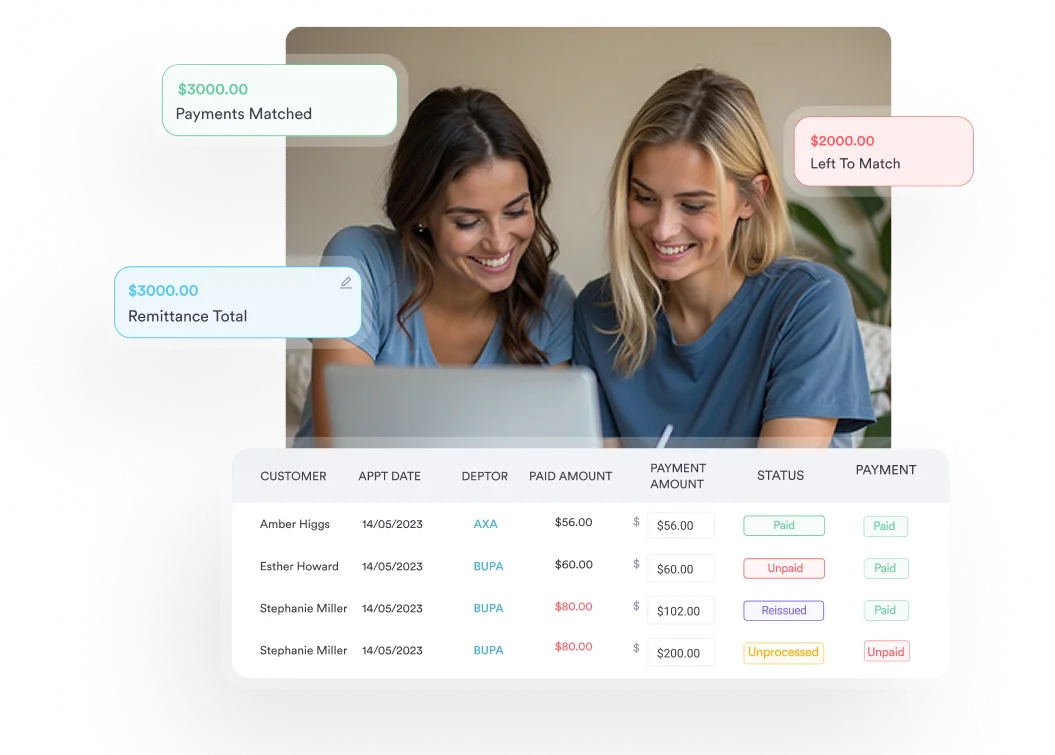
For behavioral health practices billing H2020 across multiple beneficiaries and service days, the practical gains come from three areas. First, digital intake forms and daily note templates keep documentation structured, so clinical records hold up during a Medicaid audit.
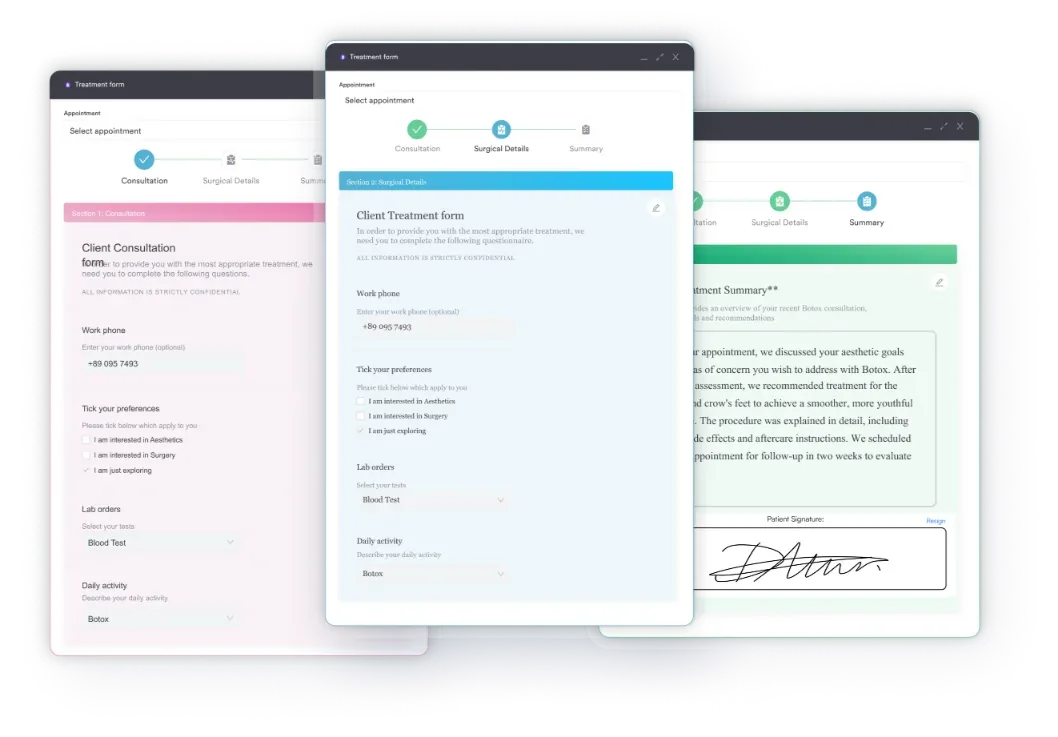
Second, denial tracking by code lets billing managers spot patterns. If H2020 denials cluster around a missing modifier or an expired authorization, the reporting surface makes that visible quickly. Third, integrating scheduling with billing ensures every attended service day generates a corresponding billing record, so services delivered and services billed stay aligned.
Pabau’s healthcare CRM and workflow tools also serve multi-specialty practices that run behavioral health service lines alongside other specialties. That connects clinical documentation directly to claim submission. Practices billing H2020 alongside other service lines get consolidated reporting that tracks behavioral health claim performance next to other revenue streams.
Keeping HIPAA-compliant records for per-diem services requires both secure storage and audit-ready documentation structure. A HIPAA compliance checklist tailored to your practice type is a useful starting point for confirming your documentation workflows meet Medicaid and HIPAA requirements simultaneously.

Pabau helps behavioral health practices manage per-diem claims, maintain compliant daily documentation, and track denial patterns across codes like H2020, so billing teams spend less time on rework and more time on care.

HCPCS code H2020 is straightforward in its descriptor but demanding in its billing requirements. Per-diem structure, state-specific Medicaid rules, modifier requirements, and daily documentation obligations combine to create a code that rewards careful pre-submission process design. The practices that bill it cleanly are the ones that have built those checks into their daily workflow rather than relying on post-denial corrections.
Pabau’s claims management tools give behavioral health billing teams visibility into H2020 submissions and denial patterns by code. They also help maintain compliant documentation from intake through claim closure. To see how Pabau supports behavioral health billing workflows, book a demo with our team.

Billing other Medicaid behavioral health services? T1040 covers Medicaid community behavioral health clinic billing rules and rate structures.
Managing long-term residential behavioral health billing? H0019 walks through per-diem billing rules for residential treatment programs.
Coding partial hospitalization services? S0201 explains the per-diem billing structure for partial hospitalization programs.
Billing a home health therapy visit? G0157 covers PTA-delivered home health billing requirements.
HCPCS code H2020 is a Level II HCPCS code with the official descriptor “Therapeutic behavioral services, per diem.” It is used primarily in Medicaid billing to report a full day of therapeutic behavioral health services delivered in a day treatment program. One unit of H2020 equals one full service day, regardless of the number of individual activities provided within that day.
Bill one unit of H2020 per calendar day of service. Append any required modifiers (such as HE for mental health or HF for substance use disorder programs) per your state Medicaid or MCO requirements. Include a valid prior authorization number if required, link the claim to a current ICD-10-CM diagnosis, and confirm daily documentation is complete before submission. Never bill multiple units on a single date of service.
H2020 is covered primarily by Medicaid. Medicare does not include H2020 in the standard Physician Fee Schedule, and it is generally not a covered Medicare service. Some commercial managed care contracts may include H-codes, but this is uncommon. Always verify coverage with the specific payer before billing.
There is no single national reimbursement rate for H2020. Rates are set by each state Medicaid program and vary by MCO contract, program type, and fiscal year. To find the current rate for your state, consult your state Medicaid provider fee schedule or your MCO’s published rate table. The CMS Physician Fee Schedule lookup tool can confirm whether a federal rate exists.
H2019 bills therapeutic behavioral services in 15-minute increments, while H2020 bills the same services on a per-diem (full-day) basis. The correct code depends on which billing unit structure your state Medicaid program or MCO uses for your specific program type. Using H2020 when the payer expects H2019 time units, or vice versa, typically results in a denial.
Each billed service day needs a daily progress note. It should show the date of service, a supported ICD-10-CM diagnosis, a medical necessity statement, and a description of services delivered. It also needs documented attendance, a clinician’s signature, and evidence the care matches the treatment plan. Incomplete daily documentation is the most common trigger for post-payment recoupment audits on per-diem behavioral health claims.



