CCSD code H4430: Examination of rectum under anaesthetic
CCSD code H4430 pays for the examination alone CCSD code H4430 is the UK private...

Last Updated: Oct 20, 2026
H2000 is the HCPCS Level II code for comprehensive multidisciplinary evaluation.
HCPCS Level II codes are maintained by the Centers for Medicare and Medicaid Services (CMS), which publishes annual updates to the code set. H2000 falls into the H-series, a section reserved for mental health and substance use disorder services billed to Medicaid and certain other public payers.
Let Pabau's smart automation suggest the right codes, reduce claim denials, and keep your practice compliant—effortlessly.
Automate repetitive tasks and focus on what matters most—your patients.
Reduce coding errors and ensure compliance with the latest regulations.
Clean claims, fewer denials, and faster reimbursements.
Powerful insights and reporting to help your practice thrive.
HIPAA compliant SOC 2 certified GDPR-compliant Trusted by 4,000+ clinics worldwide

HCPCS code H2000 describes a comprehensive multidisciplinary evaluation for behavioral health and substance use disorder settings, effective since 2003.
H2000 is billed primarily to Medicaid. Medicare does not usually reimburse it directly, and coverage rules vary by state program.
Missing modifiers and thin documentation of multidisciplinary team involvement are the two most common reasons H2000 claims get denied.
Pabau’s claims management software supports behavioral health billing with HCPCS code libraries, modifier prompting, and H2000 documentation templates.
H2000 covers a comprehensive multidisciplinary evaluation, meaning an assessment run by a team of qualified professionals rather than one clinician working alone. Payers treat team involvement as a condition of payment. A solo psychiatrist running an initial evaluation bills a different code. H2000 captures the work done when several disciplines contribute to one coordinated assessment.
Services commonly captured under a comprehensive multidisciplinary evaluation include:
H2000 applies in behavioral health programs and substance use disorder treatment facilities where team-based care is standard practice. It is not intended for routine single-clinician outpatient evaluations, which typically use CPT evaluation and management codes instead.
State Medicaid programs decide who can bill H2000, and the eligible provider list changes from state to state. Most states recognize the provider types below, but confirm your own state Medicaid provider manual before billing. A mental health EMR that surfaces payer-specific eligibility rules takes the guesswork out of that check.
Several states also require the billing provider to hold specific licensure credentials or to work inside a state-certified behavioral health program. Check the exact credential and program certification requirements before you submit H2000 claims.
Incomplete documentation is the leading cause of H2000 claim denials. Auditors look for evidence that a multidisciplinary evaluation happened, beyond confirmation that some evaluation took place. Digital clinical forms mapped to H2000 requirements capture that evidence at the point of care. Structured templates also keep protected health information handled correctly, which supports HIPAA compliance across the whole documentation workflow.
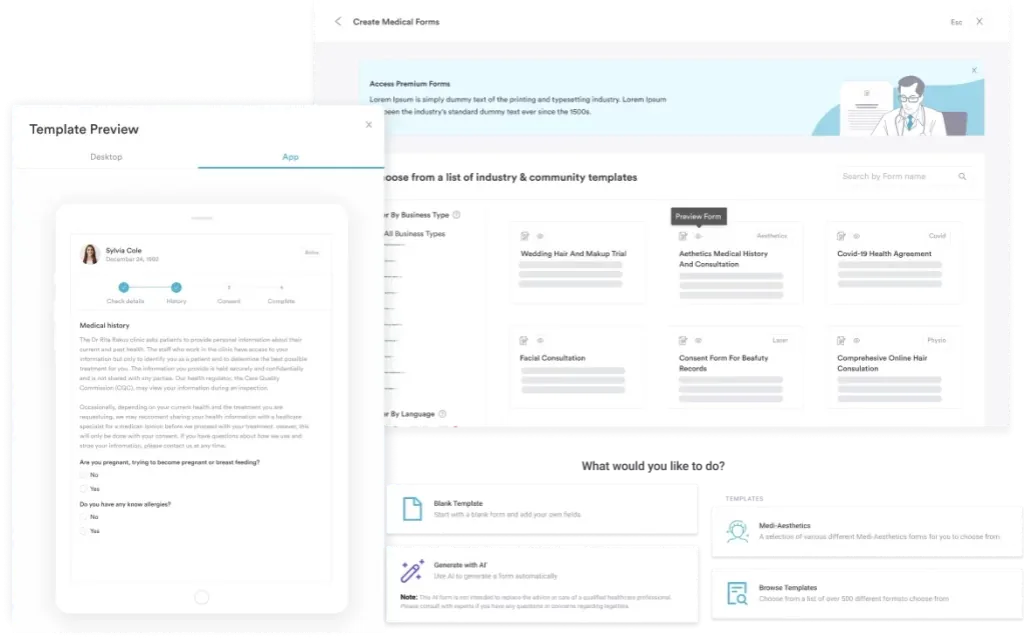
The following documentation elements must be present to support a clean H2000 claim:
Generic EMR note templates often produce documentation that satisfies clinical standards but falls short of billing standards. Templates built for H2000 prompt for multidisciplinary team involvement, which makes audit defense straightforward.
Strong patient data security matters just as much in behavioral health. H2000 evaluations often involve substance use and psychiatric records covered by 42 CFR Part 2. Those federal confidentiality rules sit on top of standard HIPAA requirements.
Modifiers tell the payer more about the service you billed. State Medicaid programs commonly require several of them on H2000 claims, and which ones apply varies by state. The table below covers the modifiers most often paired with H2000. Verify the requirements in your state Medicaid provider manual before submitting, using an HCPCS code reference as a starting point.
The state-specific U-series modifiers (U1 through U9) are the hardest part of H2000 modifier logic. They are not universal. A modifier required in Ohio may not exist in California’s Medicaid system, and an incorrect state modifier is a fast path to denial.
When in doubt, ask your Medicaid managed care organization (MCO) or behavioral health organization (BHO) for guidance specific to your state and program type. Keep their answer on file, because U-series definitions get revised between fee schedule updates.
Billing H2000 accurately means combining universal claim requirements with payer-specific rules. Claims management software with built-in HCPCS code libraries catches modifier omissions and place-of-service mismatches before the claim leaves the practice. Compliance management workflows keep billing aligned with payer requirements as Medicaid policies change through the year.
Follow these steps when submitting an H2000 claim:
Many Medicaid managed care organizations require prior authorization for comprehensive evaluations. Skip that step and the claim is denied automatically, however good the documentation is. Build a prior-auth check into intake, before the evaluation appointment is scheduled.
Each state Medicaid program sets its own H2000 reimbursement. There is no single national fee schedule for H2000, the way there is for Medicare Physician Fee Schedule codes. Rates move with the state, the program type, and sometimes the MCO administering the benefit. The table below shows representative ranges from published behavioral health fee schedules. Verify current rates with your state Medicaid agency or MCO before you rely on them. The Medicare Benefits Schedule sets its own item structure, so a US code has no direct Australian counterpart.
Use the CMS Physician Fee Schedule lookup as a reference point for comparable codes. Then check your state Medicaid agency’s published behavioral health fee schedule directly. Most agencies post annual updates on their provider portal. The ranges above reflect general industry figures for 2026, so confirm them before using them in revenue projections.
H2000 is a Medicaid code. That matters most for providers who mainly bill Medicare and meet this code while treating dually eligible patients, meaning people enrolled in both programs.
Medicaid coverage. Most state Medicaid programs cover H2000 for behavioral health and substance use disorder evaluations. The claim has to come from an enrolled provider, with the right documentation and modifiers attached. Coverage rules, prior authorization requirements, and rate-setting all vary by state.
Practices billing H2000 in more than one state end up managing a separate fee schedule and modifier set for each Medicaid program.
Medicare coverage. Medicare keeps no fee schedule entry for H2000 and generally does not reimburse it directly. Under Part B the code carries a pricing indicator of 00, meaning the service is not separately priced. For dually eligible patients, the evaluation is usually billed under CPT codes Medicare does recognize.
When a patient holds both Medicare and Medicaid, confirm with both programs which payer is primary for that specific service before you submit. EHR integration that tracks payer eligibility in real time cuts down on dual-eligibility billing errors.
Check payer eligibility at every patient visit, not only at initial intake. Medicaid enrollment status can change month to month. A patient covered on the day of the H2000 evaluation may have lost coverage or switched MCOs by the time you submit. Real-time eligibility verification catches that before it turns into a denial.
H2000 denials cluster around a predictable set of errors. Catching them before submission costs far less time than working a denial queue afterward. Systematic pre-submission checks also lighten the admin load on clinical staff, which is one driver of clinician burnout in behavioral health settings.
H2000 sits within a broader set of behavioral health codes. Knowing the adjacent codes prevents upcoding errors and helps you pick the right code for each service. The table below lists codes billed alongside or instead of HCPCS code H2000, with guidance on when each applies.
Use the PGM Billing HCPCS lookup tool to verify current code status and descriptions before billing.
Programs that bill H2000 for the initial evaluation often bill H2031 or H2024 for the ongoing services for the ongoing services that follow it.
Practices serving Medicaid, Medicare, and commercial plans need both HCPCS and CPT coding in the same billing workflow. One system prevents two common errors. The first is billing H2000 to a payer that ignores H-series codes. The second is billing CPT codes to a Medicaid program that expects H-series codes for behavioral health.
Structured clinical intake forms capture the data both code families need, starting at the first patient encounter.
Behavioral health billing asks for more documentation than most other specialties. An H2000 claim needs evidence of team-based care, the right modifier stack, and a payer-specific prior authorization trail. Generic practice management tools handle none of that automatically.
Purpose-built behavioral health platforms, and all-in-one systems with configurable billing rules, build the compliance layer directly into the clinical workflow instead.
Practice management software like Pabau supports behavioral health billing teams in several practical ways around H2000 documentation and claim submission:
Practices running psychiatry practice management alongside behavioral health programs get one platform for both CPT and HCPCS billing. Pabau’s behavioral health documentation workflows link the clinical record straight to the claim. The evidence an auditor wants is already attached when it goes out.
For multi-clinician teams, capturing each member’s contribution at the point of care removes the post-visit cleanup that delays submission. Your billers work from a note that is already complete.

Pabau’s claims management tools include HCPCS code libraries, modifier prompting, and documentation templates built for behavioral health workflows. Catch errors before claims go out the door.

Run a quarterly audit of your H2000 claims, comparing your documentation templates against the current state Medicaid provider manual. Behavioral health billing rules change often between fee schedule releases. Two hours of review can surface the modifier or documentation errors that are quietly costing you money across dozens of claims.
H2000 pays well for behavioral health and substance use disorder programs, but it asks more of your billing process than a single-clinician evaluation code does. Team documentation, state-specific modifiers, and a Medicaid-first payer structure all have to line up on the same claim.
So fix the workflow rather than the individual claim. Build the modifier check, the prior-auth check, and the team-documentation prompt into steps your staff already follow. Do that and the denial queue stops being a monthly job.
Pabau connects HCPCS code libraries, modifier prompting, and documentation templates in one workflow, so your team can bill H2000 accurately without extra admin. Book a demo to see how it fits your practice.

Coding a postpartum depression diagnosis? Postpartum depression ICD-10 code explains how F53.0 differs from transient baby blues after childbirth.
Billing an unspecified behavioral syndrome? F59 billing guide covers billability, documentation rules, and the crosswalk for related F50 to F59 codes.
Billing per diem services after the evaluation? T1020 covers the per diem rules, units, and documentation that keep those claims clean.
Coding a borderline personality diagnosis? Borderline personality disorder code covers how F60.3 avoids denials where documentation overlaps with mood or trauma disorders.
Coding a psychosexual presentation? Other sexual disorders code explains when F66 applies as a residual code in the F60 to F69 block.
HCPCS code H2000 is the billing code for a comprehensive multidisciplinary evaluation in behavioral health and substance use disorder settings. It is a HCPCS Level II code that has been active since 2003. Practices use it to bill Medicaid for team-based assessments carried out by qualified behavioral health professionals.
H2000 is primarily a Medicaid code. Most state Medicaid programs cover it for behavioral health evaluations when an enrolled provider bills it with the right documentation and modifiers. Medicare generally does not reimburse H2000 directly. For Medicare patients, practices typically bill the equivalent CPT codes 90791 or 90792 instead.
An H2000 claim needs a signed evaluation report that demonstrates multidisciplinary team involvement. Each team member’s name, credentials, and role has to be documented. The record must also carry the presenting problem, assessment findings from each discipline, and a medical necessity justification. Finish with the treatment plan or recommendations the team developed.
Common modifiers for H2000 include HQ for a group setting and HN for a bachelor’s-level clinician. HA covers a child and adolescent program, and HF covers a substance abuse program. State Medicaid programs may also require U-series modifiers, U1 through U9, which vary by state. Confirm the requirements with your state Medicaid provider manual before submitting.
H2000 reimbursement rates are set by each state Medicaid program. Fee-for-service rates typically run from $150 to $350 per encounter, though the figure varies a lot by state. Medicaid managed care organizations set their own rates through individual contracts. There is no national fee schedule for H2000, so verify current rates with your state agency or MCO.
H2000 covers a comprehensive multidisciplinary evaluation that requires input from several qualified clinicians. H0031 covers a mental health assessment conducted by a single non-physician clinician. Use H2000 when the evaluation involves coordinated team input. Use H0031 for individual non-physician assessments with no multidisciplinary team involved.