

HCPCS code E0198: Water pressure pad billing guide
HCPCS code E0198 is a water pad for a standard mattress HCPCS code E0198 is the ...

Last Updated: Oct 13, 2026
H2024 is the HCPCS Level II code for supported employment, per diem.
The code sits alongside H2023, which covers the same services in 15-minute units. Choosing between the two is where most supported employment denials start. Behavioral health billers and mental health EMR teams should settle the unit rule before the first claim goes out.
H2024 sits in the H-series of HCPCS Level II, the range the CMS HCPCS code set reserves for mental health and substance abuse services. The Centers for Medicare and Medicaid Services maintains the code and updates it every year.
Let Pabau's smart automation suggest the right codes, reduce claim denials, and keep your practice compliant—effortlessly.
Automate repetitive tasks and focus on what matters most—your patients.
Reduce coding errors and ensure compliance with the latest regulations.
Clean claims, fewer denials, and faster reimbursements.
Powerful insights and reporting to help your practice thrive.
HIPAA compliant SOC 2 certified GDPR-compliant Trusted by 4,000+ clinics worldwide

HCPCS Code H2024 covers supported employment services billed per diem, meaning one unit for each calendar day of service.
Medicaid funds H2024 and Medicare Part B does not reimburse it under standard circumstances. Rates are set state by state.
The most common error is confusing H2024 with H2023, which bills in 15-minute units. The wrong unit triggers denials or recoupments.
Several states will only pay H2024 to providers certified under the Individual Placement and Support model.
Pabau’s claims management software helps behavioral health practices track Medicaid authorizations, apply correct modifiers, and keep H2024 documentation audit-ready.
The official code descriptor is concise: “Supported employment, per diem.” That brevity hides a lot of billing complexity. The table below summarizes the key parameters coders need before submitting a claim.
Per diem means one unit of H2024 covers a full day of supported employment services, not a set block of time. H2023 is the 15-minute alternative. Submitting two units of H2024 for one calendar day is a billing error, unless the state Medicaid plan explicitly allows it.
H2024 covers vocational rehabilitation activities for individuals with serious mental illness (SMI) or developmental disabilities. Every billed activity has to help the individual obtain, maintain, or advance in competitive integrated employment.
Note that the specific activities billable under H2024 may vary by state Medicaid plan. Some states limit coverage to certain phases of supported employment (for example, covering job development but not benefits counseling). Always verify with the relevant state Medicaid billing manual before submitting claims.
Provider eligibility for H2024 is the most state-dependent part of this code, and there is no national provider type requirement. Two things hold everywhere. The provider must be enrolled in Medicaid, and the services must sit inside a state-authorized supported employment program.
Providers who commonly bill H2024 – depending on state Medicaid qualifications – include:
Several states will only accept H2024 claims from providers certified under the Individual Placement and Support model, or from those working inside a certified program. Treat that certification as a billing prerequisite rather than a quality badge. Practices running psychiatry EMR software alongside Medicaid billing should confirm their status with the state agency first. A superbill form is not a claim form, but it carries the same data the patient insurer will ask for.
Before billing H2024, verify your organization’s Medicaid enrollment status and any state certification requirements for supported employment programs. Call your state Medicaid provider relations line, or check the state billing manual. Requirements differ by state and change with plan updates.
H2024 is Medicaid-funded, and Medicare Part B does not cover it under standard circumstances. That matters most for dual-eligible patients, where teams sometimes bill Medicare out of habit. When a patient carries both, supported employment services under H2024 go to Medicaid only.
Reimbursement rates are set by each state’s Medicaid program and vary widely. There is no CMS-published national fee schedule rate for H2024 (unlike Medicare Part B services billed via the CMS Physician Fee Schedule). Managed care organizations (MCOs) that administer Medicaid in many states may set their own rates within state-negotiated parameters.
The table below reflects published per diem rates from selected state Medicaid programs. The figures show how wide the variation runs. Rates change annually, so verify the current one with your state Medicaid agency or MCO before you bill.
Prior authorization is required in many states before services begin. Some state Medicaid programs require an individualized supported employment plan to be approved before any H2024 claims are payable. Check the state-specific billing manual for authorization procedures.
Clean H2024 claims come down to unit logic, place of service, and payer-specific rules. The steps below reflect general Medicaid practice, so confirm plan specifics in your state’s billing manual. The AAPC HCPCS lookup is a quick way to check code parameters before submission.
Modifier applicability for H2024 varies by state Medicaid plan. The table below lists modifiers commonly associated with H-series supported employment codes. Requirements change with plan updates, so verify them against the state billing manual or the MCO contract each year.
Supported employment claims are among the most frequently audited Medicaid behavioral health services. Per diem billing without solid documentation is the fastest path to a recoupment demand.
HIPAA-compliant documentation is the baseline, and state Medicaid rules for H2024 usually ask for more than that. Structured clinical notes and digital intake forms produce the daily record an auditor looks for.
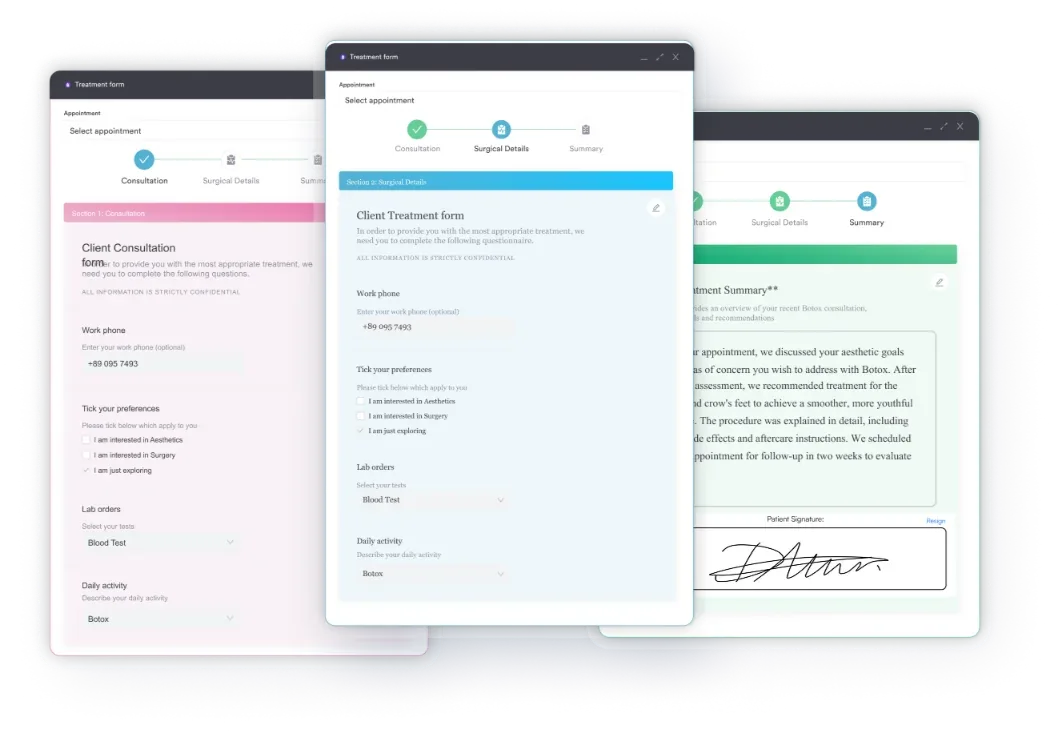
Required documentation typically includes:
Behavioral health codes billed alongside H2024 share much of this standard, including the ADHD screening CPT code. The service-note requirements for H2024 go further than most outpatient codes. Do not reuse a standard therapy note format for supported employment claims without checking your state’s rules first.
H2024 sits in a cluster of supported employment codes that split by billing unit and by service phase. Reading across them before you submit prevents the error that drives most denials here, which is billing the wrong unit type.
The H2023 and H2024 split is where most billing errors occur. If the state Medicaid plan pays per 15-minute unit, H2023 applies. If it pays a daily rate regardless of service hours, H2024 is correct. Automated claims edits will not always catch a mismatch between the two. Auditors will.
Unit type also separates H2024 from the wider set of Medicaid community supports. H0044 bills supported housing on a monthly unit, a third pattern to track when a client receives both. Coaching CPT codes sometimes land on the same date of service, so confirm with the payer whether concurrent billing is allowed.
H-series codes like H2024 carry a documentation burden that generic billing platforms handle poorly. Per diem billing needs a daily service note for every billed date, authorization tracking across service periods, and modifier logic that shifts by state. Errors pile up when that work is manual, split across spreadsheets, paper notes, and a separate billing portal.
Practice management software like Pabau keeps the clinical note and the claim in one record. Pabau’s claims management software tracks Medicaid authorization numbers and expiry dates. It flags claims missing a required modifier before they leave the practice, and ties each per diem service note to the patient record.
Pabau’s automated workflows then cross-check authorization status against every date of service before a batch goes out. That takes away the end-of-month reconciliation that per diem billing usually pushes onto a coder.
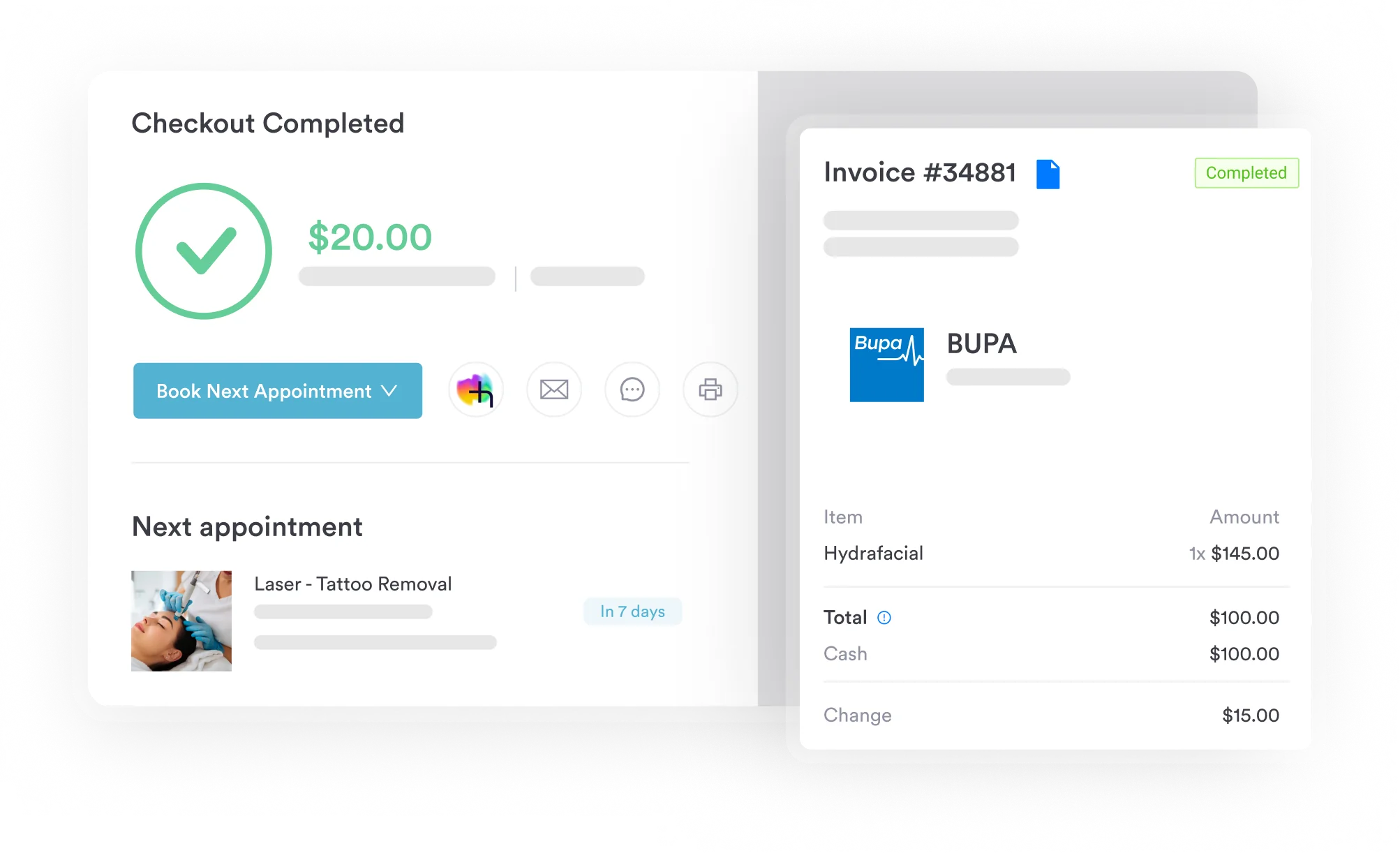
When several staff bill H2024 across a caseload, audit-readiness matters as much as code accuracy. Pabau’s client records keep daily service notes, authorization documents, and credential verification in one searchable place. That is the structure auditors expect from a supported employment claim.
Audit your H2024 claims monthly before submission. Check that each one has a matching daily service note, an active authorization number, and the correct modifier for your state. Catching mismatches early prevents denial chains that take 60 to 90 days to resolve.

Pabau’s claims management tools help behavioral health practices track Medicaid authorizations, apply correct modifiers, and maintain audit-ready documentation for H-series HCPCS codes.

Nearly every H2024 problem starts with the unit rather than the service itself. Settle how your state pays for supported employment before the first claim goes out, and the remaining rules become routine.
Practices that avoid recoupments write the daily service note on the day of service and keep the authorization number attached to it. An audit then becomes a retrieval exercise instead of a reconstruction.
That discipline is far easier to hold when the note, the authorization, and the claim sit in one record. Book a demo to see how Pabau handles Medicaid behavioral health billing end to end.

Need the 15-minute behavioral health equivalent? H2019 covers therapeutic behavioral services in time units, with its own documentation standard.
Running a day treatment program? H2012 sets out behavioral health day treatment billing and the denial triggers that come with it.
Starting from the intake assessment? H0031 covers the mental health assessment that usually opens a supported employment episode.
Billing prevention services as well? H0025 covers behavioral health prevention education and how states set its units.
HCPCS Code H2024 is a HCPCS Level II H-series code that describes supported employment services billed on a per diem (daily) basis. Behavioral health providers and vocational rehabilitation agencies use it to bill Medicaid for job placement, job coaching, and employment support. It applies to individuals with serious mental illness or developmental disabilities.
H2024 is covered by Medicaid only. Medicare Part B does not cover this code under standard circumstances. For dual-eligible patients (those with both Medicare and Medicaid), supported employment services under H2024 must be billed to Medicaid, not Medicare.
H2023 bills supported employment services in 15-minute increments, while H2024 bills on a per diem (one unit per calendar day) basis. The correct code depends on how the state Medicaid plan reimburses. If the plan pays a daily rate regardless of service hours, use H2024. If the plan pays by time unit, use H2023. Mixing these codes to the wrong state billing structure is a common denial cause.
Required documentation includes an individualized supported employment plan, prior authorization records, and periodic progress notes toward employment goals. You also need a daily service note for each billed date, covering the activities, staff credentials, and participant response. Specific requirements vary by state Medicaid program and are frequently audited.
Common modifiers include HQ (group setting), HN (bachelors-level staff), HO (masters-level staff), TF (intermediate level of care), and state-specific U-series modifiers. Modifier requirements vary widely by state Medicaid plan. Verify the current ones against the state billing manual or the managed care organization contract.
Most state Medicaid programs require POS 99, Other Place of Service, for H2024 claims. Supported employment happens at employer sites and in the community rather than inside a practice. Some states specify a different POS code, so confirm with the state Medicaid billing manual before submitting.
Prior authorization is required in many state Medicaid programs, though not all of them. Some states also require an approved individualized supported employment plan before any claims are payable. Contact your state Medicaid provider relations office or review the state billing manual to confirm authorization requirements before services begin.



