

CCSD code G5100: Bypass of duodenum billing guide
CCSD code G5100 bills a bypass that leaves the duodenum in place CCSD code G5100...

Last Updated: Oct 16, 2026
E0424 is the HCPCS Level II code for stationary compressed gaseous oxygen system, rental; includes container, contents, regulator, flowmeter, humidifier, nebulizer, cannula or mask, and tubing.
Let Pabau's smart automation suggest the right codes, reduce claim denials, and keep your practice compliant—effortlessly.
Automate repetitive tasks and focus on what matters most—your patients.
Reduce coding errors and ensure compliance with the latest regulations.
Clean claims, fewer denials, and faster reimbursements.
Powerful insights and reporting to help your practice thrive.
HIPAA compliant SOC 2 certified GDPR-compliant Trusted by 4,000+ clinics worldwide

HCPCS Code E0424 covers stationary compressed gaseous oxygen system rental, including container, regulator, flowmeter, humidifier, nebulizer, cannula or mask, and tubing.
Medicare pays for E0424 for up to 36 consecutive months; after the cap, the supplier must continue providing equipment at no charge to the beneficiary.
Modifier KX is required on every E0424 claim to attest that the required documentation is on file and medical necessity criteria are met.
Pabau’s claims management software helps DME suppliers track rental periods, attach documentation, and reduce E0424 denials before claims are submitted.
HCPCS Code E0424 is the billing code for a stationary compressed gaseous oxygen system rental. According to the Centers for Medicare and Medicaid Services (CMS), the full descriptor is: Stationary compressed gaseous oxygen system, rental; includes container, contents, regulator, flowmeter, humidifier, nebulizer, cannula or mask, and tubing.
Every item in that list is bundled into the single monthly rental payment. Billing separately for the humidifier, cannula, or tubing while also billing E0424 is unbundling and will trigger an edit.
The code belongs to the HCPCS Level II range E0424 through E0493, which covers oxygen delivery systems and related supplies. E0424 falls under the Durable Medical Equipment category and is billed to Medicare Part B by accredited DMEPOS suppliers. The same DMEPOS accreditation and rental-billing framework governs other support-surface DME.
One quick clarification, because it trips up a lot of searches: E0424 is a HCPCS Level II code, not a CPT code. You’ll often see it typed as the E0424 CPT code, or people hunting for the E0424 CPT code description, but CPT codes cover physician procedures and services. Durable medical equipment like a rented oxygen tank is always coded in HCPCS Level II, so the descriptor you want is the CMS one quoted above. It is also a different billing scenario from hyperbaric oxygen therapy (G0277), which reimburses supervised in-facility HBOT sessions rather than home oxygen equipment rental.
The E0424 monthly rental payment is a comprehensive bundle. Suppliers receive one fixed amount per month that covers all of the following:
Critically, Noridian’s JD DME guidance confirms that portable oxygen contents are also bundled into this payment. If a beneficiary uses both stationary and portable oxygen, the monthly E0424 payment already accounts for portable oxygen contents. Suppliers cannot bill separately for portable contents while billing E0424 as the base stationary code.
Medicare Part B covers home oxygen therapy under National Coverage Determination (NCD) 240.2 when medical necessity is documented. Coverage is not automatic: the beneficiary must meet clinical thresholds, and the supplier must hold the supporting documentation before billing.
The standard medical necessity criteria for home oxygen therapy require that the beneficiary’s blood oxygen level falls at or below specific thresholds under resting, exercise, or sleep conditions. Meeting patient compliance in home care settings requirements is also part of ongoing coverage: if a beneficiary stops using the equipment, the supplier must adjust billing accordingly. The ordering physician documents medical necessity in the patient’s medical record and issues a Standard Written Order (SWO), which must be completed, signed, and retained before the first claim is submitted. (CMS discontinued the Certificate of Medical Necessity (CMN) form for dates of service on or after January 1, 2023.) Patients paying up front and claiming later need a superbill, which itemizes the service, the code and the charge. Denial codes in medical billing group the reasons a payer refuses, and the group decides the fix.
Only Medicare-enrolled, DMEPOS-accredited suppliers may bill E0424. CMS DMEPOS Quality Standards require suppliers to demonstrate organizational, delivery, and service standards before receiving a supplier number. Billing without proper accreditation results in claim rejection and can trigger a voluntary refund demand if claims have already paid.
The table below summarizes the key modifiers and related codes used alongside HCPCS Code E0424 in Medicare DME billing.
With software for managing patients, DME prescriptions stay linked to the assessments that justified them.
Poor documentation is the leading cause of E0424 denials and post-payment audits. Every claim requires a complete audit trail maintained by both the supplier and the ordering physician. Maintaining HIPAA-compliant clinical documentation is not optional: CMS contractors review records on both pre-payment and post-payment bases, and missing documents result in full recoupment.
The Standard Written Order (SWO) and supporting medical record are the cornerstone of E0424 documentation. The treating practitioner signs the SWO and documents that the beneficiary meets the clinical criteria for home oxygen. The order and medical record must specify the prescribed flow rate (in liters per minute), whether oxygen is required at rest, during exercise, or during sleep, and the duration of need. Suppliers must retain this documentation and make it available to the MAC upon request. Note that CMS discontinued the Certificate of Medical Necessity (CMN) form for dates of service on or after January 1, 2023; claims submitted with CMN information are rejected.
Switching to digital intake forms for order intake and renewal workflows reduces the risk of unsigned or incomplete documentation reaching billing staff.
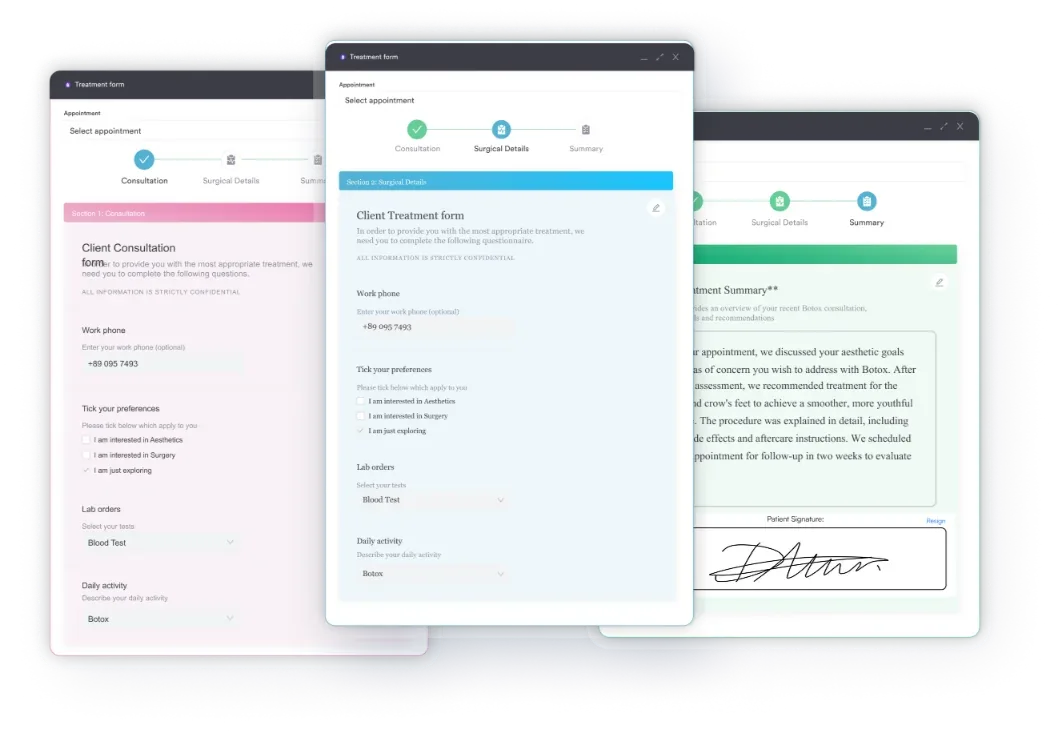
Keeping these records in a structured, searchable format makes audit response faster and less disruptive.
Run a monthly documentation audit before submitting E0424 claims. Pull every active rental account and confirm the SWO, oximetry test, and proof of delivery are on file for each beneficiary. Claims submitted without complete documentation are a known audit trigger for MAC contractors including Noridian and CGS.
Billing E0424 correctly requires understanding both the modifier stack and the billing frequency rules. CMS pays one monthly rental for the stationary system, and that payment encompasses all bundled equipment and both stationary and portable contents.
Modifier KX must appear on every E0424 claim submitted to Medicare. By appending KX, the supplier attests that the Local Coverage Determination (LCD) requirements are satisfied and that the supporting documentation, including a valid Standard Written Order (SWO) and qualifying test results, is on file. Claims submitted without KX are denied on edit. There is no grace period.
When a physician prescribes oxygen at a flow rate exceeding 4 liters per minute (LPM), a volume add-on payment applies to the E0424 base code. CMS Transmittal r2465cp addresses this specifically: the supplier appends modifier QG (flow rate greater than 4 LPM) – or QF when portable oxygen is also prescribed at greater than 4 LPM – to increase the monthly payment by 50 percent. Billers must verify the prescribed flow rate on the order before submitting standard-rate claims.
When a patient who is already receiving a stationary system under E0424 also needs portable oxygen for ambulation, a separate add-on payment is made using E0431 (portable gaseous system) or E0434 (portable liquid system). These portable codes are not included in the E0424 base payment – only the portable oxygen contents are bundled. The equipment itself (the portable unit) is billed separately.
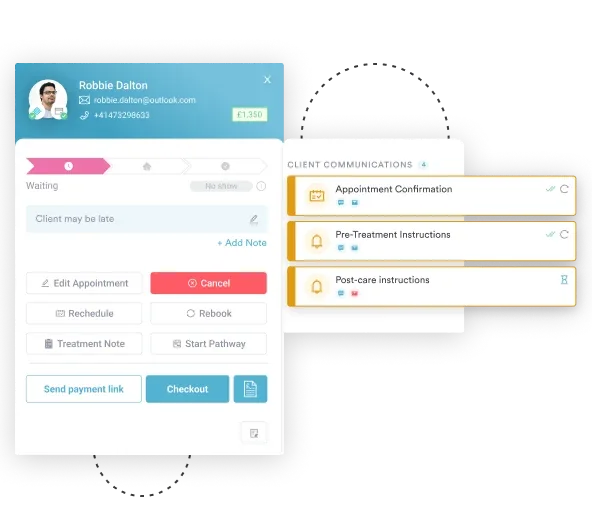

Pabau’s claims management tools help DME billing teams manage rental period tracking, modifier requirements, and order documentation across every active account, reducing denials before they reach the MAC.

The 36-month rental cap is the most consequential billing rule for E0424. Medicare pays for stationary oxygen equipment for a maximum of 36 consecutive months. After the final rental payment in month 36, the supplier’s financial relationship with Medicare for that equipment ends, but the supplier’s obligation to the patient does not.
For the following 24 months (months 37 through 60), the supplier must continue providing the same or equivalent equipment and necessary supplies at no charge to the beneficiary. Medicare does not reimburse for the equipment itself during this period, though it continues to pay separately for delivered oxygen contents and replacement accessories like cannulas and tubing that fall outside the capped equipment payment. MLN Matters article MM10837 outlines these post-cap obligations clearly. Suppliers who fail to continue service or who attempt to charge beneficiaries for the capped equipment face compliance risk under Social Security Act Section 1834(a).
The 36-month clock begins with the first month of rental. If a beneficiary transitions between suppliers during the rental period, the clock does not restart: the new supplier inherits the remaining rental months. Accurate tracking of rental start dates across all active accounts prevents inadvertent billing past the cap, which constitutes an overpayment.
Set a billing system alert at month 33 for every active E0424 account. Three months’ notice gives your team time to prepare the patient transition documentation, notify the beneficiary of the post-cap service obligation, and confirm the month-36 claim is submitted correctly. Missing the cap date creates overpayment exposure.
Here is how a clean month-one E0424 rental claim to the DME MAC is typically assembled. The base code carries the modifiers that confirm the item is a rental and that the medical-necessity documentation is on file:
Submit this same line each month through month 36, keeping the KX documentation current. Do not add separate lines for the humidifier, cannula, tubing, or portable oxygen contents; all of those are bundled into the single monthly payment. When QG or QF applies, the stationary payment increases by 50 percent for that month. Because DMEPOS rates vary by jurisdiction and by rural versus non-rural status and are updated quarterly, confirm the exact allowed amount by looking up E0424 on the current-year CMS DMEPOS fee schedule for the beneficiary’s locality.
Selecting the wrong stationary oxygen code is a common source of denials. The four stationary oxygen codes each represent a different delivery technology, and payers expect the billed code to match the actual equipment in the patient’s home.
E0424 covers stationary compressed gaseous oxygen (tanks or cylinders). E0439 covers stationary liquid oxygen systems. The distinction matters because the equipment type, maintenance requirements, and refill logistics differ. Bill the code that reflects what the supplier actually delivered and what the physician ordered. Billing E0439 when the patient has a gaseous system, or vice versa, triggers a claim edit and may constitute a false claim if the mismatch is systemic.
E1390 and E1391 cover oxygen concentrators, which generate oxygen from room air rather than storing compressed or liquid gas. A concentrator is a different device from a compressed gas system. Suppliers billing E0424 for a patient who actually has a concentrator are using the wrong code. Verify the equipment type on the delivery record before selecting the stationary billing code. The AAPC Codify HCPCS lookup provides code-level descriptors and modifier guidance to confirm the correct selection.
Many patients require both stationary and portable equipment. The stationary base code (E0424, E0439, E1390, or E1391) is billed for the home system. A separate portable equipment add-on code (E0431 for portable gaseous, E0434 for portable liquid, or K0738 for a home compressor portable system) is billed for the ambulatory equipment. The portable contents are already bundled in the stationary payment. Only the portable unit triggers a separate add-on payment.
Audit data from MAC contractors consistently identifies the same categories of E0424 errors. Understanding them in advance is far cheaper than responding to a post-payment review. You can verify current fee schedule rates using the CMS Physician Fee Schedule lookup tool and cross-reference code properties using the PGM Billing HCPCS lookup.
Billing teams that use structured compliance checklists for DME practices before submitting E0424 claims catch most of these errors before they reach the payer.
HCPCS Code E0424 generates significant Medicare volume for DME suppliers, and the compliance risk matches the billing volume. The 36-month cap, modifier KX requirement, documentation standards, and the bundling rules for portable contents create multiple points where a single process gap turns into a denial or an audit. Getting these right requires a systematic approach, not periodic manual checks.
Pabau’s practice management platform helps billing teams track rental periods, manage documentation requirements, and reduce claim errors across DMEPOS accounts. To see how Pabau handles DME billing workflows, book a demo.

Coding a congenital hair disorder? ICD-10 code Q84.1 covers congenital morphological disturbances of hair not elsewhere classified, valid for FY2026.
Coding memory loss that isn’t dementia? ICD-10 code R41.3 for amnesia covers memory impairment that does not meet the criteria for dementia or dissociative amnesia.
Coding an abnormal imaging finding? ICD-10 code R93.89 covers abnormal diagnostic imaging findings and the secondary code errors that trigger claim denials.
HCPCS Code E0424 covers the monthly rental of a stationary compressed gaseous oxygen system, including the container, oxygen contents, regulator, flowmeter, humidifier, nebulizer, cannula or mask, and tubing. All of these items are bundled into the single monthly rental payment. Portable oxygen contents used alongside the stationary system are also included in the E0424 payment per Noridian MAC guidance.
E0424 is a HCPCS Level II code, not a CPT code, even though it’s frequently searched as the E0424 CPT code. CPT codes describe physician procedures and services, while durable medical equipment such as a rented stationary oxygen system is coded only in HCPCS Level II. There is no E0424 entry in the CPT manual, so the descriptor billers are looking for is the HCPCS one: stationary compressed gaseous oxygen system, rental.
Medicare pays for E0424 for up to 36 consecutive months. After month 36, Medicare stops reimbursing for the equipment itself, but the supplier must continue providing the same equipment and necessary supplies to the beneficiary at no charge for an additional 24 months (months 37 through 60).
E0424 covers a stationary compressed gaseous oxygen system (cylinders or tanks), while E0439 covers a stationary liquid oxygen system. The correct code depends on the type of equipment actually delivered and ordered by the physician. Billing E0424 when the patient has a liquid system, or E0439 for a gaseous system, is a coding error that triggers claim edits.
Modifier KX is required on every E0424 claim to Medicare. It attests that the LCD requirements are met and that the required documentation, including the Standard Written Order (SWO), is on file. Modifier RR indicates the item is a rental, and modifier QG or QF applies when the prescribed flow rate exceeds 4 LPM. Claims submitted without KX are denied automatically.
Required documentation includes a completed, signed Standard Written Order (SWO) from the prescribing practitioner, arterial blood gas or oximetry test results, medical records supporting the diagnosis, and a proof of delivery signed by the beneficiary. (CMS discontinued the Certificate of Medical Necessity (CMN) form for dates of service on or after January 1, 2023.) Re-evaluation documentation is also required at required intervals, typically every 12 months, to support continued coverage.
The 36-month rental period begins with the first month of rental billing. The clock does not reset if the beneficiary changes suppliers: the new supplier inherits the remaining rental months from the previous supplier’s billing history.



