HCPCS code V2221: Lenticular bifocal lens billing guide
HCPCS code V2221 bills one lenticular bifocal lens at a time HCPCS code V2221 de...

Last Updated: Oct 19, 2026
L0636 is the HCPCS Level II code for lumbar sacral orthosis, sagittal-coronal control, lumbar flexion, rigid posterior frame/panels, lateral articulating design to flex the lumbar spine, posterior extends from sacrococcygeal junction to t-9 vertebra, lateral strength provided by rigid lateral frame/panels, produces intracavitary pressure to reduce load on intervertebral discs, includes straps, closures, may include padding, anterior panel, pendulous abdomen design, custom fabricated.
Every clause of the long descriptor doubles as a billing requirement. The dispensed device has to satisfy all of them.
The official CMS short descriptor is LSO SAGITTAL RIGID PANEL CUS. It drops the word coronal and shortens custom, so never treat it as the working definition of the code.
Let Pabau's smart automation suggest the right codes, reduce claim denials, and keep your practice compliant—effortlessly.
Automate repetitive tasks and focus on what matters most—your patients.
Reduce coding errors and ensure compliance with the latest regulations.
Clean claims, fewer denials, and faster reimbursements.
Powerful insights and reporting to help your practice thrive.
HIPAA compliant SOC 2 certified GDPR-compliant Trusted by 4,000+ clinics worldwide

HCPCS code L0636 covers a custom fabricated lumbar-sacral orthosis with sagittal-coronal control, extending from the sacrococcygeal junction to the T-9 vertebra.
Custom fabrication is mandatory for L0636. Bill L0637 or L0648 when the brace is prefabricated or off-the-shelf.
Medicare prices L0636 on the DMEPOS fee schedule, and prior authorization rules differ between the two DME MACs, Noridian and CGS.
Fabrication records, a face-to-face exam note, and a covered ICD-10 code are the three documents auditors ask for first.
Practice management software like Pabau ties the exam note, order, and delivery receipt to the claim, so audit prep takes minutes.
The most consequential distinction in LSO billing is how the brace was made. L0636 requires custom fabrication, which means the device is built from a mold or from direct measurement of one patient. The prefabricated version of the same design bills as HCPCS code L0635. Billing L0636 for an off-the-shelf brace is a coding error and a familiar audit trigger.
CMS treats custom fabrication as measuring the individual patient and building the device from those measurements. Adjusting a prefabricated brace does not qualify. The supplier file has to hold the measurements taken, the materials used, and the date of fabrication. That record is where medical billing compliance for orthotics usually falls down.
L0636 fits a patient with a lumbar or lumbosacral condition that needs both sagittal and coronal plane control. It also requires a reason why standard sizes cannot address that patient’s anatomy. These are conditions that chiropractic practices and orthopedic clinics see every week.
Post-surgical cases carry the clearest paper trail, since the operative report for a procedure such as 22802 already establishes the instability the brace is treating. For everything else, the burden sits with the exam note.
The treating physician has to say why a custom-fabricated orthosis is needed instead of a prefabricated one. Patient preference does not meet medical necessity under CMS policy. Recording the functional limitation on a functional status questionnaire gives the reviewer something measurable to read, and patient compliance documentation belongs in the same file.
The diagnosis codes below are the ones that most often support an L0636 claim. Each has to appear in the treating physician’s face-to-face examination notes and on the written order. Check them against the CMS ICD-10 code set and your DME MAC’s LCD, because covered lists vary by jurisdiction.
Two of these are miscoded constantly. M51.16 describes disc disorders with radiculopathy, while plain degeneration is M51.36. M47.816 is spondylosis without myelopathy or radiculopathy, so the code you want when radiculopathy is documented is M47.26.
ICD-10 code M54.5 (low back pain) was retired on October 1, 2021. Use the underlying condition instead. In physical therapy practice management workflows, tie the diagnosis code to the orthotic order in the patient record. That stops the two from drifting apart before an audit.
Audit your LSO claims quarterly. Pull every L0636 claim from the last 90 days and check each one against your DME MAC’s covered-diagnosis list. A retired code like M54.5 on a claim submitted after October 2021 is an automatic denial. It can also trigger recoupment on claims you were already paid for.
Medicare covers L0636 under Part B as durable medical equipment. The supplier needs current DMEPOS accreditation, and the claim has to meet the medical necessity criteria in the applicable DME MAC LCD.
Reimbursement comes from the CMS DMEPOS fee schedule, which is published quarterly and adjusted for geographic cost differences. Orthotic L-codes never appear on the physician fee schedule, and that is a common wrong turn. Check the current quarter’s file rather than quoting a rate from memory, because allowables move.
Documentation failures cause most L0636 denials and post-payment audits. The set is larger than for prefabricated LSO codes, because CMS wants evidence that custom fabrication was both justified and carried out. Structured medical forms built for orthotic documentation capture every element at the point of order.
Paperless clinical records hold the physician order, the fabrication record, and the delivery confirmation in one patient file. That alone cuts audit preparation from hours to minutes.
Most L0636 errors cluster around three things: fabrication evidence, code selection, and order timing. Each one is preventable at the point of service, and each one is expensive once a reviewer finds it. Good denial management starts by catching these before submission.
The LSO family is where upcoding and downcoding happen. The AAPC HCPCS code lookup lists the adjacent codes, but the two distinctions that decide the claim are fabrication type and control mechanism. If the brace runs higher up the spine, you are into TLSO territory and codes like codes like L0974.
The decision tree is short. Was the brace custom fabricated? If not, L0636 is out. If it was, does the design include lateral articulating sagittal-coronal control running from the sacrococcygeal junction to T-9? If yes, L0636 is your code. Choosing it inside practice management software at the point of order keeps the selection tied to the note that justifies it. When a claim on this code comes back unpaid, the denial reason codes on the remittance name the cause. Practices outside a payer network hand the claim work to the patient, so a superbill form has to be complete.
Before dispensing any custom LSO, confirm your DME MAC lists the planned ICD-10 diagnosis as a covered indication for L0636. LCDs change, so a diagnosis covered last year may carry different documentation requirements today. Noridian and CGS are the two DME MACs, and each publishes its own current LCD.
L0636 has more documentation touchpoints than most L-codes. Five things have to be captured at the time and retrievable on demand.
When those live in separate systems or paper files, audit preparation eats a day.
Practice management software like Pabau keeps them in one place instead. Our claims management software ties clinical documentation to the claim itself. Digital intake forms capture the face-to-face notes, order details, and medical necessity statement your reviewer will ask for.
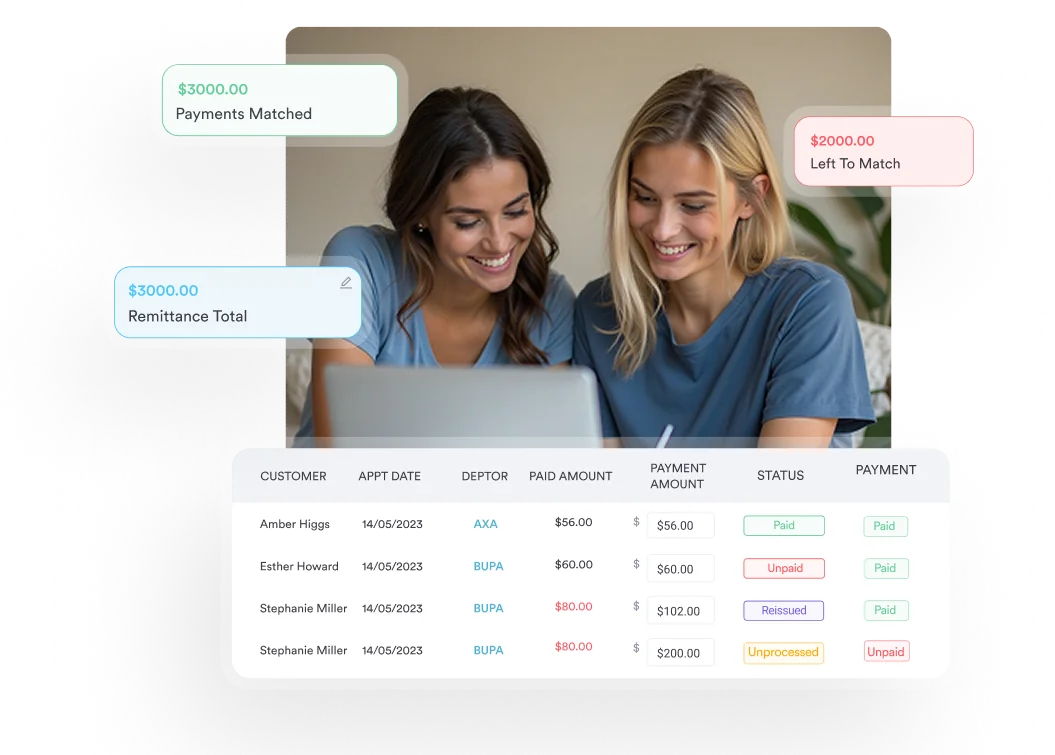
Claims then leave the practice through our Claim.MD integration, so the L0636 line, its diagnosis code, and its supporting documentation travel together. Scrubbing the claim before it goes out is what turns it into a clean claim rather than a resubmission three weeks later.
Multi-location orthotics practices have a harder version of the same problem. Centralized clinical documentation records put the lab’s fabrication data and the delivery receipt from the patient’s location in one file. That end-to-end visibility is what most L0636 audit failures are missing, because the paperwork usually exists but sits in three different places.
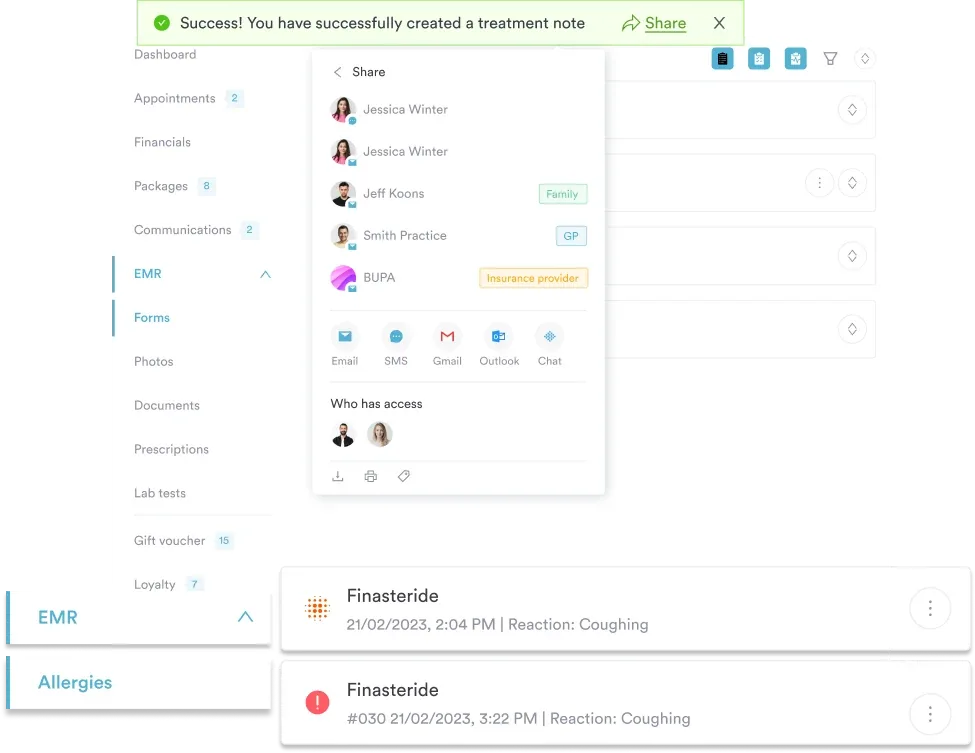

Pabau links clinical documentation to claim submission. Orthotics suppliers capture the exam note, the written order, and the fabrication record in one workflow, so L-code denials stop before they start.

L0636 is not a difficult code to select. The brace either matches the descriptor or it does not. What catches suppliers out is proving it nine months later, when a reviewer asks for records nobody filed at the time.
So decide now who owns the fabrication record and where it lives. If the answer is a named person and a patient file, your L0636 claims will survive review. The cost is a few extra minutes at the point of order, which is a trade worth making against a recoupment letter.
Practices that connect clinical notes to claim submission see fewer L0636 denials and settle audits faster. Book a demo to see how Pabau carries HCPCS documentation from the exam note through to a paid claim.

Billing a brace that runs above the lumbar spine? HCPCS code L0974 covers the TLSO full corset, the next code family up from L0636.
Need the surgical side of a post-fusion stabilization claim? CPT code 22802 explains posterior arthrodesis billing for spinal deformity.
Work across other DMEPOS supply codes? HCPCS code K0744 walks through the same supplier standards applied to wound suction dressings.
Coding a urinary tract infection instead? ICD-11 GC08 UTI guide classifies urinary tract infections with an unspecified site, replacing ICD-10 code N39.0.
Documenting a language disorder instead? ICD-11 MA80.0 aphasia guide classifies aphasia, the acquired language disorder that most often follows a stroke.
L0636 bills a custom fabricated lumbar-sacral orthosis (LSO) with sagittal-coronal control, a rigid posterior frame, and a lateral articulating design. The brace extends from the sacrococcygeal junction to the T-9 vertebra. Use it only when the device is built from that patient’s own measurements.
L0636 and L0637 describe the same device design. L0636 is custom fabricated from a patient mold or direct measurement, and L0637 is prefabricated in standard sizes. Custom fabrication must be evidenced by fabrication records, so billing L0636 for a prefabricated brace counts as upcoding.
Yes. Medicare Part B covers L0636 when the supplier holds active DMEPOS accreditation and the claim meets the DME MAC’s local coverage determination (LCD). The treating physician must supply a written order and a documented face-to-face examination. Prior authorization rules differ between Noridian and CGS, so check yours before dispensing.
You need a face-to-face examination note from the treating physician and a detailed written order naming L0636 and the supporting ICD-10 code. Add a medical necessity statement explaining why custom fabrication is required. The supplier file also needs fabrication records, a signed delivery receipt, and proof of active DMEPOS accreditation.
Common supporting codes include M51.36 for lumbar disc degeneration and M48.061 for lumbar spinal stenosis without neurogenic claudication. M43.16 covers lumbar spondylolisthesis, and M47.26 covers lumbar spondylosis with radiculopathy. M48.06 is a non-billable parent code, so always bill to the full character length. The retired code M54.5 must not be used, and your DME MAC’s LCD is the final word.
Not nationally. CMS does not mandate prior authorization for L0636, but an individual DME MAC can require it for custom-fabricated LSO claims. Noridian covers jurisdictions A and D, and CGS covers B and C. Confirm the current rule with your MAC before you submit.