HCPCS code V2221: Lenticular bifocal lens billing guide
HCPCS code V2221 bills one lenticular bifocal lens at a time HCPCS code V2221 de...

Last Updated: Oct 19, 2026
E0445 is the HCPCS Level II code for oximeter device for measuring blood oxygen levels non-invasively.
DME suppliers billing pulse oximeters face a code that looks straightforward on paper but carries significant coverage complexity in practice. HCPCS code E0445 covers non-invasive oximeter devices, yet reimbursement is not guaranteed. Medicare evaluates each claim on a carrier judgment basis, and missing a modifier or a single documentation detail can push a clean submission into a denial. Understanding how this code actually works, before submitting, is what separates predictable revenue from preventable write-offs.
Let Pabau's smart automation suggest the right codes, reduce claim denials, and keep your practice compliant—effortlessly.
Automate repetitive tasks and focus on what matters most—your patients.
Reduce coding errors and ensure compliance with the latest regulations.
Clean claims, fewer denials, and faster reimbursements.
Powerful insights and reporting to help your practice thrive.
HIPAA compliant SOC 2 certified GDPR-compliant Trusted by 4,000+ clinics worldwide

HCPCS code E0445 describes an oximeter device for measuring blood oxygen levels noninvasively, classified under Durable Medical Equipment (DME) in the Oxygen Delivery Systems and Related Supplies category.
Medicare coverage for E0445 is determined on a carrier judgment basis, meaning each DME MAC evaluates medical necessity individually. There is no national coverage determination that guarantees payment.
Modifiers RR (rental), NU (new purchase), and UE (used equipment) are commonly applied to E0445 claims. Modifier KX signals that documentation on file meets Medicare medical necessity requirements.
Pabau’s claims management software helps DME suppliers and billing teams track E0445 documentation, modifiers, and claim submissions to reduce denials.
HCPCS code E0445 is the Level II Healthcare Common Procedure Coding System code assigned to a non-invasive oximeter device used to measure blood oxygen saturation (SpO2) and pulse rate. The Centers for Medicare and Medicaid Services (CMS) maintains this code under the Oxygen Delivery Systems and Related Supplies category of Durable Medical Equipment, Prosthetics, Orthotics, and Supplies (DMEPOS).
The official long description reads: “Oximeter device for measuring blood oxygen levels non-invasively.” The short description used by many billing systems is “Oximeter non-invasive.”
A pulse oximeter measures oxygen saturation by passing two wavelengths of light through tissue (typically a finger, earlobe, or toe) and calculating the ratio of oxygenated to total hemoglobin. The device is non-invasive, requires no blood draw, and provides a continuous or spot-check reading of both SpO2 percentage and heart rate. Clinically, these devices are used to monitor patients with chronic respiratory conditions, sleep-disordered breathing, or post-operative oxygen requirements.
HCPCS code E0445 covers the device itself. It does not cover the probes or accessories separately billed under other codes, nor does it represent oxygen concentrators or delivery systems, which use a different code range within the same E-code category. A replacement probe for an oximeter the patient already has is reported under HCPCS code A4606.
The CMS DME fee schedule determines reimbursement for HCPCS code E0445, updating annually with rates that vary by locality and payment indicator. The figures below reflect the general national framework for 2026. Actual amounts paid will depend on the beneficiary’s DME MAC jurisdiction, whether the item is billed as a rental or purchase, and applicable competitive bidding program rules.
Current exact dollar amounts for your jurisdiction should be verified directly through the PGM Billing HCPCS lookup tool or by accessing your DME MAC’s local fee schedule. Rates in competitive bidding areas (CBAs) may differ significantly from non-CBA localities.
Medicare coverage for HCPCS code E0445 carries a “Carrier Judgment” (C) coverage code. That means there is no national coverage determination (NCD) for pulse oximeter devices under this code. Each DME MAC assesses coverage individually based on whether the device is medically necessary for the specific patient, supported by adequate clinical documentation.
Each of the four DME MACs (Palmetto GBA, Noridian Healthcare Solutions, CGS Administrators, and Wisconsin Physicians Service) may publish Local Coverage Determinations (LCDs) or policy articles governing E0445. Suppliers must check the applicable LCD for the beneficiary’s state before submitting a claim. What passes in one jurisdiction may require additional documentation in another.
To support a covered E0445 claim, the clinical record typically needs to demonstrate one or more of the following:
Suppliers providing HCPCS code E0445 under Medicare Part B should also confirm whether the specific oximeter product has received a PDAC (Pricing, Data Analysis, and Coding) coding verification letter confirming E0445 applicability. Manufacturers submit product specifications to the PDAC contractor, which reviews them and issues a letter confirming which HCPCS code applies. Billing a product under E0445 without a PDAC letter, when the product requires one, can result in claim denial during post-payment audit. You can verify coding letters through the CGS Medicare coding verification guidance.
Accurate claims management is particularly important here: because coverage is carrier-based rather than nationally determined, documentation gaps are the most common reason a clean claim becomes a denial. Building a pre-submission checklist into your DME billing workflow, and using software that tracks documentation status alongside claim status, significantly reduces that exposure. Revenue cycle management reporting separates claims that were denied from claims nobody submitted.
Before submitting an E0445 claim, confirm your DME MAC’s applicable LCD and any policy articles governing pulse oximeters. LCD requirements for oximetry coverage often include specific SpO2 threshold values, testing protocols, and ordering physician documentation. Missing one of these requirements is the most common reason E0445 claims are denied on first submission.
A patient management system reminds you when issued equipment is due for review, replacement, or return.
Correct modifier application is not optional for HCPCS code E0445 claims. Each modifier tells the DME MAC how the item is being provided and whether documentation requirements have been met. Missing or incorrect modifiers are among the most common technical denial triggers for DME codes.
The KX modifier requires supplier attestation that all LCD coverage criteria are met and that the supporting documentation is on file at time of billing. Submitting KX without adequate documentation exposes the supplier to post-payment recoupment. Teams managing digital documentation and billing workflows in the same system can link modifier status directly to documentation completion. This reduces the risk of premature KX submission.
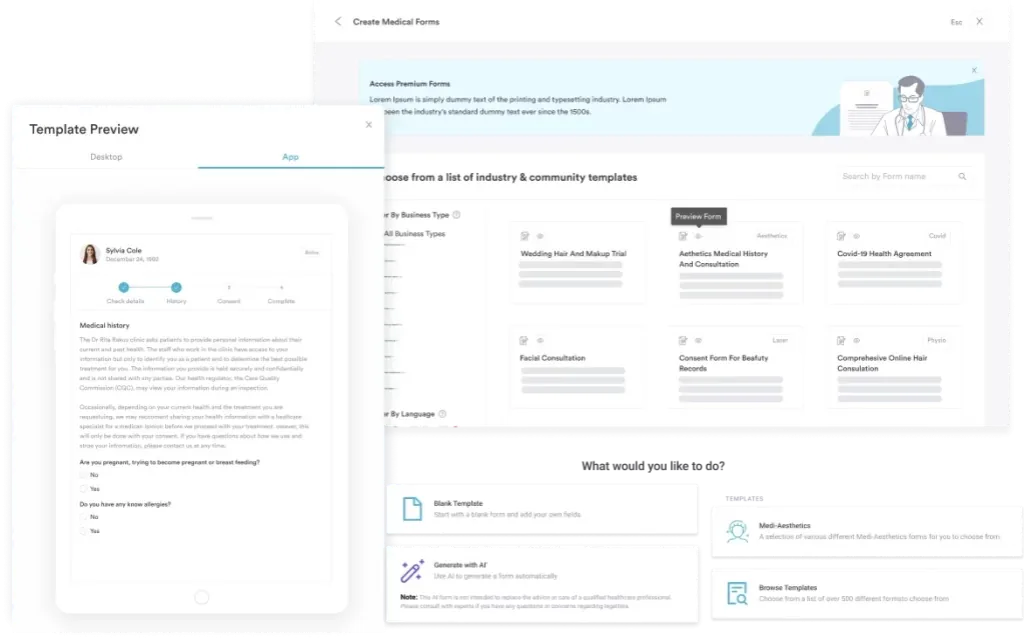

Pabau’s claims management tools help DME suppliers track E0445 documentation requirements, apply correct modifiers, and monitor claim status from a single platform, so coverage issues surface before claims are submitted.

Documentation is where most E0445 denials originate. Because coverage is discretionary rather than nationally mandated, the DME MAC has significant latitude in determining whether the record supports medical necessity. A well-organized documentation package, assembled before delivery, is the most effective denial-prevention tool available to suppliers.
The standard documentation package for a covered E0445 claim typically includes:
Keeping complete patient records that tie the clinical order to delivery to claim submission is the foundation of audit-ready DME billing. Any gap between the clinical record, the order, and the submitted claim creates an audit vulnerability. Practices relying on structured intake and clinical forms at the point of care reduce their downstream billing risk.
E0445 can be billed as a rental or an outright purchase, and the billing distinction carries different modifier requirements and reimbursement rates. Monthly rental claims use modifier RR and are subject to a rental cap: after the rental cap period is reached (typically 13 months for capped rental items), ownership transfers to the beneficiary and further rental claims are not covered. Purchase claims use modifier NU for new equipment or UE for used equipment. Choosing incorrectly between rental and purchase, or billing rental beyond the cap without transitioning to purchase, are both common audit findings for DME suppliers.
Audit your E0445 rental claims regularly. Once a beneficiary has received 13 months of rental billing, the claim should stop unless the item qualifies as a continuous rental under a specific Medicare benefit category. Continuing to bill RR past the cap is a frequent finding in DME compliance audits and can result in recoupment of all post-cap payments.
Because HCPCS code E0445 requires medical necessity documentation, the ICD-10-CM diagnosis code on the claim must reflect a condition for which ongoing oxygen saturation monitoring is clinically appropriate. The following table lists commonly used diagnosis codes for E0445 claims. It is not exhaustive. Check the applicable DME MAC LCD for the ICD-10 codes that qualify under your jurisdiction’s coverage policy.
Always verify that the diagnosis code listed on the claim matches the ICD-10 codes identified as covered in the applicable DME MAC LCD. Using a diagnosis code that is not on the LCD-approved list, even a clinically accurate one, will result in a medical necessity denial. The AAPC Codify HCPCS lookup provides ICD-10 crosswalk data for E0445 that can help billing teams verify code pairs before submission.
Billing teams managing multiple diagnosis codes across different payer contracts benefit from HIPAA-compliant documentation workflows that tie each ICD-10 code to the supporting clinical note. This link is exactly what an auditor checks: that the clinical record attached to the claim substantiates the diagnosis code on it. Tools supporting integrated practice management reduce the manual effort of maintaining that chain of evidence across payers.
Understanding where HCPCS code E0445 sits within the broader code family helps billing teams avoid upcoding, undercoding, and bundling errors. Pulse oximeters are distinct from oxygen concentrators, liquid oxygen systems, and stationary delivery systems, all of which carry their own codes.
Related codes in the E-code range that suppliers frequently encounter alongside E0445:
Suppliers providing both oxygen delivery equipment and monitoring devices to the same patient should ensure each is billed under the correct code and that the medical record supports the medical necessity of each item independently. Bundling E0445 with oxygen concentrator codes incorrectly, or failing to bill the monitoring device separately when both are provided, are common compliance findings in DME audits.
For practices building structured billing workflows. Similarly. For practices also handling prescription management alongside DME billing, centralizing documentation in one platform reduces the gap between the clinical order and the submitted claim.
DME suppliers also operating in multi-site environments will find that multi-location management tools that standardize documentation protocols across sites reduce variation in documentation quality, which directly affects E0445 claim acceptance rates. For those also managing clinical compliance.
HCPCS code E0445 is a straightforward code with a complex coverage environment. Carrier judgment coverage means no claim is automatically approved, and every submission depends on the documentation, modifier, and diagnosis code alignment being correct before the claim goes out. The most common failure points, missing modifiers, inadequate medical necessity documentation, and incorrect rental vs. purchase billing, are all preventable with the right workflow in place.
Pabau’s claims management software helps billing teams track documentation status and modifier requirements before submission, reducing the denials that cost DME suppliers time and revenue. To see how Pabau supports DME and clinical billing workflows, book a demo.

Pairing a diagnosis code with this claim? Carotid artery injury coding guide explains how to code a sequela-stage left internal carotid artery injury under ICD-10.
Coding a cervical spine fracture instead? C2 open fracture coding guide covers the correct 7th character for a nondisplaced C2 open fracture on the initial encounter.
Coding a follow-up visit for a foreign body? Foreign body of breast coding guide explains when to use this code for a subsequent encounter involving an embedded foreign body.
HCPCS code E0445 is the Level II Healthcare Common Procedure Coding System code for an oximeter device for measuring blood oxygen levels noninvasively. It represents pulse oximeters, classified under Durable Medical Equipment (DME) in the Oxygen Delivery Systems and Related Supplies category. DME suppliers bill this code when providing a non-invasive SpO2 monitoring device to a Medicare or Medicaid beneficiary.
Medicare coverage for HCPCS code E0445 is determined on a carrier judgment basis, meaning there is no national coverage determination. Each DME MAC evaluates claims individually based on medical necessity, documentation, and the applicable Local Coverage Determination (LCD) for the beneficiary’s state. Coverage is not automatic and requires supporting clinical documentation.
Common modifiers for E0445 include RR (rental equipment), NU (new equipment purchase), UE (used equipment), KX (documentation on file confirms medical necessity requirements are met), GA (advance beneficiary notice on file), and GY (item does not meet Medicare coverage criteria). Modifier KX is required when billing under carrier judgment coverage to attest that all LCD requirements have been satisfied.
Required documentation for an E0445 claim typically includes a physician order dated before delivery, clinical notes showing the diagnosis and oximetry test results, a signed proof of delivery from the beneficiary, and (when applicable) a PDAC coding verification letter for the specific device model. An Advance Beneficiary Notice (ABN) is required when the supplier anticipates a possible denial.
To bill E0445 as a monthly rental, append modifier RR to the code and submit one unit per month with the date of service matching the start of that rental period. Rental is subject to a cap (typically 13 months for capped rental DME), after which ownership transfers to the beneficiary and further rental claims are not covered. Always confirm the rental vs. purchase billing rules with the applicable DME MAC LCD before initiating rental billing.