



HCPCS code E0198: Water pressure pad billing guide
HCPCS code E0198 is a water pad for a standard mattress HCPCS code E0198 is the ...

Last Updated: Oct 13, 2026

CPT code 21407 covers open treatment of an orbital fracture, excluding blowout, when the surgeon places an implant.
The implant is the deciding factor: 21406 applies with no implant, 21407 with an implant, and 21408 with a bone graft.
Under the 2026 fee schedule, 21407 carries 17.29 total RVUs in both facility and non-facility settings.
S02.3XXA was deleted in 2016, so orbital floor claims now need a laterality-specific code such as S02.31XA or S02.32XA.
Pabau’s claims management software validates CPT and ICD-10 pairings and attaches operative notes before an orbital fracture claim goes out.
CPT code 21407 covers open treatment of an orbital fracture, excluding blowout, when the surgeon places an implant. The implant restores orbital anatomy, and its presence in the operative note is what separates 21407 from 21406. The code sits in the musculoskeletal section of the CPT code set, under fracture and dislocation procedures on the head. Claim accuracy is cheaper to build at entry than to repair in an appeal. An appeal filed after the timely filing window is denied on timeliness alone, whatever the coding showed.
The American Medical Association (AMA) maintains the CPT code set and keeps 21407 separate from the blowout fracture codes, 21385 through 21395. Those cover a different mechanism and a different surgical approach. Sorting the two families out is the first decision on any orbital claim.
The 214XX orbital fracture codes are separated by what the surgeon places in the orbit. Picking the wrong one is among the most common billing errors in craniofacial and oculoplastic surgery. The table below shows the differentiating factor for each code.
The blowout exclusion applies to all three codes. Blowout fractures have their own range, 21385 through 21395, because the mechanism and the surgical approach differ from the fractures 21407 covers.
Adjacent head fracture codes follow the same logic. Percutaneous treatment of a malar area fracture is 21355, and reconstruction of the orbital walls is 21184. The AAPC CPT-to-ICD-10 crosswalk confirms which diagnoses support each one.
When the operative note describes both an implant and a bone graft for the same orbital fracture, do not bill 21407 and 21408 together. Check National Correct Coding Initiative (NCCI) edits for bundling rules first. Then confirm the local coverage determination from your Medicare Administrative Contractor (MAC) before you choose the higher-complexity code.
Relative value units (RVUs) drive what Medicare pays for 21407. The Centers for Medicare and Medicaid Services (CMS) sets them each year through the Medicare Physician Fee Schedule (MPFS). The table below shows the 2026 national values. Check the CMS fee schedule lookup tool for your own locality.
That last row is worth a second look. Plenty of surgical codes pay more in a non-facility setting because the physician carries the overhead. 21407 is not one of them. The site of service leaves the RVU total untouched, so a hospital case and an office-based case start from the same number.
Figures shift with each year’s fee schedule and with the Geographic Practice Cost Index (GPCI), which adjusts payment for your location. The FastRVU lookup tool returns current, locality-adjusted values for 21407.
Medicare payment for 21407 is the total RVU multiplied by the annual conversion factor (CF), adjusted by the GPCI for your locality. At the 2026 conversion factor of $33.4009, 17.29 RVUs comes to roughly $578 before that adjustment. The conversion factor changes every January 1, so any dollar figure is year-specific.
Each MAC publishes local coverage determinations (LCDs) that define medical necessity for orbital fracture repair. Your MAC may ask for documentation beyond the national standard. Confirm the active LCDs for your region before you bill Medicare.
The modifier decides whether a claim pays in full, downcodes, or denies. These are the ones that come up most often in orbital fracture repair.
Commercial payers often handle modifier -50 differently from Medicare. Some want two line items, 21407-RT and 21407-LT, instead of the single bilateral modifier. Confirm the rule with the payer before you submit a bilateral repair.
Every 21407 claim needs an ICD-10-CM diagnosis code that establishes medical necessity. The diagnosis has to carry the fracture site, the side, and the encounter type. Initial encounters use the seventh character A for a closed fracture and B for an open one, as in as in S02.32XB.
S02.3XXA still turns up on orbital claims, and it was deleted in 2016. Payers reject it. Orbital floor fractures now carry laterality, so the correct choice is S02.30XA, S02.31XA, or S02.32XA.
The medial orbital wall works the same way, so S02.83XA becomes S02.831A, S02.832A, or S02.839A. LeFort patterns are coded S02.411A, S02.412A, and S02.413A. A LeFort injury usually moves the procedure into a different CPT family, starting with 21422 and 21346.
Blowout fractures also code to the S02.3 family, so the diagnosis alone will not tell a payer which CPT code belongs on the claim. Only the operative note does that. Billing 21407 for a pure blowout repair is a common upcoding error that draws audits.
The operative note is the billing record for 21407. CMS Article A52767 on fracture care billing requires documentation that supports the level of service billed, including the surgical approach and the implant. Records also have to stay HIPAA compliant, since payers can request the note at any point.
The global surgery period for 21407 is 90 days under Medicare. Related follow-up visits, dressing changes, and suture removal inside that window are bundled. They cannot be billed separately without a modifier showing the service was unrelated.
Referrals often arrive from emergency departments or sports medicine practices, so the preoperative imaging report may sit outside your own records. Digital forms that capture implant type, approach, and fracture detail keep every piece together before the claim goes out.

A handful of errors drive most 21407 denials. Each one has a pre-submission check that catches it.
Coding accuracy is one half of medical billing. The review step before submission is the other half. Many practices add a second-level review for surgical codes with 90-day global periods, where bundling risk is highest. Tracking denials by code shows which part of the workflow needs attention.
Set up a claim review rule for the 21406-21407-21408 family. Flag any 21407 claim where the attached operative note has no keyword match for ‘implant’ or ‘implant placement.’ That single rule catches the most common upcoding error before submission.
Surgical billing for a code like 21407 creates more documentation touchpoints than routine office coding. Plastic surgery practices handling orbital repairs alongside other head and neck work need three things. Operative notes have to link to claims, ICD-10 pairings need checking, and the global period has to be tracked.
Practice management software like Pabau handles that workflow in one place. Its claims management tools capture structured operative data, attach it to the claim, and validate the CPT and ICD-10 pair before submission. The checklist confirms implant details and surgical approach are filled in first.
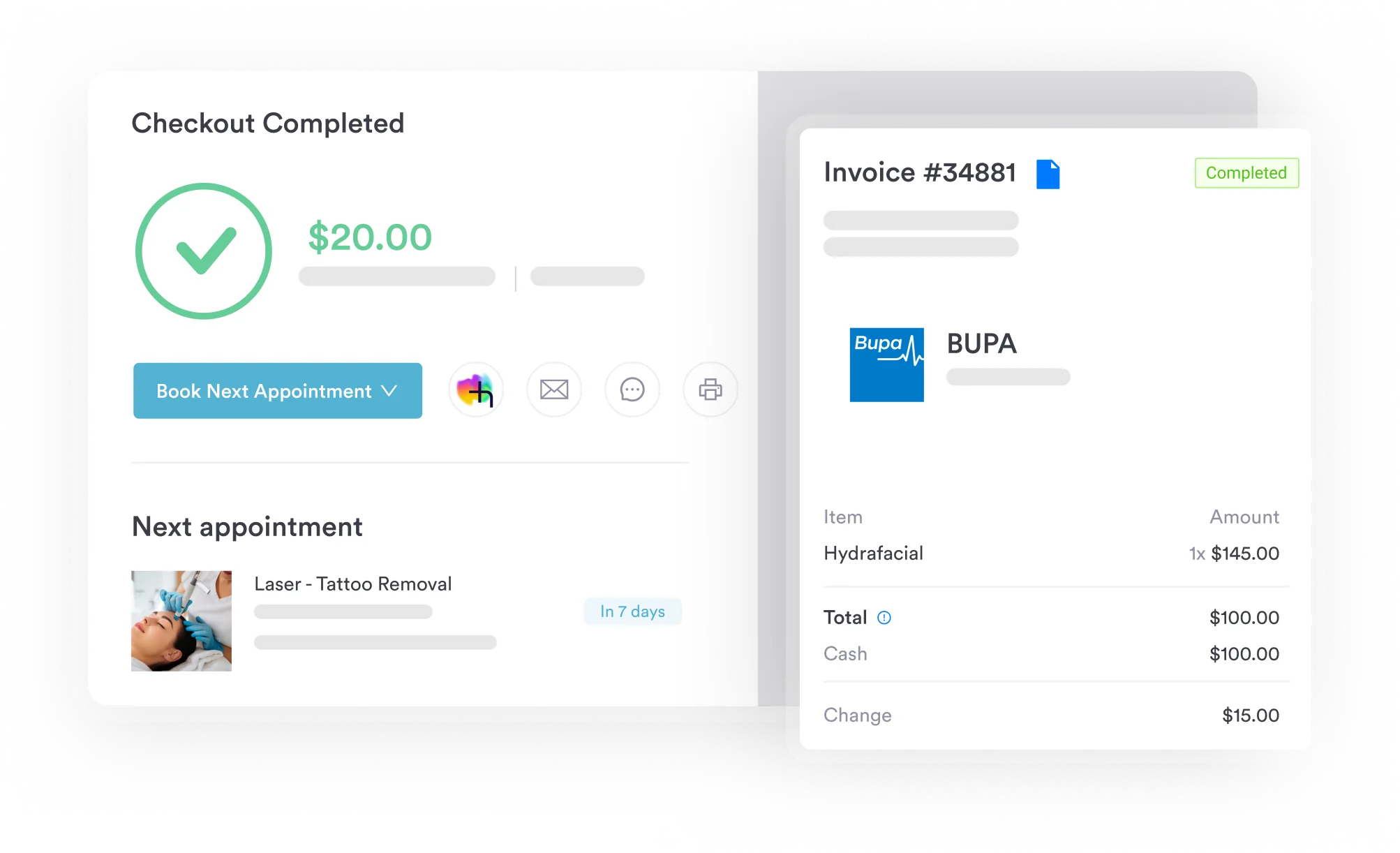
The 90-day global period tracker flags a follow-up visit that falls inside the window, which cuts inadvertent bundling errors. For a fracture care program running several surgeons, structured clinical records keep implant documentation, modifier justification, and follow-up notes together at claim review.
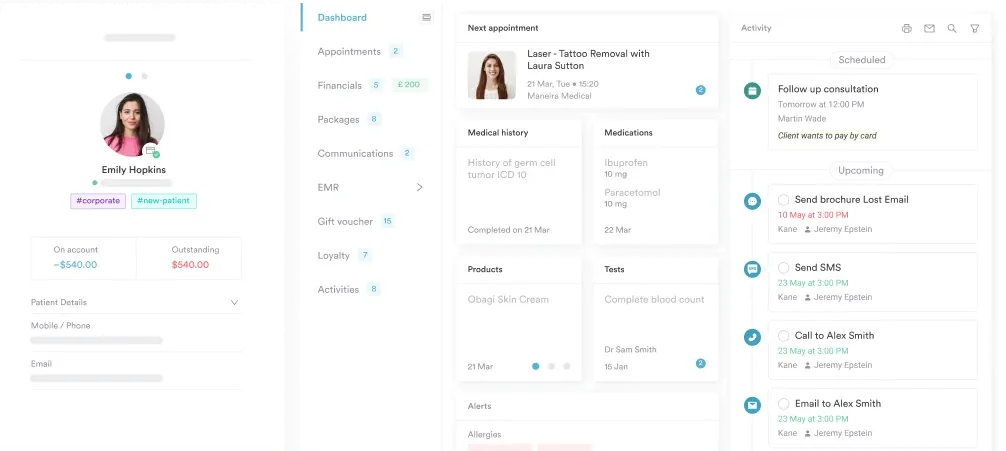

Pabau’s claims management software attaches the operative note to the claim and checks the CPT and ICD-10 pairing before you submit. Your team spends less time reworking denials.

The implant line in the operative note is what makes 21407 the right code, and it is the first thing a payer looks for. If that line is vague, the claim downcodes to 21406 no matter how complex the case was.
Site of service will not change what Medicare pays here. The leverage sits in the operative note, the ICD-10 laterality, and the 90-day global period.
Build the pre-submission review around those three and the denials thin out quickly. Book a demo to see how Pabau keeps operative detail attached to surgical claims.

Coding another head fracture repair? 21470 covers open treatment of a complicated mandibular fracture, with the same documentation demands.
Working a LeFort I case? 21422 walks through open treatment of a palatal or maxillary fracture.
Reconstructing the zygomatic arch? 21255 covers the bone graft reconstruction and the modifiers that go with it.
Billing interdental fixation on its own? 21110 explains when the device application is separately reportable.
Facing a panfacial injury? 21433 covers open treatment of craniofacial separation and what the note has to show.
CPT code 21407 is the procedure code for open treatment of an orbital fracture, excluding blowout fractures, with placement of an implant. It sits in the musculoskeletal section of the CPT code set, under fracture and dislocation procedures on the head.
21406 covers open treatment without an implant, 21407 covers open treatment with an implant, and 21408 covers open treatment with a bone graft. The operative note must document implant placement to support 21407. Without it, 21406 applies regardless of surgical complexity.
The common ones are -22 for increased complexity, -50 for a bilateral procedure, and -51 for multiple procedures. Others include -52 for reduced services, -62 for two surgeons, and -80 for an assistant surgeon. Modifier -22 needs a detailed operative note to justify the increase.
Orbital floor fractures use S02.30XA, S02.31XA, or S02.32XA, depending on the side documented. Medial orbital wall fractures use S02.839A, S02.831A, or S02.832A. LeFort patterns use S02.411A, S02.412A, and S02.413A. S02.3XXA was deleted in 2016 and will be rejected.
No. CMS gives 21407 the same practice expense RVU in both settings, so the total stays at 17.29 either way. Many surgical codes pay more in a non-facility setting, but this one does not.
Yes. Medicare covers 21407 when medical necessity is documented and the claim meets CMS criteria under the Medicare Physician Fee Schedule. Coverage is subject to local coverage determinations from your Medicare Administrative Contractor (MAC), which may add requirements. Check the active LCDs for your region first.
The operative note needs preoperative imaging confirming the fracture, the surgical approach and incision type, and the implant manufacturer and material. It also needs the fracture complexity and the postoperative plan. Missing implant details are the most common reason a 21407 claim downcodes to 21406.



