CPT code 93503: Swan-Ganz catheter billing and modifiers
CPT code 93503: Official descriptor and procedure overview In the AMA CPT code s...

Last Updated: Oct 23, 2026

CPT code 85025 reports a complete blood count (CBC) with automated differential WBC count, covering Hgb, Hct, RBC, WBC, platelet count, MCV, MCH, MCHC, RDW, and a five-part leukocyte differential.
85025 differs from CPT 85027 in one critical way: 85027 does not include the automated differential, making code selection dependent on what the physician explicitly ordered.
Billing 85025 when the physician ordered only ‘CBC’ (without ‘CBC w/differential’) is a documented CERT audit trigger and requires payment adjustment to reflect the ordered test.
Practice management software like Pabau helps practices link physician orders to the correct CPT code at the point of care, reducing the most common 85025 billing error before a claim is submitted.
Most practices lose money on lab billing not because the test was wrong, but because the order didn’t match the code. CPT code 85025 is one of the highest-volume hematology codes in the US. A single mismatch between “CBC” and “CBC with differential” on the order is enough to trigger a CERT audit and force a payment rollback.
This reference covers the official descriptor, included components, medical necessity criteria, modifier rules, bundling restrictions, and the most common billing mistakes for CPT code 85025, along with practical steps to keep claims clean.
CPT code 85025 is the standard code for a complete blood count (CBC) with automated differential WBC count. The American Medical Association (AMA), which maintains the CPT code set, defines it as: “Blood count; complete (CBC), automated (Hgb, Hct, RBC, WBC and platelet count) and automated differential WBC count.”
This is a Category I CPT code classified under Hematology and Coagulation Procedures (range 85002-85999). It falls under HCPCS Level I, meaning it is identical to the subset of CPT codes used for Medicare billing.
The code is performed using an automated hematology analyzer. Because the analysis is automated throughout (both the cell count and differential), there is no manual review component included in 85025. When a pathologist or lab technician performs a manual differential, a separate code applies. A physician’s written blood smear interpretation is billed separately as CPT code 85060.
Pabau’s lab management software integrates lab orders directly into the patient record, so the ordering physician’s exact language (including whether a differential was requested) is captured at the time of ordering rather than reconstructed later from memory or paper.
Understanding exactly what CPT code 85025 covers prevents undercoding and overbilling. The test panel includes two distinct layers: the base CBC measurements and the automated leukocyte differential.
Because platelet count is included in the base CBC, CPT 85049 (platelet, automated) cannot be billed separately when 85025 is also submitted. Medi-Cal’s Pathology and Blood manual explicitly states that 85049 will not be reimbursed if billed alongside CPT 85025. Most payers apply the same bundling logic through NCCI edits.
CPT 85027 covers a CBC without the automated differential. The base measurements (Hgb, Hct, RBC, WBC, platelet count) are identical. The only structural difference is the absence of the five-part leukocyte differential.
Code selection depends entirely on what the physician ordered, not on clinical judgment. If the order reads “CBC,” that maps to 85027. If it reads “CBC with differential” or “CBC w/diff,” that maps to 85025.
Billing 85025 when the order says only “CBC” is the single most common audit finding for this code family, as documented in CMS CERT program reports.
CPT 80050, the General Health Panel, includes 85025 as one of its three components alongside 80053 and 84443 (TSH). For commercial payers that accept panel codes, bill 80050 rather than the individual codes when a physician orders the full panel.
Billing 80050 and 85025 separately for the same encounter with one of these payers is a bundling violation and triggers claim rejection or audit exposure under the National Correct Coding Initiative (NCCI).
Medicare and Medicare Advantage plans do not recognize CPT 80050 and will auto-deny it. For these payers, bill the individual components separately — 80053, 85025 or 85027, and 84443 — each with its own documented medical necessity.
Payers require that CBC with differential be medically necessary for the patient’s condition at the time of the order. The Centers for Medicare and Medicaid Services (CMS) National Coverage Determination for Blood Counts (CAG-00182N) governs Medicare coverage and was updated when CPT codes in the hematology range were revised.
Local Coverage Determinations (LCDs) issued by Medicare Administrative Contractors (MACs) provide the specific list of covered ICD-10-CM diagnoses for each jurisdiction. The following ICD-10 categories commonly support medical necessity for CPT code 85025:
For functional medicine practices and integrative clinics ordering comprehensive baseline labs, the ICD-10 code on the requisition must match a payer-covered indication. A wellness or screening visit (Z00.xx) alone does not support medical necessity under most commercial payer LCDs. Document the specific finding or clinical concern that prompted the order.
CPT 85025 is a diagnostic laboratory code. Preventive care coverage under the ACA applies to specific screenings listed by the USPSTF. CBC with differential does not appear on the USPSTF Grade A/B list for asymptomatic screening, which means it is not covered as a zero-cost preventive benefit.
When ordered during a routine wellness visit without a clinical indication, cost-sharing applies to the lab portion of the encounter even if the E/M visit itself is covered as preventive.
This distinction matters for patient communication. If a patient is told their annual “well visit” is free and then receives a bill for a CBC, the explanation of benefits often confuses them. Practices that use HIPAA-compliant documentation practices and clear pre-visit communications avoid most of these disputes.
Before ordering CPT 85025 alongside a wellness visit, confirm the clinical indication in the chart. If the record shows only a routine visit with no sign, symptom, or risk factor that prompted the CBC, payers will deny or reclassify the claim. One sentence in the assessment noting ‘monitoring for anemia risk given dietary history’ is sufficient to support the order.
Lab results only help if they reach the chart fast — a strong primary care EHR makes that automatic.
Adequate documentation for CPT code 85025 requires more than a lab result in the chart. Medicare and commercial payers expect to see a coherent clinical record that links the order to the result and the result to the clinical decision.
In-office testing adds a layer: the practice must hold a valid CLIA certificate for the complexity level of the analyzer in use. CPT 85025 is a moderate-complexity test and does not appear on the CLIA-waived test list.
An in-office lab performing 85025 needs a CLIA Certificate of Compliance or Certificate of Accreditation, not a Certificate of Waiver. Modifier QW, which flags CLIA-waived testing, does not apply to 85025.
Reference lab billing adds another: when your practice draws the blood but sends the specimen to Quest Diagnostics, Labcorp, or another independent lab for analysis, you cannot bill 85025 under your NPI for the analysis. The reference lab bills for the analysis.
If you bill on behalf of the reference lab, attach Modifier 90. Your practice bills only for the specimen collection (venipuncture, CPT 36415).
Digital intake forms and lab requisition workflows in digital clinical documentation tools capture the physician’s order language automatically, creating an audit-ready chain of documentation. A primary care compliance checklist can help practices audit their lab order workflows annually; see this primary care compliance checklist as a starting point for that review.
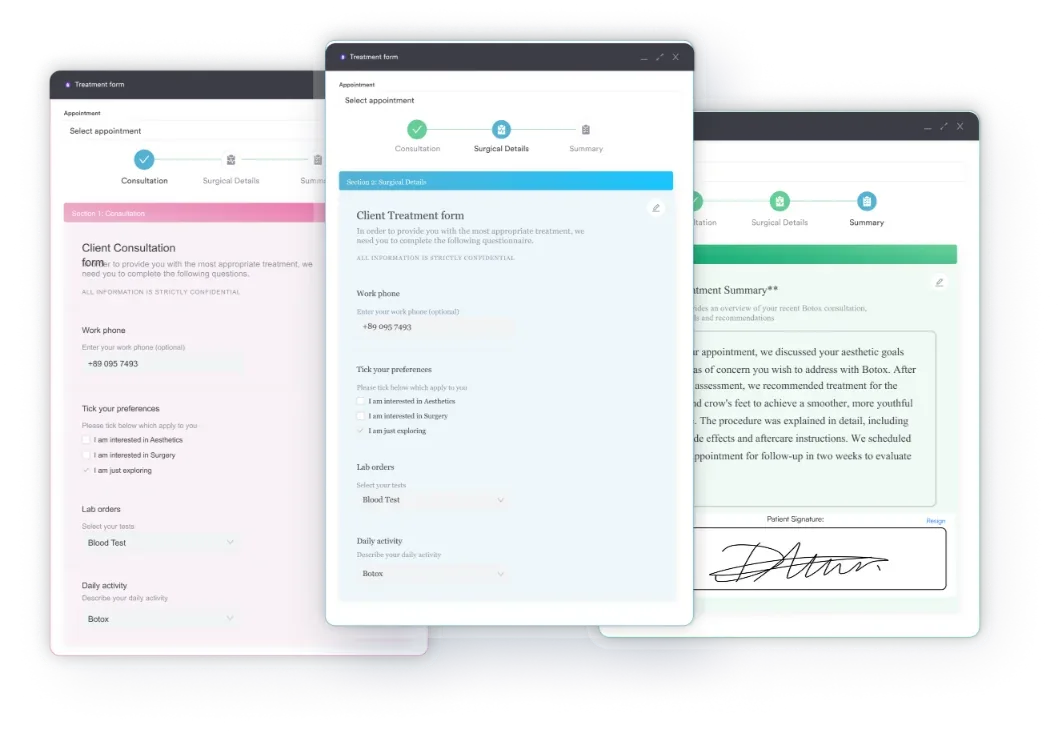

Pabau links physician lab orders directly to billing codes so the right CPT code is attached before the claim leaves your practice. See how it works for your team.

CERT audit data documented by XiFin identifies a recurring pattern: a physician orders “CBC,” the lab performs a CBC with differential (because it is often the default analyzer protocol), and the lab bills 85025.
Without a written order for “CBC with differential,” Medicare requires the payment to be adjusted to the lower-complexity code. Documentation must support the billed code, not the other way around.
Coders working with hematology panels benefit from knowing the full family of CBC-adjacent codes. The AAPC Codify platform provides the full hematology range (85002-85999) with crosswalks and NCCI edit lookups.
Run a quarterly audit of your 85025 claims against the original physician orders. Pull any claim where the result shows a differential was performed and check whether the order explicitly requested ‘CBC with differential.’ Claims where the order says only ‘CBC’ need to be corrected to 85027 before the MAC performs its own audit. This is the single highest-value billing review for any practice with significant lab volume.
Medicare reimburses CPT code 85025 under the Clinical Laboratory Fee Schedule (CLFS), not the Physician Fee Schedule. Rates are set nationally and updated annually. For current Medicare reimbursement, consult the CMS CLFS file, published each November for the following year. Payment typically falls in the $8 to $12 range nationally, though exact figures shift with each annual CLFS update. Where a code carries an evaluation and management component, documented complexity sets the level billed. A coding error surfaces as a cash flow problem weeks later, which is why the healthcare revenue cycle is measured end to end.
Commercial payer rates vary significantly. Many national payers (including major Blue Cross Blue Shield plans) publish allowable schedules that differ from Medicare CLFS by 20 to 150 percent, depending on their contracted lab network and whether the testing was performed in-office or at a reference lab.
Place of service (POS) code affects reimbursement for in-office testing. POS 11 (Office) applies when the test is performed in the practice. POS 81 (Independent Laboratory) applies when billing from a standalone reference lab. Medicare CLFS payment is the same regardless of POS for lab codes, but some commercial contracts pay differentially based on site.
Effective claims management across both in-office and reference lab scenarios is where Pabau’s claims management software adds the most billing workflow value, tracking order source, performing lab, and modifier assignment in a single record before submission.
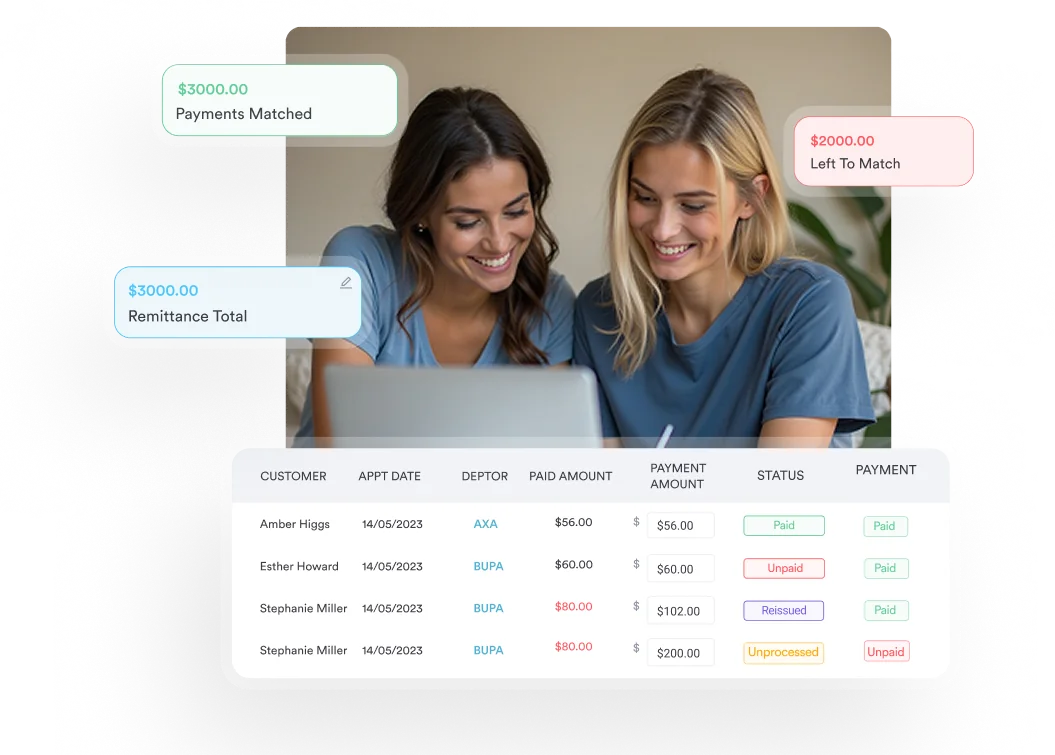
Primary care practices order CBC with differential more often than any other specialty, and the same CLFS rate applies regardless of volume. For broader context on running high-volume lab billing workflows.
CPT code 85025 is straightforward in theory and error-prone in practice. The mismatch between what a physician orders and what a lab performs is where most billing problems start, and most audits land.
Pabau’s lab management and claims management tools capture the physician’s order language at the point of care, match it to the correct CPT code, and attach the right modifiers before a claim leaves the practice. That closes the order-to-code mismatch that triggers CERT findings on 85025.
To see how that workflow applies to your practice’s lab billing volume, book a demo and we will walk through your specific scenario.

Billing a CT abdomen and pelvis scan? CT abdomen and pelvis billing covers the contrast scan and how it differs from the related codes 74176 and 74178.
Managing multiple lab orders across specialties? Pabau lab management software integrates physician orders with billing codes and patient records in one place.
Looking for related lab coding guidance? 80053 covers the comprehensive metabolic panel commonly ordered alongside CBC panels.
CPT code 85025 is a complete blood count (CBC) with automated differential WBC count, covering hemoglobin, hematocrit, RBC, WBC, platelet count, MCV, MCH, MCHC, RDW, and a five-part leukocyte differential. All measurements are produced by an automated hematology analyzer.
85027 covers a CBC without the automated differential. Code selection depends on what the physician ordered: “CBC only” maps to 85027; “CBC with differential” maps to 85025.
Common covered diagnoses include anemia (D50–D59), leukemia and lymphoma (C81–C96), thrombocytopenia (D69.3, D69.6), systemic infections (A00–B99), and chronic conditions such as HIV, lupus, and CKD. Wellness visit codes (Z00.xx) alone do not establish medical necessity under most payer LCDs.
No — CPT 85049 (platelet count, automated) is bundled into 85025 and will not be separately reimbursed under NCCI edits.
Modifier 90 applies when billing on behalf of a reference lab, Modifier 91 applies to a repeat CBC on the same date for a distinct clinical reason, and Modifier 59 applies when NCCI edits bundle 85025 with a separately performed service. QW does not apply to 85025, since it is a moderate-complexity test that requires a CLIA Certificate of Compliance or Accreditation rather than a waiver.
Yes — there are no NCCI edits bundling 85025 with E/M codes, provided both are medically necessary and independently documented.