CCSD code H4430: Examination of rectum under anaesthetic
CCSD code H4430 pays for the examination alone CCSD code H4430 is the UK private...

Last Updated: Oct 20, 2026
58561 is the CPT code for hysteroscopy, surgical; with removal of leiomyomata.
Claims for this code fail more often than coders expect: the most common culprits are missing prior authorization, a bundled diagnostic hysteroscopy billed separately, and a diagnosis code that does not satisfy payer medical necessity criteria.
Let Pabau's smart automation suggest the right codes, reduce claim denials, and keep your practice compliant—effortlessly.
Automate repetitive tasks and focus on what matters most—your patients.
Reduce coding errors and ensure compliance with the latest regulations.
Clean claims, fewer denials, and faster reimbursements.
Powerful insights and reporting to help your practice thrive.
HIPAA compliant SOC 2 certified GDPR-compliant Trusted by 4,000+ clinics worldwide

CPT Code 58561 covers hysteroscopy with surgical removal of submucosal fibroids (leiomyomata) – the diagnostic component (58555) is bundled in and cannot be billed separately.
D25.0 (submucosal leiomyoma of uterus) is the primary ICD-10 pairing. Claims supported only by intramural or subserosal fibroid codes are often denied for lack of medical necessity.
Modifier 22 may apply when multiple large fibroids are removed in one session. The documentation must justify the substantially increased work, or payers will deny it.
Pabau’s claims management software checks that required claim fields, including prior authorization numbers, are present before submission and connects to 4,000+ US payers via Claim.MD.
CPT Code 58561 is defined by the American Medical Association as: Hysteroscopy, surgical; with removal of leiomyomata.
The procedure is performed transcervically using a hysteroscope and operative resectoscope or mechanical morcellator. No abdominal incision is made. The target is one or more submucosal fibroids (leiomyomata) projecting into the uterine cavity.
This code belongs to the 585xx hysteroscopy family. Diagnostic hysteroscopy (58555) is a component of every operative hysteroscopy and is therefore bundled into 58561 by National Correct Coding Initiative (NCCI) edits. Billing 58555 separately on the same date of service is an NCCI violation and will trigger a denial or recoupment request.
Hysteroscopic myomectomy is the surgical removal of one or more submucosal fibroids via a transcervical approach. Knowing the operative steps helps coders confirm that documentation supports the specific code rather than a lower-complexity procedure.
The operative report must document that the primary intent was fibroid removal, not biopsy or ablation. If the note describes only tissue sampling, code 58558 applies. If it describes endometrial destruction as the primary goal, code 58563 applies.
CPT Code 58561 carries meaningful relative value units (RVUs) that reflect the complexity of operative hysteroscopy. The CMS Physician Fee Schedule sets the Medicare allowed amount; commercial payers typically pay 110-160% of Medicare rates, though this varies by contract. For precise current-year figures, use the FastRVU 2026 RVU lookup tool.
Efficient billing of 58561 is part of a broader revenue cycle management process. Verifying the payer contract multiplier before claim submission prevents underpayment disputes later.
Note: Medicare rates change annually with the MPFS final rule. Any dollar amounts cited elsewhere should be verified against the current fee schedule year. Practices billing 58561 through a clearinghouse can validate allowable amounts before submission via the Claim.MD clearinghouse integration, which connects to over 4,000 US payers.
Understanding the bundle prevents the most common billing errors on 58561 claims.
58558 is a permanent NCCI bundle into 58561. A same-session biopsy is never billed separately, and Modifier 59 or XS cannot override the edit. The same holds for 58563: when ablation and myomectomy happen in one session, bill only 58563.
The 58558/58561 distinction is the most frequently misapplied coding decision in operative hysteroscopy. CPT Code 58558 covers hysteroscopy with biopsy of the endometrium or endocervix; CPT Code 58561 covers hysteroscopy with surgical removal of leiomyomata. These are different clinical intents – tissue sampling versus surgical excision – and the operative report must be clear about which one occurred.
For gynecologic surgical coding involving multiple concurrent procedures, document each separately in the operative note with distinct indications. The claim then reports only the codes the NCCI edits allow together.
Medical necessity for CPT Code 58561 requires a diagnosis code that confirms the hysteroscopic approach is clinically appropriate. Not all fibroid diagnosis codes satisfy payer criteria. Intramural or subserosal fibroids that do not project into the uterine cavity do not justify a hysteroscopic myomectomy.
Payers maintain local coverage determinations (LCDs) and national coverage determinations (NCDs) that specify which ICD-10 codes are acceptable. Check your payer’s current LCD for 58561 before submitting – these policies change and a code acceptable last year may now require additional documentation.
Modifier selection errors are a leading cause of underpayment on CPT Code 58561 claims. The right modifier depends on what else was performed in the same surgical session.
The operative report is the foundation of every 58561 claim. Auditors and payers look for these specific elements – a generic “hysteroscopy with fibroid removal” narrative is not enough.
Submitting a clean claim for 58561 means all eight of these elements appear in the operative note before the claim goes out the door. Missing even one – most often the FIGO classification or fluid deficit – gives payers a documentation-based denial reason.
Many commercial payers require prior authorization for CPT Code 58561 before the procedure is performed. Medicare does not require prior authorization for 58561 in most circumstances, but Medicaid requirements vary significantly by state. Most payers require imaging confirmation of a submucosal fibroid, typically a transvaginal ultrasound or sonohysterogram.
They also look for documented symptoms (heavy menstrual bleeding, bulk symptoms, or infertility) and evidence that conservative management was considered. Check individual payer policy before scheduling – prior auth requirements change and a blanket rule does not exist across all commercial plans. For guidance on keeping medical billing compliance requirements current, a structured tracking system helps teams manage authorization status per procedure.
Structured denial management workflows catch these patterns before they become write-offs. An appeal for a 58561 denial should include the operative note, the pre-operative imaging report, and the prior authorization number, if one applies. Add a copy of the payer’s LCD and a cover letter explaining why the denial criteria do not apply.
CPT Code 58561 is payable in both ambulatory surgery center (ASC) and hospital outpatient department (HOPD) settings. The physician professional component is billed the same way in both settings. Facility fees are governed by different CMS payment systems.
The physician professional component is always billed on a CMS-1500 form regardless of setting. The facility files its own claim separately. Confirm with the facility that 58561 appears on the current CMS ASC approved procedures list before scheduling in that setting. The list updates annually with the Medicare final rule.
OB-GYN practices billing complex operative codes like CPT Code 58561 juggle prior authorizations across multiple payers. Their billers also track NCCI edits and watch which diagnosis codes trigger rejections. Purpose-built OB-GYN practice management software handles these workflows systematically rather than relying on biller memory.
Pabau’s claims management software checks that required claim fields, such as membership numbers and prior authorization codes, are present before a claim is submitted. Prior authorization results obtained from the payer are stored with the patient’s record. For electronic submission, Pabau connects to over 4,000 US payers through the Claim.MD clearinghouse integration. That connection supports eligibility checks and electronic remittance advice (ERA) posting on 58561 claims.
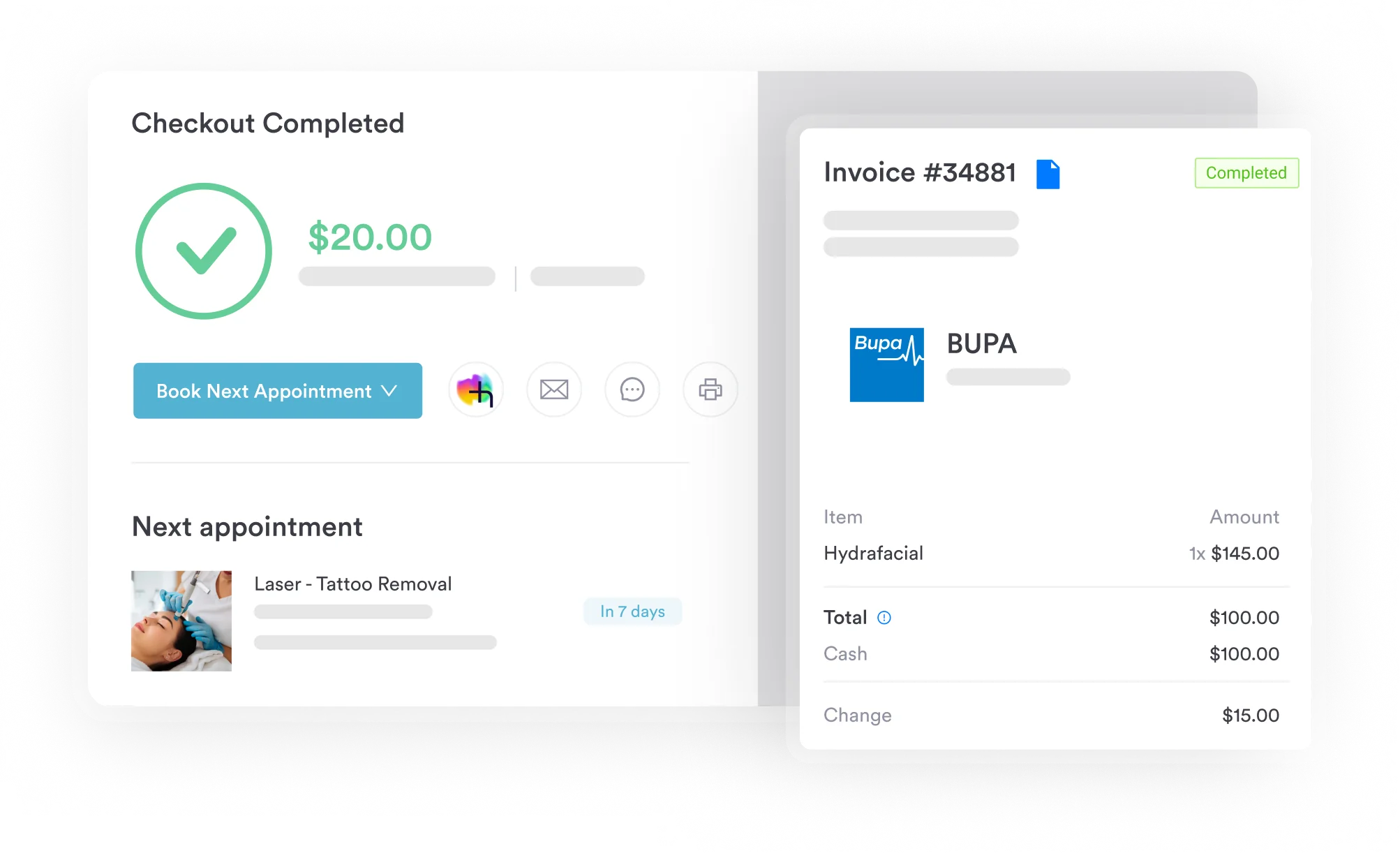
That kind of automation matters most on a high-denial code like 58561, where a single missing prior authorization number or an unresolved NCCI edit can stall reimbursement for weeks. Catching these gaps before submission means faster payment and less staff time spent on appeals.

Pabau checks that required claim fields, including prior authorization numbers, are present before submission. It connects to 4,000+ US payers via Claim.MD, so your 58561 claims go out complete.

CPT Code 58561 is a high-value operative code that rewards clean documentation and careful modifier selection. Shortcuts lead to denials that take weeks to appeal. The most preventable failures are billing 58555 or 58558 separately, submitting D25.1 or D25.2 without confirming submucosal extension, and missing prior authorization for commercial payers.
Pabau checks that required claim fields, including prior authorization numbers, are present before a 58561 claim is submitted. Its Claim.MD connection then carries that claim to more than 4,000 US payers. To see how Pabau handles complex surgical billing, explore our revenue cycle management guide or book a demo with our team.

Need help managing OB-GYN billing compliance? Medical billing compliance covers the documentation and audit-readiness standards that protect OB-GYN practices from payer recoupment.
Handling claim denials across your surgical codes? Denial management in healthcare walks through structured appeal workflows for complex surgical procedure denials.
Want to understand electronic claim submission for 58561? 837 file billing explains the EDI transaction format used for professional and institutional claims submitted via clearinghouse.
CPT Code 58561 covers hysteroscopy with surgical removal of leiomyomata (submucosal fibroids) performed transcervically. The code includes the diagnostic hysteroscopy component, uterine distension, and any concurrent D&C integral to the same hysteroscopic session. It does not cover biopsy (58558) or endometrial ablation (58563) when those are performed as the primary procedure.
CPT 58558 covers hysteroscopy with biopsy of the endometrium or endocervix; CPT 58561 covers hysteroscopy with surgical removal of submucosal fibroids. The clinical distinction is intent: tissue sampling versus surgical excision. 58558 is a permanent bundle into 58561, so a same-session biopsy is never billed separately. No modifier overrides the edit.
Yes, CPT Code 58561 is covered by Medicare when medical necessity is documented with an appropriate ICD-10-CM diagnosis code, primarily D25.0 (submucosal leiomyoma). Medicare does not typically require prior authorization for this code, but Medicaid requirements vary by state and commercial plans vary by payer.
The most common denial reason is missing or expired prior authorization from commercial payers. Next come insufficient medical necessity documentation (a wrong ICD-10 code or missing imaging confirmation) and NCCI bundling violations, such as billing 58555 separately. A place-of-service mismatch between the claim and the facility also triggers denials. Modifier 22 denials occur when the operative note does not explicitly document the increased complexity.
The D&C CPT code is 58120 for a blind (non-hysteroscopic) dilation and curettage. When a D&C is performed as part of a hysteroscopic session under CPT Code 58561, it is bundled into 58561 and cannot be billed separately. CPT 58120 applies only when a D&C is performed without hysteroscopic guidance as the standalone procedure.
Yes, CPT Code 58561 appears on the CMS ASC approved procedures list and is payable in an ambulatory surgery center setting. The facility files a separate claim under the CMS ASC payment system using place-of-service code 24. The physician bills the professional component separately, using facility RVU rates.