



HCPCS code E0198: Water pressure pad billing guide
HCPCS code E0198 is a water pad for a standard mattress HCPCS code E0198 is the ...

Last Updated: Oct 13, 2026

CPT Code 01654 covers anesthesia for a bypass graft procedure on the arteries of the shoulder and axilla, classified within the 01610-01680 range for anesthesia on the shoulder and axilla.
CPT 01654 carries 8 base units and has no connection to cardiac or cardiopulmonary bypass surgery, despite the similar-sounding “bypass” terminology.
Reimbursement is calculated using the formula: (Base Units + Time Units + Qualifying Circumstance Units) multiplied by the anesthesia conversion factor.
Modifiers AA, QZ, QK, and QX are required on every 01654 claim to identify whether an anesthesiologist or CRNA performed the service.
Pabau’s claims management software helps anesthesia practices capture documentation, track time units, and submit clean claims with the correct modifiers.
CPT Code 01654 is the anesthesia code for a bypass graft procedure on the arteries of the shoulder and axilla, carrying 8 base units under the ASA Relative Value Guide.
It sits in a code range covering several closely related shoulder and axilla artery procedures, so it is easy to confuse with a neighboring code such as 01656.
The code applies exclusively to US-based anesthesia providers billing under Medicare, Medicaid, and commercial payer fee schedules where CPT coding standards govern reimbursement.
CPT Code 01654 is the American Medical Association’s designated code for anesthesia services provided during a bypass graft procedure on the arteries of the shoulder and axilla. The official AMA descriptor reads: Anesthesia for procedures on arteries of shoulder and axilla; bypass graft.
This places 01654 in the peripheral vascular anesthesia category, alongside other codes describing surgery on the axillary and brachial arteries.
Despite the similar-sounding term “bypass,” 01654 has no connection to cardiac surgery or cardiopulmonary bypass (the heart-lung machine used in open-heart procedures) — the bypass graft here is a vascular conduit that reroutes blood flow around a diseased or blocked segment of the shoulder/axilla arterial system. Coders looking for the heart operation need 33533, which covers a coronary artery bypass with a single arterial graft.
The “bypass graft” qualifier is the key clinical distinction that separates 01654 from its neighboring codes. Bill 01654 when a surgeon creates a bypass graft confined to the shoulder and axilla arteries.
When the bypass graft runs specifically from the axillary artery to the femoral artery, use 01656 instead, not 01654. Billers should confirm the exact vessels involved and the graft configuration with the operative report before assigning a code from this series.
Anesthesia billing does not use a single flat fee. Every claim is calculated using a unit-based formula governed by the CMS Physician Fee Schedule and the ASA Relative Value Guide (RVG).
For CPT Code 01654, the base unit value published in the ASA RVG is 8 base units, reflecting the moderate complexity of a peripheral vascular bypass graft procedure on the shoulder and axilla arteries.
Total reimbursement is calculated as follows:
Formula: (Base Units + Time Units + Qualifying Circumstance Units) x Conversion Factor = Reimbursement
For example: a 3-hour procedure (12 time units) with no qualifying circumstances would yield 20 total units (8 base + 12 time). Multiply by the current conversion factor for the locality to determine the Medicare allowable. Practices should use the FastRVU 2026 lookup tool to verify current locality-specific rates.
Shoulder and axilla bypass graft procedures can trigger 99100 for elderly patients or 99140 for emergent presentations, such as acute limb ischemia. Document the clinical basis for any qualifying circumstance code in the anesthesia record before billing it.
Medicare reimbursement for CPT Code 01654 is not a single national figure. Because the anesthesia conversion factor varies by Medicare locality, the actual allowable depends on where the service is rendered.
The 2026 national Medicare anesthesia conversion factor should be verified directly from the CMS Physician Fee Schedule lookup tool before billing, as it is updated with each annual MPFS final rule.
Commercial payers typically reimburse at a rate above Medicare, though contract terms vary significantly. Always confirm the contracted conversion factor with each payer before estimating reimbursement.
You can also cross-reference current figures using procedure code fee schedules to understand how fee structures are organized across different payer types.
Always pull the locality-specific anesthesia conversion factor from the CMS MPFS lookup tool rather than relying on national average estimates. A 3-5% difference in the conversion factor across localities can mean hundreds of dollars per complex vascular case. Flag this step in your billing workflow checklist for every 01654 claim.
Every CPT Code 01654 claim submitted to Medicare requires a provider-role modifier. Missing or incorrect modifiers are the single most common reason for anesthesia claim denials. The modifier identifies who performed the anesthesia service and in what capacity, directly affecting the payment rate.
The QK/QX pair is the most frequently misapplied modifier combination in peripheral vascular anesthesia billing. Both the anesthesiologist (QK) and the CRNA (QX) must bill separately using the same 01654 code with their respective modifiers. Failure to pair these correctly results in claim rejection.
Medical direction rules also require an anesthesiologist to perform specific pre-anesthesia and post-anesthesia tasks for each case they direct. Documenting compliance with these seven CMS medical direction requirements is essential for 01654 claims billed under QK.

Pabau’s claims management tools help anesthesia practices capture start and stop times, attach pre-anesthesia evaluations, and submit claims with the correct modifiers, reducing denials on high-value codes like 01654.

Peripheral vascular anesthesia claims like 01654 attract above-average scrutiny from MACs, particularly around vessel identification and graft configuration. Every 01654 claim must be supported by a complete anesthesia record that documents medical necessity and validates the units billed.
Incomplete documentation is the second most common cause of claim denial and the leading reason for post-payment audits in vascular anesthesia.
Required documentation includes all of the following. Missing any single element creates a recoverable denial or, worse, a compliance finding. Practices that maintain HIPAA-compliant documentation workflows and structured record templates reduce this risk considerably.
For surgical specialty practices .
Peripheral vascular anesthesia billing errors cluster around a predictable set of mistakes. Billers who know where 01654 claims typically fail can build pre-submission checks that catch most denials before they happen. This section covers the top denial patterns, none of which are covered in detail by competing code reference pages.
Patterns similar to these appear across many high-acuity anesthesia codes. Understanding I81 and other high-complexity diagnoses helps billers pair the correct diagnosis code with 01654, which reduces medical necessity denials.
Similarly.
CPT Code 01654 sits within the shoulder and axilla anesthesia subsection covering arterial procedures. Selecting the correct code from this range requires understanding which vessels are involved and the exact graft configuration. The table below maps the most commonly confused adjacent codes.
The 01654 vs. 01656 distinction is where most coders make errors. Use 01654 for a bypass graft procedure confined to the shoulder and axilla arteries. Use 01656 specifically when the bypass graft runs from the axillary artery to the femoral artery — a longer, anatomically distinct conduit that also carries a different base unit value (10 vs. 8). Downcoding is as common as upcoding, and both trace back to how the decision-making level was recorded. Diagnosis pointers on the claim form link each service line to the diagnosis that justifies it.
Confirm the exact vessels grafted in the operative report before assigning either code. For another anesthesia code with a similar site-specific distinction.
Build a 01654 vs. 01656 decision checklist for your billing team: if the operative report shows the bypass graft is confined to the axillary and brachial arteries in the shoulder/axilla region, use 01654. If the graft specifically extends from the axillary artery to the femoral artery, use 01656. A one-line discrepancy between the operative report and the anesthesia record about which vessels were grafted is enough to trigger a pre-payment review.
Anesthesia billing for high-acuity codes like CPT Code 01654 depends on complete, timestamped records that survive payer scrutiny. Most denials trace back to missing documentation rather than incorrect coding.
Pabau’s claims management software gives anesthesia practices a structured workflow for capturing pre-anesthesia evaluations, recording start and stop times, and attaching modifiers before submission.
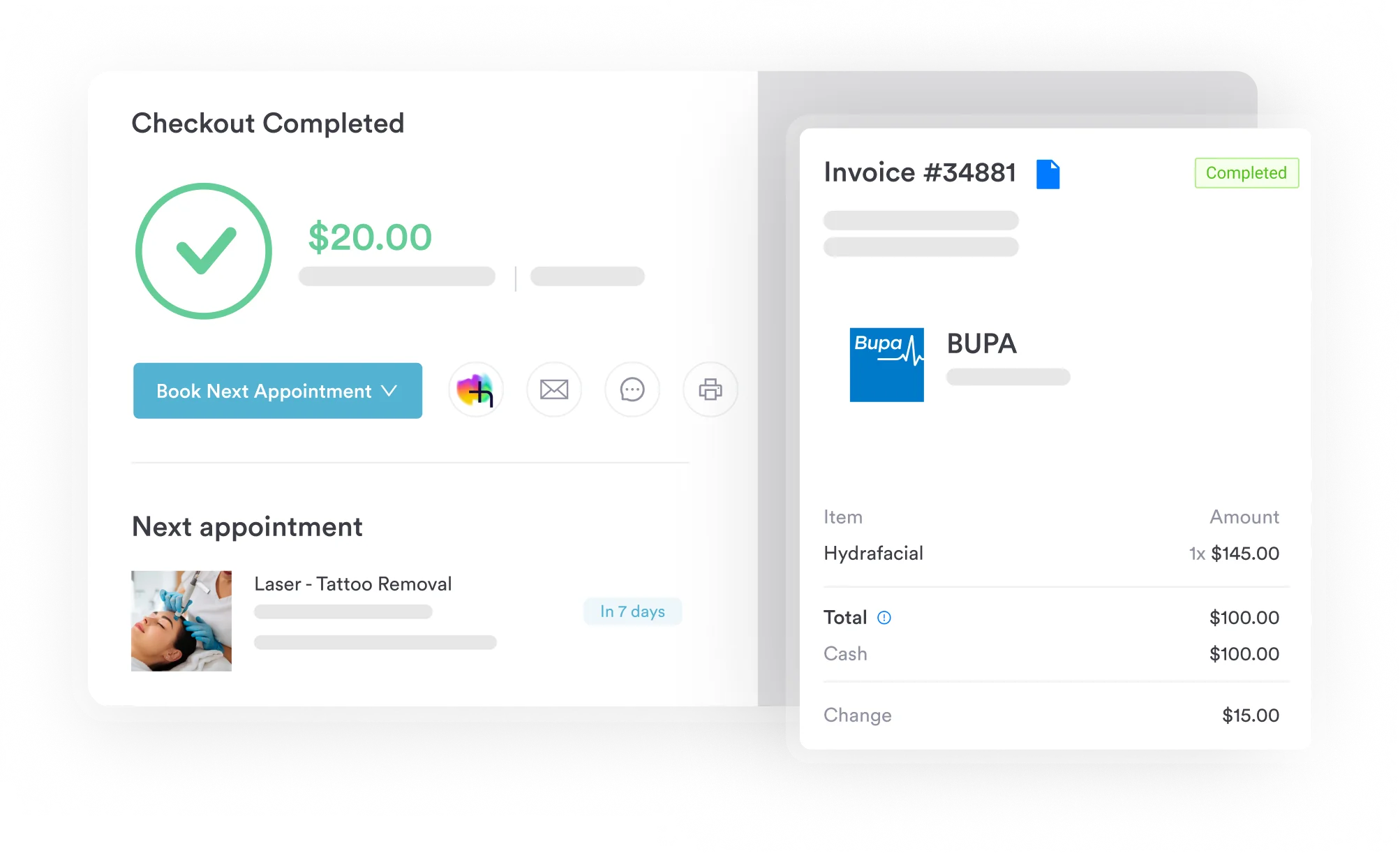
The platform’s automated billing workflows can flag claims missing required modifiers and route incomplete records back to the clinical team before submission.
This reduces the manual review burden on billing staff handling large volumes of peripheral vascular anesthesia cases.
Practices dealing with the diagnostic coding side, such as pairing the correct ICD-10 diagnosis with 01654, can also reference Pabau’s diagnostic coding guides to understand how diagnosis and procedure code pairing affects medical necessity reviews.
Review how I76 and similar condition-specific codes work alongside procedure codes for a fuller picture of clean claim submission.
CPT Code 01654 is a moderate-complexity, high-scrutiny anesthesia code where billing errors are expensive. The most preventable denial causes — missing modifiers, incorrect time unit rounding, and absent pre-anesthesia evaluations — all stem from documentation gaps rather than coding confusion.
Getting the code selection right matters just as much: confirming the correct base unit value (8, not a neighboring code’s 6 or 10) and the exact vessels grafted prevents both underbilling and audit risk.
Pabau’s claims management tools help anesthesia practices capture the documentation required for 01654 clean claim submission. To see how Pabau handles complex anesthesia billing workflows, book a demo with the team.

Need anesthesia billing details for a different anatomical site? CPT code 00190 covers base units, modifiers, and documentation for anesthesia during facial bone and skull procedures.
Billing for a vascular procedure instead of a bypass graft? CPT code 36471 breaks down reimbursement and modifiers for varicose vein sclerotherapy.
Need anesthesia coding for an orthopedic procedure? CPT code 01340 explains base units and billing requirements for anesthesia during closed distal femur procedures.
CPT Code 01654 covers anesthesia services for a bypass graft procedure on the arteries of the shoulder and axilla. It applies when a surgeon creates a bypass graft to reroute blood flow around a diseased or blocked segment of the axillary or brachial artery. It does not apply to cardiac or cardiopulmonary bypass surgery, despite the similar-sounding terminology.
CPT 01654 carries 8 base units as defined in the ASA Relative Value Guide (RVG). These base units reflect the moderate complexity of a peripheral vascular bypass graft procedure on the shoulder and axilla arteries. Time units are added on top of the base units based on the documented anesthesia duration.
Required modifiers for 01654 include: AA (anesthesiologist personally performing), QZ (CRNA without medical direction), QK (anesthesiologist medically directing 2-4 concurrent CRNAs), QX (CRNA under medical direction, billed alongside QK), and QY (anesthesiologist directing one CRNA). Every 01654 claim must include one of these modifiers or it will be denied.
CPT 01654 is used for a bypass graft procedure confined to the arteries of the shoulder and axilla. CPT 01656 is used specifically when the bypass graft runs from the axillary artery to the femoral artery. The two codes also carry different base unit values – 8 for 01654 versus 10 for 01656 – so confirming the exact vessels grafted in the operative report is essential before selecting a code.
Yes, a CRNA can bill CPT Code 01654 using modifier QZ when performing the service independently without medical direction. When working under the medical direction of an anesthesiologist, the CRNA bills 01654 with modifier QX and the anesthesiologist bills a separate 01654 claim with modifier QK. State scope-of-practice rules may affect CRNA billing eligibility; always verify with your MAC.
The 2026 Medicare national anesthesia conversion factor should be verified directly from the CMS MPFS final rule, as it changes annually and varies by Medicare locality. Use the CMS Physician Fee Schedule lookup tool or the FastRVU RVU lookup to find the rate applicable to your geographic area.
Required documentation includes: a pre-anesthesia evaluation (dated and timed before the procedure), a continuous intraoperative anesthesia record with documented start and stop times, a post-anesthesia note, a medical necessity statement identifying the surgical procedure, and documentation supporting any qualifying circumstance codes billed alongside 01654.



