CPT code 93503: Swan-Ganz catheter billing and modifiers
CPT code 93503: Official descriptor and procedure overview In the AMA CPT code s...

Last Updated: Oct 23, 2026

CPT Code 00922 covers anesthesia for seminal vesicle procedures within the male genitalia anesthesia sub-range (CPT 00920-00938), part of the broader perineum anesthesia range (CPT 00902-00952).
Base unit value is 6, verified by the VA Community Care Table H, the DOL OWCP fee schedule, and MassHealth.
Do not confuse 00922 with CPT 00921 (vasectomy): 00921 covers vasectomy, 00922 covers seminal vesicle procedures specifically.
Pabau’s claims management software helps urology and anesthesia practices submit accurate CPT 00922 claims and track reimbursements in one workflow.
CPT Code 00922 is the anesthesia code for surgical procedures on the seminal vesicles, including open urethral approaches, and it carries 6 base units. Practices that rely on anesthesia claims management software catch coding and modifier errors before claims reach the payer.
CPT Code 00922 is maintained by the American Medical Association (AMA) as part of the Current Procedural Terminology (CPT) code set. Its official description reads: “Anesthesia for procedures on male genitalia (including open urethral procedures); seminal vesicles.” The code sits within the male genitalia anesthesia sub-range (CPT 00920-00938), part of the broader perineum anesthesia range that spans CPT 00902 through 00952.
Seminal vesicles are paired glandular structures located posterior to the bladder in male anatomy. Surgical procedures on them, such as seminal vesiculectomy (CPT 55650) or excision of a Müllerian duct cyst (CPT 55680), require general or regional anesthesia. CPT 00922 is the correct code to bill when anesthesia is provided for these specific surgical interventions.
Anesthesia billing uses a unit-based formula rather than time-only billing. The total billable units equal: Base Units + Time Units + Qualifying Circumstance Units (when applicable). CPT Code 00922 carries a base unit value of 6, confirmed across multiple federal fee schedules.
Time units are calculated by dividing total anesthesia time by 15 minutes per unit (the standard conversion used by most payers, though some Medicaid programs use 10-minute intervals). A 45-minute procedure would add 3 time units, making the total 9 units before modifiers. Use the FastRVU reimbursement lookup tool to cross-reference current RVU values and conversion factors for your locality.
Qualifying circumstance codes can add units on top of the base and time calculation. CPT 99100 (patient under 1 year or over 70) adds 1 unit. CPT 99140 (emergency conditions) adds 2 units. Bill these only when the clinical documentation supports the circumstance. Base unit values vary widely across the anesthesia code set:
Not every anesthesia code needs 99100 for a young patient. CPT code 00836 covers hernia repair in premature infants. Its descriptor already names the age criteria, so 99100 is generally not reported alongside it.
Modifier selection for CPT 00922 depends on who delivers the anesthesia service and whether supervision is involved. Incorrect modifier use is one of the most common reasons anesthesia claims are denied or downcoded.
Medicare applies a 50% payment reduction when modifier QK or QY is used alongside QX, because medical direction splits reimbursement between the directing physician and the CRNA. Verify the specific split rules with your MAC before submitting claims. Modifier logic isn’t unique to anesthesia: non-anesthesia codes like CPT 96127 follow the same payer rules for matching modifiers to who performed the service.
Audit your modifier usage against actual anesthesia start and stop times before each claim submission. Documenting the specific minutes of pre-anesthesia assessment, induction, maintenance, and emergence separately protects you from post-payment audits and supports the time units billed.
Every CPT 00922 claim requires a supporting ICD-10-CM diagnosis code to establish medical necessity. Payers match the procedure code against the diagnosis to confirm clinical appropriateness. Using the wrong ICD-10 pairing is a common cause of medical necessity denials.
Always verify ICD-10 pairing against the specific payer’s local coverage determination (LCD). Some Medicaid programs maintain their own approved diagnosis lists for male genitalia anesthesia codes. The CMS Physician Fee Schedule search tool allows you to look up coverage determinations tied to specific CPT codes, including 00922.
The male genitalia anesthesia sub-range (CPT 00920-00938) contains closely related codes that coders must distinguish carefully. Selecting the wrong code because procedures sound similar is a recurring denial trigger. Procedure site determines code selection, not anatomical proximity, which is why CPT 00924 sits right next to 00922 in the sequence yet covers entirely different anatomy.
CPT 00921 (vasectomy) and CPT 00922 (seminal vesicles) are frequently confused because the codes are adjacent and both involve male reproductive anatomy. They are not interchangeable. Vasectomy anesthesia is CPT 00921 with 3 base units. CPT 00922 carries 6 base units because the procedures are anatomically deeper, require more extensive exposure, and carry greater procedural complexity. Billing 00921 for a seminal vesicle procedure undercodes the service and reduces reimbursement by 50%.
Reimbursement for CPT 00922 varies by payer type, geographic locality, and conversion factor. No single dollar amount applies universally, so practices must calculate expected reimbursement using the formula: Total Units x Conversion Factor = Reimbursement Amount.
Medicare reimbursement uses the anesthesia conversion factor published annually in the Medicare Physician Fee Schedule. The conversion factor differs by MAC jurisdiction and is updated each January 1. Use the AAPC Codify CPT lookup to verify current payer-specific payment policies, or check the CMS fee schedule search directly for your locality.
State Medicaid programs apply their own conversion factors and base unit tables. Utah Medicaid, New York eMedNY, and Massachusetts MassHealth all reference CPT 00922 explicitly in their published anesthesia code schedules at 6 base units. Veterans Affairs Community Care uses the same 6 base unit value from Table H. The Department of Labor OWCP fee schedule for federal workers’ compensation also confirms 6 base units for this code. For men’s health and urology practices.

Pabau’s claims management tools help urology and anesthesia practices track modifiers, document time units, and submit CPT 00922 claims accurately across Medicare, Medicaid, and commercial payers.

Clean documentation is what separates paid claims from denied ones for CPT 00922. Payers audit anesthesia claims closely because the unit-based billing model creates opportunities for overcoding. Five documentation elements are non-negotiable for any 00922 claim. First-pass rate measures how often a claim is paid without anyone touching it again.
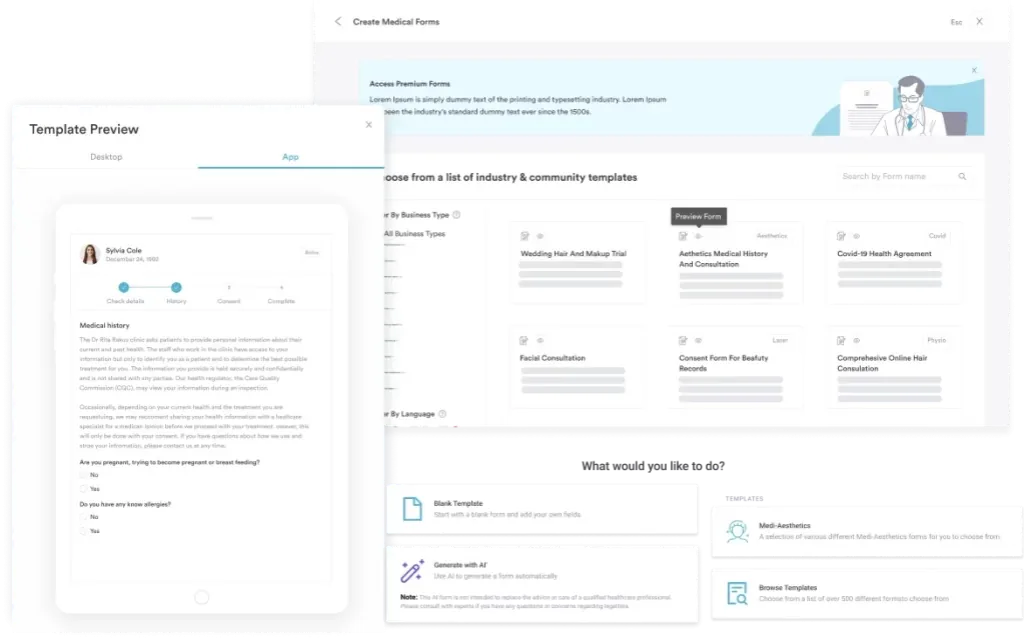
Using digital documentation forms in the anesthesia workflow keeps clinical activity and the billing record aligned. Structured electronic templates prompt providers to capture start and stop times, ASA classification, and procedure identification at the point of care, rather than reconstructing them at the billing stage.
Run a quarterly audit of all CPT 00922 claims against your anesthesia time logs. Flag any claim where billed time units differ from the documented start/stop window by more than one unit. Discrepancies are the primary target in CMS post-payment audits for anesthesia services.
CPT 00922 claims face a predictable set of denial patterns. Understanding them before submission is more cost-effective than working appeals after the fact. The following are the most common issues, along with the specific billing fix for each.
Anesthesia billing sits in a higher audit risk tier than most surgical procedure billing. The time-based formula creates a calculation variable that payers scrutinize. Practices billing CPT 00922 regularly should maintain a compliance framework covering the following areas.
Accurate coding relies on clean source documentation. The same discipline applies elsewhere in the anesthesia code set. Consistent use of billing compliance management tools that flag modifier conflicts, time unit mismatches, and unsupported diagnosis codes catches most denial-triggering issues before claims leave the practice. Under current evaluation and management rules, the counted elements changed but the need to show reasoning did not.
Federal programs including the DOL OWCP, VA Community Care, and Medicaid all reference CPT 00922 explicitly in their published base unit tables. This means payers have the data to verify claims against expected unit values. A claim with 6 base units and 4 time units (total 10 units) for a 60-minute seminal vesicle procedure is consistent with published tables. A claim with 12 base units for the same code triggers an edit. Practices that systematically document their anesthesia compliance rationale are better positioned during payer audits. The AMA CPT coding resources page includes tools to support accurate code set use and audit preparation.
CPT 00922 is a narrowly defined code with a 6-base-unit value that applies specifically to seminal vesicle surgical procedures, not vasectomy or general male genitalia procedures. Getting it right means verifying the procedure against the operative report, selecting the correct modifier for your anesthesia delivery model, and pairing the claim with a supported ICD-10-CM diagnosis code.
Pabau’s claims management software supports accurate anesthesia billing by centralizing documentation, modifier tracking, and claim submission in one connected workflow. To see how Pabau handles anesthesia and urology billing, book a demo with our team.

Billing extra breast localization devices? Breast localization device billing guide covers the add-on code for each extra lesion localized under stereotactic guidance, always paired with code 19283.
Still billing a deleted CPT code? Deleted CPT code replacement guide explains why claims carrying this deleted code are denied, and which replacement code and modifiers to bill instead.
Billing a deleted mammaplasty code? Deleted mammaplasty code guide covers the mammaplasty augmentation code the AMA deleted in 2021, with no direct one-to-one successor for claims.
CPT Code 00922 is the anesthesia code for procedures on the male seminal vesicles, within the male genitalia anesthesia sub-range (CPT 00920-00938). It carries 6 base units and is used when anesthesia is administered for seminal vesicle surgeries such as seminal vesiculectomy (CPT 55650) or Müllerian duct cyst excision (CPT 55680). It does not apply to vasectomy procedures, which use CPT 00921.
CPT 00922 has 6 base units, confirmed by the VA Community Care Table H, the DOL OWCP fee schedule, and the Massachusetts MassHealth anesthesia codes spreadsheet. This is double the base unit value of adjacent codes 00920 and 00921, reflecting the greater procedural complexity of seminal vesicle surgery.
CPT 00921 covers anesthesia for vasectomy procedures (unilateral or bilateral) and carries 3 base units. CPT 00922 covers anesthesia for seminal vesicle procedures (including open urethral procedures) and carries 6 base units. The two codes cover different anatomical procedures. Billing 00921 for a seminal vesicle procedure is a coding error that reduces reimbursement by approximately 50%.
The applicable modifiers are AA (physician performs all anesthesia personally), QK (physician directs 2-4 concurrent CRNA procedures), QX (CRNA under physician medical direction), QY (physician directs one CRNA), and QZ (CRNA without medical direction). Modifier selection depends on the specific care delivery arrangement and payer rules.
Commonly paired ICD-10-CM codes include N49.0 (inflammatory disorders of seminal vesicle), Q55.4 (congenital malformations of seminal vesicles and related structures), and C63.7 (malignant neoplasm of other specified male genital organs). Always verify payer-specific LCD requirements before submitting, as Medicaid programs may maintain their own approved diagnosis lists.