CPT code 81408: Tier 2 molecular pathology billing guide
CPT code 81408: Official descriptor and Tier 2 classification CPT code 81408 is ...

Last Updated: Nov 10, 2026
Q0750 is the CCSD code for subtotal abdominal hysterectomy, +/- oophorectomy, +/- ureterolysis. The uterine body is removed through an open abdominal incision and the cervix is retained.
Removal of one or both ovaries and freeing of the ureters sit inside the same code, so neither goes on a separate claim line. If the cervix is removed, the procedure is a total abdominal hysterectomy and Q0740 applies instead.
Let Pabau's smart automation suggest the right codes, reduce claim denials, and keep your practice compliant—effortlessly.
Automate repetitive tasks and focus on what matters most—your patients.
Reduce coding errors and ensure compliance with the latest regulations.
Clean claims, fewer denials, and faster reimbursements.
Powerful insights and reporting to help your practice thrive.
HIPAA compliant SOC 2 certified GDPR-compliant Trusted by 4,000+ clinics worldwide

Q0750 is the CCSD code for an open subtotal abdominal hysterectomy, where the uterine body is removed and the cervix is retained.
Laparoscopic and robotic-assisted subtotal hysterectomies take Q0751 and Q0752, and a total abdominal hysterectomy takes Q0740.
Oophorectomy and ureterolysis sit inside the Q0750 descriptor, so never add Q2234 or Q2232 on a separate line.
The operative note must state the open approach, the retained cervix, and the side and extent of any ovarian removal.
Confirm pre-authorisation and Healthcode acceptance with each insurer before surgery and before you submit the claim.
CCSD Code Q0750 covers “Subtotal abdominal hysterectomy, +/- oophorectomy, +/- ureterolysis”. The surgeon removes the uterine body through an open abdominal incision and leaves the cervix in place. The code is maintained by the Clinical Coding and Schedule Development (CCSD) Group, and UK private insurers use it widely.
CCSD codes are used only in UK private healthcare billing. They sit outside the NHS tariff system and differ in structure from CPT codes (US) and OPCS-4 codes (NHS England). For gynaecological procedures, the schedule encodes the surgical approach (abdominal, laparoscopic, robotic or vaginal) and the extent of excision (subtotal or total) as separate codes.
The CCSD schedule places Q0750 within the Q-series gynaecological codes (14.1.0 Uterus/Adnexa), alongside the other CCSD codes for the uterus and ovaries. Insurers apply the schedule in their own fee lists, and our guide to the Bupa CCSD code schedule shows how one of them does it.
Before assigning Q0750, confirm three elements against the operative note. The approach was open abdominal, the uterine body was removed, and the cervix was retained.
A subtotal abdominal hysterectomy is performed through a lower abdominal incision (laparotomy). The surgeon removes the corpus uteri (uterine body) and deliberately leaves the cervical stump in situ. That is the defining distinction. In a total hysterectomy the cervix is excised, and in Q0750 it is not.
The “+/- oophorectomy” and “+/- ureterolysis” parts of the descriptor mean both procedures are already covered by Q0750. CCSD lists Q0750 as an unacceptable combination with Q2234 (prophylactic oophorectomy) and Q2232 (open oophorectomy and salpingectomy). So an oophorectomy done at the same operation never goes on a separate claim line.
It still has to be documented. Record whether one or both ovaries were removed, which side, and whether the tubes came out too.
Surgical reasons for preferring the subtotal approach over a total hysterectomy include:
The clinical scenario in the patient record must support the choice of subtotal abdominal hysterectomy. Coders reviewing operative notes for Q0750 should expect one or more of these indications:
The indication does not change the code, but it drives the ICD-10 diagnosis code that accompanies the claim. Common pairings include D25 (leiomyoma of uterus), N80 (endometriosis) and N92 (excessive or frequent menstruation). Insurer billing systems check the pairing, and a mismatch generates an automatic query or rejection.
Knowing the scope of Q0750 prevents both underclaiming and unbundling. The table below shows what the code already covers and what is billed separately.
CCSD’s unacceptable-combination rules settle most bundling questions for Q0750. Check them in the current schedule before you add any second procedure line to the claim.
The subtotal-versus-total decision is the most important choice coders make with Q0750. The table below sets out the codes that sit closest to it.
The first code-selection question is whether the cervix was removed. If it was, Q0750 does not apply. The operative note must state cervical retention explicitly, because a report that never mentions the cervix cannot defend Q0750 on audit.
The second question is the route, and the matrix below shows how the two answers combine into one code.
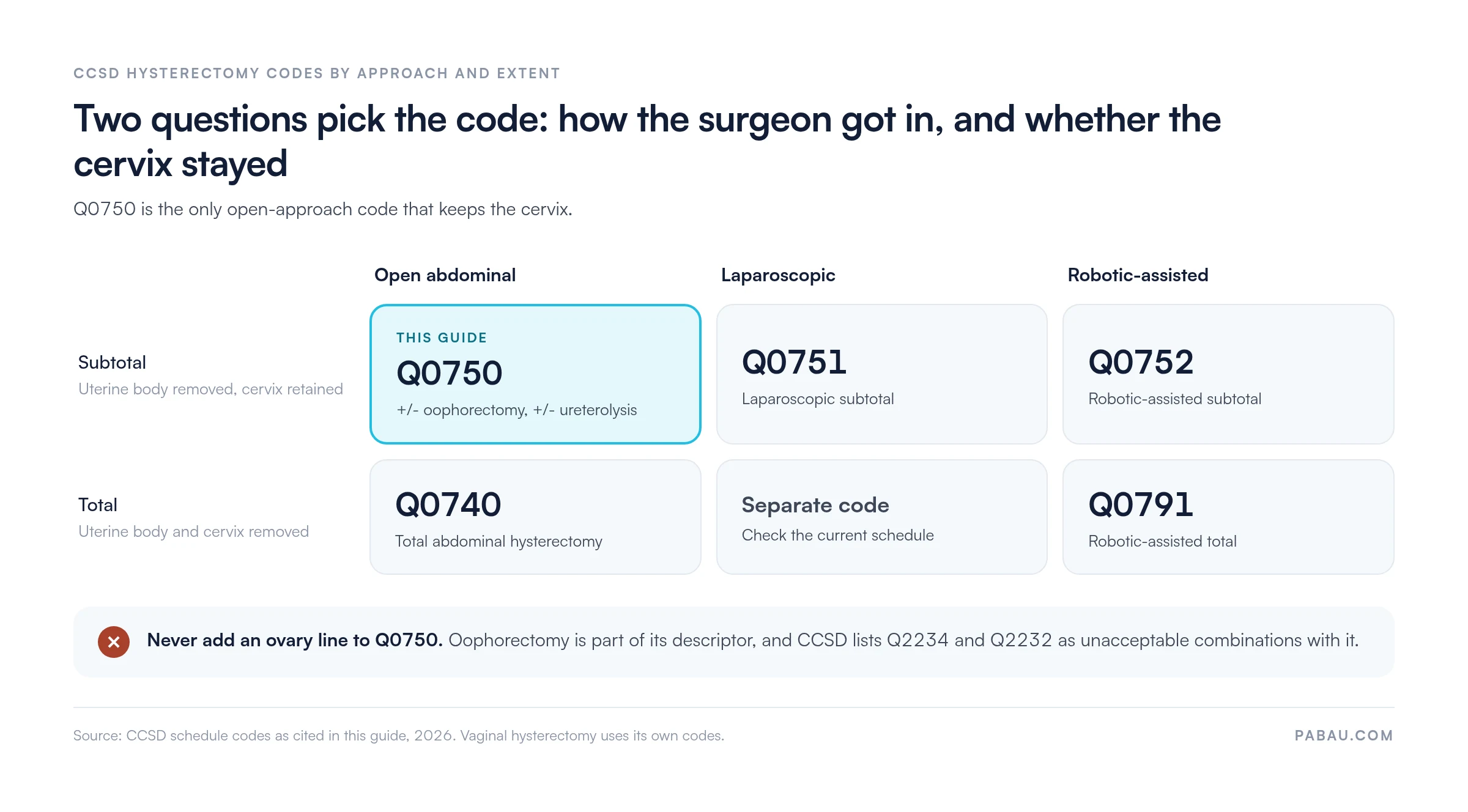
A hysterectomy performed for an ovarian tumour has its own code, Q0880. Check adjacent code numbers against the current CCSD schedule, because annual updates can revise them.
UK private insurers audit surgical claims against operative documentation. For Q0750, the operative note must address each of these elements:
The ICD-10 diagnosis code on the claim must match the documented indication. Never assign a diagnosis that the clinical record does not state or support. Pabau, the practice management platform we build, lets you set up operative note forms with a field for each element above. Nothing then goes missing at submission.
The CCSD Technical Guide (October 2025) sets out the general business rules for all CCSD surgical codes. That includes the rules on concurrent procedure coding and unbundling.
Check the operative note for five points before you submit a Q0750 claim. It states the open abdominal approach and the retained cervix. It says yes or no to oophorectomy, with the side. It confirms specimen dispatch. Its indication matches the ICD-10 code. A missing point is a likely denial.
Insurers generally require pre-authorisation for inpatient surgery such as Q0750, so confirm the rule with each insurer before the procedure. Pre-authorisation does not guarantee payment. It confirms approval in principle, subject to the clinical details matching those submitted at the time.
Standard insurer requirements for Q0750 pre-authorisation typically include:
Requirements vary by insurer. The table below lists the pre-authorisation channels for four large UK private insurers:
Store the pre-authorisation reference in the patient record and link it to the procedure booking. A claim submitted without that reference is likely to be rejected, however strong the clinical case.
Surgeon fees for Q0750 differ between insurers. Our guide to the Bupa procedure fee schedule explains how one large insurer sets and publishes them.
CCSD Code Q0750 claims fail for a predictable set of reasons. Most denials are preventable at the documentation or pre-submission stage.
The anaesthetist always invoices the anaesthetic for Q0750 independently. The consultant surgeon’s Q0750 invoice covers the surgical fee only. The anaesthetist submits a separate claim with the appropriate CCSD anaesthetic code, typically calculated on a time and unit basis. An anaesthetic charge inside the surgeon’s invoice is a billing error that most insurers reject or query.
Insurers do not all pay an assistant surgeon fee for Q0750. An assistant is clinically routine in open abdominal surgery, but first-assistant policies vary. Before billing one, confirm that the patient’s policy covers a first assistant for this procedure. Blanket assistant claims without that check lead to recurring partial denials.
When surgeon and assistant both claim for the same procedure date, insurer systems cross-reference the claims. The operative note must name both practitioners and their roles to support both invoices.
Healthcode is the main electronic billing clearinghouse for UK private healthcare claims. Many UK private insurers accept claims through it, but confirm Healthcode acceptance with each insurer before you submit. The steps below cover the validation points that prevent rejection at submission.
Build a Q0750 submission checklist into your practice workflow. It confirms the code, the pre-auth reference, the ICD-10 match and the absence of an oophorectomy line, then clears validation. Run every claim through it before you submit. Five minutes of review saves weeks of denial management.
Most Q0750 rejections start before the claim exists. The pre-auth number sits in an email, the operative note skips the cervix, or someone adds an oophorectomy line out of habit. Each slip turns into a query weeks later.
Pabau keeps the pre-authorisation reference, the operative note and the invoice on one patient record. Its integrated claims management software sends the claim to Healthcode from that record, so nobody retypes the code or the reference. Payments post back against the same episode, giving you an audit trail from authorisation to settlement.
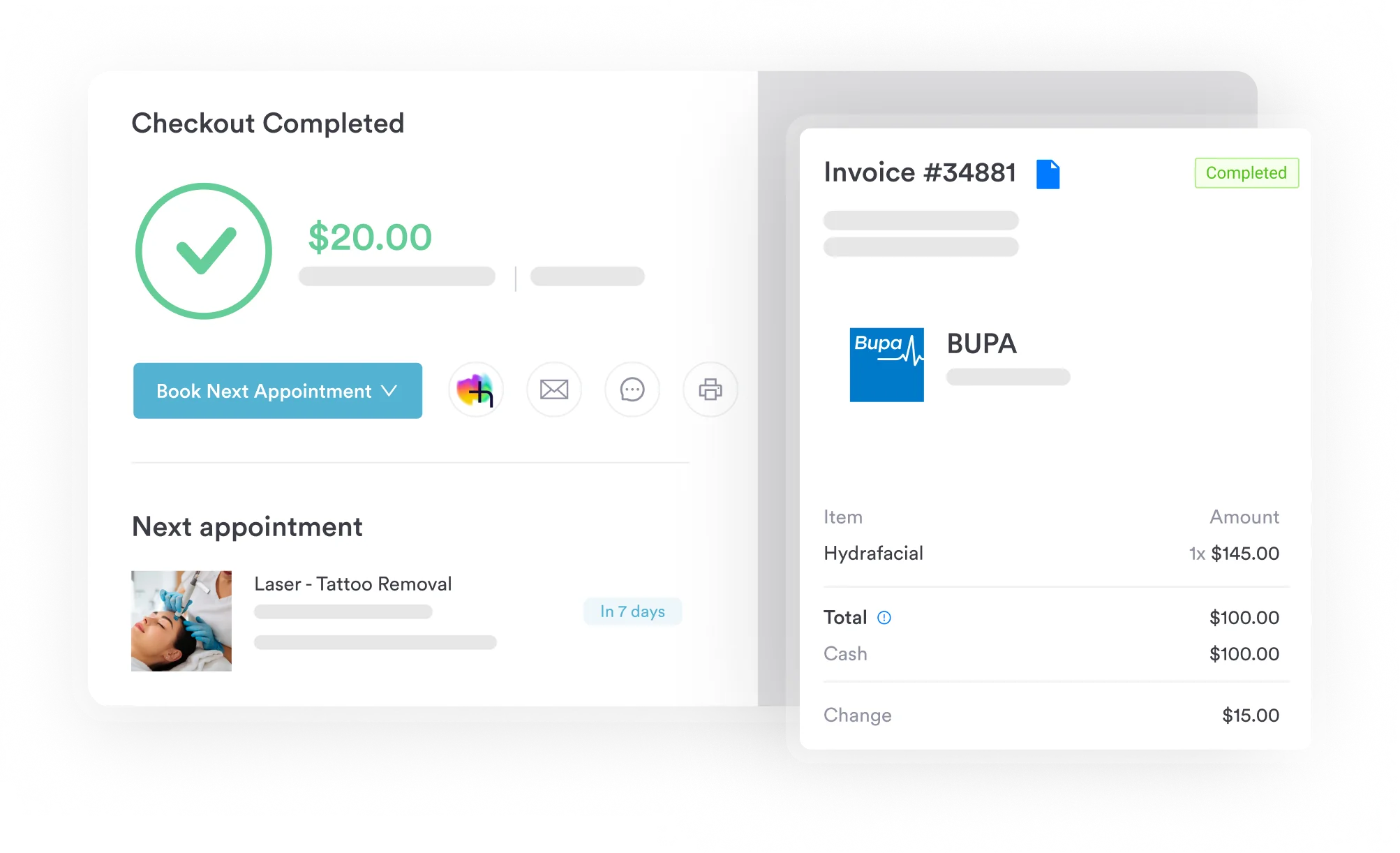

Pabau helps UK private practice teams capture structured operative notes, store pre-authorisation references against patient records, and submit clean claims through integrated billing workflows.

Q0750 rewards a precise operative note more than a clever coder. Once the note states the open approach and the retained cervix, the code chooses itself.
The bigger risk is the habit of adding an ovary line. Treat oophorectomy as part of Q0750, chase the pre-auth reference before theatre, and most rejections never happen.
Book a demo to see how Pabau keeps gynaecology claims, notes and pre-auth references on one record.

Need the full Bupa CCSD code set? Bupa CCSD codes covers the CCSD schedule as Bupa applies it, with fee and documentation context.
Coding a hysterectomy for an ovarian tumour? CCSD code Q0880 explains the code, documentation and claim rules for that procedure.
Want a worked Healthcode submission? CCSD code M0222 walks through pre-authorisation and Healthcode claims for another CCSD procedure.
Billing the same procedure in the US? CPT code 58180 covers supracervical hysterectomy billing under US coding rules.
CCSD Code Q0750 is the UK private healthcare code for subtotal abdominal hysterectomy, +/- oophorectomy, +/- ureterolysis. The uterine body is removed through an open abdominal incision and the cervix is retained. It applies only to the open route, not to laparoscopic, robotic or vaginal hysterectomy.
No. Oophorectomy is part of the Q0750 descriptor, so it never goes on a separate claim line. CCSD lists Q2234 (prophylactic oophorectomy) and Q2232 (open oophorectomy and salpingectomy) as unacceptable combinations with Q0750. Document the side and extent of any ovarian removal in the operative note.
The most common confusion is with Q0740, the total abdominal hysterectomy code, which differs by removal of the cervix. Q0751 is the approach-based sibling, a laparoscopic subtotal hysterectomy, and Q0752 is the robotic-assisted version. Always check the current CCSD schedule, because annual updates can change code numbers.
The usual reasons are a subtotal-versus-total code error, a missing pre-authorisation reference, or an ICD-10 code that does not match the operative note. Others are a non-open approach coded as Q0750, a separate oophorectomy line, and late submission. A short pre-submission checklist covering each one prevents most rejections.