CPT Code 35820: Exploration for postoperative hemorrhage (thorax)
CPT Code 35820: Official descriptor and clinical overview CPT Code 35820 is defi...

Last Updated: Nov 13, 2026
P2520 is the CCSD code for repair of urethrovaginal fistula (including cystoscopy). It covers surgical closure of an abnormal tract between the urethra and the vagina, with the cystoscopy done in the same operation.
The cystoscopy is part of the code, so it is never billed on its own line for that session. Major UK private insurers, including Bupa, AXA Health, Aviva and Vitality, generally expect preauthorization before the surgery.
Let Pabau's smart automation suggest the right codes, reduce claim denials, and keep your practice compliant—effortlessly.
Automate repetitive tasks and focus on what matters most—your patients.
Reduce coding errors and ensure compliance with the latest regulations.
Clean claims, fewer denials, and faster reimbursements.
Powerful insights and reporting to help your practice thrive.
HIPAA compliant SOC 2 certified GDPR-compliant Trusted by 4,000+ clinics worldwide

CCSD Code P2520 is the UK private insurance code for surgical repair of a urethrovaginal fistula, with the cystoscopy included.
The cystoscopy is part of the code, so a separate cystoscopy line on the same claim invites a rejection.
P2520 is a gynecological and urological operation, not a dental code, whatever older guides suggest.
Most rejections trace back to a missing preauthorization number, the wrong fistula code or a diagnosis that doesn’t match the operation note.
Check the insurer’s own code lookup before you quote, because CCSD sets the codes while each insurer sets its fees.
CCSD Code P2520 is the code UK private medical insurers use for repair of a urethrovaginal fistula, including cystoscopy. The schedule is run by the CCSD Group of insurers: Bupa, Vitality, AXA Health and Aviva. Its UK private insurance codes give hospitals, consultants and insurers one shared language for procedures.
A urethrovaginal fistula is an abnormal opening between the urethra and the vagina. Patients usually present with urine leaking through the vagina, often after earlier pelvic or vaginal surgery. P2520 pays for the operation that closes that tract, with the cystoscopy done in the same session.
The letter P confuses people. It has nothing to do with periodontics. CCSD code numbers broadly follow the NHS OPCS-4 classification, where chapter P covers the lower female genital tract. That is why a urinary leak repair carries a P prefix rather than the M prefix of the bladder and urethra codes.
The same chapter holds P2100, the code for reconstruction of the vagina. Vaginal vault repairs sit in chapter P as well, under codes such as CCSD code P2420.
A urogynecologist or urologist usually repairs the fistula through the vagina. The surgeon starts with a cystoscopy to see the opening from inside the urethra and bladder, and to check that the bladder itself is intact. Then the tract is excised or freshened and closed in layers.
Where the local tissue is thin or scarred, some surgeons bring in a tissue flap to support the closure. A Martius flap from the labial fat pad is the common example. The patient then goes home with a urinary catheter while the repair heals.
Each of those steps matters for billing, because the insurer reads the operation note to confirm the code. A note that only says “fistula repaired” leaves the reviewer guessing which fistula and which route.
The descriptor names the cystoscopy, so that part of the operation is already paid for inside P2520. Here’s how the pieces of a typical case fall:
Insurers publish their own rules on extra codes. Bupa’s procedure code lookup is the quickest check for a Bupa patient, and our guide to Bupa CCSD codes walks through how it works.
Fistula codes sit close together, and the wrong one is an easy slip on a busy list. The deciding question is which two structures the tract connects.
A urethral fistula that opens onto the skin, for example, is coded M7330 instead. Reconstruction of the bladder and urethra, often at the bladder neck, is a cystourethroplasty and is coded M3710.
A diagnostic cystoscopy done weeks before the repair is a separate episode, so it can carry its own code, such as M4510. The cystoscopy done during the repair cannot.
UK private insurers expect an ICD-10 diagnosis next to the procedure code. For a urethrovaginal fistula, N82.1 is the usual choice. It covers other female urinary-genital tract fistulae, and the urethrovaginal type is listed under it.
Watch two near misses. N36.0 is urethral fistula, and ICD-10 sends urethrovaginal fistulae away from it to N82.1. N82.0 is vesicovaginal fistula, which belongs with P2510 instead. A claim that pairs P2520 with N82.0 tells the reviewer the code and the diagnosis describe different operations.
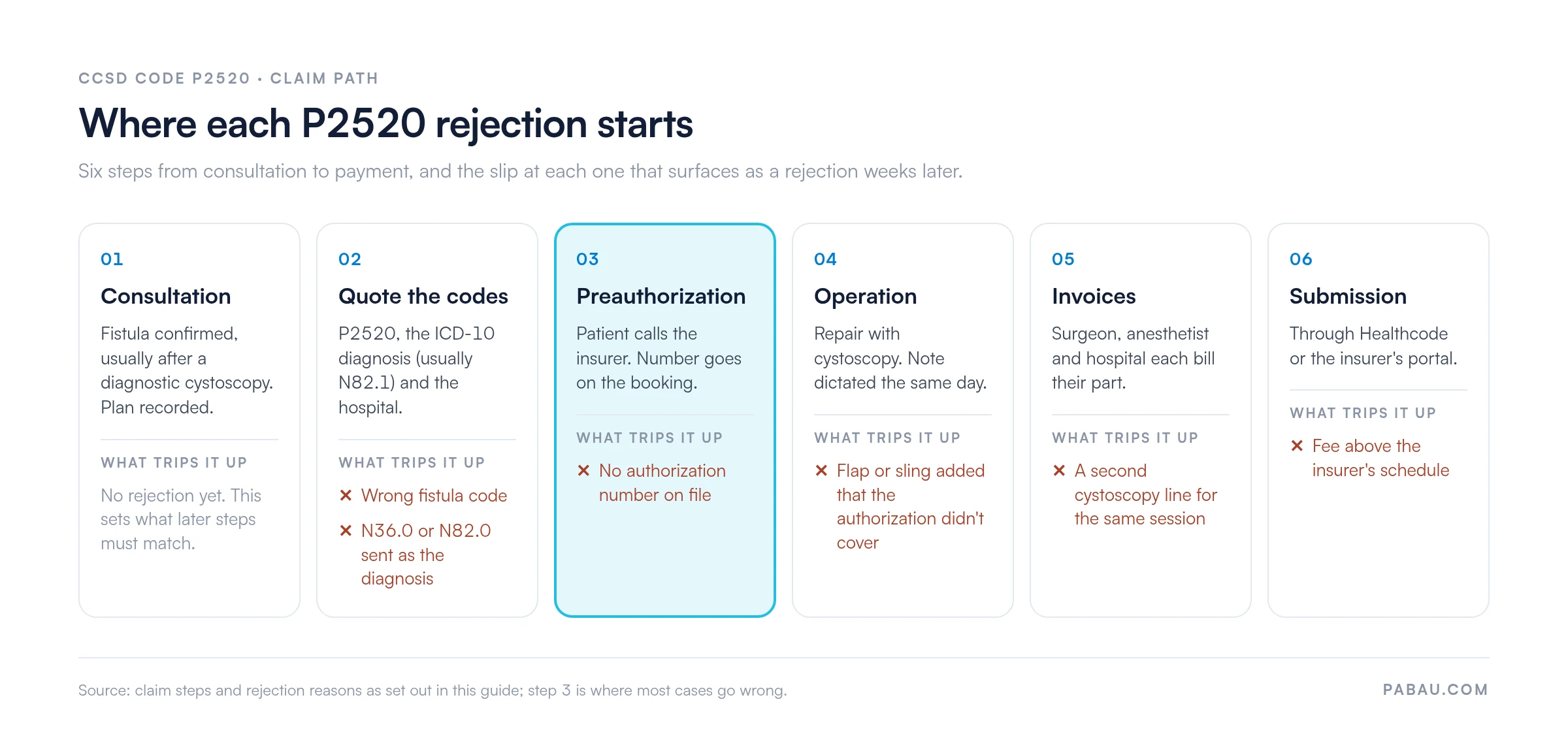
Surgery claims follow the same broad route at most UK insurers. Each step hands something to the next, so a slip early on surfaces as a rejection weeks later.
Step three is where most cases go wrong. If the operation changes on the day, such as an added sling, the insurer needs to hear before the invoice arrives. The map below shows where each common rejection starts.
An insurer that queries P2520 will ask for the operation note first. Make sure it shows:
Keep the consent form and the preauthorization number on the same record. A reviewer can then match the code, the diagnosis and the authorization without writing back.
Take an illustrative patient who develops vaginal leakage some months after a hysterectomy. A diagnostic cystoscopy at an outpatient visit finds an opening in the mid urethra, with a healthy bladder above it. That outpatient cystoscopy is billed on its own, because it happened in a separate episode.
The practice quotes P2520 with N82.1, and the patient gets an authorization number. On the day, the surgeon repairs the fistula vaginally after a check cystoscopy. The surgeon’s invoice carries P2520 alone, and the anesthetist and hospital bill separately for the same date. Nobody adds a second cystoscopy line.
Most rejections are paperwork problems rather than clinical ones. These are the patterns worth watching:
When a rejection does land, ask for the reason in writing before you resubmit. A second submission with the same fault simply restarts the clock.
In many private gynecology and urology practices, the pieces of a P2520 claim live in different places. The operation note sits in one system, the authorization number in an email, and the invoice in a spreadsheet. Matching them up happens when the insurer asks.
Pabau, the practice management and billing platform we build, keeps them on one patient record. Operation notes, consent forms and the authorization number sit together in the patient record. Your billing team can then check the code against the note before the invoice goes out.
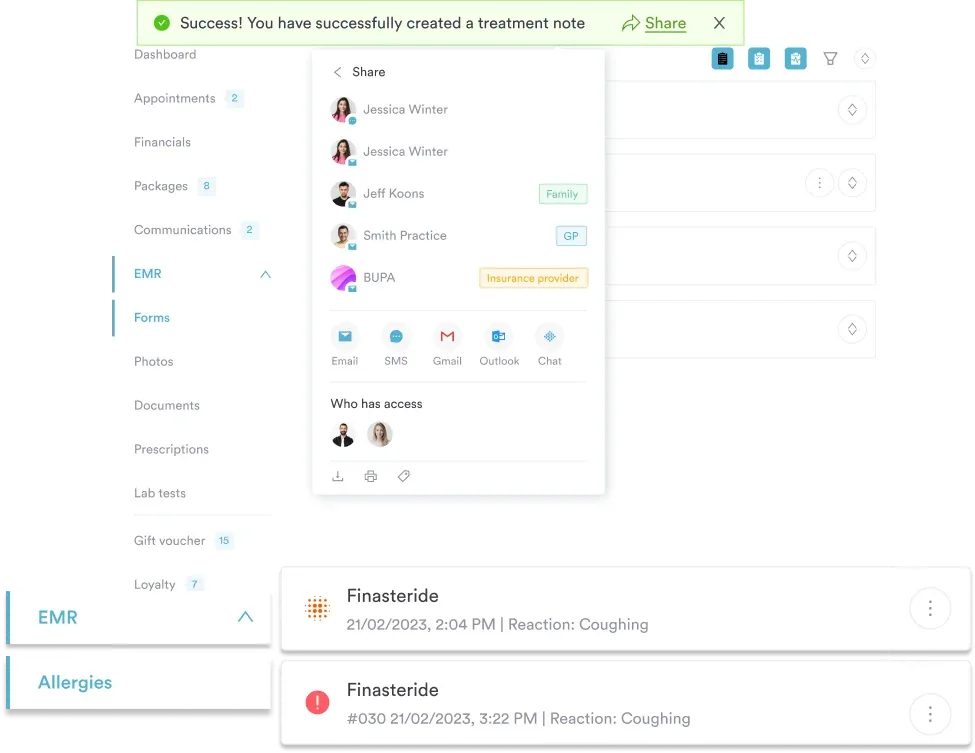
From there, Pabau’s claims management sends UK insurance claims through Healthcode. You can see which invoices are paid, part-paid or queried, so shortfalls get raised with patients early.
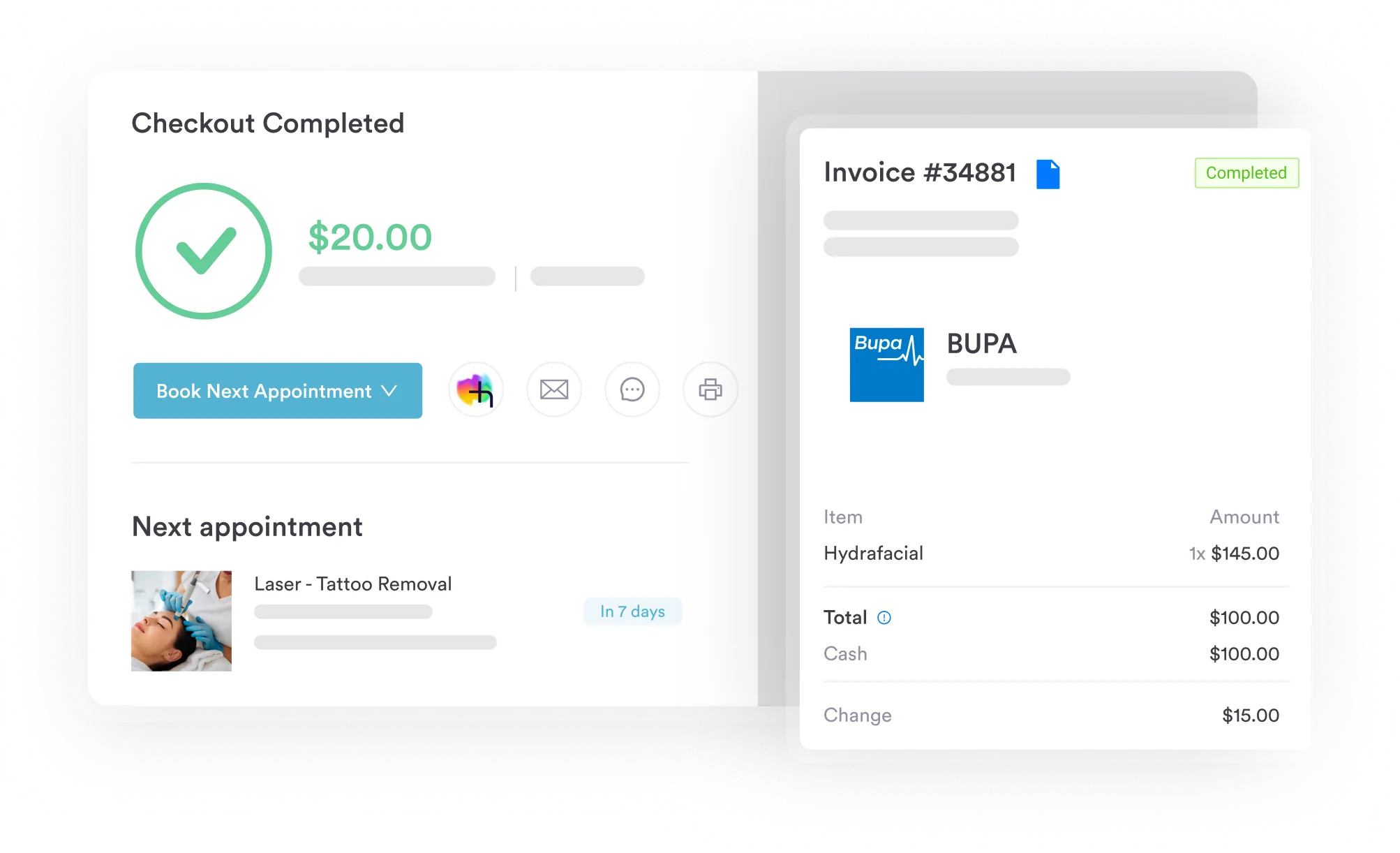

Pabau keeps operation notes, consent and authorization numbers on one patient record and sends UK insurance claims through Healthcode. See how surgical practices cut avoidable P2520 rejections.

P2520 is a narrow code, and that works in your favor. It names one fistula and one operation, with the cystoscopy built in. A claim gets paid when the note, the diagnosis and the authorization all describe that same operation.
Spend your effort before surgery rather than after a rejection. Confirm the fistula type, quote the right pair of codes and log the authorization number. Those three steps prevent most of the queries that slow these claims down.
Book a demo to see how Pabau keeps surgical notes, authorizations and insurer claims on one record for your practice.

Does the tract run to the bladder instead? CCSD Code P2510 covers repair of a vesicovaginal fistula, the closest neighbor to P2520.
Repairing a urethral fistula that opens to the skin? CCSD Code M7330 covers closure of a fistula of the urethra, including cystoscopy.
Billing the diagnostic scope done before surgery? CCSD Code M4510 covers a standalone flexible cystoscopy done in a separate episode.
New to Bupa’s code rules? Bupa CCSD codes explains how Bupa uses the schedule and where to check a code.
P2520’s descriptor doesn’t separate first and repeat repairs. Record the repeat in the operation note, and confirm the code at preauthorization, since a revision with a flap may be coded differently.
Usually, when the policy covers inpatient surgery and the condition isn’t excluded. Cover depends on the policy, so the patient should get preauthorization before the operation is booked.
NHS hospitals record the operation under OPCS-4 P25.2. Private insurers use the CCSD code P2520 for the same operation on their claims.
CCSD sets the code, not the fee. Each insurer publishes its own fee for P2520, so check the patient’s insurer before quoting. Any amount above that fee is billed to the patient as a shortfall.
Yes. The anesthetist sends a separate invoice for the same admission, and insurers generally reference the surgeon’s procedure code. Make sure both invoices show the same date and patient details.