

CPT Code 98981: RTM Treatment Management Billing Guide
CPT code 98981: Definition and official descriptor CPT code 98981 is an add-on c...

Last Updated: Nov 9, 2026
M7020 is the CCSD code for transrectal sextant needle biopsy of prostate with ultrasound guidance. One claim covers the transrectal ultrasound and the six needle cores taken from the apex, mid-gland and base on each side of the gland.
M7020 sits in chapter 12 of the CCSD schedule, under the prostate category, at Minor 3 complexity. Histopathology on the cores is billed separately by the pathologist, and most UK private insurers expect pre-authorisation before the procedure date.
Let Pabau's smart automation suggest the right codes, reduce claim denials, and keep your practice compliant—effortlessly.
Automate repetitive tasks and focus on what matters most—your patients.
Reduce coding errors and ensure compliance with the latest regulations.
Clean claims, fewer denials, and faster reimbursements.
Powerful insights and reporting to help your practice thrive.
HIPAA compliant SOC 2 certified GDPR-compliant Trusted by 4,000+ clinics worldwide

CCSD Code M7020 covers a six-core (sextant) transrectal needle biopsy of the prostate under TRUS guidance, bundling the imaging and biopsy into one code.
Histopathology processing of the biopsy cores is not included in M7020 and is billed under a separate laboratory code.
The ICD-10 codes R97.2 (elevated PSA) and C61 (prostate cancer) are the most common medical necessity anchors paired with M7020.
Pre-authorisation requirements vary by UK private insurer and policy, so always verify with the patient’s insurer before the procedure date.
Pabau, the practice management platform we build, keeps procedure notes and patient records in one place, so M7020 claims go out fully documented.
CCSD Code M7020 is defined by the CCSD coding schedule as “transrectal sextant needle biopsy of prostate with ultrasound guidance.” M7020 sits in chapter 12 of the schedule, alongside the other CCSD codes for the urinary system and male reproductive organs.
It is used only for the transrectal approach under real-time imaging. It is a bundled code, so a single claim covers both the TRUS component and the needle biopsy itself.
Two elements distinguish M7020 from other prostate biopsy codes. First, the route is transrectal. The biopsy needle passes through the rectal wall, guided by a transrectal ultrasound probe. Second, the sampling pattern is sextant, with six cores taken from the apex, mid-gland, and base on each side of the prostate.
Both characteristics must be present for M7020 to apply. Transperineal and MRI-guided biopsies take different codes, and an extended protocol needs the insurer’s ruling.
Private insurers including Bupa, AXA Health, Aviva, Vitality, WPA, Healix, and Allianz Care recognise M7020 within their CCSD-based fee schedules. Refer to the Bupa CCSD billing guide for Bupa-specific coding conventions that apply alongside M7020.
M7020 covers the whole procedural sequence below, from preparation to discharge.
The ultrasound guidance in step 3 is an integral part of M7020. This distinguishes it from a “blind” transrectal biopsy performed without real-time imaging, which carries a different CCSD code.
M7020 is indicated when there is clinical suspicion of prostate cancer or a need to characterise prostatic pathology. The ICD-10 diagnosis paired with the claim must reflect one of these accepted indications.
Every M7020 claim must carry an ICD-10 diagnosis code that establishes medical necessity. The diagnosis must appear in the clinical notes before the procedure date. The table below lists the codes most commonly paired with M7020 in UK private billing.
Use the most specific diagnosis code supported by the clinical documentation. Payers may query a claim where R97.2 (elevated PSA) is used but no PSA value or date is recorded in the notes. Record the PSA figure and collection date in the clinical notes before submitting the claim.
On an active surveillance re-biopsy, C61 establishes medical necessity in place of the PSA code.
M7020 is a bundled code. Its fee covers both the transrectal ultrasound guidance and the needle biopsy in a single submission. Billing both components separately on the same claim date would constitute double-billing under CCSD unbundling rules.
Histopathology is the exclusion that trips up this code most often. When a practice assumes M7020 includes laboratory processing, the pathology work can go unbilled entirely. Confirm with your pathology partner that they submit the tissue analysis code on their own invoice, not yours.
Using the wrong code on a claim that clearly describes one procedure type is a common audit trigger. The choice depends on route, guidance modality, and sampling protocol, checked in the order shown below.
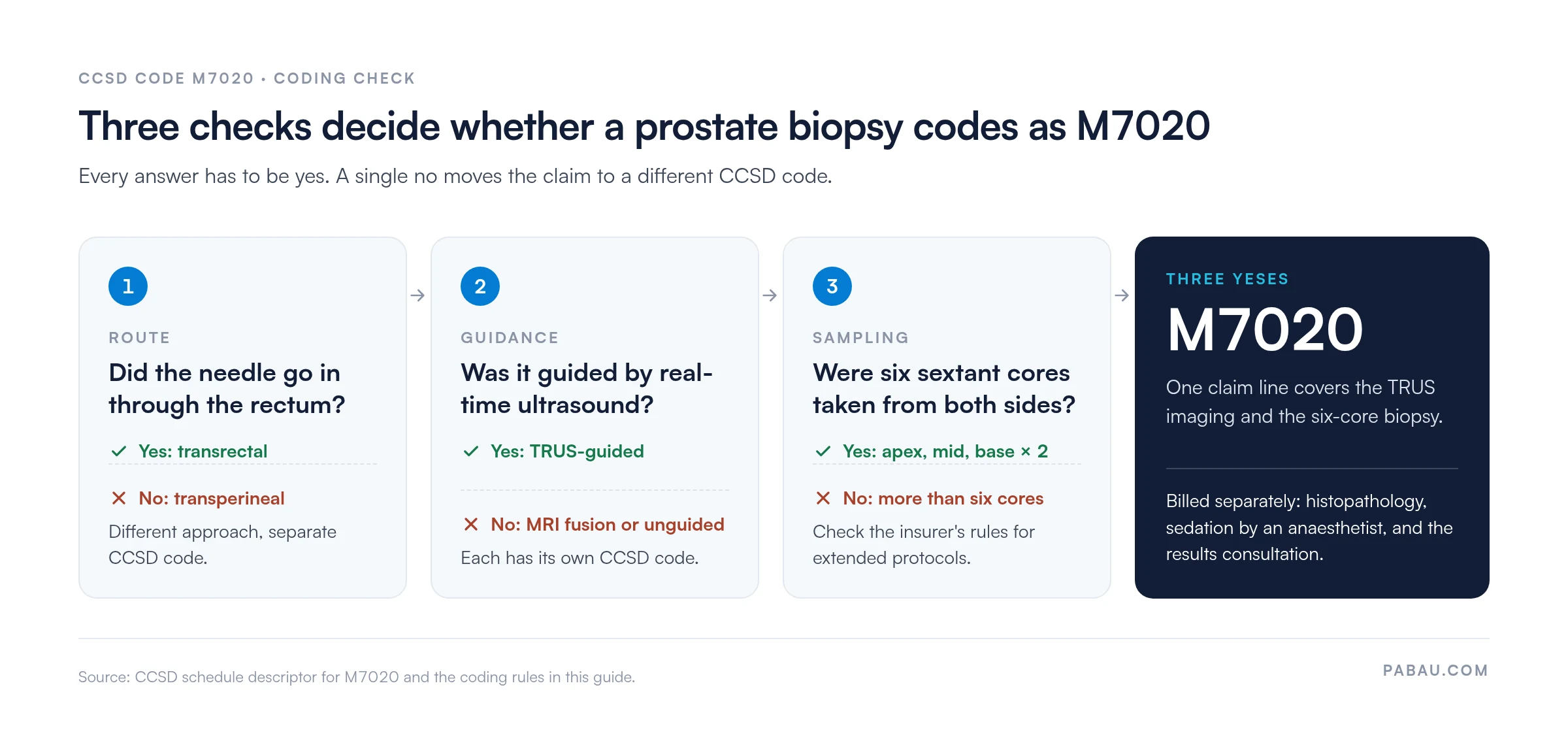
The MRI-guided fusion biopsy distinction matters most in specialist urology practices where both techniques are performed. The clinical notes must clearly state the guidance modality used. Notes that say “prostate biopsy performed” without specifying ultrasound versus MRI leave the coder unable to defend the code if audited.
M7020 may be billed alongside other codes where additional separately identifiable services are provided on the same date. Modifiers reduce the risk of claim rejection when multiple codes appear together.
When in doubt, call the insurer’s provider line before submitting to confirm which ancillary codes they accept alongside M7020. Undisclosed add-on codes that surface at claims review are a common reason for retrospective clawbacks.
Most UK private insurers, including Bupa, AXA Health, Aviva and Vitality, require pre-authorisation for surgical or invasive procedures. Whether pre-auth is mandatory for M7020 depends on the insurer and the patient’s policy. There is no universal rule across all payers.
Treat pre-auth as required unless the insurer confirms in writing that it is not needed for this procedure under this patient’s policy.
When applying for pre-authorisation, include the following in every application.
When pre-auth is omitted and a claim is subsequently submitted, most UK insurers will reject the claim outright. The patient may then be left to pay for the procedure themselves. Appeals are possible but time-consuming. Obtaining authorisation before the procedure date is always faster than pursuing a retrospective appeal.
Run a pre-auth checklist at the point of scheduling, not on the morning of the procedure. For M7020, confirm the policy is active, the urologist is recognised by the insurer, and the hospital is on the policy’s approved list. A single lapsed recognition status can hold payment for weeks.
Inadequate clinical notes are the second most common cause of M7020 claim denials after missing pre-authorisation. The documentation must demonstrate medical necessity before the procedure, describe the procedure in sufficient clinical detail, and confirm the histopathology submission pathway.
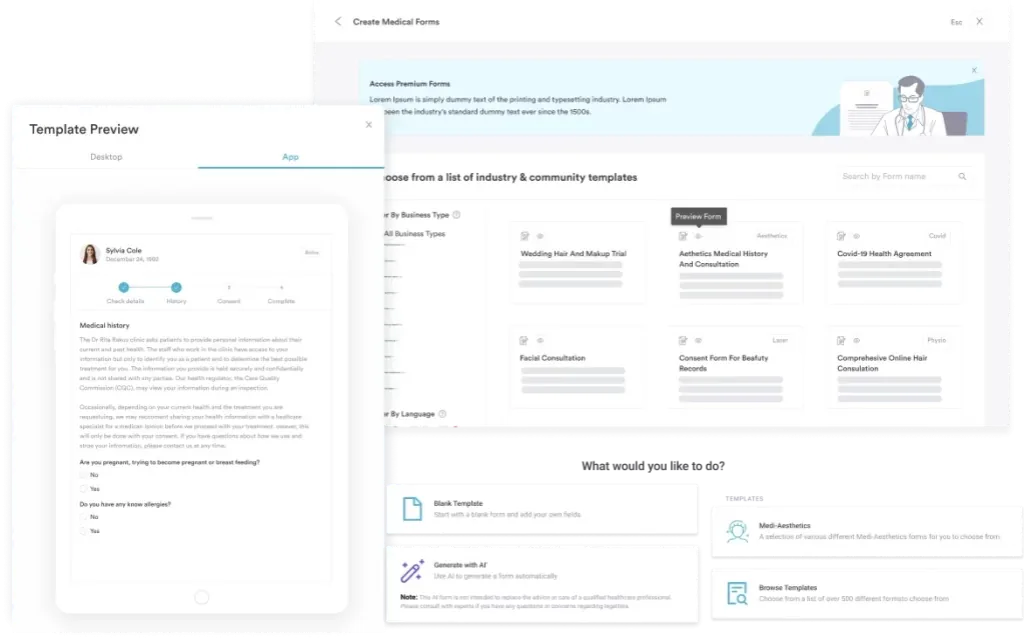
Every M7020 claim should be supported by clinical notes that contain each of the elements below.
Pabau, the practice management platform we build, lets urology practices turn this list into a templated digital procedure note. The same fields are then captured for every patient, whichever urologist performs the biopsy.
Keep the pre-operative consultation, the procedure note, and the pathology result together in a single patient file. When an insurer requests clinical records during an audit, producing the complete episode in one place cuts the time to resolve the claim.
Most M7020 rejections are preventable. The table below maps the most frequent denial patterns to their root cause and the corrective action needed before resubmission.
Practices using claims management software can automate the pre-submission check. It flags missing pre-auth numbers, mismatched ICD-10 codes, and incomplete documentation fields before the claim reaches the payer. Catching errors at submission is faster and cheaper than handling denials after the fact.
Complications after a TRUS-guided prostate biopsy are recognised in urology literature and require separate coding when they result in an additional clinical encounter or intervention.
The three most common complications and their coding rules for follow-up care are listed below.
When a complication requires a second procedure in the same hospital admission, bill M7020 on the original procedure date. Bill the second procedure code on the date it was performed.
Never merge both procedures under a single M7020 claim. Each procedure date must have its own claim line and its own clinical documentation.
Add a complication-coding prompt to your post-biopsy follow-up workflow. When a patient returns within 30 days of M7020, check whether the presenting complaint is a known complication. Then confirm that the clinical record links it to the procedure date. Insurers cross-reference these encounters during audits.
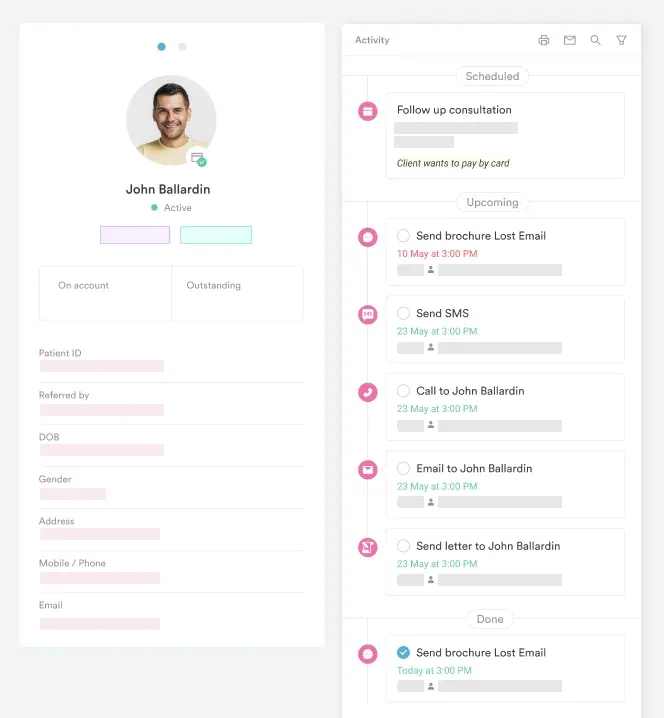
The evidence an M7020 claim depends on is often scattered. The PSA result sits in a lab portal, the consent form on paper, and the pre-authorisation number in an inbox.
In Pabau, consent forms, procedure notes, and pre-authorisation references are stored against the same patient record. Its Healthcode integration then sends the CCSD claim electronically to UK private insurers.
Your team stops chasing missing details after a rejection, and an audit request is answered from one patient file.

Pabau keeps procedure notes, consent forms, and claim documentation linked to each patient file. Pre-authorisation requests and audit responses become faster and more complete.

M7020 is one of the easier CCSD codes to get right, because its descriptor leaves little room for interpretation. If the biopsy was transrectal, ultrasound-guided and six-core, the code fits.
When an M7020 claim fails, the cause almost always sits outside the procedure. Build the pre-authorisation check into scheduling, and make every procedure note record core count, laterality and the pathology reference. The risk left after that is an insurer-specific rule, which one call to the provider line settles.
Book a demo to see how Pabau links consent, procedure notes and Healthcode claims for your urology patients.

Comparing billing software for a UK private practice? Best medical billing software in the UK reviews the leading platforms for CCSD coding, Healthcode claim submission, and insurer billing.
Want to reduce claim rejections across all procedure codes? Pabau’s claims management software connects clinical notes to billing codes and flags missing documentation before a claim is submitted.
Pricing an M7020 claim for Bupa? Bupa procedure codes fee schedule lists Bupa’s procedure codes with their fee schedule links, so you can check the M7020 fee before you quote.
CCSD Code M7020 covers a transrectal sextant needle biopsy of the prostate with ultrasound guidance. The transrectal ultrasound (TRUS) guidance and the six-core needle biopsy are bundled into a single billable code. Histopathology processing, anaesthesia, and any post-procedure consultations are not included and must be billed separately.
The ultrasound guidance fee is bundled into M7020. Billing a separate TRUS code alongside M7020 on the same date is double-billing under CCSD unbundling rules. It will trigger a claim rejection or retrospective clawback.
Pre-authorisation requirements vary by UK private insurer and by the patient’s policy. Most insurers, including Bupa, AXA Health, Aviva and Vitality, require prior approval for surgical or invasive procedures. Treat pre-auth as mandatory unless the insurer confirms in writing that it is not required for this patient’s policy.
Six cores are taken in a sextant prostate biopsy, two from each of three zones bilaterally: Apex, mid-gland, and base. The word “sextant” derives from the Latin for six. If more than six cores are taken (an extended-core protocol), verify with the insurer whether M7020 still applies or whether a different code is required.
Yes, in most cases. If an anaesthetist administers conscious sedation or general anaesthesia for the procedure, the anaesthetist bills their own CCSD anaesthesia code on a separate claim. The urologist submits M7020. Verify whether the insurer requires separate pre-authorisation for the anaesthetic component under the patient’s policy.
M7020 applies to the transrectal route: The needle passes through the rectal wall under TRUS guidance. A transperineal biopsy uses a perineal approach through the skin between the scrotum and anus, often with template grid guidance. These are distinct procedures with separate CCSD codes, different risk profiles, and different pre-authorisation pathways with most UK insurers.




