CPT code 95808: Attended polysomnography billing guide
CPT code 95808 covers attended PSG with 1 to 3 extra channels CPT code 95808 is ...

Last Updated: Nov 11, 2026
M4400 is the CCSD code for urethral sphincterotomy (including cystoscopy). It covers cutting the urethral sphincter through a cystoscope, and the cystoscopy at that operation is part of the code.
Urologists most often use it for men with detrusor-sphincter dyssynergia, frequently after spinal cord injury. UK private medical insurers read the code to identify the procedure, and each insurer sets its own fee and pre-authorization rules.
Let Pabau's smart automation suggest the right codes, reduce claim denials, and keep your practice compliant—effortlessly.
Automate repetitive tasks and focus on what matters most—your patients.
Reduce coding errors and ensure compliance with the latest regulations.
Clean claims, fewer denials, and faster reimbursements.
Powerful insights and reporting to help your practice thrive.
HIPAA compliant SOC 2 certified GDPR-compliant Trusted by 4,000+ clinics worldwide

CCSD code M4400 is urethral sphincterotomy (including cystoscopy), listed in Chapter 12 under sub-chapter 12.3.0 Bladder.
The cystoscopy is part of the descriptor, so a second cystoscopy line for the same operation would bill it twice.
The only unacceptable combination found for M4400 is H5620, lateral sphincterotomy of the anus.
Pre-authorization rules differ between insurers and policies, so check with the insurer before the operation.
The operative note has to describe a sphincterotomy, or the claim will read like M6620, M7940 or M7920.
CCSD code M4400 is the code a urologist uses to bill a UK private medical insurer for urethral sphincterotomy (including cystoscopy). The surgeon passes a cystoscope into the urethra and cuts the urethral sphincter under direct vision. The cystoscopy at that operation is already part of the code and needs no line of its own.
M4400 sits in Chapter 12 of the CCSD schedule, under sub-chapter 12.3.0 Bladder. CCSD codes follow the OPCS-4 chapter letters, and the M chapter covers the urinary tract. You can browse other codes in this chapter in our CCSD code library.
The procedure is most often offered to men with detrusor-sphincter dyssynergia, where the sphincter tightens while the bladder contracts. This is common after spinal cord injury. Cutting the sphincter lowers the pressure the bladder has to push against, and the patient then drains into a sheath (condom) collector.
That clinical picture matters for billing. Insurers read the diagnosis and the operative note together, so the claim needs a neurogenic bladder diagnosis that explains why the sphincter was cut.
Queries tend to start where the authorization, the note and the invoice disagree. Follow the claim in this order to keep them aligned.
Here is a simple example. A surgeon performs cystoscopy and external sphincterotomy at one sitting for a man with dyssynergia after spinal cord injury. The invoice carries M4400 alone, the authorization code and the date of surgery.
Several CCSD codes cut, open or stretch the same stretch of anatomy. Each one includes cystoscopy, so only the descriptor tells them apart.
Read the full descriptor before you choose. A short label such as “bladder outlet incision” or “sphincter cut” can point to the wrong row. Check the current wording on the CCSD schedule, which needs a free login.
Working from the operative note settles it fastest. Ask first whether tissue was cut, then where the surgeon made the incision. When the surgeon rebuilt the bladder neck and urethra instead of cutting the sphincter, the operation is a cystourethroplasty billed as CCSD M3710.
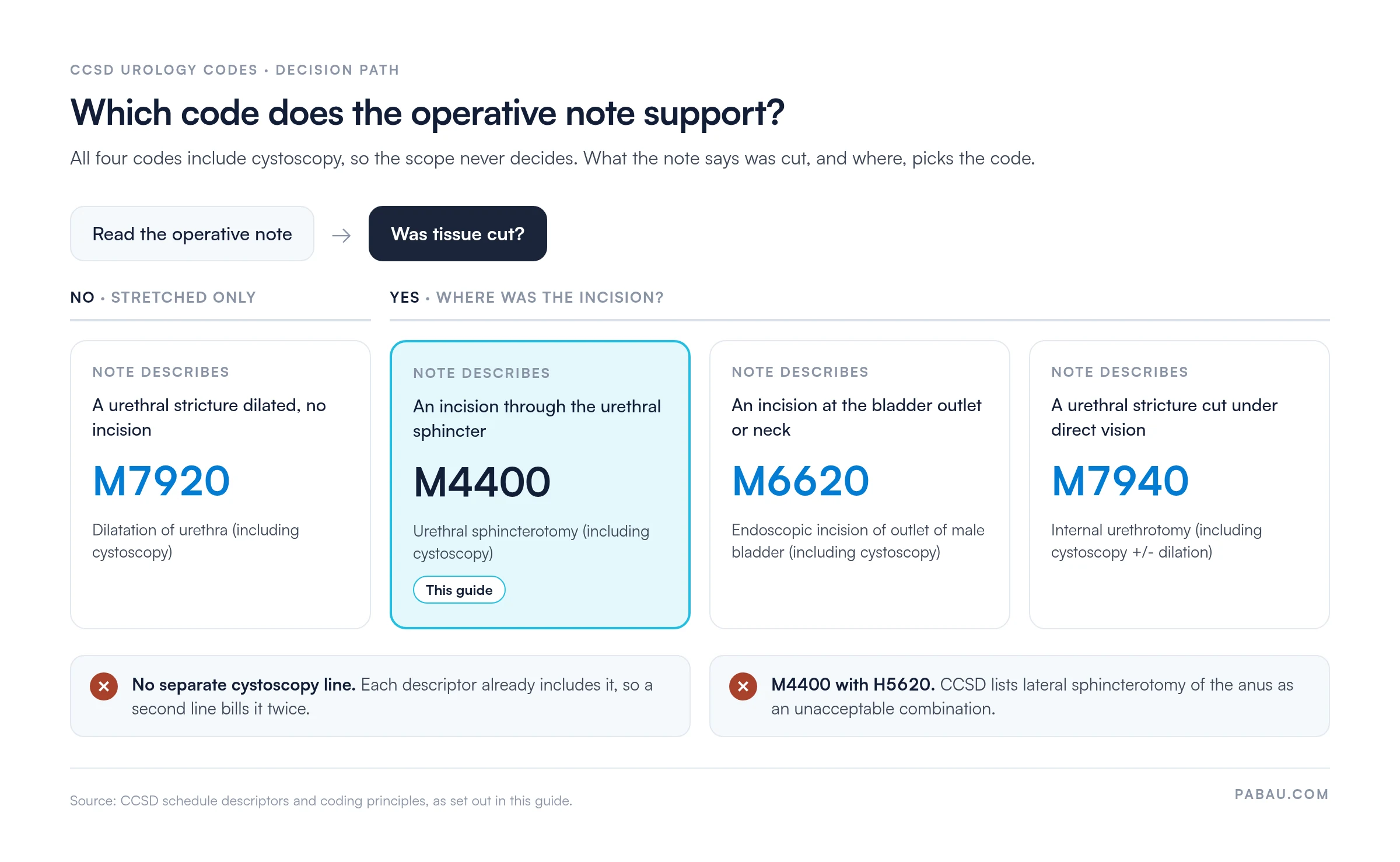
The only unacceptable combination found for M4400 is H5620, which CCSD added on 20 January 2010. H5620 covers lateral sphincterotomy of the anus. The two procedures share a word but treat different organs, so the pair is easy to pick from a search box by mistake.
CCSD calls its coding principles non-exhaustive guidelines. Each insurer decides whether to adopt a given combination rule, and CCSD does not set fees. If both procedures were performed at the same sitting, raise it with the insurer before you submit.
Cystoscopy needs the same care. The M4400 descriptor already includes it, so a separate cystoscopy code for the same operation would bill one procedure twice. Bladder hydrodistension works the same way, because the cystoscopy is already written into CCSD M4320.
Whether you need pre-authorization for outpatient or day-case urology depends on the insurer and the patient’s policy. Check with the insurer before the operation, and record the authorization code, the dates it covers and any limits it states.
Some insurers publish their own code search, such as the Bupa code search portal. Our Bupa CCSD codes guide explains how that schedule works.
An insurer that queries M4400 compares the invoice with the clinical record. The note should make the code obvious to someone who wasn’t in the room.
Keep the record for as long as your retention policy says. UK GDPR sets no fixed retention period, so many private practices base their schedule on the NHS Records Management Code of Practice.
Billing a sphincterotomy usually means juggling an insurer approval, a theater list and an invoice in separate places. A typo in the authorization code or a date outside the approval can be enough to stall payment.
Pabau, the practice management and insurance claims software we build, handles UK insurance billing through its Healthcode integration. The authorization code, its dates and the approved sessions sit on the patient’s insurance case. If the authorization is missing, Pabau warns your team before the invoice goes out.
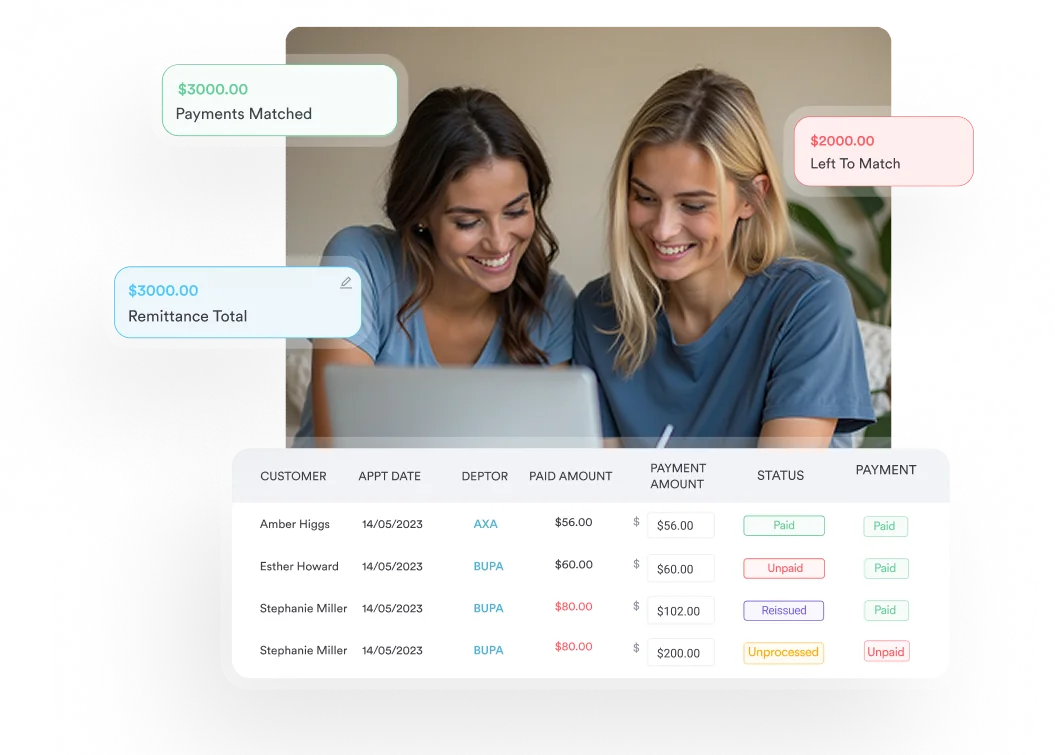
Your billing team then sends the claim with the authorization details already on it. Less time goes on chasing queries, and the urologist’s list gets paid sooner.

Pabau stores the insurer’s authorization code, dates and sessions on the patient’s case and warns you when one is missing. Claims go to Healthcode with the details already in place.

M4400 is a narrow code. It pays for one cut through the urethral sphincter, with the cystoscopy already inside it. Claims stall when the note, the descriptor or the authorization disagree.
So write the note so that the sphincter is named, bill the code once, and keep H5620 off the invoice unless the insurer agrees. Checking those three points takes a minute and can save a query that holds up payment.
Book a demo to see how Pabau keeps your urology claims matched to the authorization before they reach the insurer.

Billing a stricture rather than a sphincter? CCSD code M7940 billing guide covers internal urethrotomy and how it differs from dilation.
Need the full Bupa procedure schedule? Bupa CCSD codes guide explains how Bupa uses CCSD codes for fees and submission.
Looking up another urology code? CCSD codes library lists the procedure codes we cover, chapter by chapter.
It marks the urinary chapter. CCSD codes follow the OPCS-4 chapter letters, and M covers urinary tract procedures.
No. The CCSD Group maintains the codes and coding principles, but it does not set fees. Each insurer publishes its own fee for M4400, so check the schedule of the insurer you are billing.
You need a free account. The CCSD schedule search sits behind a login on ccsd.org.uk, and you can register there if you don’t have one.
Usually, yes. In UK private practice the anesthetist normally invoices against the same CCSD procedure code with their own fee. Confirm the insurer’s rules before you submit.
No. A TURP removes prostate tissue, while urethral sphincterotomy cuts the urethral sphincter. They carry different CCSD codes, so code from what the operative note describes.